




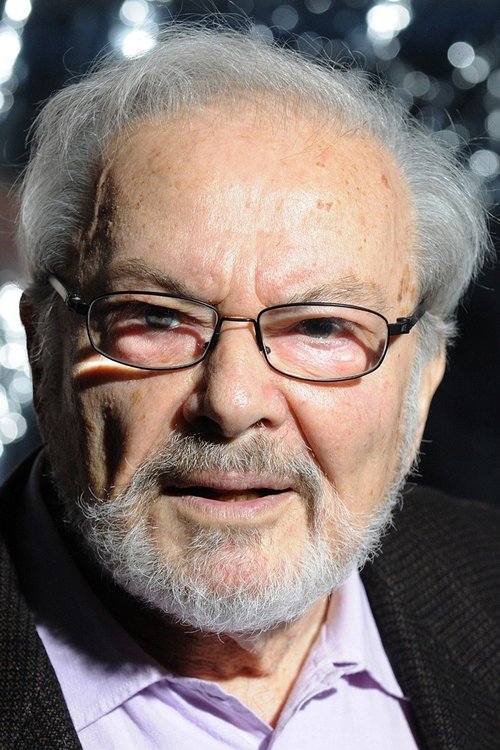
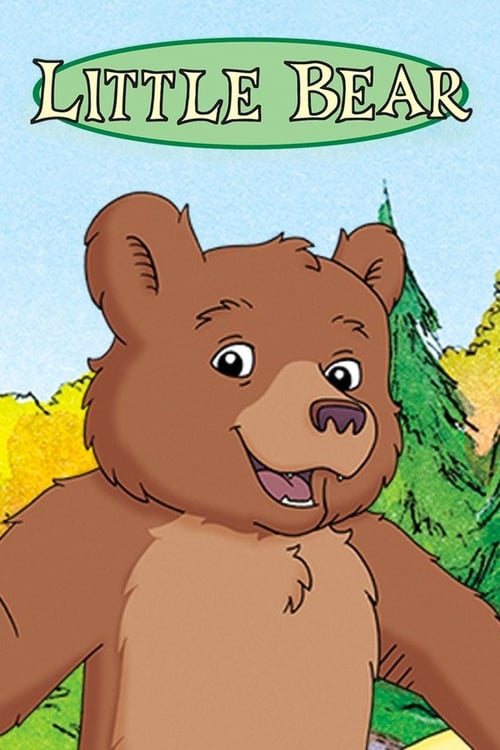
Maurice Bernard Sendak (; June 10, 1928 – May 8, 2012) was an American author and illustrator of children's books. Born to Polish-Jewish parents, his childhood was impacted by the death of many of his family members during the Holocaust. Sendak illustrated his own books as well as those by other authors, such as the Little Bear series by Else Holmelund Minarik. He achieved acclaim with Where the Wild Things Are (1963), the first of a trilogy followed by In the Night Kitchen (1970) and Outside Over There (1981). He also designed sets for operas, notably Mozart's The Magic Flute.
In 1987, Sendak was the subject of an American Masters documentary, "Mon Cher Papa". In 1996, he received the National Medal of Arts. Per Margalit Fox, Sendak, "the most important children's book artist of the 20th century", "wrenched the picture book out of the safe, sanitized world of the nursery and plunged it into the dark, terrifying and hauntingly beautiful recesses of the human psyche." His career was chronicled in Lance Bangs's Tell Them Anything You Want: A Portrait of Maurice Sendak (2009).
Contents
Early life
Sendak was born on June 10, 1928, in Brooklyn, New York, to Polish-Jewish immigrants Sadie (née Schindler) and Philip Sendak, a dressmaker. Maurice said that his childhood was a "terrible situation" due to the death of members of his extended family during the Holocaust which introduced him at a young age to the concept of mortality. His love of books began when, as a child, he developed health issues and was confined to his bed. He was "enthralled by Mickey Mouse (who was created the year of his birth), by American comics, and by the bright lights of Manhattan." When he was 12 years old, he decided to become an illustrator after watching Walt Disney's Fantasia (1940).
Maurice was the youngest of three siblings, born five years after Jack Sendak and nine years after Natalie Sendak. Jack also became an author of children's books, two of which were illustrated by Maurice in the 1950s. In 2011, Maurice was working on a book about noses, and he attributed his love of the olfactory organ to his brother Jack, who, in Sendak's opinion, had a great nose.
At the New York Art Students League, he took a class from John Groth, who taught him "a sense of the enormous potential for motion, for aliveness in illustration […] He himself […] showed how much fun creating in it could be."
Career
Author and illustrator
Maurice Sendak began his professional career in 1947 with illustrations for a popular science book, Atomics For the Millions. One of Sendak's first professional commissions, when he was 20 years old, was creating window displays for the toy store FAO Schwarz. The store's children's book buyer introduced him to Ursula Nordstrom, children's book editor at Harper & Row, who would go on to edit E. B. White's Charlotte's Web (1952) and Louise Fitzhugh's Harriet the Spy (1964). This led to his first illustrations for a children's book, for Marcel Aymé's The Wonderful Farm (1951). His work appears in eight books by Ruth Krauss, including A Hole Is to Dig (1952), which brought wide attention to his artwork. He illustrated the first five books in Else Holmelund Minarik's Little Bear series. The Maurice Sendak Foundation cites Krauss, Nordstrom and Crockett Johnson as mentors to Sendak. He made his solo debut with Kenny's Window (1956). He published the Nutshell Library (1962), consisting of Alligators All Around, One Was Johnny, Pierre and Chicken Soup With Rice. Sendak said of Nordstrom: "She treated me like a hothouse flower, watered me for ten years, and hand-picked the works that were to become my permanent backlist and bread-and-butter support."
Sendak gained international acclaim after writing and illustrating Where the Wild Things Are (1963), edited by Nordstrom. It features Max, a boy who "rages against his mother for being sent to bed without any supper". The book's depictions of fanged monsters concerned some parents when it was first published, as his characters were somewhat grotesque in appearance. Sendak explained that the title came from the Yiddish phrase vilde chaya, or "wild beast": "It's what almost every Jewish mother or father says to their offspring, 'You're acting like a vilde chaya! Stop it!'" It won the Caldecott Medal, considered the highest honor for picture books in the United states. Humphrey Carpenter and Mari Prichard write that "it is generally considered unequaled in its exploration of a child's fantasy world and its relation to real life." It was adapted into an opera by Oliver Knussen and a film by Spike Jonze.
Sendak later recounted the reaction of a fan:
A little boy sent me a charming card with a little drawing on it. I loved it. I answer all my children's letters–sometimes very hastily–but this one I lingered over. I sent him a card and I drew a picture of a Wild Thing on it. I wrote, "Dear Jim: I loved your card." Then I got a letter back from his mother and she said: "Jim loved your card so much he ate it." That to me was one of the highest compliments I've ever received. He didn't care that it was an original Maurice Sendak drawing or anything. He saw it, he loved it, he ate it.
Other projects
Sendak was an early member of the National Board of Advisors of the Children's Television Workshop during the development stages of the Sesame Street television series. He created two animated stories for the series: Bumble Ardy, an animated sequence with Jim Henson as the voice of Bumble Ardy, and Seven Monsters. Sendak later adapted Seven Monsters into the book Seven Little Monsters, which itself would be adapted into an animated television series.
Sendak wrote an animated musical, Really Rosie, featuring the voice of Carole King and broadcast in 1975. It is available on video (usually as part of video compilations of his work). An album of the songs was also produced. He contributed the opening segment to Simple Gifts, a Christmas collection of six animated shorts shown on PBS in 1977 and later released on VHS in 1993. He adapted Where the Wild Things Are for the stage in 1979. Additionally, he designed sets and costumes for many operas and ballets, including the award-winning Pacific Northwest Ballet 1983 production of Tchaikovsky's The Nutcracker, Glyndebourne Festival Opera's productions of Prokofiev's The Love for Three Oranges (1982), Ravel's L'enfant et les sortilèges and L'heure espagnole (1987) and Knussen's adaptation of Sendak's own Higglety Pigglety Pop! or There Must Be More to Life (1985), Houston Grand Opera's productions of Mozart's The Magic Flute (1981) and Humperdinck's Hansel and Gretel (1997), Los Angeles County Music Center's 1990 production of Mozart's Idomeneo, New York City Opera's production of Janáček's The Cunning Little Vixen (1981) and the Lyric Opera of Kansas City's production of Mozart's The Goose of Cairo (1982).
In 2003, Chicago Opera Theatre produced Sendak and Kushner's adaptation of Brundibár. In 2005, Berkeley Repertory Theatre, in collaboration with Yale Repertory Theatre and Broadway's New Victory Theater, produced a substantially re-worked version of the Sendak-Kushner adaptation. In 2004, Sendak worked with the Shirim Klezmer Orchestra in Boston on their project Pincus and the Pig: A Klezmer Tale. This Klezmer version of Prokofiev's best-known musical story for children, Peter and the Wolf, featured Maurice Sendak as the narrator. He also illustrated the cover art.
Margalit Fox writes that "His art graced the writing of other eminent authors for children and adults, including Hans Christian Andersen, Leo Tolstoy, Herman Melville, William Blake and Isaac Bashevis Singer."
Personal life
Sendak mentioned in a September 2008 article in The New York Times that he was gay and had lived with his partner, psychoanalyst Eugene David Glynn (February 25, 1926 – May 15, 2007), for 50 years before Glynn's death in May 2007. Revealing that he never told his parents, he said, "All I wanted was to be straight so my parents could be happy. They never, never, never knew." Sendak's relationship with Glynn was referenced by other writers before (including Tony Kushner in 2003) and Glynn's 2007 death notice identified Sendak as his "partner of fifty years". After his partner's death, Sendak donated $1 million to the Jewish Board of Family and Children's Services in memory of Glynn, who treated young people there. The money will go to a clinic which is to be named for Glynn.
Sendak was an atheist. In a 2011 interview, he said that he did not believe in God and explained that he felt that religion, and belief in God, "must have made life much easier [for some religious friends of his]. It's harder for us non-believers."
In the early 1960s, Sendak lived in a basement apartment at 29 West 9th Street in Greenwich Village where he wrote and illustrated Wild Things. Later he had a nearby pied-à-terre at 40 Fifth Avenue where he worked and stayed occasionally after moving full-time to Ridgefield, Connecticut.
He said: "I don't really believe that the kid I was has grown up into me. He still exists somewhere in the most graphic, plastic, physical way for me. I have tremendous concern for, and interest in, him. I try to communicate with him all the time. One of my worst fears is losing contact."
Influences
Maurice Sendak drew inspiration and influences from a vast number of painters, musicians, and authors. Going back to his childhood, one of his earliest memorable influences was actually his father, Philip Sendak. According to Maurice, his father related tales from the Torah; however, he would embellish them with racy details. Not realizing that this was inappropriate for children, young Maurice was frequently sent home after retelling his father's "softcore Bible tales" at school. Gregory Maguire says Sendak "felt he was relative to people like Emily Dickinson and Keats and Henry James and Homer." Margalit Fox wrote: "A largely self-taught illustrator, Mr. Sendak was at his finest a shtetl Blake, portraying a luminous world, at once lovely and dreadful, suspended between wakefulness and dreaming. In so doing, he was able to convey both the propulsive abandon and the pervasive melancholy of children's interior lives. ... His visual style could range from intricately crosshatched scenes that recalled 19th-century prints to airy watercolors reminiscent of Chagall to bold, bulbous figures inspired by the comic books he loved all his life, with outsize feet that the page could scarcely contain. He never did learn to draw feet, he often said."
Sendak had other influences growing up, including Walt Disney's Fantasia and Mickey Mouse. Mickey Mouse was created in the year Sendak was born, 1928, and Sendak described Mickey as being a source of joy and pleasure for him while growing up. He has been quoted as saying, "My gods are Herman Melville, Emily Dickinson, Mozart. I believe in them with all my heart." Of Dickinson, he said: "I have a little tiny Emily Dickinson so big that I carry in my pocket everywhere. And you just read three poems of Emily. She is so brave. She is so strong. She is such a passionate little woman. I feel better." Of Mozart, he said, "When Mozart is playing in my room, I am in conjunction with something I can't explain. ... I don't need to. I know that if there's a purpose for life, it was for me to hear Mozart."
Death and tributes
Sendak died at Danbury Hospital in Danbury, Connecticut on May 8, 2012, at age 83, due to complications from a stroke. In accordance with his wishes, his body was cremated and his ashes were scattered at an undisclosed location.
Spike Jonze recalled "I would look at those pictures—where Max's bedroom turns into a forest—and there was something that felt like magic there." Jonze directed the film adaptation Where the Wild Things Are and the documentary Tell Them Anything You Want: A Portrait of Maurice Sendak (both 2009). Author R. L. Stine called Sendak's death "a sad day in children's books and for the world." Tom Hanks said "Maurice Sendak helped raise my kids—all four of them heard 'The night Max wore his wolf suit...' many times."
Stephen Colbert, who interviewed Sendak in one of his last public appearances, said of Sendak: "We are all honored to have been briefly invited into his world." On a January 2012 episode of The Colbert Report, Sendak taught Colbert how to illustrate and provided a book blurb for Colbert's spoof children's book, I Am a Pole (And So Can You!) The book was published on the day of Sendak's death with his blurb: "The sad thing is, I like it!"
The 2012 season of Pacific Northwest Ballet's The Nutcracker, for which Sendak designed the set and costumes, was dedicated to his memory.
His final book, Bumble-Ardy, was published eight months before his death. A posthumous picture book, My Brother's Book, was published in February 2013. (2009). Jonze's film Her was dedicated in memory of Sendak and Where the Wild Things Are co-star James Gandolfini.
Richard Robinson, executive of Scholastic Corporation, said "Maurice Sendak captured childhood in brilliant stories and drawings that will live forever." Gregory Maguire, author of Making Mischief: A Maurice Sendak Appreciation wrote that Sendak realized "Children are full humans, compromised only by their lack of vocabulary and practice in reporting how they live. But they live as fully as Sendak himself lived right up to his last months and weeks and hours. ... [S]ome more sentimental scrap of me (that he would have scorned) hopes he is settling down to some nice bowl of chicken soup with rice with Emily Dickinson or Herman Melville. Though they have been impatient to meet him in person for a very long time, no doubt they'll greet him as a fellow king. By now, Sendak is finding his dinner waiting for him. And it is still hot."
Awards and honors
In 2012, School Library Journal named Where the Wild Things Are as its top picture book based on reader surveys. The librarian who conducted it observed that there was little doubt what would be voted number one and highlighted its designation by one reader as a watershed, "ushering in the modern age of picture books". Another called it "perfectly crafted, perfectly illustrated ... simply the epitome of a picture book" and noted that Sendak "rises above the rest in part because he is subversive." Sendak received the third biennial Hans Christian Andersen Award for Illustration in 1970, recognizing his "lasting contribution to children's literature". He received one of two inaugural Astrid Lindgren Memorial Awards in 2003, recognizing his career contribution to "children's and young adult literature in the broadest sense". The citation called him "the modern picture-book's portal figure" and the presentation credited Where the Wild Things Are with "all at once [revolutionizing] the entire picture-book narrative ... thematically, aesthetically, and psychologically." In the U.S., he received the Laura Ingalls Wilder Medal from the professional children's librarians in 1983, recognizing his "substantial and lasting contributions to children's literature". At the time it was awarded every three years. Only Sendak and the writer Katherine Paterson have won all three of these premier awards.
Caldecott Medal from the ALA as illustrator of "the most distinguished American picture book for children", Where the Wild Things Are, 1964 (Sendak was one of the Caldecott runners-up seven times from 1954 to 1982, more than any other illustrator, although some won multiple medals)
The House of Sixty Fathers, a novel by Meindert DeJong, for which Sendak provided the spot, black-and-white illustrations, won the Child Study Association of America's Children's Book Award (now called the Josette Frank Award), 1956
Hans Christian Andersen Award for children's book illustration, 1970
National Book Award in category Picture Books for Outside Over There, 1982
Laura Ingalls Wilder Medal for American children's literature, 1983
Selected works
Filmography
1973: Where the Wild Things Are (animated short direct by Gene Deitch, music and narration by Peter Schickele)
1975: Really Rosie (director, writer, and story artist)
1985: Return to Oz (directed by Walter Murch, preliminary artwork)
1986: Sendak (non-story featurette)
1987: In the Night Kitchen (Animated short direct by Gene Deitch, narration by Peter Schickele)
1995-2001: Little Bear (Based-book co-creator, producer)
2000-2003: Seven Little Monsters (Based-book creator, producer)
2001: The Little Bear Movie (producer)
2002: Last Dance (directed by Mirra Bank)
2009: Where the Wild Things Are (producer, story)
2009: Tell Them Anything You Want: A Portrait of Maurice Sendak, documentary Lance Bangs and Where the Wild Things Are director Spike Jonze. Released in the US on DVD by Oscilloscope Laboratories.
2010: Higglety Pigglety Pop! or There Must Be More to Life (story), an animated/live action short adapted and directed by Chris Lavis and Maciek Szczerbowski (The Clyde Henry Company), co-produced by Spike Jonze, Vincent Landay, and Marcy Page (National Film Board of Canada)
Selected exhibitions
October 13, 2024 – February 17, 2025. Wild Things: The Art of Maurice Sendak at the Denver Art Museum
April 18 – September 1, 2024. Wild Things Are Happening: The Art of Maurice Sendak at the Skirball Cultural Center in Los Angeles
March 25, 2021 – July 10, 2021. Maurice Sendak Exhibit and Sale at the Society of Illustrators in New York
June 11, 2013 – August 17, 2013. "Maurice Sendak: A Celebration of the Artist and his Work" at the Society of Illustrators in New York
Permanent. Maurice Sendak Collection at The Rosenbach Museum & Library in Philadelphia
2013–"Maurice Sendak; The Memorial Exhibition." April 2013 "Bowers Museum of California" "The New Britain Museum of American Art'"
September 8, 2009 – January 19, 2010.There's a Mystery There: Sendak on Sendak at The Contemporary Jewish Museum in San Francisco
October 6, 2009 – November 1, 2009. Where the Wild Things Are: Original Drawings by Maurice Sendak at The Morgan Library & Museum in New York
October 1–30, 2009 "Sendak in SoHo" at AFA Gallery in New York
April 15, 2005 – August 14, 2005. Wild Things: The Art of Maurice Sendak at The Jewish Museum in New York