Tenure
On January 21, 2025, Vice President JD Vance swore Rubio into office as the 72nd secretary of state. During his tenure as secretary of state, Rubio has served in an acting capacity as national security advisor, the administrator of USAID and archivist of the United States, leading to him being dubbed the "Secretary of Everything" by The New York Times.
Rubio is the first Hispanic to hold the office of secretary of state. Rubio became the first Hispanic to act as National Security Advisor on May 1, 2025, after Trump announced his intention to replace national security advisor Mike Waltz with Rubio. Rubio became the interim national security advisor, while continuing as secretary of state. Rubio is the first person to be both secretary of state and national security advisor in fifty years, since Henry Kissinger in 1975. Rubio is also the first Floridian to serve as secretary of state.
On his first day as secretary, Rubio met with foreign ministers of the Quadrilateral Security Dialogue member countries to "strengthen economic opportunity and peace and security in the Indo-Pacific region" and counter the influence of China.
On January 23, 2025, as part of compliance with Executive Order 14168, which ended gender self-identification on passports, Rubio instructed State Department staff to freeze any passport applications that requested "X" sex markers. As part of the move, the department held some transgender applicants' documents while their applications were in limbo. The move created widespread confusion among both applicants and those who had already acquired passports with "X" sex markers. The Williams Institute estimated that, out of the 171 million Americans who hold valid U.S. passports, 16,700 may be eligible for ones with "X" sex markers.
In accordance with President Trump's executive order, on January 24, 2025, Rubio enacted an unprecedented freeze on all U.S. foreign aid for 90 days, with some exceptions, effective January 28. This shut down many of USAID's humanitarian, development, and security programs worldwide. During his time in Congress, Rubio was an avid supporter of USAID. During a February 6 press conference in the Dominican Republic, Rubio said, "If it's providing food or medicine or anything that is saving lives and is immediate and urgent, you're not included in the freeze." But on February 8, CNN reported that many waivers were not being acted upon because too many staff have been placed on leave and because payment systems had been taken over.
In March, ProPublica reported that emails show that Rubio was alerted by longtime employees who estimated that one million children would go untreated for severe malnutrition, up to 166,000 people would die from malaria, and 200,000 children would be paralyzed by polio over the next decade if the USAID programs were cut.
Despite assurances from the Trump administration that critical foreign assistance programs would be protected, the restructuring of USAID by the Department of Government Efficiency (DOGE) in early 2025 resulted in significant operational disruption. During late February and early March, the cessation of access to financial systems severely hindered USAID's ability to process payments. At a February 13 meeting, three political appointees shouted at a regular employee to draft a memo countering the "false narrative" in the media that there had ever been a pause. On February 24, employees were told not to bother requesting waivers for infectious diseases such as Ebola because they would not be approved. On February 26, about 10,000 programs were abruptly ended. Meanwhile, payment of $2 billion for work already completed was slowed.
At times, the Trump administration seemed to be "trying to reverse-engineer its most sweeping actions" in order to restore lifesaving programs. But when appealed to by an employee, political appointee Joel Borkert said some were canceled in error, and wrote in an email, "we have the ability to rescind."
On March 10, Rubio posted to X that the administration would be keeping only 17% of USAID programs.
In June 2025, the White House requested that Congress pass a package of rescissions, or "clawbacks", of approximately $8 billion in foreign aid and $1 billion for the Corporation for Public Broadcasting. The House of Representatives passed the cuts as requested. The Senate excluded the cuts to PEPFAR, the program started under President George W. Bush to help lower-income countries get access to HIV medicines. The Senate passed two preliminary votes, 51-50, with Vice-President JD Vance casting the tie-breaking votes. A rescission is one of the exceptions to the Senate’s 60-vote filibuster rule.
On July 17, the Senate voted 51-48 in favor of the cuts. The next day, the House of Representatives voted 216-213 for the Senate version, meaning PEPFAR was protected.
Hurricane Melissa was a Category 5 hurricane that first made landfall at Jamaica on October 28, 2025, and then hit other Caribbean islands. Rubio activated a disaster assistance response team that was on the ground in Jamaica within several days. By October 31, three U.S. CH-47 Chinook helicopters were deployed to Jamaica to help with relief efforts, with five more helicopters on the way.
In early November, the State Department promised $12 million in aid to Jamaica, $8 million to Haiti, $3 million to Cuba, and $500,000 to The Bahamas. The State Department's Tommy Pigott said, "The State Department's response to Hurricane Melissa demonstrates that the new foreign assistance model is not only capable of responding to emergencies, but that it allows for relief efforts that are informed by the State Department's regional experts and integrated with the State Department's broader foreign policy."
In June 2025, Rubio announced sanctions against four judges of the International Criminal Court (ICC) in retaliation for the court's issuance of arrest warrants for Israeli prime minister Benjamin Netanyahu and former defence minister Yoav Gallant, and for an earlier decision to open an investigation into alleged war crimes by United States personnel in Afghanistan.
In July 2026, Rubio announced a broader campaign to dismantle the ICC "brick by brick" and systematically prevent it from investigating and prosecuting US officials and service members. Measures under consideration included travel bans, visa revocations, additional sanctions against the ICC and affiliated organizations, and diplomatic pressure on other countries to withdraw from the ICC or reject its asserted authority to prosecute Americans.
In his first trip abroad as secretary of state, Rubio traveled to Panama, Guatemala, El Salvador, Costa Rica, and the Dominican Republic. The trip was intended to address curtailing illegal migration and Trump's push to reclaim the Panama Canal. On January 30, Rubio stated that it was in U.S. "national interest" to acquire Greenland and did not rule out military coercion to do so.
In February 2025, Rubio met with El Salvador president Nayib Bukele and reached an agreement for the country to take in deported foreign nationals who committed crimes, in addition to jailed U.S. citizens and permanent residents. Rubio praised the agreement as a way of rehousing deportees and American prisoners in the Salvadoran Terrorism Confinement Center.
On February 6, 2025, ABC News reported that Rubio had been the acting archivist of the United States since Trump took office. Later reporting by 404 Media said that this reporting was misunderstanding, faulty, or a "bad news source" quoting an unnamed National Archives and Records Administration employee, and noted that Colleen Shogan was still listed as Archivist of the United States. But after the removal of Shogan and deputy archivist William J. Bosanko, Rubio became acting archivist of the United States on February 16. 300 days later, to comply with the Vacancies Reform Act, he gave up the role on February 4, 2026; no immediate successor was appointed, though "authority" was delegated to Jim Byron, his senior advisor.
In February 2025, Rubio supported Trump's proposal that the U.S. take over the Gaza Strip, saying that the U.S. "stands ready to lead and Make Gaza Beautiful Again" and pursues a lasting peace in the region for all people. In March 2025, Rubio bypassed Congress by issuing an emergency declaration to send Israel a $4 billion shipment of arms.
On May 16, 2025, while in Abu Dhabi, UAE, Trump said: "We're looking at Gaza. And we're going to get that taken care of. A lot of people are starving." Israel claims that Hamas systemically raids food aid in order to support its operations, and Israel has put forward a plan of food distributed through a system of hubs run by private contractors and protected by Israeli soldiers. The U.S.-backed Gaza Humanitarian Foundation has been set up to carry out this plan and announced it would be ready to begin operations by the end of May. This plan has been criticized as unworkable and potentially unlawful because it could lead to mass forced relocations. On May 15, 2025, Rubio acknowledged the criticism and said the U.S. government is "open to an alternative if someone has a better one".
In October 2025, the Knesset passed a bill that would apply Israeli sovereignty to all West Bank settlements. Rubio called the bill "counterproductive" to Trump's Gaza peace plan.
On February 16, 2025, Rubio rejected concerns that Ukraine and Europe would be excluded from any future peace negotiations in the Russian invasion of Ukraine, saying, "One phone call does not solve a war as complex as this one, but I can tell you that Donald Trump is the only leader in the world that could potentially begin that process." On February 18, American and Russian delegations headed by Rubio and Russian Foreign Minister Sergey Lavrov met in Riyadh, Saudi Arabia, to develop a framework for further peace negotiations on the Ukraine war. Rubio was accompanied by U.S. national security advisor Mike Waltz and Special Envoy Steve Witkoff.
In October 2025, Rubio and Lavrov began holding discussions in preparation for the 2025 Budapest Summit between Donald Trump and Vladimir Putin. The summit was eventually canceled.
On March 7, 2025, The New York Times reported that Rubio had clashed with Elon Musk during a White House cabinet meeting. Musk criticized him for not firing anyone in the State Department, and Rubio was angered by Musk's dismantling of USAID while he was the agency's administrator.
On March 9, 2025, Rubio condemned the massacres of Syrian minorities committed by pro-government fighters during clashes in western Syria. He said "the United States stands with Syria's religious and ethnic minorities, including its Christian, Druze, Alawite, and Kurdish communities" and that the "perpetrators of these massacres against Syria's minority communities" should be held accountable.
On March 14, Rubio expelled the South African ambassador to the United States, Ebrahim Rasool, and called him a "race-baiting politician who hates America".
In February 2025, Rubio announced that the State Department's Counter Foreign Information and Manipulation and Interference Office would be shut down, saying it had wasted millions of dollars and engaged in censorship.
In late April, Rubio announced plans to trim State Department costs and jobs by 15% to 17%. The same day, a senior State Department official said the job cuts would be 22%. Rubio said: "Over the past 15 years, the department's footprint has had unprecedented growth and costs have soared. But far from seeing a return on investment, taxpayers have seen less effective and efficient diplomacy. The sprawling bureaucracy created a system more beholden to radical political ideology than advancing America's core national interests." The proposal would fire 80% of staff in the Bureau of Democracy, Human Rights, and Labor.
In May 2025, Rubio announced the U.S. government would "aggressively revoke visas for Chinese students, including those with connections to the Chinese Communist Party or studying in critical fields". He also announced the U.S. would increase scrutiny of all future visa applications from China and Hong Kong.
On June 27, 2025, Rubio hosted a peace agreement between the Democratic Republic of the Congo and Rwanda, according to which Rwanda will withdraw soldiers from the eastern DRC and the two countries will launch a framework for economic integration within 90 days. President Trump announced there will be deals with the West for minerals such as tantalum, gold, cobalt, copper, and lithium. A critic said, "Minerals are only one driver of conflict."
This agreement potentially ends a long-running conflict in which six million people have died. Rubio said: "This is an important moment after 30 years of war. President Trump is a president of peace. He really does want peace. He prioritizes it above all else." Former DRC president Joseph Kabila expressed skepticism of the peace deal, saying it was "nothing more than a trade agreement".
In November 2025, Rubio called for international action to stop the flow of weapons to the Rapid Support Forces (RSF), the paramilitary group responsible for mass killings and atrocities in El Fasher and across Sudan's Darfur region. He emphasized that the U.S. knew which countries were involved in supplying the RSF and using their territories for transit, and that pressure was being applied at the highest levels to stop it. Various sources, including the Sudanese army and U.N. investigators, have accused the United Arab Emirates (UAE) of being the RSF's main foreign backer.
In early September 2025, Rubio met with Mexican president Claudia Sheinbaum and Foreign Affairs Secretary Ramón de la Fuente during his third visit to Latin America. The U.S. and Mexico agreed to continue close cooperation regarding the smuggling of drugs from Mexico into the U.S. and the smuggling of guns from the U.S. into Mexico. Rubio said, "It's the closest cooperation we've ever had, maybe between any country, but definitely between the U.S. and Mexico."
In June 2025, Rubio defended the direct U.S. strikes on Iranian nuclear sites known as Operation Midnight Hammer, which followed a previous wave of Israeli attacks. In January 2026, he expressed strong support for the anti-government protests in Iran.
During the 2026 Iran war, Rubio said the U.S. government knew that Israel was planning to attack Iran and that the U.S. did a preventive attack to avoid higher casualties. Critics of Israel denounced this as US strategy shaped by Israeli military decisions. Rubio also said the world will be a safer place when the military operation is completed. He said Iran's leadership is the problem, not its people, and that he hoped that the government would fall, but if not, the war's goals were to degrade Iranian military capabilities and ensure that Iran will not control the Strait of Hormuz.
On January 3, 2026, the U.S. launched airstrikes in Venezuela and captured Venezuelan President Nicolás Maduro and his wife. CNN called Rubio the "driving force of the strategy" of the operation. President Trump has said that Rubio will be among the officials responsible for the power transition in Venezuela after Maduro's ouster. According to The New York Times, Venezuela has been a de facto puppet state since the intervention, with the US State Department under Rubio controlling core aspects of Venezuela's governance, including its domestic finances, government appointments, revenues, foreign policy, and the distribution of its natural resources. Rubio has been dubbed Venezuela's "viceroy" by other US officials, and has been in regular contact with the country's acting president, Delcy Rodríguez.
On May 5, 2026, Rubio met with SOUTHCOM commander General Francis L. Donovan about Operation Southern Spear with a map of Cuba on the background. When asked why he posed for a picture with the map of Cuba, he said, "Cuba is under the Southern Command—you know, it's the closest part. Our ambassadors were all over the Western Hemisphere. I met with the general who just took command of SOUTHCOM, and there was a map of Cuba behind us. I thought it would be fitting to take a picture in front of it because it's the closest to the United States within SOUTHCOM." On May 7, Rubio announced a new set of sanctions on Cuba's Grupo de Administración Empresarial S.A. (GAESA), which is controlled by the Cuban military. Rubio has called GAESA the heart of Cuba's communist system.
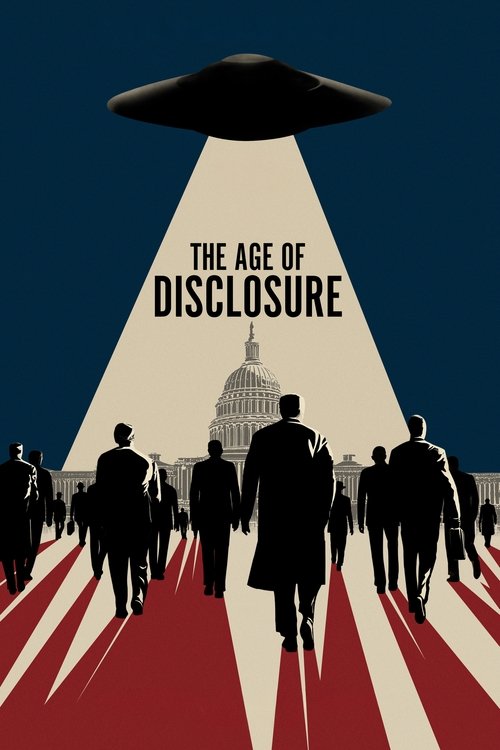
Rubio participated in The Age of Disclosure, a 2025 documentary film about UFOs and supposed government programs involving recovery of alien technology that crashed on Earth.