Reaction
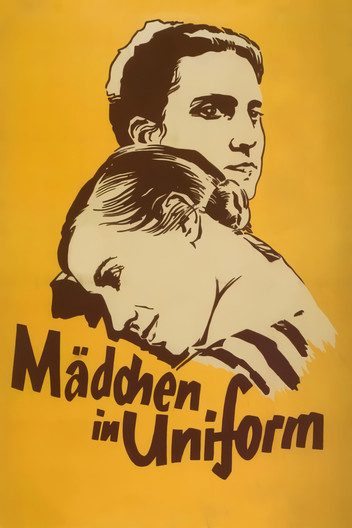
The film had some impact in the Berlin lesbian clubs, but was largely eclipsed by the ongoing cult success of The Blue Angel (1930). The film did, however, generate large amounts of fan mail to the stars from all over Germany and was considered a success throughout much of Europe. The goodnight kiss Hertha Thiele (Manuela) received from Dorothea Wieck (Fräulein von Bernburg) was especially popular. One distributor even asked for more footage of other kisses like it to splice into prints of the film.
From its premiere at the Capitol cinema in Berlin until 1934, the film is said to have grossed some 6,000,000 ℛ︁ℳ︁. Despite the collective nature of the filming for which cast and crew received only a quarter of the normal wage, none saw a share of the six million Reichsmarks and Thiele later hinted that the profits had been mostly retained by the producers.
The film was distributed outside Germany and was a huge success in Romania. During a 1980 interview, Thiele said the school play scene caused a "longstockings and kissing" cult when the film was first shown there. It was also distributed in Japan, the United States, England and France.
Mädchen in Uniform won the audience referendum for Best Technical Perfection at the Venice Film Festival in 1932 and received the Japanese Kinema Junpo Award for Best Foreign Language Film (Tokyo, 1934).
Later, an alternative ending which subtly pandered to Nazi ideals enabled continued screening in German cinemas. Eventually even this version of the film was banned as "decadent" by the Nazi regime, which reportedly attempted to burn all of the existing prints. By then, though, several had been dispersed around the world. Leontine Sagan (director) and many others associated with the film fled Germany soon after the banning. Many of the cast and crew were Jewish, and those who could not escape from Germany died in the camps. Assistant director Walter Supper killed himself when it became clear his Jewish wife would be arrested.
Despite its later banning, Mädchen in Uniform was followed by several German films about intimate relationships among women, such as Acht Mädels im Boot (Eight Girls in a Boat, 1932) and Anna and Elizabeth (1933), which also starred Wieck and Thiele but was banned by the Nazis soon after its opening night along with the Nazi propaganda film I for You, You for Me (Me for You, You for Me, 1934).
The film is said to have inspired the 1949 novel Olivia by Dorothy Bussy, which treats very similar themes, and which was made into a French film Olivia (1951) directed by Jacqueline Audry.
There is a German remake of the film produced in 1958. Mädchen in Uniform (1958) was directed by Géza von Radványi and starred Lilli Palmer, Romy Schneider, and Therese Giehse. In this remake, the political criticism on the Prussian Center and the love story between the main characters was played down. Manuela comes to see Fräulein von Bernburg as a motherly figure rather than a romantic one.
There was another remake made in Mexico in 1950. The film is entitled Muchachas de uniforme and was directed by Alfredo B. Crevenna. Other films that were inspired by the themes in Mädchen in Uniform are Lost and Delirious (Lea Pool, Canada 2001) and Loving Annabella (Katherine Brooks, 2006). Mädchen in Uniform was also the inspiration for René Pollesch's play Mädchen in Uniform -- Wege aus der Selbstverwirklichung at the German Playhouse in Hamburg (2010).
Since the film's release, Mädchen in Uniform's message - and by extension what the movie symbolizes - has been widely debated by critics; with Christa Winsloe's and Leontine Sagan's intention to make the movie contested. B. Ruby Rich believes it to be, among other things, "a film about sexual repression in the name of social harmony, about the absent patriarchy and its forms of presence, about bonds between women which represent attraction instead of repulsion, and about the release of powers that can accompany the identification of a lesbian sexuality." While very few analyses question the film's queer messaging, there is a more contentious debate about whether the film is an effective allegory for the 1930s world and the rise of Hitler and the Nazi party.
In his 1947 book From Caligari to Hitler, German film critic Siegfried Kracauer argues that the film fails to fully break away from the authoritarian rule as "in the whole film, there is no hint of the possibility that authoritarian behavior might be superseded by democratic behavior." This, according to Kracauer, exists in several places from the character of Fräulein Von Bernberg, the treatment of Manuela and the ending of the film where the headmistress is forced out of the school after Manuela's attempted suicide. The bugles that conclude the film symbolise to Kraucer "that the principle of authority has not been shaken. The headmistress will continue to wield the scepter. And any possible softening of authoritarian discipline would only be in the interest of its preservation." Many people have refuted this argument however, including Nina Zimink who agrees that the bugle fair does symbolize that not everything is perfect after the departure of the headmistress, states that they signify "optimistic political development" in a world that is quite bleak. Whilst some critics, like Lisa Ohm and Lotte H. Eisner, agreed with Siegfried's argument in one regard or another, the primary perspective is to move away from this critical view . Rich, who championed the film as unabashedly queer, states that "intrusion to the film is an antidote to viewing this all-female space as a "free zone" within a patriarchal society, which can be seen to dominate not only in the concrete form of the staircase or Principal, but in the equally threatening form of external authority that waits just outside the school gates". There are also thinkers like Veronika Mayer who call the film "liberating" especially when placed in contrast to the 1958 film that is far more timid about the lesbian relationship between Manuela and Fräulein Von Bernburg, opting instead to present it as maternal connection.