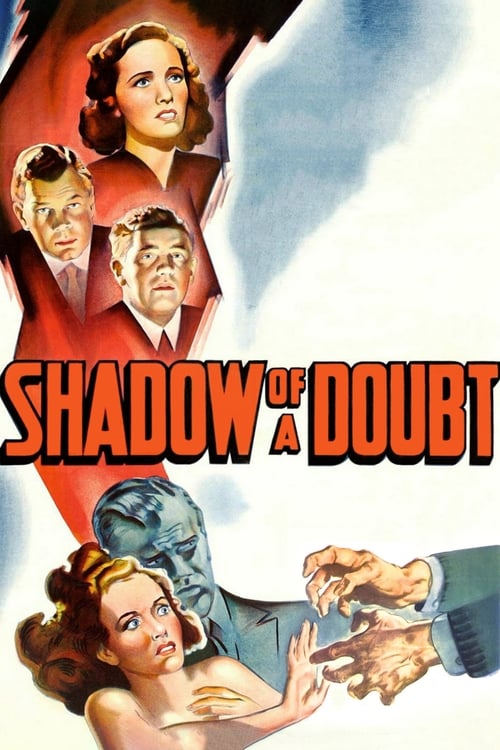




Edward Macdonald Carey (March 15, 1913 – March 21, 1994) was an American actor. He first made his career starring in various B-movies from the 1940s through the 1960s, (with a few A-picture exceptions like Hitchcock's Shadow of a Doubt), and was known in many Hollywood circles as "King of the Bs". Beginning in 1965, he portrayed patriarch Dr. Tom Horton on NBC's soap opera Days of Our Lives. For almost three decades, he was the show's central cast member, winning two Daytime Emmy Awards.
Contents
Early life
Edward Macdonald Carey was born on March 15, 1913 in Sioux City, Iowa. He graduated from the University of Iowa in Iowa City with a bachelor's degree in 1935, after attending the University of Wisconsin–Madison for a year where he was a member of Alpha Delta Phi. He became involved with the drama school at the University of Iowa and decided to become an actor.
Career
Radio and Broadway
Carey toured with the Globe Players. He began to work steadily on radio, including playing Dick Grosvenor on the soap opera Stella Dallas and Ridgeway Tearle in John's Other Wife, both in the early 1940s. He was also in Lights Out.
Carey was on Broadway in Lady in the Dark (1941) opposite Gertrude Lawrence, Danny Kaye and Victor Mature. His performance led to him receiving a contract offer from Paramount. He later recalled, "1941 was probably the greatest year of my life. I got my first big hit with Lady in the Dark, I got married and I signed with Paramount Pictures. I only wish I could remember it all better." The reason was his alcoholism.
Film appearances and World War II service
Carey made his film debut in Star Spangled Rhythm (1942). Paramount gave him the third lead in Take a Letter, Darling (1942), directed by Mitchell Leisen. He followed it with Dr. Broadway (1942), which was his first starring role. He had a leading part in Wake Island (1942), directed by John Farrow, a big hit.
Carey's career received a boost when borrowed by Alfred Hitchcock at Universal to play the romantic lead in Shadow of a Doubt (1943) with Joseph Cotten and Teresa Wright. However the momentum was halted when he enlisted in the United States Marine Corps. He had two months before he left, which enabled him to star in a musical for Paramount, Salute for Three (1943). Carey received his commission in early 1944 and attended fighter director school at Camp Murphy in Orlando, Florida. After school he served with Air Warning Squadron 3 with stints on Espiritu Santo, Bougainville and Mindanao.
In 1947, Carey returned to Paramount. They put him back into leading roles: Suddenly, It's Spring (1947), directed by Leisen, co-starring Paulette Goddard; Hazard (1948), again with Goddard; and Dream Girl (1948), supporting Betty Hutton, directed by Leisen.
Carey played Cesare Borgia in Bride of Vengeance (1948) alongside Goddard, directed by Leisen, but it was a flop. More popular was a Western, Streets of Laredo (1949), but William Holden was the hero; Carey was the villain.
In 1949, he co-starred as "Nick Carraway" in Alan Ladd's version of The Great Gatsby. Carey followed this with Song of Surrender (1949), once again directed by Leisen.
Universal borrowed Carey for two films: a Western with Maureen O'Hara, Comanche Territory (1950), and South Sea Sinner (1950) with Shelley Winters.
Back at Paramount he was in a low budget film noir, The Lawless (1950) directed by Joseph Losey. Back at Paramount he was a villain to Ray Milland in Copper Canyon (1950), directed by John Farrow. At Paramount he was Jesse James in The Great Missouri Raid (1951) and was in Mystery Submarine (1950) at Universal.
Television
While still a featured player in films, Carey began appearing on television in episodes of The Christophers, Celanese Theatre, Hope Chest, and Lux Video Theatre. As time went on, Carey's work was increasingly on the small screen, including appearances on The Quiet Gun, Stage 7, Science Fiction Theatre, Hour of Stars, Celebrity Playhouse, and The 20th Century Fox Hour, where he appeared as Fred Gaily in a remake of the 1947 film classic, Miracle on 34th Street, starring Teresa Wright and Thomas Mitchell.
He was also featured on General Electric Theater, Screen Directors Playhouse, The Alcoa Hour, and Climax!. Carey managed a single, starring turn as a young professor traveling cross-country in the fifth season of Alfred Hitchcock Presents ("Coyote Moon") as well.
In 1956, Carey took over the role of the kindly small-town physician Dr. Christian, a character created in the late 1930s by actor Jean Hersholt on radio and in films. Carey portrayed Dr. Christian on syndicated television for one season.
Carey guested on The Kaiser Aluminium Hour, The Joseph Cotten Show, The Jane Wyman Show, Zane Grey Theatre, Wagon Train, Studio One in Hollywood, Playhouse 90, The Frank Sinatra Show, Suspicion, Target, Pursuit, Schlitz Playhouse, DuPont Show of the Month, and Rawhide.
Carey was in the Western film Man or Gun (1958), for Republic. and The Redeemer (1959). He played patriot Patrick Henry in John Paul Jones (1959), directed by John Farrow who had worked with Carey at Paramount. He appeared in Blue Denim (1959).
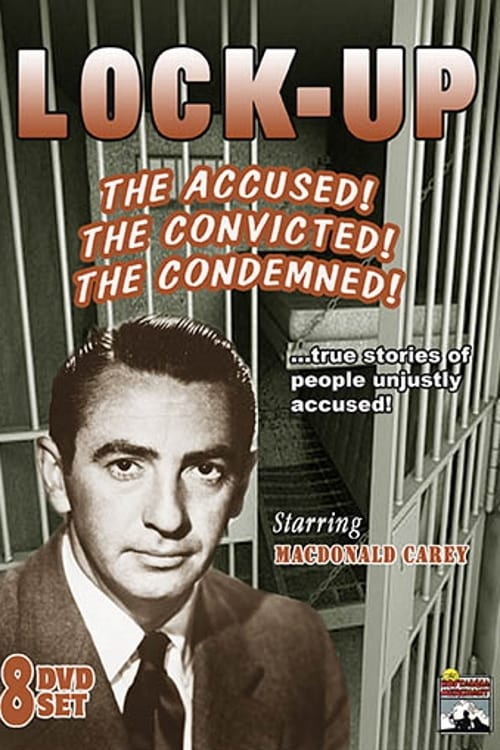
Carey starred as crusading Herb Maris in the 1950s syndicated series Lock-Up. A total of seventy-eight episodes were made between 1959 and 1961.
Carey guest starred on Alfred Hitchcock Presents, Moment of Fear, Thriller ("The Devil's Ticket"), The United States Steel Hour, Insight, Target, Checkmate and The Alfred Hitchcock Hour.
Carey went to England to make the films The Devil's Agent (1962) and The Damned (1963), for director Joseph Losey.
Published work
Carey wrote several books of poetry, and a 1991 autobiography, The Days of My Life. For his contribution to television, Carey has a star on the Hollywood Walk of Fame, at 6536 Hollywood Boulevard.
Personal life
Carey was married to Elizabeth Heckscher from 1941 until their divorce in 1969. They had six children: Lynn, Lisa, Stevens, Theresa, Edward Macdonald Jr., and Paul. Later, he dated Lois Kraines. The couple remained together from 1973 until Carey's death. His grandchildren include Ellie Diamond and Vytas and Aras Baskauskas. He has a godson, Maurice Heckscher.
Carey was a Roman Catholic, and a member of the Good Shepherd Parish and the Catholic Motion Picture Guild in Beverly Hills, California.
In September 1991, Carey had a cancerous tumor surgically removed from his lung.
Carey died on March 21, 1994, six days after his 81st birthday. He is buried at Holy Cross Cemetery in Culver City, California.
Awards and nominations
Daytime Emmy Awards
(1974) Daytime Emmy Outstanding Actor in a Daytime Drama Series for Days of Our Lives
(1975) Daytime Emmy Outstanding Actor in a Daytime Drama Series for Days of Our Lives
Soap Opera Digest Awards
(1984) Soap Opera Digest Award Outstanding Actor in a Mature Role in a Daytime Serial for Days of Our Lives
(1985) Soap Opera Digest Award Outstanding Actor in a Mature Role in a Daytime Serial for Days of Our Lives
(1990) Soap Opera Digest Editors Choice award