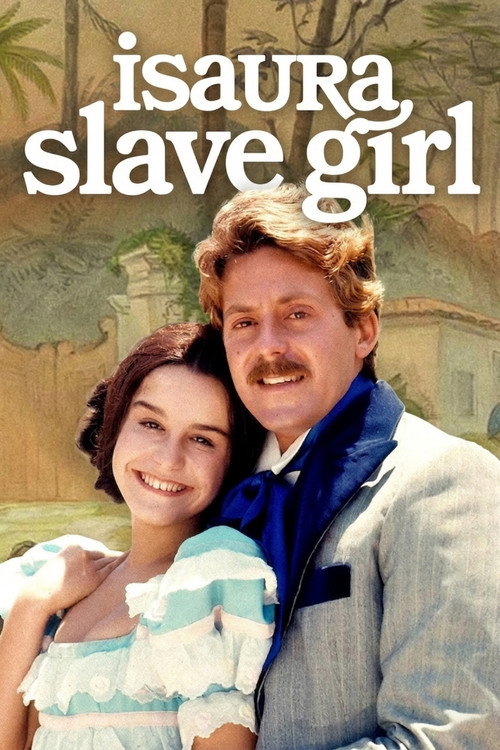




Maria Lucélia dos Santos (born 20 May 1957) is a Brazilian actress, director and producer. She received international acclaim for her leading role in the 1976 Rede Globo telenovela Isaura, The Slave Girl, broadcast in over 80 countries.
Contents
Biography
Maria Lucélia dos Santos was born in Santo André, São Paulo, to Maurílio Simões dos Santos and Maria Moura dos Santos. Her parents were both blue collar workers. She has two siblings: Maurílio Wagner and Cristina Santos, also an actress.
At age 9, Lucélia heard actress Cacilda Becker on the radio calling children to do an audition for a role in one of her plays, but her mother did not allow her to perform. She had developed a taste for performing arts since she had seen the play A Moreninha, starring Marília Pêra, on a school trip. Lucélia was completely fascinated by the show and decided that she would be an actress for the rest of her days.
Career
She made her stage debut at the age of 14, in the children's play Dom Chicote Mula Manca e seu fiel companheiro Zé Chupança, replacing actress Débora Duarte, who had moved to Rio de Janeiro in order to star in the Rede Globo telenovela Bicho do Mato. She was then invited by Eugênio Kusnet to participate in his intensive two-year performing arts course. After the course, Lucélia acted in a production of Godspell, which was presented in a circus tent in the Rio de Janeiro neighborhood of Botafogo. She finished high school in Rio, where she took the vestibular test for Medicine by an imposition of her father. She failed to enter in the university, since she was already deeply involved with her acting career.
Lucélia worked as a receptionist at a weight-loss clinic before starring in productions of the plays The Rocky Horror Show and Transe no 18. Due to her early stage success, Lucélia was invited to star in the film Paranóia in 1976, at the age of 19. After three other small roles in unsuccessful films, that same year she landed the leading role in Escrava Isaura, which tells the story of the struggle of a white-skinned black slave to find happiness during the Brazilian Empire. The telenovela, based on the novel of the same name by 19th-century abolitionist writer Bernardo Guimarães, is the most dubbed program in the history of world television, according to a research conducted by Good Morning America. Prior to being invited for the leading role by writer Gilberto Braga and director Herval Rossano, Lucélia had been turned down by Globo several times. She even landed a role in Estúpido Cupido, but that was wrapped up due to financial reasons.
Escrava Isaura achieved worldwide success. It became the most popular program in the history of Polish television at the time of its original broadcast, reaching more than 81 percent of share. It was the first show starred by a non-Chinese leading actress broadcast in the People's Republic of China, in addition to being the first telenovela shown in the former Soviet Union, where it had a broad appeal. The word "fazenda" (Portuguese: farm) jokingly became a synonym for the small land properties given by the government through its perestroika economic program. In the show, "fazenda" is used as a synonym for plantation.
In 1980, in an attempt to break with the image of "Brazil's sweetheart", acquired with her role in the telenovela, she posed nude for the Brazilian version of Playboy. The April issue of the magazine sold extremely well. It was, however, in the movies that her attempt would succeed. Controversial playwright Nelson Rodrigues invited Lucélia to star in the film adaptation of his play Bonitinha mas Ordinária. Knowing that was the perfect chance to break the good girl typecast, she accepted. She would later act in two other adaptations of Rodrigues' plays: Engraçadinha and Álbum de família.
Personal life
She was married to classical composer and conductor John Neschling, whom she divorced. Their son, Pedro Neschling (born June 28, 1982), is also an actor.
Lucélia has always been a friend of President Luiz Inácio Lula da Silva, since her parents' house was located in front of the Santo André labor union headquarters, where then metallurgist Lula began his political career. Her involvement with the Workers' Party emerged in the late 1970s, when some outlawed from the military regime began to return to Brazil and continues until the present day. She was engaged in all of Lula's presidential campaigns. In addition to her support of the Workers' Party, Lucélia was also one of the first artists to support the Green Party, raising awareness to the problems of deforestation. She has also supported Diretas Já and breastfeeding.
Filmography
As an actress
Motion pictures
1976: Um Brasileiro Chamado Rosaflor
1976: O Ibraim do Subúrbio
1976: Já Não Se Faz Amor Como Antigamente
1976: Paranóia as Lúcia Riccelli
1977: A Ordem Natural das Coisas as Ciça
1980: Romeu e Julieta as Julieta
1981: Bonitinha Mas Ordinária as Maria Cecília
1981: Engraçadinha as Engraçadinha
1981: Álbum de Família as Gória
1982: Luz del Fuego as Luz del Fuego
1982: O Sonho Não Acabou as Lucinha
1983: Alice & Alice as Alice Maria
1985: Fonte da Saudade as Bárbara/Guida/Alba
1986: Baixo Gávea as Clara
1986: As Sete Vampiras as Elisa Machado
1989: Kuarup as Lídia
1993: Vagas Para Moças de Fino Trato as Lúcia
1993: Menino de Engenho as Clarice/Maria Menina
2001: Três Histórias da Bahia
2003: O Ovo
2008: Um Amor do Outro Lado do Mundo as Luiza
As a director
2001: Timor Lorosae: The Unseen Massacre (documentary film)
1997: O ponto de Mutaçâo da China Hoje (television miniseries)
Awards and recognitions
Lucélia has won numerous awards inside and outside of Brazil. In Brazil, she won the Brasília Film Festival Candango trophy for Best Actress for her performances in the films Engraçadinha (1981) and Vagas Para Moças de Fino Trato (1993). In 1982 she won the Kikito trophy for Best Actress for her performance in Luz del Fuego at the Gramado Film Festival. In 2002, her documentary Timor Lorosae received the Audience Award at the Recife Film Festival.
In addition to becoming the first actress to receive the Golden Eagle Award for Best Foreign Actress in China, in 1985, Lucélia was honored with the Jewel of China medal in 2004 for her efforts in bringing together the Chinese and Brazilian cultures. She was in Fernando Henrique Cardoso's presidential entourage to China, where she was warmly greeted by Prime Minister Deng Xiaoping.