Cast
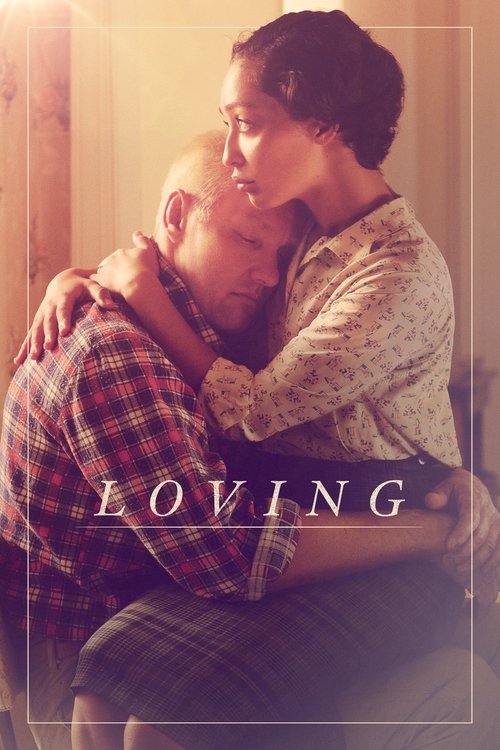
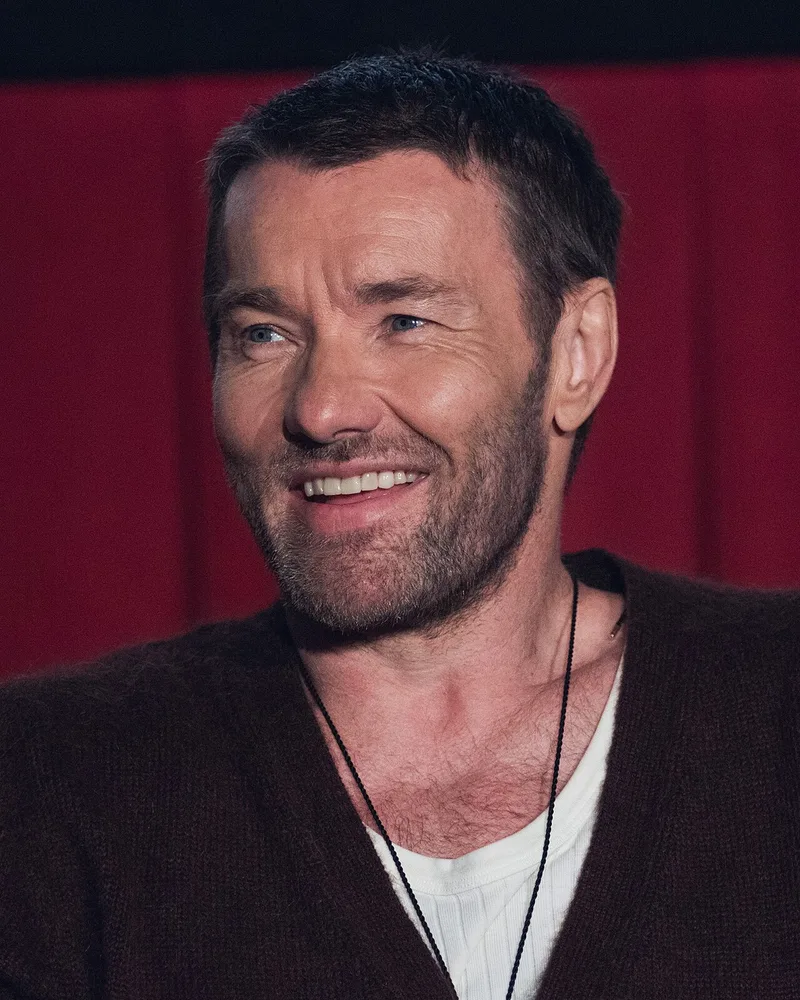
Joel Edgerton as Richard Loving: a taciturn, white Virginian bricklayer, and the husband of Mildred. On the character of Richard, Nichols stated, "[Richard] speaks in a clipped manner, then it's the way he holds his head in front of the rest of the body, how self-conscious he seemed in front of the camera. He'd laugh and quickly cover his lips over his [tobacco-stained] teeth. He's a bricklayer ... they're hunched over all day long, and they turn their bodies into these assembly lines for laying brick. What I gave [Edgerton], in terms of coherent character on the page, he added specificity." When describing Richard, Edgerton stated that he "... was a quiet hero, and sometimes quiet dignity speaks louder than the typical movie hero who's all too eager to fight." He spoke of some of the challenges in portraying Richard, such as the Virginian accent, in which he stated, "The importance of the story itself, not to treat it with kid gloves but to maintain a reverence for the truth, for the responsibility we felt toward these real people. And conveying so much with so few words was one of the biggest challenges." To capture the physical quality of Richard, Edgerton bleached his hair, adopted a receding hairline, and wore prosthetic teeth. He spoke of the influences in Errol Morris' The Thin Blue Line (1988), recommended by Nichols, which assisted in his finding of Richard's accent. He was drawn to Nichols' version of the character, as according to him he was: "just shut down and emasculated and weathered by this situation" while Edgerton noted the version was keeping more in line with the man in Buirski's The Loving Story (2011). Both Nichols and Edgerton felt the main challenge of bringing Richard to the screen was the question of where he fell on the intellectual spectrum, as Richard was not well educated nor naturally gifted, and may not have understood the case's complexities or its social ramifications, with both actor and director holding conversations on the subject. Edgerton spoke of Richard, the difficulty in holding an accent with a taciturn approach, while referring to roles of the past: "With a character like John Connolly of Black Mass (2015), you really get to fly on the rhythm of an accent, and the rhythm is so much a part of what an accent is. When you don't have much to say, it's hard to latch onto that cadence." Edgerton also involved himself in bricklaying to prepare for the role, and while speaking of his experience he remarked that he began to fully understand Richard's posture: "Suddenly it made sense because of the mechanics of his work ... Here was a man who looked awkward in his own body because he was so used to conserving energy. A man who slumped because he spent his days hunched over a pile of bricks." In an interview with People, Edgerton spoke of Richard and Mildred's daughter Peggy: "Peggy is as shy as her father and we were really just hoping for her acceptance and her blessing, which I think we got. One day on set she called me 'Daddy' and it was like the greatest blessing I've ever had."
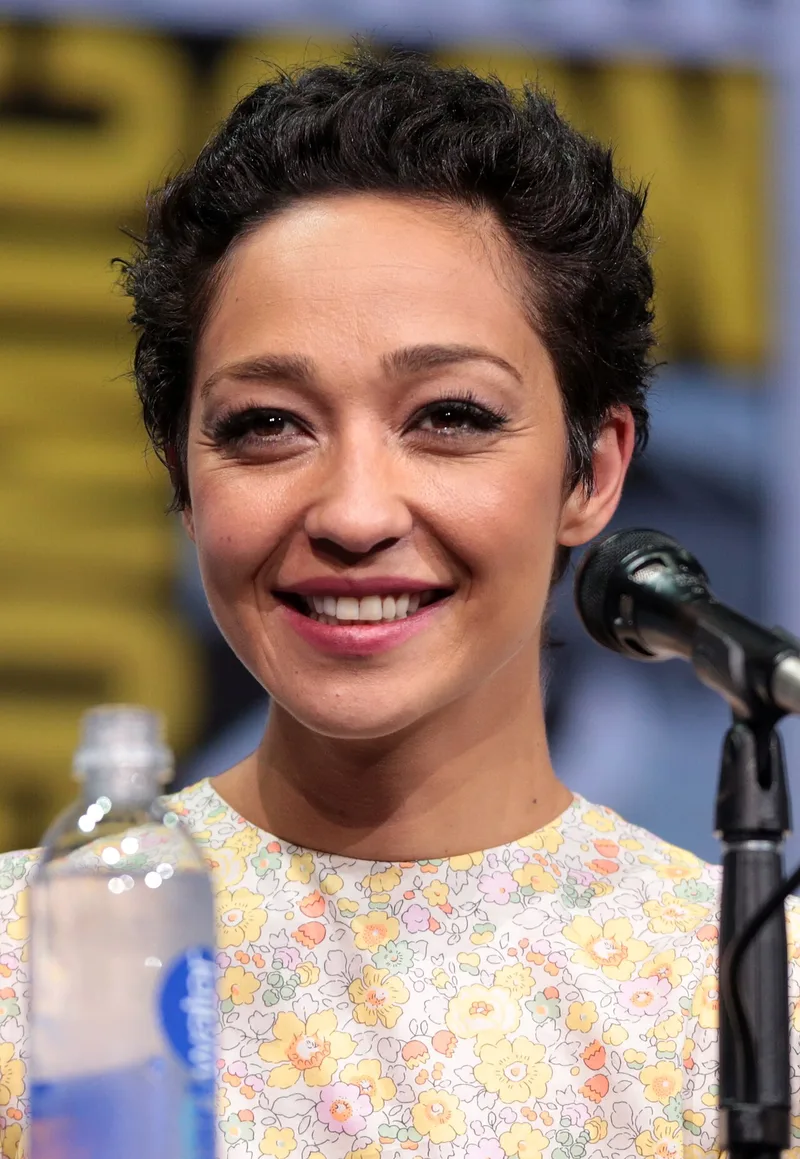
Ruth Negga as Mildred Loving: a sweet, soft-spoken young woman of black and Native American ancestry, whose marriage to Richard violated the state's anti-miscegenation law. During 2013, while preparing for Midnight Special, casting director Francine Maisler suggested Negga to Jeff Nichols and Sarah Green. Negga was the first person director Nichols auditioned for the role and he revealed that he thought she was too petite when he first met her, but her acting abilities changed his mind, wherein he stated, "She spoke in Mildred's voice. She held her mouth like Mildred ... I wasn't looking for star power. I was looking for great actors." After she successfully auditioned for the role of Mildred, Nichols sent Negga excerpts of his yet-to-be-finished screenplay and a copy of Nancy Buirski's The Loving Story (2011). Of Negga's audition, Nichols stated, "Ruth had the voice, she had the posture, the facial expressions. It wasn't until after we were done and I started to speak with her that I realized she had an Irish accent ... She was Mildred. When she left the room I turned to [Green] and [Maisler] and said, 'Well, do we really have to see anyone else?'" On what attracted her to Nichols' film, and the part of Mildred, Negga stated, "I've never seen that kind of story told in this manner before. You know, the screenplay is so beautiful and I wanted very much to be part of that. Having become familiar with them, I think their story needs to be told and shared and honored and celebrated." On the character of Mildred, Negga stated, "Mildred was the spine of the couple. She saw what maybe Richard didn't want to see, that they weren't going to get out of this by running away or putting their heads in the sand. She was a very astute woman. After those five days in jail, she realized that the fairy tale was over." Negga spoke of the personal connection she felt to the Lovings' story, because of her own background as a mixed-race person. Nichols invited Negga and Edgerton to Virginia for two weeks to visit the various locations, do prep work, and visit special places related to Richard and Mildred, two weeks prior to post-production. Negga deeply identified with Mildred's sense of connection to a place, with her drawing comparisons to Limerick, Ireland and Richmond, Virginia, by her stating that: "Virginia isn't that different from Ireland ... Land and home and community are super important. When I was playing her, I tried to imagine I couldn't go home again because of whom I married. It must have drained the lifeblood from her." On the unassuming couple, Negga stated, "They were poor, relatively uneducated. Mildred was a bit more educated than he was, but I think everyone else underestimated their tenacity, their belief in themselves, their love for each other, and their respect for each other." In an interview with The Boston Globe, Negga spoke of having "already been gifted, personally" by playing Mildred and getting to know her surviving family, to which she later remarked, "She's my hero. But what's important is that people are coming out of this movie genuinely moved because what they see is kindness. In many ways, [Mildred] would have been uncomfortable [by the attention] but their legacy is important ... I think schoolchildren will know their names."
Marton Csokas as Sheriff Brooks: A powerful local figure whom everybody in Caroline County knew and feared. One of the more difficult roles to cast was that of Sheriff Garnett R. Brooks, with Nichols himself not seeing Brooks as the bad guy of the story or even as a nemesis to the couple, noting that the lawman's beliefs about race and marriage were commonplace. Nichols explains: "I see Sheriff Brooks as being part of the equation ... Having grown up in Arkansas, I have family members that are racists. It's not something I'm proud of, but I understand how these attitudes are perpetuated, and that everyone sets, or has set, their own point of view." He explains the beliefs of Brooks, in which he expands, "Brooks was quoted as saying 'a robin's a robin, a sparrow is a sparrow,' and he believed that. It was important that Brooks not be played as the slack-jacked and mean Southern sheriff stereotype." Joel Edgerton suggested Marton Csokas for the role of Brooks. After meeting Csokas, Nichols was intrigued by his perspective on the part. He remembers, "Marton saw Sheriff Brooks as seeing himself as an adult dealing with wayward children. They were born and raised in a part of the South that didn't necessarily see the lines between color, and his stance was, God put those lines there." For the role of Sheriff Brooks, Csokas pored over published records and spoke to family members, to which he remarked, "From the home perspective, here was a husband and father who was a hardworking, loyal, strict human being who loved his family and animals, and was a stickler for the law. The statements Sheriff Brooks makes are indicative of the status quo and what people believed. That was the law at the time. So he was doing his job to the nth degree, which is important to quantify." In an interview with Entertainment Weekly, Colin Firth spoke of the daughter of Sheriff Garnett Brooks, Betty Cwiklinski, offering her services while post-production took place, in the form of her father's old uniform, but it couldn't be used as it didn't fit Csokas. Firth stated that Cwiklinski said, "He was like that, he did say that stuff." He concluded by mentioning her thoughts on her father: "She thought he was misguided but he was still a human being. And she made that stipulation. There's a real sense even among the locals to want to address that side of their history."
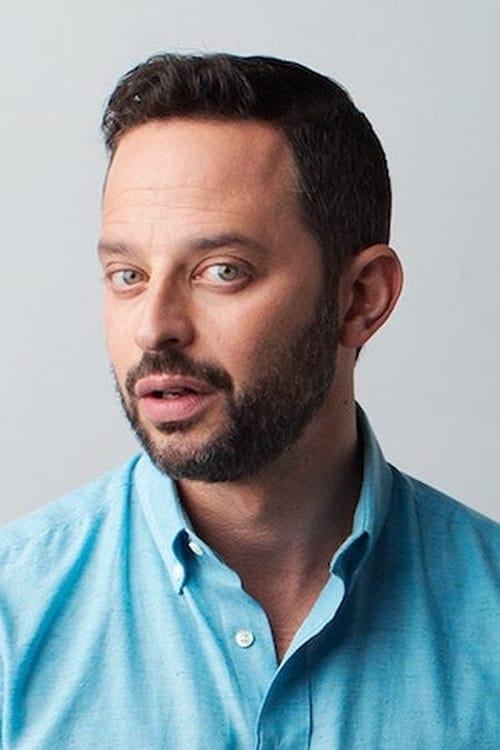
Nick Kroll as Bernie Cohen: A young ACLU volunteer attorney who represents Richard and Mildred Loving. In 2014, while watching television in New Orleans during the filming of Midnight Special, Nichols was struck by the realization that Nick Kroll looked remarkably like Bernie Cohen, to which Nichols noted, "I went online and watched more of [Kroll], and began to envision him as a good fit for Bernie." Nichols furthered his remark on his inspired choice of Kroll, "... Then you find out Jules Kroll went to Georgetown Law just like Bernie Cohen did. I don't know. It just started to make sense. He came to Austin to see me and talk about the part. Honestly, I just thought it was an inspired choice." On the quality of Cohen, Nichols stated, "Bernie had this quality of performance ... It was like he was performing, but I also felt like it could happen in the scene where he first meets Richard and Mildred. There are no cameras in the room, but he is putting on a performance to persuade them that he is the right lawyer for their case, even if he isn't entirely sure of that himself. At the end of the scene, you see him sort of break character." Kroll was not only familiar with the Lovings' story but also with Nichols' work, with him stating, "I'd seen Take Shelter and Mud, and thought they were phenomenal movies. They are quite different from one another and yet you can still feel the larger hand at work; [Nichols] has a very special touch that he brings to his films. It was exciting to get the call that I was being considered for LOVING, because of this filmmaker and this subject." On taking the role of Cohen, Kroll began to remark, "The story of Richard and Mildred Loving is such a beautiful, important story about two people who love each other and that want to be together and were brave enough to go through the legal system to make that happen for themselves and in the end for millions of people ... So, in that regard, it seemed like something it would be an honour to be a part of." Kroll highlighted his own numerous ties to the Loving case: "Weirdly, my father went to Georgetown Law school almost exactly when Bernie was going there ... And my dad actually worked for Robert F. Kennedy while he was in school: he worked at RFK's office and then actually ran his campaign in Queens when he was running for president. And I went to Georgetown. So I had a number of weird connections to the whole thing, including the fact that I've played a defense lawyer before, a very different kind of defense lawyer, in that Rodney Ruxin represented the worst people in the world." In an interview with The Hollywood Reporter, Kroll spoke of the presidential election, while stating, "I think a lot of people see hope in [Richard and Mildred Loving's story]. They see the power of the individual and their ability to make change in the country outside of the system."
Michael Shannon as Grey Villet: A freelance photographer who is commissioned by LIFE Magazine to create a photo essay on the Lovings. Nichols sent Shannon the script, although the two hadn't spoken about what role he was potentially going to play. Nichols also mentioned that he didn't envision Shannon as portraying Richard Loving, to which he states, "... When I found these photos of this Life photographer, he was a tall guy–like six foot four– and he kind of looked like Mike. And as you'll see when you see the film, he's kind of gregarious. And I'd seen Mike in this one man play called Mistakes Were Made ... And he was kind of gregarious in this play, and it's a side of him that not a lot of people have seen." Nichols concludes by remarking of Shannon's Grey that "... he enters people's lives and very quickly has to ingratiate himself to them. Like he becomes their friend, so that he can take these really delicate photos." Shannon spoke of being on set for one day, and of the fact his scenes were shot in order, wherein he stated, "... we shot the scene in the yard first. It was also the hardest to shoot because it started to rain, and then we kept stopping and starting." He later explained that "[Nichols] wasn't sure whether to shoot it in the rain or not. Once we got to the dinner scene, that went fast. We did the couch scene, and I was done." Loving marks the fifth collaboration between Shannon and Nichols.
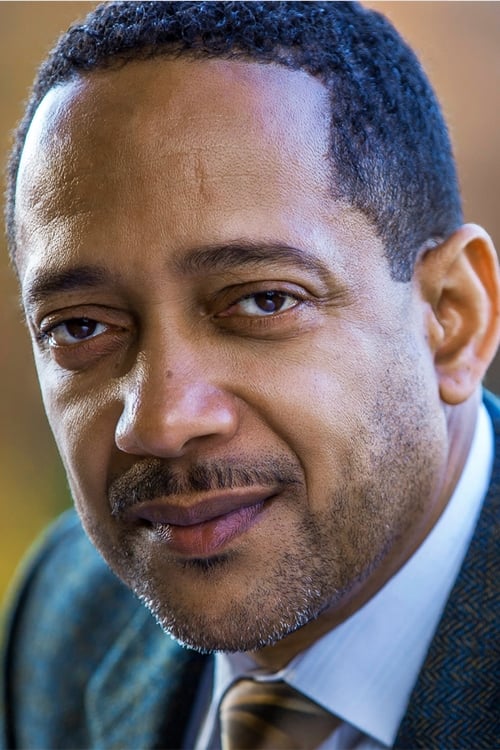
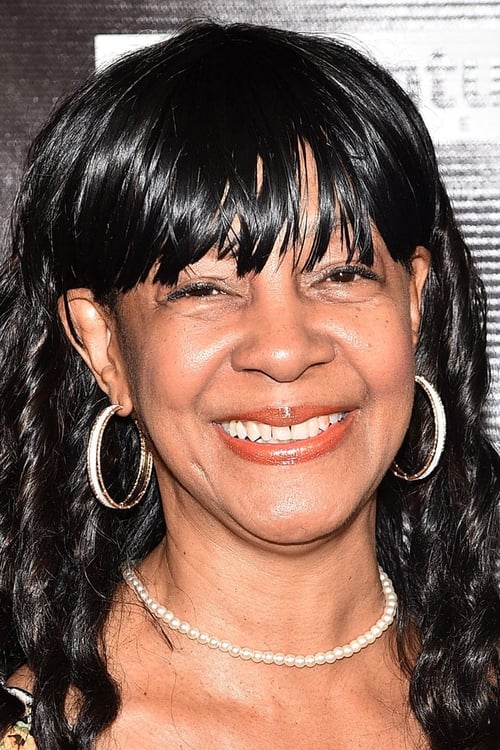
Additionally, Terri Abney is introduced as Garnet Jeter, the sister of Mildred; Alano Miller appears as Raymond Green, the best friend of Richard; Jon Bass appears as Phil Hirschkop, a Virginia civil rights lawyer, and associate of Bernie Cohen; Bill Camp appears as Frank Beazley, a former lawyer to the Lovings; David Jensen appears as Judge Bazile, the Caroline County judge who indicted the Lovings in 1958 for violating Virginia's Racial Integrity Act; Sharon Blackwood appears as Lola Loving, Richard's mother; Christopher Mann appears as Theoliver Jeter, Mildred's father; Winter-Lee Holland appears as Musiel Byrd-Jeter, the mother of Mildred; Michael Abbott Jr. appears as Deputy Cole, one of the law officers charged with arresting the couple; Chris Greene appears as Percy Fortune, a good friend of the Lovings, in particular, Richard; Will Dalton appears as Virgil, a very loyal friend to Richard.