




The Los Angeles Fire Department (LAFD or LA City Fire) is the full-service fire department of the city of Los Angeles, California, United States, and of the city of San Fernando, California, United States, via contract.
The department provides fire suppression services, technical rescue services, emergency medical response services, and hazardous materials response services to the residents of the city of Los Angeles. The LAFD is responsible for approximately four million people who live in the agency's 471 square miles (1,220 km2) jurisdiction. department was founded in 1886 and is the third-largest municipal fire department in the United States, after the New York City Fire Department and the Chicago Fire Department. The department is sometimes also referred to as the "Los Angeles City Fire Department" or "LA City Fire" to distinguish it from the Los Angeles County Fire Department, which serves unincorporated areas and, via contracts, other incorporated municipalities within Los Angeles County without their own fire departments.
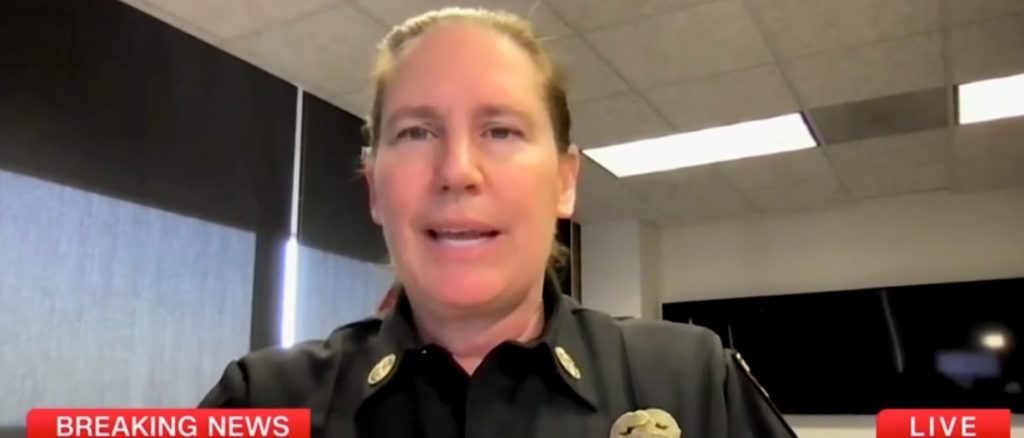
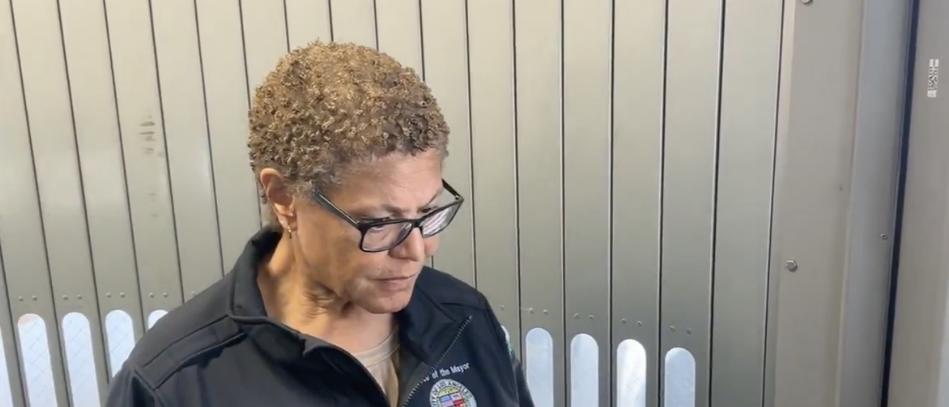
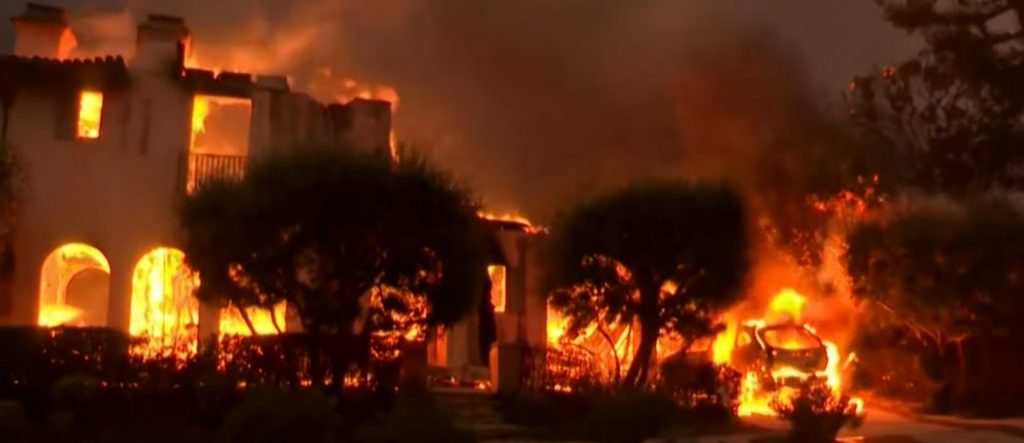
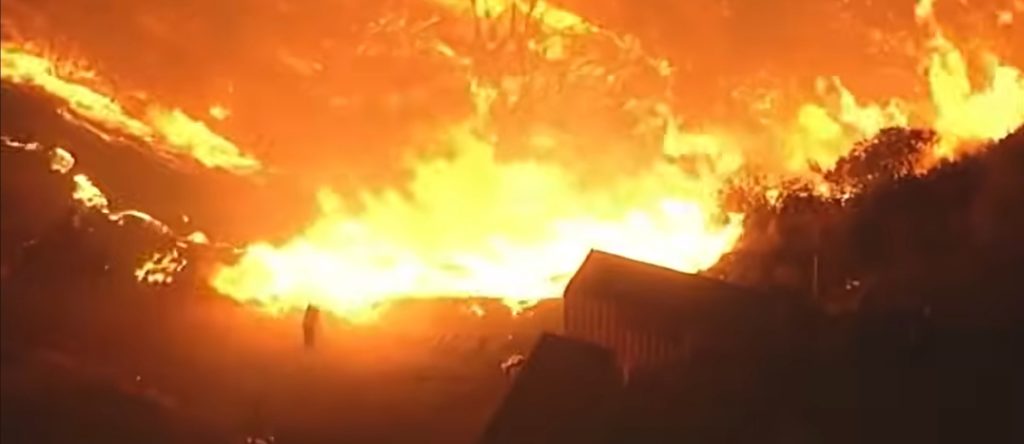
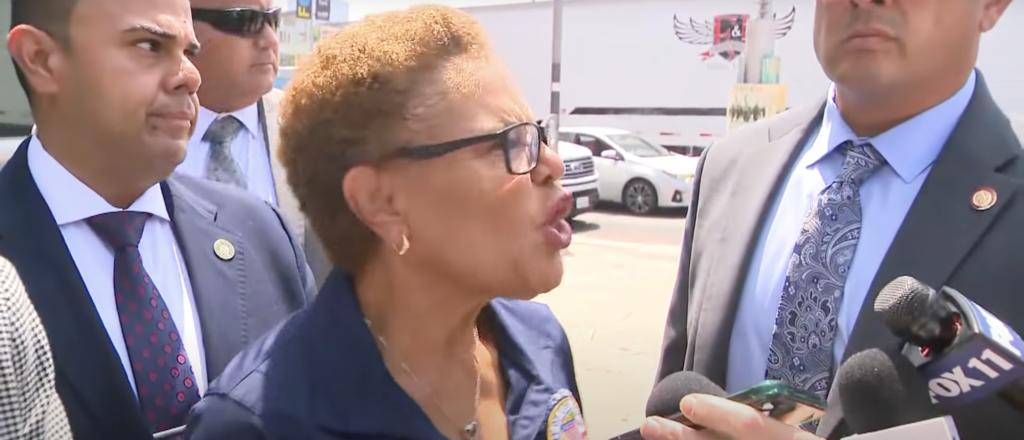
The department is currently under the command of Jamie Moore, after former LAFD chief Kristin Crowley was fired by Los Angeles mayor Karen Bass following the 2025 Southern California wildfires for refusing to write an after-action report.
Contents
History
The Los Angeles Fire Department has its origins in 1871. That September, George M. Fall, the county clerk for Los Angeles County, organized Engine Company No. 1. It was a volunteer firefighting force with an Amoskeag fire engine and a hose jumper (cart). The equipment was hand-drawn to fires. In the spring of 1874, the fire company asked the Los Angeles City Council to purchase horses to pull the engine. The council refused, and the fire company disbanded.
Many of the former members of Engine Company No. 1 reorganized under the name of Thirty-Eights No. 1 in May 1875, Engine Co. No. 2 was organized under the name Confidence Engine Company.
Los Angeles acquired its first "hook and ladder" truck for the Thirty-Eights. It proved to be too cumbersome and was ill-adapted to the needs of the city. It was sold to the city of Wilmington. In 1876, another hook and ladder truck was purchased, serving in the city until 1881.
In 1878, a third fire company was formed by the residents in the neighborhood of Sixth Street and Park. It was given the name "Park Hose Co. No. 1". East Los Angeles formed a hose company named "East Los Angeles Hose Co. No. 2" five years later. The final volunteer company was formed in the fall of 1883 in the Morris Vineyard area. This company was called "Morris Vineyard Hose Co. No.3."
All of these companies remained in service until February 1, 1886, when the present paid fire department came into existence.
In 1877, the first horses were bought for the city fire department. It would continue to use horses for its equipment for almost fifty years, phasing out the last horse-drawn equipment on July 19, 1921.
By 1900, the department had grown to 18 fire stations with 123 full-time paid firefighters and 80 fire horses. The city had also installed 194 fire-alarm boxes, allowing civilians to sound the alarm if a fire was spotted. 660 fire hydrants were placed throughout the city, giving firefighters access to a reliable water source.
Modern day
A 2021 Los Angeles Times investigation revealed that more than 54 percent of all fires requiring an LAFD response were associated with homelessness. Most are unintentional, resulting from the use of open-flame cooking equipment or campfires near tents and other flammable materials. Until June 2024, the city could not prohibit unhoused people from performing vital activities like cooking, and attempts to remove encampments from high-risk areas had been blocked by the United States Court of Appeals for the Ninth Circuit, which had ruled that the city was obligated to provide housing for the residents of a removed encampment.
About a third of homeless-related fires are classed as arson by the LAFD. The LAFD only forwards arson cases to the Police Department for investigation when there is significant property damage or they believe the victim was being targeted. Thus, very few homeless-related arsons are prosecuted. The problem of homeless-related fires becomes more grave with each passing year:
In 2021, Los Angeles had, on average, 24 homeless-related fires every day (more than 54% of all fires).
In 2024, Los Angeles had, on average, 46 homeless-related fires every day.
Organization
Administration
Administration has the official office for the fire chief of the department, with CAD designation of "FC1" and radio designation of "fire chief". The fire chief reports directly to the Board of Fire Commissioners.
Executive Bureau / chief of staff
Executive Bureau/chief of staff is commanded by a deputy chief (bureau commander) who holds the title of chief of staff. The chief of staff is assisted by an executive administrative assistant II and senior management analyst I. In 2022, the Executive Bureau was changed from the previous name of Administration Bureau.
Types of apparatus
The department utilizes a wide array of apparatuses and equipment. These are most but not all of the apparatus.
Triple combination engines
The triple combination fire engine or "triple" (as it is commonly called) is the most common type of firefighting apparatus in Los Angeles. The term "triple combination" refers to the apparatus having three components: a water tank, high capacity water pump, and hose. The triple can be found as a one-piece engine company or as two engines assigned to a task force station. The "triples" used by the LAFD have a direct drive, dual centrifuge main pump rated at 1,500 GPM at 150 psi with a 10-foot lift through a 6-inch suction. These apparatuses carry a combination of all of the following sizes of hose: 4″, 21⁄2″, 1 3/4″, 1 1/2″ and 1″. The standard hose load is 750' of 4", 750' of 2 1/2" with a 325GPM nozzle, 400' of 1 3/4" with a 200 GPM nozzle, 400' of 1 1/2" with a 125 GPM nozzle and 500' of 1" with a dual gallonage 10/40 GPM nozzle. The water tank carrying capacity of all LAFD engines is 500 gallons. All frontline engines are equipped with a 30-gallon Class A foam injection system with the exception of Engine 51 at LAX that carries Class B foam in the onboard system.
All Engine Companies have a wide range of Fire Suppression Tools and Equipment along with a wide variety of Basic Rescue and Medical Equipment.They are Staffed by an Engine Company Driver who is also responsible for manning and managing the pump,an officer (Captain) and Two Firefighters.
Light forces and task forces
The LAFD uses the concept of light forces and task forces, which can be considered one "resource", although comprising more than one unit or company.
A light force is composed of a pump engine (200 series, for example Engine 201 or Engine 301 for 100 stations) and a ladder truck. Light forces almost always respond together as one unit or resource.
A task force is simply a light force coupled with an engine. An engine company is considered a single unit or "resource" when responding to incidents on its own. A task force usually responds to larger incidents, such as structural fires, and is made up of an engine, a 200 series engine (pump), and a truck, all operating together. While a standard engine is always staffed with a full crew, a 200 series engine (pump) is only staffed by a driver (and one other firefighter if responding as part of a light force). The purpose of the 200 series engine (pump) is to provide support and equipment to the truck in a light force, and either the truck company or the engine company in a task force.
Rescue ambulances
Rescue ambulances (RAs) are often called"rescues"for short.They can be considered either paramedic Staffed/advanced life support (ALS),or emergency medical technician Staffed/basic life support (BLS) units.Ambulances numbered 1-112 are frontline advanced life support units.They are staffed by two firefighters/paramedics,while those in the 200 series are advanced life support reserve units. Ambulances in the 800s and 900s are basic life support units staffed by two firefighter EMTs, with 900-series units assigned to stations identified numerically over 100.The Rescue Ambulances have a wide range of Specialized Medical Equipment on board including Cardiac Monitors and Defibrillators,Cardiac Drugs,Intubation And Airway Management Supplies and other Equipment for Medical Responses.
Helicopters
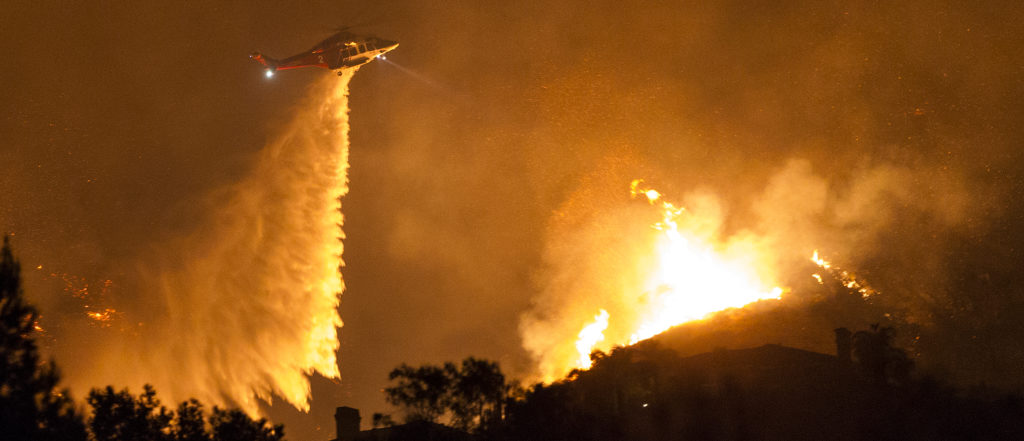
The Air Operations Section (AIROPS) of the LAFD operates out of Fire Station 114 at Van Nuys Airport (KVNY). The helicopter fleet consists of five medium duty and two light duty helicopters, making the department capable of handling brush fire suppression, air ambulance transport, high rise fire response, and hoist rescues.
FIRE 1, FIRE 2, FIRE 3, FIRE 4, and FIRE 5 are all AgustaWestland AW139s. FIRE 6 and FIRE 7 are both Bell 206 B-III Jet Rangers.
The department previously operated Bell 205 and Bell 412 types, the last of which was retired in 2017 to make way for the newer AW139s.
Fireboats
The Port of Los Angeles is under the jurisdiction of the LAFD which operates 5 fireboats to provide fire protection for ships and dockside structures. Fireboat 1, Fireboat 3 and Fireboat 5 are identical 39-foot (12 m) long aluminum fireboats capable of a top speed of 29 knots (33 mph; 54 km/h) while fully loaded. They are equipped with a 2,400 US gal/min (9,100 L/min) pump and a 1,000 US gal/min (3,800 L/min) deluge gun. They also have a 50-US-gallon (190 L) firefighting foam capacity.
Fireboat 4, also known as the Bethel F. Gifford, was commissioned in 1962 and is the oldest of the fleet. It is capable of pumping water at 9,000 US gal/min (34,000 L/min) and carries 550 US gallons (2,082 L) of foam solution for petrochemical fires. It is equipped with jet-stream nozzles to allow for increased maneuverability.
The newest and most technologically advanced of the fireboats is the 105-foot (32 m) long Fireboat 2, also known as the Warner Lawrence, which has the capability to pump up to 38,000 US gallons per minute (140,000 L/min) up to 400 feet (120 m) in the air. Boat 2 also has an onboard area for treatment and care of rescued persons.
California Task Force 1
The Los Angeles Fire Department is the founding member of one of California's eight FEMA Urban Search and Rescue Task Forces. California Task Force 1 (CA-TF1) is available to respond to natural or man-made disasters around the country and world and assist with search and rescue, medical support, damage assessment and communications.
Command structure
The LAFD is divided into four operational Bureaus: Operations Central Bureau (OCB), Operations West Bureau (OWB), Operations South Bureau (OSB), formerly known as South Division, and Operations Valley Bureau (OVB), formerly known as North Division. Each bureau is commanded by a deputy chief, who holds the title of bureau commander. Each bureau also has an assistant chief who serves as the assistant bureau commander. To replicate the former North and South Division, Operations Central Bureau (OCB) and Operations Valley Bureau (OVB) also have three additional assistant chiefs who work 24-hour platoon duty. These assistant chiefs staff marked Dodge RAM SUVs and respond to major incidents - assistant 2 for Operations Central Bureau (OCB) and assistant 4 of Operations Valley Bureau (OVB).
Operations Central Bureau comprises three battalions and 22 fire stations. Battalion 1 (8 fire stations), Battalion 2 (8 fire stations) and Battalion 11 (6 fire stations). Operations Central Bureau headquarters are located at Fire Station 3 located in Civic Center and Bunker Hill.
Operations West Bureau comprises three battalions and 21 fire stations. Battalion 4 (7 fire stations), Battalion 5 (7 fire stations) and Battalion 9 (7 fire stations). Operations West Bureau headquarters are located at Fire Station 82 located in Hollywood
Operations South Bureau comprises three battalions and 25 fire stations. Battalion 6 (11 fire sStations), Battalion 13 (8 fire stations), Battalion 18 (6 fire stations). Operations South Bureau headquarters is located at the San Pedro Municipal Building (638 South Beacon Street, Suite 374).
Operations Valley Bureau comprises five battalions and 31 fire stations. Battalion 10 (9 fire stations), Battalion 12 (7 fire stations), Battalion 14 (7 fire stations), Battalion 15 (8 fire stations) and Battalion 17. Operations Valley Bureau headquarters is temporarily located at Fire Station 83 in Encino.
Each of the four operational bureaus house a number of battalions. These battalions are staffed by uniformed personnel who rotate on a 24-hour platoon duty. Each battalion is commanded by a battalion chief, who responds to major incidents within their battalion, usually 20-30 square miles in size. They have the responsibility of commanding these scenes as the Incident Commander (IC). Battalion chiefs drive a Dodge RAM SUV to emergency incidents.
In pop culture
The LAFD has been featured in many TV shows, movies, and video games. Sometimes the LAFD or LAFD equipment is just seen in the background.
(1974) Firehouse, starring James Drury
(1981–1982) Code Red, starring Lorne Greene
(1995–2000) LAPD: Life on the Beat, the fire department was featured often responding to various emergency calls with the "LAPD".
(1999) Rescue 77
(2004) Grand Theft Auto: San Andreas, appears as Fire Department of San Andreas
(2013) Grand Theft Auto V, appears as Los Santos Fire Department
(2015) San Andreas, Dwayne Johnson plays a rescue helicopter pilot who works for the LAFD.
(2018–present) 9-1-1, the show's main characters work for the LAFD in the fictional station 118.
(2018–present) The Rookie, the show's main character dates a firefighter who works for the LAFD.