Directing
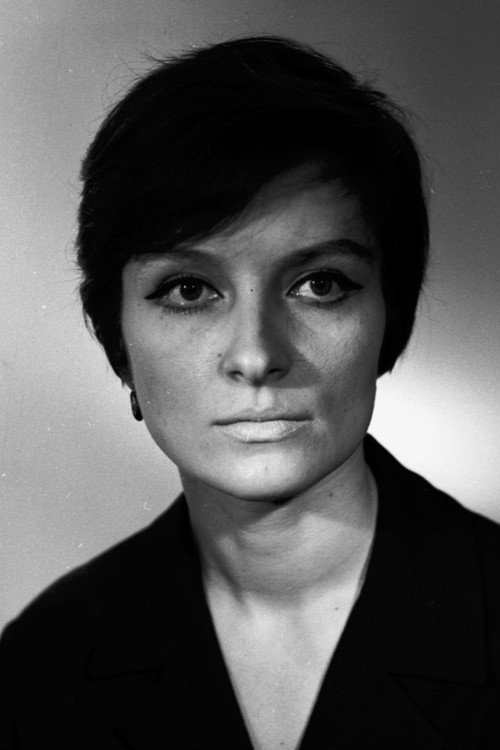
Shepitko graduated from VGIK in 1963 with her prize winning diploma film Heat, or Znoy, made when she was 22 years old. In the film, Kemel, a recent school graduate, travels into an isolated part of the steppes to work in a small communal farm camp in Central Asia during the mid-1950s. The film was influenced by a short story, "The Camel's Eye", by Chingiz Aitmatov. Her film showed Dovzhenko's impression, both in its parched setting and its naturalistic style. During the editing phase of the film, Shepitko was helped by Elem Klimov who also was a student at VGIK at that time. The two would later marry and have a child. During the filming of Heat, Shepitko contracted Hepatitis A and oftentimes she would direct portions of the film from a stretcher. Temperatures on locations could reach upwards of 50 degrees Celsius which caused the film to melt inside of the camera numerous times. Heat won the Symposium Grand Prix ex aequo at the Karlovy Vary IFF in 1964 and an award at the All-Union Film Festival in Leningrad.
Shepitko's first post-institute film Wings concerns a much-decorated female fighter pilot of World War II. The pilot, now principal of a vocational college, is out of touch with her daughter and the new generation. She has so internalized the military ideas of service and obedience that she cannot adjust to life during peacetime. Shepitko brings to light the inner life of a middle-aged woman who must reconcile her past with her present reality. She expresses this by contrasting her character's repression, marked by claustrophobic interiors and tight compositions, with heavenly, expansive shots of sky and clouds, representing the freedom of her flying days. Actress Maya Bulgakova inhabits this stern but reasonable woman with empathy and humor. The film aroused considerable Soviet press controversy at the time, as films were not meant to depict conflicts between children and parents (Vronskaya 1972, p. 39). It started a public debate by acknowledging a generation gap and for painting a war hero as a forgotten, lost soul.
In 1967, she shot the second of the three episodes in a portmanteau film titled Beginning of an Unknown Era, made to commemorate the fiftieth anniversary of the October Revolution. Shepitko's episode, The Homeland of Electricity, follows a young engineer who brings electric power to an impoverished village. The film as a whole was judged by the authorities to show the Bolsheviks in an unflattering light, and was left unreleased. Two of the episodes, including The Homeland of Electricity, were found and shown publicly for the first time in 1987, but the film in its complete original form is believed lost.
In 1969, she shot her first color film, a musical-fantasy film titled In the 13th Hour of the Night, a New Year's revue starring Vladimir Basov, Georgy Vitsin, Zinovy Gerdt, Spartak Mishulin and Anatoly Papanov.
Shepitko's third film, You and Me, follows the lives of two male surgeons struggling with different notions of fulfillment. It is both a character study and a critique of consumerism. This was her second and last film in color. It was favorably received at the Venice Film Festival.
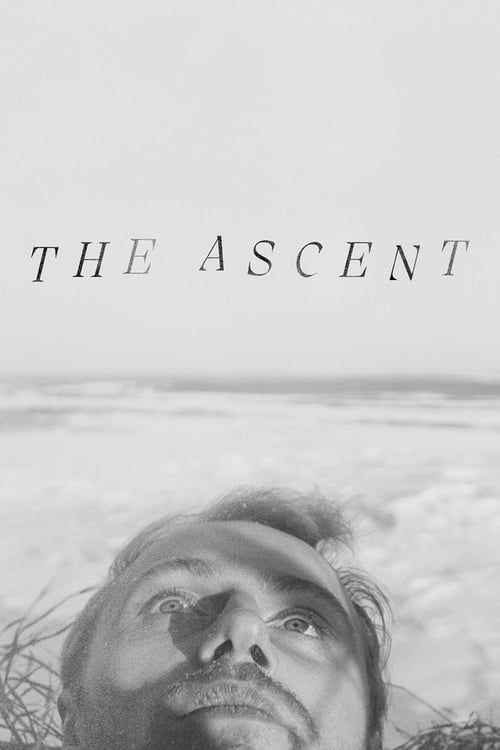
In 1977 Shepitko released The Ascent, her last completed film and the one which received the most attention in the West. The actors Boris Plotnikov and Vladimir Gostyukhin gained their first major roles in the film. Adapted from a novel by Vasili Bykov, Shepitko returns to the sufferings of World War II, chronicling the trials and tribulations of a group of pro-Soviet partisans in Belarus in the bleak winter of 1942. Two of the partisans, Sotnikov and Rybak, are captured by the Wehrmacht and then interrogated by a local collaborator, played by Anatoly Solonitsyn, before four of them are executed in public. This depiction of the martyrdom of the Soviets owes much to Christian iconography. The Ascent won the Golden Bear at the 27th Berlin International Film Festival in 1977. It was also the official submission of the Soviet Union for the Best Foreign Language Film of the 50th Academy Awards in 1978, and it was included in "1001 Movies You Must See Before You Die" by Steven Schneider.
Shepitko wanted the film to adhere to the authenticity of what Soviet soldiers would have experienced during World War II. The cast was derived of no-name actors whose backgrounds fit the characters she wanted them to portray. The film was shot in Murom during the severe winters of Russia where temperatures reached 40 degrees below zero. Shepitko refused any special treatment and only wore clothing that the cast wore to embody the suffering that they went through.
Shepitko's growing international reputation led to an invitation to serve on the jury at the 28th Berlin International Film Festival in 1978. Shepitko was offered a chance to direct in Hollywood, which she put off until she could improve her English. Shepitko's son Anton Klimov claims that Francis Ford Coppola screened his 1979 film Apocalypse Now to Shepitko before its release to get her thoughts on it.