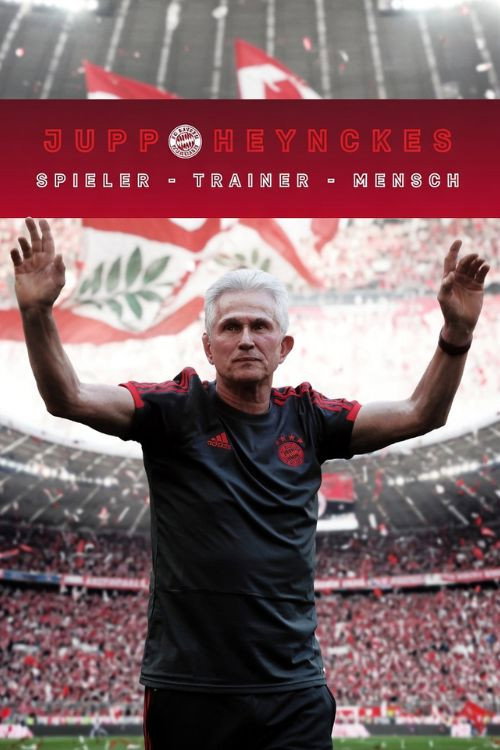




Josef "Jupp" Heynckes (German: [ˈjʊp ˈhaɪnkəs]; born 9 May 1945) is a German retired professional footballer and manager. For the majority of his playing career he was as a striker for Borussia Mönchengladbach in its golden era of the 1960s and '70s, when they won many national championships and the DFB-Pokal, as well as the UEFA Cup. During this period the team played in its only European Cup final in 1977, losing to Liverpool. He is the fourth-highest goalscorer in the history of the Bundesliga, with 220 goals. He was a member of the West Germany national team that won the UEFA Euro 1972 and the 1974 FIFA World Cup titles.
As manager, Heynckes won four Bundesliga titles with Bayern Munich and two UEFA Champions Leagues; with Real Madrid in 1997–98 and Bayern in 2012–13, the latter of which was part of a continental treble. He is widely regarded as one of the greatest managers of all time.
Contents
Early life
Josef Heynckes was born 9 May 1945 in Mönchengladbach.
Playing career
Club level
Heynckes played 369 matches in the German Bundesliga, scoring 220 goals. His tally is the fourth highest in this league, after Gerd Müller's 365 goals, Robert Lewandowski's 312, and Klaus Fischer's 268.
After playing for amateur club Grün-Weiß Holt as a youth, Heynckes started his professional career in 1964 with his hometown club Borussia Mönchengladbach who were then in the second division. In 1965, the club, managed by Hennes Weisweiler, achieved promotion to the Bundesliga, with the teenaged striker scoring 23 goals in 25 matches in his debut season.
In August 1965, Heynckes scored his first two Bundesliga goals against SC Tasmania 1900 Berlin. He scored 27 Bundesliga goals in two seasons for Borussia before joining Hannover 96, where he spent three years and scored 25 times in 86 league matches.
He returned to Mönchengladbach in 1970, with the club having just won the first league title in its history. With Heynckes, who scored 19 times in 33 matches, Gladbach became the first club to retain the Bundesliga title in 1970–71.
In the 1971–72 European Cup, Heynckes scored twice in an extraordinary 7–1 win against Italian champions Inter Milan. The match, however, was forced to be replayed after a drinks can had been thrown onto the pitch by a spectator, hitting Inter's Roberto Boninsegna. Borussia drew the replayed home leg 0–0 and were eliminated 4–2 on aggregate.
In 1973, after eliminating Dutch club Twente 5–1 on aggregate in the semi-finals, Borussia Mönchengladbach became the first German side to reach the final of the UEFA Cup. Borussia lost the away leg of the final against Liverpool 3–0 at Anfield, after the match initially had to be abandoned after 27 minutes due to a waterlogged pitch. During the match, Heynckes had a penalty kick saved by Ray Clemence, denying his side a decisive away goal. In the return leg, Heynckes scored both goals in Gladbach's 2–0 win. The English team, however, prevailed 3–2 on aggregate to lift the trophy. With 12 goals, Heynckes was joint top scorer of the competition with Twente's Jan Jeuring. Despite disappointment in Europe, Gladbach ended the 1972–73 season with success in the DFB-Pokal final, beating 1. FC Köln at the Rheinstadion in Düsseldorf.
International level
Heynckes made 39 appearances for the West Germany national team and scored 14 goals.
In February 1967, he made his international debut at age 21, scoring in a 5–1 friendly win against Morocco.
Heynckes was a member of the West Germany team that won the 1972 UEFA European Championship, playing 90 minutes in the 3–0 win over the Soviet Union in the final. He was named by UEFA as one of seven German players in the official Team of the Tournament.
Heynckes was included in West Germany's squad for the 1974 FIFA World Cup, which was held in West Germany. Despite his excellent form at club level, however, he spent most of the tournament on the bench as Gerd Müller, the national team's all-time top goalscorer, was used as the starting centre forward by coach Helmut Schön. Heynckes was in the starting line-up for West Germany's opening two fixtures against Chile and Australia but then played no further part due to injury and die Nationalelf won their second World Cup, beating the Netherlands 2–1 in the final at Munich's Olympiastadion. In 2013, Heynckes said of his experience at the 1974 World Cup, "I was in the starting lineup for the Germany national team competing for the World Cup, but after an injury I was sidelined for the entire final. This was the greatest disappointment of my life, but it spurred me on and became my greatest source of motivation."
Managerial career
1979–91: Early career
After his playing career, Heynckes stayed with Borussia Mönchengladbach and served the club for eight more years, first as an assistant and then as a manager, succeeding Udo Lattek in this position in 1979 at age 34. Heynckes took over on 1 July 1979 and in the 1979–80 season, Heynckes led Mönchengladbach to the 1980 UEFA Cup final, where they lost to Eintracht Frankfurt. They won the first leg 3–2 and lost the second leg 1–0. in the league, Mönchengladbach finished in seventh place.
The 1980–81 season started with a 2–1 loss to Fortuna Düsseldorf. During the 1980–81 season, Mönchengladbach defeated OSV Hannover, TuS Langerwehe, Bünder SV, and Atlas Delmenhorst to get to the quarter-final of the DFB-Pokal where they lost to 1. FC Kaiserslautern. Their seventh-place finish in the previous season failed to qualify them for a place in Europe. Mönchengladbach finished the league season in sixth place.
The 1981–82 season started with a 4–2 loss to Werder Bremen on 8 August 1981. Then they went on a six-match undefeated streak. This included a 7–2 win against SSV Dillenburg in the DFB-Pokal. Again they reached the quarter-final of the DFB-Pokal. This time they were knocked out by 1. FC Nürnberg. They finished the league season in seventh place. They were knocked out of the UEFA Cup in the second round by Dundee United. They had knocked out 1. FC Magdeburg in the first round.
Mönchengladbach finished the 1982–83 season in 12th place. For the third consecutive season, Mönchengladbach was eliminated in the quarter-final of the DFB-Pokal.
In the 1983–84 season, Die Fohlen finished third in the Bundesliga, missing out on the league title to VfB Stuttgart on goal difference. The team also reached the DFB-Pokal final, losing to Bayern Munich on penalties.
Mönchengladbach finished the 1984–85 season in fourth place. They were eliminated in the second round of the UEFA Cup by Widzew Łódź and in the semi-final of the DFB-Pokal by Bayern Munich.
Mönchengladbach finished the 1985–86 season in fourth place in the league. In the third-round of the UEFA Cup, Gladbach beat Real Madrid 5–1 at the Rheinstadion. However, a 4–0 loss at the Santiago Bernabéu Stadium in the second leg saw Borussia eliminated on the away goals rule. In 2013, Heynckes described it as "the worst night of my career".
1992–98: Coaching in Spain and return to Bundesliga
In 1992, he was appointed manager of Athletic Bilbao, becoming only the third German manager in Spain's La Liga after Hennes Weisweiler and Udo Lattek, both of whom managed Barcelona. Heynckes managed his first match against Cádiz on 5 September 1992. He led them to an eighth-placed finish in his first season. They were eliminated in the third round of Copa del Rey.
He led the Basque club to fifth spot in the league and qualification for the UEFA Cup in 1993–94. They were eliminated in the fourth round of the Copa del Rey. His final match was a 3–2 win against Tenerife.
On 1 July 1994, Heynckes returned to Germany to become manager of Eintracht Frankfurt and was manager until 2 April 1995. His first match was a 6–0 win against I. SC Göttingen 05 in the first round of the German Cup.
Heynckes' spell at the Eintracht was problematic and he clashed with the club's star players Tony Yeboah, Jay-Jay Okocha and Maurizio Gaudino. In December 1994, the three players were punished for a perceived lack of effort with extra training sessions. Because of this the players refused to play in Eintracht's next match against Hamburger SV and were suspended indefinitely by the club. Gaudino was loaned out to Manchester City later in the month and Yeboah was sold to Leeds United in January 1995. Okocha was later allowed to return to the team before leaving for Fenerbahçe in 1996. Heynckes left the club on 2 April 1995 after a 3–0 home defeat to Schalke 04 with the team in 13th place in the table. Heynckes finished with a record of 12 wins, 10 draws and 12 losses.
In 1995, Heynckes returned to Spain to take over at Tenerife. He won his first match as manager against Sevilla on 2 September 1995. In his first season, he led the team from the Canary Islands into the UEFA Cup with a fifth-placed finish in La Liga. In the Copa del Rey, they got to the quarter-finals where they lost to Atlético Madrid. The following season the club finished ninth in La Liga and reached the semi-finals of the UEFA Cup, where they were beaten by eventual winners Schalke 04. In the Copa del Rey, Tenerife had a bye until the fourth round, where they were eliminated by Real Betis after losing both legs of the tie.
1999–2003: Benfica and return to Athletic
After his dismissal by Real Madrid, Heynckes took a year out of football before joining Portuguese club Benfica for the 1999–2000 season. Heynckes replaced Graeme Souness. Benfica finished third in Heynckes' only full season in charge and were knocked out of the UEFA Cup at the third round with an 8–1 aggregate defeat by Celta Vigo, losing the first leg 7–0. They were knocked out in the round of 16 of the Portuguese Cup. After releasing club icon and captain João Pinto, who then joined Lisbon rivals Sporting CP, after transfer listing him. Heynckes became unpopular with the Benfica fans and left the club by mutual agreement in September 2000. His final match at the club was a 2–1 win against Estrela Amadora on 17 September 2000. Benfica were tied for seventh place at the time of his departure.
In 2001, Heynckes returned to Athletic Bilbao for a second spell as coach. In the 2001–02 season, Athletic finished tenth in La Liga, missing out on qualification to the UEFA Cup by a point, and reached the semi-finals of the Copa del Rey. The following season, Athletic secured a seventh-place finish, again finishing one point short of UEFA Cup qualification. They were eliminated in the second round of the Copa del Rey. In June 2003, Heynckes left Athletic to become head coach of Schalke 04.
2003–07: Return to the Bundesliga
In 2003, after eight years managing in Iberia, Heynckes returned to Germany to manage Schalke 04. Upon joining die Königsblauen Heynckes said: "Schalke is something special, for many it is like a religion, for me it is an absolutely ideal position." His first match was a 1–0 win against Dacia Chișinău on 19 July 2003 in the Intertoto Cup. His first league match was a 2–2 draw against Borussia Dortmund on 2 August 2003. Despite targeting a top five finish upon his appointment, Schalke were eliminated in the second round of the German Cup by SC Freiburg. Freiburg won 7–3 and scored four goals in extra time. Schalke finished the 2003–04 season in seventh place in the Bundesliga.
Schalke started 2004–05 season with a 5–0 win against Vardar on 17 July 2004 in the Intertoto Cup. Schalke defeated Hertha BSC II in the first round of the DFB-Pokal. Schalke started the league season in the relegation zone after losing three of their opening four league matches. On 15 September 2004, Heynckes was fired by the club's general manager Rudi Assauer. Heynckes finished with a record of 28 wins, 14 draws and 15 losses.
In May 2006, Heynckes returned to manage Borussia Mönchengladbach, the club where he had begun his career as both a player and manager.
Heynckes' first match was a 2–0 win against Energie Cottbus on 12 August 2006. Heynckes' comeback started well, with Gladbach in fifth position in the Bundesliga at the end of the seventh matchday after winning each of their opening four home matches. He resigned on 31 January 2007, however, after 14-straight Bundesliga matches without a win saw Borussia drop to 17th place in the table. with the coach requiring police protection for matches against VfL Bochum and Energie Cottbus in the previous month. On departing Borussia, Heynckes refused a pay-off and returned his company car to the club office freshly cleaned and with a full tank of petrol. In May 2013, upon returning to Borussia-Park for his originally final match as a Bundesliga coach, Heynckes said: "This is my club. It's where I started as a 19-year-old professional, then worked as a coach. Since then I have come full circle. Mönchengladbach is my home town, I spent 23 years at the club, so this will not be just a normal game for me."
The team's fortunes did not improve after Heynckes' departure and the club was relegated at the end of the season, finishing last in the Bundesliga table.
2009–13: Final years
After over two years out of football, Heynckes came out of retirement and returned to football in April 2009, becoming caretaker manager of his former club Bayern Munich, replacing the sacked Jürgen Klinsmann. Bayern were in danger of missing out on qualification for the Champions League upon Heynckes' appointment, but the team won four and drew one of its remaining matches, finishing second in the Bundesliga, two points behind champions VfL Wolfsburg.
The four Bayern wins were against Borussia Mönchengladbach, Energie Cottbus, Bayer Leverkusen, and VfB Stuttgart. The draw was against 1899 Hoffenheim.
On 5 June 2009, Heynckes signed a two-year contract to manage Bayer Leverkusen. Heynckes' first match was a 1–0 German Cup win against SV Babelsberg 03 on 31 July 2009. Bayer Leverkusen were eventually eliminated by Kaiserslautern in the second round. The team started the season with a record 24 Bundesliga matches unbeaten, challenging Bayern Munich for the league title. The team's unbeaten record finally came to an end in March 2010 with a 3–2 defeat at 1. FC Nürnberg, after which Leverkusen only won two of their final nine matches and finished in fourth place.
In the 2010–11 season, Leverkusen finished runner-up in the Bundesliga to Borussia Dortmund, thus qualifying for the Champions League for the first time since 2005. It was also the club's highest final league position since the 2001–02 season. They were knocked out in the second round of the DFB-Pokal for the second consecutive season. They also reached the round of 16 in the Europa League.
Despite his success, Heynckes decided not to extend his contract and left Bayer Leverkusen in the 2011 close season to take over at Bayern Munich for a third time.
On 25 March 2011, it was announced that Heynckes would be replacing Louis van Gaal as the manager of Bayern Munich at the beginning of the 2011–12 season. At the age of 66, he was the oldest coach in the Bundesliga. Heynckes took over a team which had finished third in the 2010–11 Bundesliga, three points behind his Bayer Leverkusen side. He finished with a record of 44 wins, 26 draws and 14 losses at Bayer Leverkusen.
2017–18: Return to management
On 6 October 2017, Heynckes was appointed Bayern Munich manager until the end of the 2017–18 season. Carlo Ancelotti was dismissed and Willy Sagnol managed the team on 1 October against Hertha BSC. Heynckes officially took the role on 9 October. His first match in his fourth stint was a 5–0 win against Freiburg.
On 4 April 2018, Heynckes set a new Champions League record of most consecutive wins as a manager with twelve wins by defeating Sevilla in the quarter-final 1st leg match in 2017–18 UEFA Champions League, surpassing the record of ten wins in a row set by Louis van Gaal and Carlo Ancelotti.
Bayern president Uli Hoeneß said numerous times in interviews that he wanted Heynckes to stay as manager for the 2018–19 season. Heynckes said in an interview with Sport Bild that he was only going to manage Bayern until the end of the season.
Heynckes managed Bayern in 26 Bundesliga matches. He won 22, lost three and one match ended with a draw. In the Champions League, Heynckes was in charge of ten matches. He won seven, lost one and two matches ended with a draw. His only defeat was against his old club, Real Madrid, in the first leg in the semi-finals.
Heynckes retired at the end of the 2017–18 season. In his career, Heynckes managed 1,265 matches in all competitions and in three leagues. He managed 668 Bundesliga matches with five clubs, won 343, lost 164 and drew 161 matches. Heynckes managed 200 La Liga matches with three clubs. In La Liga, he won 79, lost 62 and drew 59 matches. He also managed 38 matches in the Primeira Liga with Benfica, winning 23 matches, losing eight and drawing seven matches.
Career statistics
Player
Jupp Heynckes at WorldFootball.net
Honours
Club
Borussia Mönchengladbach
Bundesliga: 1970–71, 1974–75, 1975–76, 1976–77
DFB-Pokal: 1972–73
UEFA Cup: 1974–75; runner-up: 1972–73
European Cup runner-up: 1976–77
International
West Germany
FIFA World Cup: 1974
UEFA European Championship: 1972
Manager
Borussia Mönchengladbach
UEFA Cup runner-up: 1979–80
Bayern Munich
Bundesliga: 1988–89, 1989–90, 2012–13, 2017–18
DFB-Pokal: 2012–13
DFB/DFL-Supercup: 1987, 1990, 2012
UEFA Champions League: 2012–13; runner-up: 2011–12
Real Madrid
UEFA Champions League: 1997–98
Supercopa de España: 1997
Schalke 04
UEFA Intertoto Cup: 2003, 2004
Individual
Player
kicker Bundesliga Team of the Season: 1971–72, 1973–74, 1974–75
Bundesliga top scorer: 1973–74, 1974–75
European Cup top scorer: 1975–76
European Cup Winners' Cup top scorer: 1973–74
UEFA Cup top scorer: 1972–73, 1974–75
UEFA European Championship Team of the Tournament: 1972
Manager
FIFA World Coach of the Year: 2013
IFFHS World's Best Club Coach: 2013; runner-up: 1998
VDV Bundesliga Coach of the Season: 2012–13, 2017–18
German Football Manager of the Year: 2013, 2018
World Soccer Awards Manager of the Year: 2013
France Football magazine 25th Greatest Manager of All time: 2019