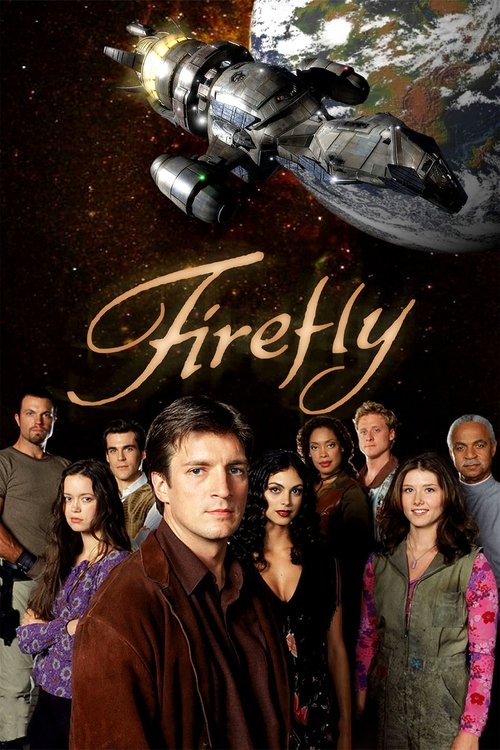




Joseph Hill "Joss" Whedon ( WEE-dən; born June 23, 1964) is an American filmmaker, comic book writer, and composer. He is best known as the creator of several television series: the supernatural drama Buffy the Vampire Slayer (1997–2003) and its spinoff Angel (1999–2004), the short-lived space Western Firefly (2002), the Internet musical miniseries Dr. Horrible's Sing-Along Blog (2008), the science fiction drama Dollhouse (2009–2010), the Marvel Cinematic Universe films The Avengers (2012) and Avengers: Age of Ultron (2015) and series Agents of S.H.I.E.L.D. (2013–2020), and the science fiction drama The Nevers (2021).
After beginning his career in sitcoms, Whedon wrote the poorly received horror comedy film Buffy the Vampire Slayer (1992) – which he later adapted into the acclaimed television series of the same name – co-wrote the Pixar animated film Toy Story (1995), and wrote the science fiction horror film Alien Resurrection (1997). After achieving success as a television showrunner, Whedon returned to film to write and direct the Firefly film continuation Serenity (2005), to co-write and produce the horror comedy film The Cabin in the Woods (2012), and to write and direct the Shakespeare adaptation Much Ado About Nothing (2012). For the Marvel Cinematic Universe, Whedon wrote and directed the ensemble superhero film The Avengers (2012) and its sequel Avengers: Age of Ultron (2015). He also co-wrote the DC Extended Universe superhero film Justice League (2017), for which he also served as director for re-shoots, replacing Zack Snyder (who retained directorial credit).
Whedon has also worked as a composer (notably for the Buffy the Vampire Slayer musical episode "Once More, with Feeling" and Dr. Horrible's Sing-Along Blog) and comic book writer, both for comic book continuations of television series he created and for established franchises, such as Astonishing X-Men.
Beginning in July 2020, multiple actors, producers, and writers have spoken out against Whedon about the toxic workplace environments he had allegedly created in many of his projects. Whedon has denied any wrongdoing, while acknowledging that he can be "confrontational".
Contents
Early life
Born on June 23, 1964, in New York City and raised on the Upper West Side as Joseph1 Hill Whedon, he would later become a third-generation TV writer as a son of Tom Whedon, a screenwriter for Alice in the 1970s and The Golden Girls in the 1980s, and a grandson of John Whedon, who worked on The Donna Reed Show in the 1950s and The Dick Van Dyke Show and That Girl in the 1960s, as well as writing for radio shows such as The Great Gildersleeve. His mother, Ann Lee (née Jeffries) Stearns, originally from Kentucky, was an activist and a teacher at Riverdale Country School as Lee Whedon, in addition to being an aspiring novelist. Jessica Neuwirth, a former student of Stearns, has often cited her as her inspiration, describing her as a "visionary feminist". His parents both acted, appearing in a play together at the Harvard Radcliffe Dramatic Club. The family would spend vacations reciting Shakespeare.
Whedon is the younger sibling of Samuel and Matthew Whedon and the older sibling of writers Jed and Zack Whedon. Whedon stated that his parents expected constant creativity from their children and were often verbally demeaning and gave them the silent treatment if he and his brothers were not amusing or entertaining, or if they simply disagreed with them. He stated, however, that he was more afraid of his older brothers who constantly bullied him. At the age of 5, a friend (age 4) died by drowning in a pond on the Whedons' upstate property. His parents divorced when he was 9. Whedon cited his childhood trauma as having a direct influence in his relationships, addictions and behaviors into adulthood and has stated that he suffers from complex post traumatic stress disorder.
At a young age, he showed great interest in British television series shows like Masterpiece and comedy group Monty Python.
Whedon attended Riverdale Country School in New York City where his mother taught history. Starting at age 15, he spent three years at Winchester College, a boarding school in England. There, taking note of omnipresent bullying, he concluded, "it was clear to me from the start that I must take an active role in my survival". Whedon graduated from Wesleyan University in 1987, where he was awarded an honorary Doctor of Letters in 2013. There, he also studied under renowned academic Richard Slotkin. It was at Wesleyan he would meet Jeanine Basinger, a film scholar who became his mentor. After leaving Wesleyan, Whedon conceived the first incarnation of Buffy Summers, "Rhonda, the Immortal Waitress".
Career
1980s–1990s
From 1989 to 1990, Whedon worked as a staff writer on the sitcoms Roseanne and Parenthood. As a script doctor, Whedon was an uncredited writer on films including The Getaway, Speed, Waterworld, and Twister. Whedon worked on an early draft of X-Men which subsequently contained at least two of his contributions to dialogue exchanges, while the final cut of Speed retained most of his dialogue. While he was script consulting, he also wrote Buffy the Vampire Slayer (the film that would precede the series), Alien Resurrection and early drafts for Titan A.E. and Atlantis: The Lost Empire – but would subsequently express strong dissatisfaction with the released versions of the first three of these films. He co-wrote Toy Story, which earned him a shared Academy Award nomination for Best Original Screenplay. He became one of the highest paid screenwriters when he sold his Afterlife script to Columbia Pictures for $1.5 million.
In 1997, Whedon created his first television series, Buffy the Vampire Slayer.2 The series depicts Buffy Summers, the latest in a line of young women called to battle against vampires, demons, and other forces of darkness. The idea came directly from his aversion to seeing the Hollywood formula of "the little blonde girl who goes into a dark alley and gets killed in every horror movie". Whedon said he wanted to subvert the idea and create someone who was a hero. This conception came from "the very first mission statement of the show, which was the joy of female power: having it, using it, sharing it". The writing process came together from conversations about the emotional issues facing Buffy Summers, and how she would confront them in her battle against supernatural forces. Whedon usually directed episodes from his own scripts that held the most cathartic moments in Buffy's story.
The series received numerous awards and nominations, including an Emmy Award nomination for writing for the 1999 episode "Hush". The 2001 episode "The Body" was nominated for a Nebula Award in 2002, and the fall 2001 musical episode "Once More, with Feeling" was nominated for a Best Dramatic Presentation Hugo Award and a Best Script Nebula Award. The final episode "Chosen" was nominated for a Best Dramatic Presentation, Short Form Hugo Award in 2003. All written and directed by Whedon, they are considered some of the most effective and popular episodes of the series.
A. Asbjørn Jøn, an anthropologist and scholar, recognized that the series has shifted the way vampires have since been depicted in popular culture representations. Since the end of the series, Whedon has stated that his initial intention was to produce a "cult" television series and acknowledged a corresponding "rabid, almost insane fan base" that subsequently emerged. In June 2012, Slate identified it as the most written about popular culture text of all time. "[M]ore than twice as many papers, essays, and books have been devoted to the vampire drama than any of our other choices—so many that we stopped counting when we hit 200".
2000s
Whedon followed Angel with the space western Firefly, starring Nathan Fillion, Gina Torres, Alan Tudyk, Morena Baccarin, Adam Baldwin, Jewel Staite, Sean Maher, Summer Glau and Ron Glass. Set in the year 2517, Firefly explores the lives of the people who while on the outskirts of society, make their living as the crew of Serenity, a "Firefly-class" spaceship. The series' original concept progressed after Whedon read The Killer Angels, a book on the Battle of Gettysburg.
An ever-present element was Whedon's injection of anti-totalitarianism, writing into the show a historical analogy of the Battle of Gettysburg, the "Battle of Serenity Valley".3 The beaten soldiers were called "Browncoats" after the brown dusters they wore as their uniforms. Whedon said, "I wanted to play with that classic notion of the frontier: not the people who made history, but the people history stepped on—the people for whom every act is the creation of civilization". Firefly was written as a serious character study, encompassing what Whedon called "life when it's hard". He went on to elaborate that it was about "nine people looking into the blackness of space and seeing nine different things".
Fox chose to play the episodes of the series out of order, running "The Train Job" first, and not airing the pilot until a dozen episodes later, resulting in some confusion from viewers. The series was also promoted as a comedy, not a science fiction drama, and placed in the infamous "Friday night death slot". The show was praised by critics overall, but some objected to the fusion of American frontier and outer space motifs. Faced with these hurdles, the show had an average of 4.7 million viewers at the time and was ranked 98th in Nielsen ratings. The series was cancelled by Fox before all of the episodes had aired. Whedon took to Universal Pictures as a means of achieving a continuation of the story. Following Firefly was Serenity, a follow-up film taking place after the events of the final episode. Serenity developed into a franchise that led to graphic novels, books and other media. New Scientist magazine held a poll in 2005 to find "The World's Best Space Sci-Fi Ever", and Firefly and Serenity took first and second place, respectively. It also received an Emmy shortly after its cancellation, as well as a number of other awards. Since being canceled, Firefly has attained cult status.
In 2004, Whedon created the comic book line Astonishing X-Men. He finished a 24 issue run in 2008 and then handed over the reins as a writer to Warren Ellis. One storyline from the comic, the notion of a cure for mutation being found, was also an element in the third X-Men film, X-Men: The Last Stand. In February 2009 Astonishing X-Men #6, which depicted the return of Colossus to the title and concluded Whedon's first story arc, was named by readers as #65 in Marvel's Top 70 Comics of all time.
2010s
Whedon co-wrote and produced a horror-comedy film titled The Cabin in the Woods with director Drew Goddard, finishing production in 2009 though the film was not released until 2011. Whedon and Goddard intended to make a film that exemplified horror movies while still preserving the fun and frightening elements necessary to being a horror film. The script was written in three days and they produced a minimum of 15 pages a day. Whedon described it as an attempt to revitalize horror, calling it a "loving hate letter" to the genre, continuing:
On another level it's a serious critique of what we love and what we don't about horror movies. I love being scared. I love that mixture of thrill, of horror, that objectification/identification thing of wanting definitely for the people to be alright but at the same time hoping they'll go somewhere dark and face something awful. The things that I don't like are kids acting like idiots, the devolution of the horror movie into torture porn and into a long series of sadistic comeuppances. Drew and I both felt that the pendulum had swung a little too far in that direction.
Whedon thought part of what distinguished it from other horror films was that people were not disposable – "As a culture, for our own entertainment, we tend to assume that they are (expendable)". He reiterated a sentiment that the introduction of torture porn into this genre was becoming an exercise in nihilism and misogyny as a means to promote distress and instead of trying to scare its audience.
In July 2010, it was confirmed that Whedon would write and direct The Avengers, a live-action adaptation of the superhero team of the same name. Of his desire to take on the film, he explained that the core of the movie was about "finding yourself from community" and the togetherness derived from a group that ultimately doesn't belong together.
It became the third-highest-grossing film of all time at the North American box office back in 2012, and it received considerable praise from critics. In retrospect, Whedon thought the film had "imperfections", begrudging its quality in comparison to that of The Matrix and The Godfather Part II. Nonetheless, he felt he "pulled off" the endeavor of making a summer movie reminiscent of those from his childhood.
In March 2012, Whedon stated that although television involves more compromise than film:
2020s
On July 13, 2018, HBO announced that the network had obtained the rights to The Nevers, an "epic science fiction drama about a gang of Victorian women who find themselves with unusual abilities, relentless enemies, and a mission that might change the world", on which Whedon was going to serve as writer, director, executive producer, and showrunner. Production on the series started in July 2019 in London, with scenes filmed at Trinity Church Square and the New Wimbledon Theatre area. By 2020, production was completed on five episodes before being shut down due to the COVID-19 pandemic, only resuming in September of that year to complete six of the season's ten-episode order. On November 25, 2020, HBO announced that Whedon had exited the project.
Accusations of workplace harassment
In July 2020, Justice League actor Ray Fisher accused Whedon of showing "gross, abusive, unprofessional, and completely unacceptable" behavior toward the cast and crew of the film, going so far as to invite Whedon to sue him for slander if he believed the allegations were untrue. A virtual panel for the 2020 at-home San Diego Comic-Con focusing on Whedon's work was cancelled following Fisher's statements. The following month, it was reported that WarnerMedia had begun an investigation into Whedon's behavior during the production of Justice League. Jason Momoa posted in support of Fisher, writing about "the shitty way [they] were treated" on Justice League reshoots and saying that "serious stuff went down". In December 2020, WarnerMedia announced that its investigation had concluded and that "remedial action" had been taken.
Fisher also claimed that Whedon's exit from the HBO Max series The Nevers was a result of HBO parent company WarnerMedia's inquiry. He said on Twitter that "I have no intention of allowing Joss Whedon to use the old Hollywood tactic of 'exiting'" and claimed, "This is undoubtedly a result of [the investigation]." HBO had announced on November 25, 2020, that the company had "parted ways" with Whedon, and Whedon released his own statement, claiming the departure was due to the COVID-19 pandemic. HBO chief Casey Bloys declined to elaborate on the decision to part ways, but said HBO had received no complaints about Whedon's behavior. Nonetheless, in what Bloys acknowledged was an unusual step, Whedon's name has not been used in marketing for the series, though he remained credited in the series itself.
Gal Gadot told the Los Angeles Times in December 2020 that her experience with Whedon had not been "the best" but that she had taken it "to the higher-ups and they took care of it". Grace Randolph later reported that Whedon had asked Gadot to film a sexually charged scene in Justice League, but that Gadot had refused and a body double was used in her place.
In February 2021, Buffy the Vampire Slayer and Angel actress Charisma Carpenter alleged that Whedon had "abused his power on numerous occasions", calling him a "vampire" and "casually cruel". In a tweeted statement, Carpenter said that Whedon had called her "fat" and asked her "if [she] was going to keep it" upon learning of her pregnancy, mocked her religious faith, and repeatedly threatened to fire her, which he ultimately did. Carpenter also revealed that she had participated in WarnerMedia's Justice League investigation.
Unrealized projects
Early in his career, Whedon sold two spec scripts that were not produced, Suspension and Afterlife. He sold Suspension for $750,000, with an additional $250,000 if production had commenced. In September 2014, Empire suggested the script was being made, with Liam Neeson attached to the project. In 1994, he sold Afterlife for $1.5 million, with an additional $500,000 if production had commenced. In 2000, Andy Tennant was in talks to direct and rewrite. In Afterlife there were precursors to themes Whedon would later explore in Dollhouse. The script was about Daniel Hoffstetter, a government scientist, who awakes after dying to discover his mind has been imprinted on a mind-wiped body.
Whedon had a number of planned Buffy the Vampire Slayer spinoffs that became stuck in development or terminally stalled. Among these were Buffy the Animated Series, a set of television movies for The WB based on Angel and Buffy characters, a Spike spin-off film, and Ripper, a proposed BBC pilot about Rupert Giles.
Goners was announced in 2005. According to Variety magazine, it was a fantasy thriller under development by Universal Pictures, and was to be produced by Mary Parent and Scott Stuber. From a 2006 interview with Fanboy Radio: "I've been seeing a lot of horror movies that are torture porn, where kids we don't care about are mutilated for hours, and I just cannot abide them... it's an antidote to that very kind of film, the horror movie with the expendable human beings in it. Because I don't believe any human beings are".
Whedon was hired to write and direct a Warner Bros. adaptation of Wonder Woman. However, in February 2007, Whedon announced that he would no longer be involved with the project. "We just saw different movies, and at the price range this kind of movie hangs in, that's never gonna work. Non-sympatico. [sic] It happens all the time". Conversely, he stated, "the fact of the matter is, it was a waste of my time. We never [wanted] to make the same movie; none of us knew that". Whedon also pitched a screenplay to adapt Batman for the same company as development started on what would eventually become Batman Begins. It was described as having included a new, "more of a 'Hannibal Lecter' type" villain, and portrayed Bruce Wayne as "a morbid, death-obsessed kid" whose grief was overcome by protecting a girl from being bullied in an alley similar to where his parents were murdered. In March 2017, Whedon was in negotiations to direct, write, and produce Batgirl set in the DC Extended Universe. He withdrew from the project in February 2018, saying he didn't have a story for the movie.
Themes, style and influences
Thematically, Whedon's work often explores perspectives on existentialism, anti-authoritarianism, free will, power, powerlessness, sexuality, adulthood, sacrifice, atheism, misogyny and feminism. His projects usually revolve around an ensemble of protagonists, primarily focused on a loner hero who ends up working with others to accomplish a goal. He says of the recurring aspects of community, "Everything I write tends to turn into a superhero team, even if I didn't mean for it to. I always start off wanting to be solitary, because a) it's simpler, and b) that isolation is something that I relate to as a storyteller. And then no matter what, I always end up with a team". Examining a typical motif, he says, "I tend to write about people who are helpless or out of control who then regain or retake control".
Articulating his approach to screenwriting, Whedon has noted outlining and act structure as the hardest parts of storytelling, but emphasizes that he feels they are "completely essential". Many of Whedon's altered phrases and heavily popularized words have entered a common usage called "Slayer Slang", which PBS included an entire section of in their article series Do You Speak American?. In an issue of Buffy the Vampire Slayer Season Eight, where Buffy travels to the future, Whedon writes Buffy's reaction to the future dialect of Manhattan; this allows Whedon to comment on the series' distinctive style of dialogue; "Buffy blames herself for what's happened to the English language, and there's a lot of hubris in that joke. I like to think that adding Y's to words that don't usually have Y's is going to destroy the whole fabric of our society". His use of self-aware dialogue to humanize characters, which relies heavily on dry humor and subtext, subversive treatment of clichés, use of misogyny as a trait of his villains, and the recurring theme of self-sacrifice led by subverting moral icons are defining traits of his style of storytelling.
His penchant for killing off characters has been widely acknowledged. Whedon responded to the criticism, saying, "The percentage of people who die... is a lot. I think it's pretty near everybody. The percentage of people that I kill—not so many. I think the reason that my rep is so nasty is that I tend to do it... unexpectedly, or to someone people are recently invested in, and that is a real mission statement for me, because, death doesn't leave a card. Death doesn't take Hitler. It doesn't work according to story plans, and when a death feels like a loss, gives you grief... then you have told a story that involves death." Dramatic effect is used to convey the sense of realism and shock value that comes from fatal circumstances.
Feminism
Elements of feminism are present throughout much of Whedon's work and he gives his mother credit for inspiring this. The character Kitty Pryde from the X-Men comics was an early model for Whedon's strong teenage girl characters. He said, "If there's a bigger influence on Buffy than Kitty, I don't know what it was. She was an adolescent girl finding out she has great power and dealing with it." Kitty Pryde later played a central role in Whedon's run on Astonishing X-Men.
In college, Whedon studied a theory called "womb envy", a concept he says observes "a fundamental thing that women have something men don't, the obvious being an ability to bear children. Men not only don't get what's important about what women are capable of, but in fact they fear it, and envy it, and want to throw stones at it, because it's the thing they can't have." In 2007, Whedon expressed his outrage over the murder of Du'a Khalil Aswad, and because the act was caught on video, was prompted to attack the underlying attitude he felt led to the murder, comparing the video to torture porn.
In late 2013, Whedon spoke at an Equality Now event, where he issued a pointed dissection of the word "feminist". He begins to say, "I have the privilege living my life inside of words ... but part of being a writer is also living in the very smallest part of every word." Arguing against the suffix "-ist", he continues, "you can't be born an –ist. It's not natural." Whedon explains that because of this, the word "includes the idea that believing men and women to be equal ... is not a natural state. That we don't emerge assuming that everybody in the human race is a human. That the idea of equality is just an idea that's imposed on us..." This sparked an unfavorable reaction from the feminist community, but also an appreciation for Whedon's arguments' thought provocation.
News website Digital Spy released in early 2015 an interview they had conducted with Whedon, during which he criticized the entertainment industry for its "genuine, recalcitrant, intractable sexism, and old-fashioned quiet misogyny". Whedon offered The Hunger Games film series as an argument for female-led franchises, and hoped Marvel Studios would pursue production of more such franchises. However, critics noted an almost stereotypical lack of feminist ideals in his writing decisions and portrayal of Black Widow, one of two female protagonists in Marvel's 2015 Avengers: Age of Ultron, played by Scarlett Johansson.
Frequent collaborators
Whedon has repeatedly hired the same actors for his projects and has been described as "the gravitational center of the Whedonverse, a galaxy that spins recurring actors and themes through an orbital system of TV shows, films and comic books that all share similar traits: a unique brand of witty dialogue, relatable characters and fantasy/sci-fi mythology".
Note: Due to Whedon's frequent casting of the same actors in various projects, the above list only includes those who have played three or more different roles in Whedon productions; actors that only played one role in multiple Whedon productions are not included.
Personal life
In 2013, Whedon said that he is a workaholic. This arose during the time that followed the completion of Much Ado About Nothing, which was made in the span of a two-week vacation from The Avengers, and after making the pilot for Agents of S.H.I.E.L.D. amidst the pre-production for Avengers: Age of Ultron. "It is actually a problem. Sometimes it's adorable ... and sometimes it's not ... Not to get all dark and weird, but it is something I need to address." He has been a member of the Academy of Motion Picture Arts and Sciences in its Writers' branch since 2017.
Marriages
In 1995, Whedon married Kai Cole, an architect, producer and co-founder of Bellwether Pictures. They have two children together. Whedon and Cole separated in 2012 and divorced in 2016. In 2017, Cole claimed that Whedon had repeatedly been unfaithful to her and that he "does not practice what he preaches" in regard to feminism.
Whedon married Canadian artist Heather Horton in February 2021.
Religious and philosophical views
Whedon has identified himself as an atheist.
Whedon has identified as an absurdist and existentialist. A committed humanist, Whedon was presented with the Outstanding Lifetime Achievement Award in Cultural Humanism by the Humanist Chaplaincy at Harvard University in 2009. He has spoken about existentialism, explaining in detail how it, and more specifically Jean-Paul Sartre's Nausea, was used as a basis for the Firefly episode "Objects in Space". He called it "the most important book" he ever read, and said it was given to him right after he saw Steven Spielberg's Close Encounters of the Third Kind, whose impact, he recalls, had made him an existentialist.
Political views
In July 2012, at San Diego Comic-Con, in response to one woman who noted the anti-corporate themes in many of his films and asked him to give his economic philosophy in 30 seconds or less, Whedon spoke out against capitalism, saying that America is "turning into Tsarist Russia".
Endorsing Barack Obama in the 2012 United States presidential election, Whedon satirically equated Mitt Romney's future as president with a zombie apocalypse, quipping, "Romney is ready to make the deep rollbacks in health care, education, social services and reproductive rights that will guarantee poverty, unemployment, overpopulation, disease, rioting—all crucial elements in creating a nightmare zombie wasteland."
In 2015, Whedon signed a petition as part of a political campaign calling for Elizabeth Warren to run for President of the United States.
In January 2017, after actress Nicole Kidman publicly suggested that America should accept that Donald Trump is president, Whedon tweeted a photograph of plastic puppet Lady Penelope Creighton-Ward alongside an image of Kidman, an action some interpreted as mocking and objectifying Kidman's physical appearance. That same month, Whedon also received criticism for reportedly comparing Ivanka Trump to a dog and for wishing that Paul Ryan would be raped to death by a rhinoceros. Referring to Ivanka's husband Jared Kushner and Trump, he tweeted: "He's a Voldemort in training, & unlike the Pekingese he married under, can play the long game." Whedon stated that he had been referring to Donald Trump. In April 2017, Whedon took a shot at Republicans by criticizing the physical appearance of teenage cancer survivors who were visiting then–Speaker of the House Paul Ryan. He later apologized on Twitter.