Critical reaction
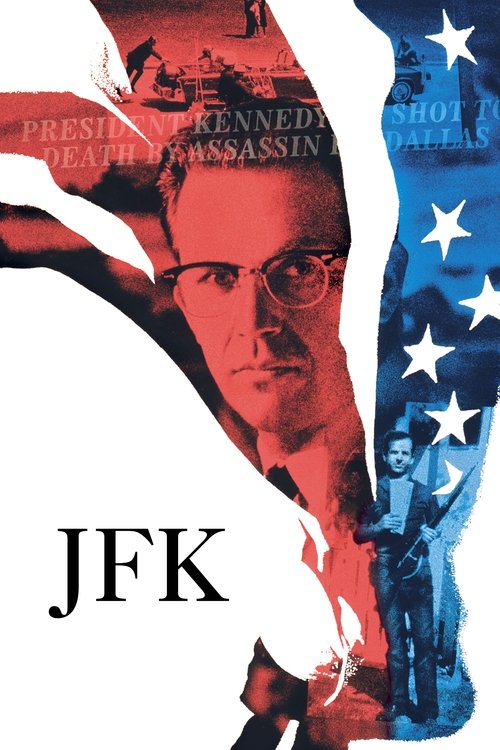
On review aggregator Rotten Tomatoes, JFK holds an approval rating of 85% based on 73 reviews and an average rating of 7.7/10. The site's critics consensus reads, "As history, Oliver Stone's JFK is dubious, but as filmmaking it's electric, cramming a ton of information and excitement into its three-hour runtime and making great use of its outstanding cast." On Metacritic, the film has a weighted average of 72 out of 100 based on 29 reviews, indicating "generally favorable" reviews. Audiences polled by CinemaScore gave the film an average grade of "A" on an A+ to F scale.
The film's production and release were subject to intense scrutiny and criticism. A few weeks after shooting had begun, on May 14, 1991, Jon Margolis wrote in the Chicago Tribune that JFK was "an insult to the intelligence". Five days later, The Washington Post ran a scathing article by national security correspondent George Lardner titled, "On the Set: Dallas in Wonderland" that used one of the drafts of the JFK screenplay to blast it for "the absurdities and palpable untruths in Garrison's book and Stone's rendition of it." The article pointed out that Garrison lost his case against Clay Shaw and that he inflated his case by trying to use Shaw's homosexual relationships to prove guilt by association. Stone responded to Lardner's article by hiring a public relations firm that specialized in political issues. Anthony Lewis in The New York Times stated the film "tells us that our government cannot be trusted to give an honest account of a Presidential assassination." Washington Post columnist George Will called Stone "a man of technical skill, scant education and negligible conscience."
Time ran its own critique of the film-in-progress on June 10, 1991, and alleged that Stone was trying to suppress a rival JFK assassination film based on Don DeLillo's 1988 novel Libra. Stone rebutted these claims in a letter to the magazine.
Stone split his time making the film, responding to criticism and conducting a publicity campaign that saw him "omnipresent from CBS Evening News to Oprah." The Lardner Post piece was reputed to have hit Stone the most because Lardner had a copy of the script. Stone recalls, "He had the first draft and I went through probably six or seven drafts."
Upon theatrical release, The New York Times ran an article by Bernard Weinraub that called for intervention by the studio: "At what point does a studio exercise its leverage and blunt the highly charged message of a film maker like Oliver Stone?" The newspaper ran a review of the film by Vincent Canby who wrote, "Mr. Stone's hyperbolic style of film making is familiar: lots of short, often hysterical scenes tumbling one after another, backed by a soundtrack that is layered, strudel-like, with noises, dialogue, music, more noises, more dialogue." Pat Dowell, film critic for The Washingtonian, had her 34-word capsule review for the January issue rejected by her editor Jack Limpert on the grounds he did not want the magazine to give a positive review to a film he felt was "preposterous". Dowell resigned in protest.
Richard Corliss, Time's film critic, wrote:
Whatever one's suspicions about its use or abuse of the evidence, JFK is a knockout. Part history book, part comic book, the movie rushes toward judgment for three breathless hours, lassoing facts and factoids by the thousands, then bundling them together into an incendiary device that would frag any viewer's complacency. Stone's picture is, in both meanings of the word, sensational: it's tip-top tabloid journalism. In its bravura and breadth, JFK is seditiously enthralling; in its craft, wondrously complex.
The Miami Herald said, "the focus on the trivialities of personality conveniently prevents us from having to confront the tough questions [Stone's] film raises." Gene Siskel and Roger Ebert both gave the film positive reviews on their television show. Writing for the Chicago Tribune, Siskel called the film "thoroughly compelling" and suggested that while it contained "gross alterations of fact", Stone had "the right to speculate on American history". Ebert praised the film in his review for the Chicago Sun-Times, saying,
The achievement of the film is not that it answers the mystery of the Kennedy assassination, because it does not, or even that it vindicates Garrison, who is seen here as a man often whistling in the dark. Its achievement is that it tries to marshal the anger which ever since 1963 has been gnawing away on some dark shelf of the national psyche. Rita Kempley in The Washington Post wrote, "Quoting everyone from Shakespeare to Hitler to bolster their arguments, Stone and Sklar present a gripping alternative to the Warren Commission's conclusion. A marvelously paranoid thriller featuring a closetful of spies, moles, pro-commies and Cuban freedom-fighters, the whole thing might have been thought up by Robert Ludlum."
New York Newsday published two articles on Boxing Day: "The Blurred Vision of JFK" and "The Many Theories of a Jolly Green Giant". A few days later, the Chicago Sun-Times followed suit with "Stone's Film Trashes Facts, Dishonors J.F.K." Jack Valenti, then president and chief executive of the Motion Picture Association of America, denounced Stone's film in a seven-page statement. He wrote: "In much the same way, young German boys and girls in 1941 were mesmerized by Leni Riefenstahl's Triumph of the Will, in which Adolf Hitler was depicted as a newborn God. Both JFK and Triumph of the Will are equally a propaganda masterpiece and equally a hoax. Mr. Stone and Leni Riefenstahl have another genetic linkage: neither of them carried a disclaimer on their film that its contents were mostly pure fiction." Stone recalls in an interview, "I can't even remember all the threats, there were so many of them."
TIME magazine ranked it the fourth best film of 1991, while also including it in "Top 10 Historically Misleading Films" in 2011.
Ebert named Stone's film as the year's best and one of the top ten films of the decade as well as one of The Great Movies. Gene Siskel ranked it the seventh best film of the year. The Sydney Morning Herald named JFK as the best film of 1991. Entertainment Weekly ranked it the 5th Most Controversial Movie Ever.
Ebert's future colleague Richard Roeper was less complimentary: "One can admire Stone's filmmaking skills and the performances here while denouncing the utter crapola presented as 'evidence' of a conspiracy to murder." Roeper applauded the film's "dazzling array of filmmaking techniques and a stellar roster of actors" but criticized Stone's narrative: "As a work of fantastical fiction, JFK is an interesting if overblown vision of a parallel universe. As a dramatic interpretation of events, it's journalistically bankrupt nonsense."
Harry Connick Sr., the New Orleans district attorney who defeated Garrison in 1973, criticized Stone's view of the assassination: "Stone was either unaware of the details and particulars of the Clay Shaw investigation and trial or, if he was aware, that didn't get in his way of what he perceived to be the way the case should have been." In his book Reclaiming History: The Assassination of President John F. Kennedy, a history of the assassination published 16 years after the film's release, Vincent Bugliosi devoted an entire chapter to Garrison's prosecution of Shaw and Stone's subsequent film. Bugliosi lists thirty-two separate "lies and fabrications" in Stone's film and describes the film as "one continuous lie in which Stone couldn't find any level of deception and invention beyond which he was unwilling to go." David R. Wrone stated that "80 percent of the film is in factual error" and rejected the premise of a conspiracy involving the CIA and the so-called military-industrial complex as "irrational". Warren Commission investigator David Belin called the film "a big lie that would make Adolf Hitler proud". Former Indiana Representative Floyd Fithian, who had served on the House Select Committee on Assassinations, said the film had manipulated the past. Kennedy's son, John F. Kennedy Jr., refused to watch the film, "because that's not entertainment for me... people, historians, filmmakers...are going to take time and money studying (the assassination)." He cared little about the controversy, stating that regardless of the truth, it would not bring his father back. Clint Hill, a Secret Service agent who was with Kennedy when he was shot, criticized the film, calling it "absurd".
The "General Y" shown as organizing the assassination of President Kennedy was unmistakably Major General Edward Lansdale. Historian Max Boot would be highly critical of the General Y story: Lansdale... was a critic, not an advocate, of the Americanization of the Vietnam War. He was never a proponent of expensive weapons systems; he argued that the best weapon was a well-trained soldier, diplomat, or spy who would deal sympathetically with the local populace...A staunch advocate of spreading liberty abroad, Lansdale was scarcely likely to undermine liberty at home by participating in a military coup d'état against the lawfully elected president—a man he had worked for and respected, even if he was less enamored of the president's younger brother.... Far from plotting to kill John F. Kennedy, as numerous conspiracy-mongers continue to allege, Lansdale was as grief-stricken as the rest of the country by his shocking death and as uncertain about what would come next.