




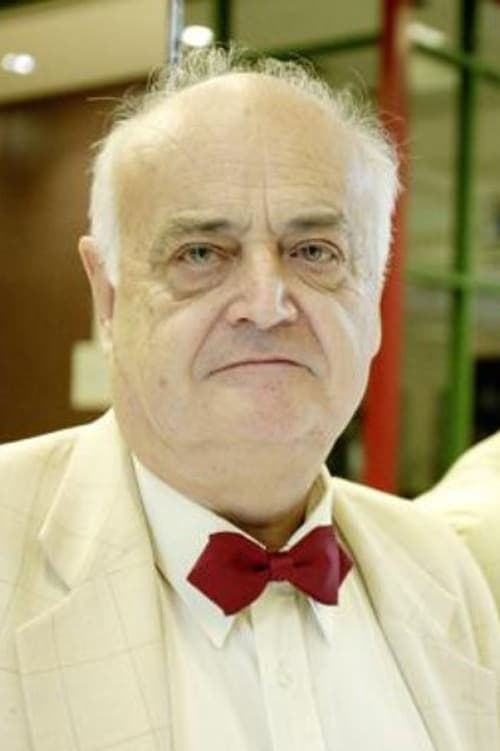
Jean Michel Rollin Roth Le Gentil (3 November 1938 – 15 December 2010) was a French film director, actor, and novelist best known for his work in the fantastique genre.
Rollin's career, spanning over fifty years, featured early short films and his achievements with his first four vampire classics Le viol du vampire (1968), La vampire nue (1970), Le frisson des vampires (1970), and Requiem pour un vampire (1971). Rollin's subsequent notable works include La rose de fer (1973), Lèvres de sang (1975), Les raisins de la mort (1978), Fascination (1979), and La morte vivante (1982).
His films are noted for their exquisite, if mostly static, cinematography, off-kilter plot progression, poetic dialogue, playful surrealism and recurrent use of well-constructed female lead characters. Outlandish dénouements and abstruse visual symbols were trademarks. Belied by high production values and precise craftsmanship, his films were made with little money, often against deadlines. In the mid-1970s, lack of regular work led the director to direct mostly pornographic films under various pseudonyms, an activity he continued until the early 1980s.
Contents
Early life
Jean Rollin was born in Neuilly-sur-Seine (now Hauts-de-Seine), France, to Claude Louis René Rollin-Roth-Le Gentil, an actor and theatre director who went by the stage name Claude Martin, and his wife Denise (née Leffroi), an artists' model. His half-brother was actor Olivier Rollin.
Career
Rollin had a passion for cinema from an early age. He saw his first film during the second World War. It was Capitaine Fracasse, a 1942 film directed by Abel Gance. Rollin decided he wanted to make films when he grew up; his father, a theatre actor, was a heavy influence on him. During his teens, he developed an obsession for American serials and read comic books.
When he was 16, he found a job at Les Films de Saturne, helping write invoices while earning some money though he wanted to be involved in cinema. They specialized in creating opening and closing credits and short cartoons, but real films were also shot such as industrial shorts and documentaries. Rollin was part of the crew in a short documentary about Snecma, a big factory in France which built motors and planes. He arranged the tracking shots, laid the tracks, checked the electricity, and helped the cameraman.
When Rollin did his military service for the French army, he worked as an editor in the cinema department alongside Claude Lelouch. They worked on army commercials with Lelouch directing and Rollin editing. They also made two films, Mechanographie, a documentary, and La Guerre de Silence (The War of Silence), a fiction film.
In 1958 after leaving the army, he directed his first short film Les Amours Jaunes (The Yellow Lovers). He shot it on a 35mm Maurigraphe camera, and used a beach in Dieppe as his location, the same beach used in his later films.
1960s
In 1960, Rollin decided to direct his first feature film, but later abandoned the project as he had no money to finish it. His next short, Ciel de Cuivre (Sky of Copper), was directed in 1961, and was quite surreal though it told a sentimental story. He did not finish the film because he ran out of money and it was not very good. The footage is now lost.
In 1962, he was as an assistant director on the film Un Cheval pour Deux (A Horse for Two), which was not a great experience for him, and he decided to approach cinema in a different way. In the early sixties, Rollin became interested in politics and made a short documentary in 1964 called Vivre en Espagne (Life in Spain). It was about Generalissimo Francisco Franco, thirty minutes were filmed but he risked a lot to get it made. Rollin and the crew found themselves pursued by the police and just managed to make it back into France. Jean also directed a short film in 1965 called Les Pays Loins.
In 1968, Jean directed his first feature Le viol du vampire (The Rape of the Vampire). At the time he was still not known in the world of cinema, having only done a few short films and documentaries. The film was shot on a low budget, and consisted of two parts because it was originally intended to be another short film; the second part was later added so that it was released as a feature film. The release of Le Viol caused public scandal and outrage, his strong inspiration of American serials did not attract viewers. It was released during the events of May 1968, and due to the riots, it was a rare theatrical production at the time. Rollin himself was also threatened due to this scandal, because of this, he briefly decided to give up making films.
His second feature La vampire nue (The Nude Vampire) was his first film in colour. It was mostly inspired by the 1916 film Judex, and also surrealism in general. Rollin wanted to do something a little more temperate than Le Viol, a traditional mystery film. Anyway, as he himself stated, it came to be the same kind of film as his first feature, it also has the same spirit. La vampire nue also became notable in that it introduced Catherine and Marie-Pierre Castel, twin sisters who frequently collaborated with Rollin during the early years of his career.
Following La vampire nue, Rollin found himself in a financial crisis and having suffered an accident during production which left him traumatized, the circumstances took a positive turn when he met with producer Monique Nathan, owner of the Films Moderns company. Nathan having put her faith and support in Rollin, turned down several a number of the most prominent French New Wave filmmakers for financing and instead entirely supported Rollin as both a producer and a co-screenwriter for his next project, Le Frisson des Vampires (Shiver of the Vampires) which was heavily influenced by the trappings of the hippie movement. It did however retain many of the themes one could expect from a Rollin film and one of the most iconic scenes ever to appear in a Rollin film: actress Dominique emerging from an old grandfather clock. Production for the film took place in an abandoned castle in Soissons, a commune in the Aisne department of Picardy.
1970s
1971, Rollin directed Requiem pour un vampire (Requiem for a Vampire), which became one of his most successful films, and it was another low budget production, which almost took no money to produce. There was no dialogue in the first forty minutes of the film, this was in Rollin's words to make the "ultimate naive film", simplifying the story, direction and cinematography. Initially, Rollin had Catherine Castel in mind to play one of the leading ladies in Requiem; however, Castel was unable to accept the role due to being pregnant, which forced Rolling to offer the role to Maire-Pierre. The second female lead was portrayed by Mireille D'argent whom Rollin chose after she was introduced to him by an agent. Rollin discovered that D'argent's agent was collecting her wages, which prompted him to contact a lawyer and have her wages returned to her. Requiem was filmed in the small village of Crêvecoeur. The graveyard was located outside the village on a knoll. The castle, a historical place entirely furnished with genuine antiques, all of which were worth a fortune, had been rented from the duchess of Roche-Guyon. It wasn't her castle that Rollin and the crew were interested in, but the ruins of the dungeon above, that overlooked the entire area. Following this, Rollin made a temporary departure to creating films associated with the erotic vampire genre.
Having risen to success during his early vampire era, Rollin embarked on a different approach to filmmaking. Rollin financed his 1973 film La rose de fer (The Iron Rose) himself and was convinced that it would become a failure, leading to financial ruin. Prior to production, he engaged in a deal with Impex films to direct a number of hardcore porn films in the near future in order to produce La rose de fer and ensure that it would not fail. The story follows two young lovers (Françoise Pascal and Hugues Quester) who meet at a wedding reception and agree to go on a date, for which they decide to take a walk in an enormous cemetery. As they make love in an underground tomb, strange and bizarre occurrences take place above ground. As night falls, they frantically try to escape from the cemetery, and with no luck, end up where they started. They are slowly overcome with hysteria and paranoia which brings about their mortality. The film was shot in the city of Amiens over a four-week period and premiered at the 2nd Annual Convention of the Fantastique in Paris in April 1973 and was initially met with a negative reception and as a result, Rollin was unable to find anyone to back his future personal projects.
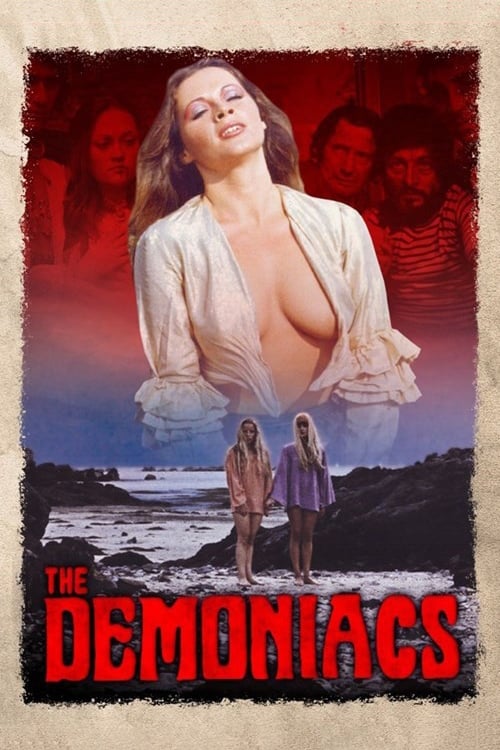
Rollin directed the adult sex films Jeunes filles impudiques (Schoolgirl Hitchhikers), Le sourire vertical (The Vertical Smile), and Tout le monde il en a deux (Bacchanales sexuelles or Fly Me the French Way) under the pseudonym Michel Gentil as he was financially unable to come up with a budget for another mainstream feature film. However, in 1974 Rollin directed the horror adventure and self-proclaimed "Expressionist" film Les démoniaques which was inspired by the adventure classics he had enormous admiration for in his youth. The film includes Joëlle Cœur and Willy Braque whom Rollin worked with on Jeunes filles impudiques. The story follows two young women who have been involved in a shipwreck and are brutally raped and murdered by a group of rogue pirates, only to be resurrected after making love to the devil so that they can seek their revenge. Rollin had many disputes with the producers of the film during production of the project as they insisted on a low budget. He was hospitalized for two weeks following the work due to mental and physical exhaustion. Further problems would arise including the working title, Les diablesses, having to be changed as the copyright was not free of charge and with the Castel Twins being unavailable for the roles of the avenging ghosts, the parts where offered to inexperienced actresses Lieva Lone and Patricia Hermenier.
1980s
As Jean Rollin's career continued into the 1980s, he started off the decade with the release of La nuit des traquées (The Night of the Hunted) in the summer of 1980. This mainstream feature saw the return of pornographic actress Brigitte Lahaie, in her first leading role in a Rollin film. Upon the film's debut, it was considered a failure. However, it eventually garnered somewhat of a following in later years, as several of Rollin's works have done in the past. La nuit des traquées was shot in less than ten days on an extremely low budget, similar to his pornographic films. Rollin admitted that "I was tired of X-films", as the film was intended to be another hardcore sex film and told the producer "if you want a horror film for the same cost", then, "I can make it in 9 days". Rollin came to the decision to cast actors of the pornographic industry in the picture in order to keep production cost down and to give the actors the opportunity to show their legitimate talent. The film stands as a noteworthy piece of work in Rollin's canon, as it differs from any of his previous work and is a departure from the fantastique genre that his films are greatly known for; the film is often poetic, yet it serves a realistic tone and chilling atmosphere. Lahaie portrays the character of Elizabeth, a young woman discovered wandering around in the rain on a dark night, by a man named Robert (Vincent Gardère). As Elizabeth has no recollection of why she is there and frequently continues to lose her memory every few minutes, Robert drives her to his apartment in the city where they make love. The following morning while Robert goes to work, a doctor named Francis and a woman named Solange (Bernard Papineau and Rachel Mhas) locate Elizabeth and accompany her back to the clinic where she has escaped from. It is revealed that Elizabeth and fellow patients are currently confined to the hospital for a deteriorating disease in which they have been contaminated by an environmental accident.
In addition to Lahaie, Rollin had actress Martine Delva in mind for the role of Lahaie's character's friend Véronique. Delva was introduced to Rollin and Lionel Wallman by actor Alain Plumey and when offered the role, she accepted the role. Prior to production, which was intended to take place in La Défense district, she was involved in a serious car accident which left her unconscious with a broken leg and she died within one week from her injuries. The role of Véronique then offered to Dominique Journet. Pornographic actress Catherine Greiner and frequent collaborator, Natalie Perrey appeared as patients at the hospital.
In the early year of the film, it was met with a negative reception and did not please audiences during its release; not receiving a successful response at the Stigès Festival. It did however receive positive reaction when it was screened at a festival in Trieste, where it was applauded and viewed as a highly subversive work. Rollin himself had stated that "I don't think it is a very good film and it is probably one of my worst" and that if he could remake just one of his films it would be La nuit des traquées.
1990s
Rollin's final adult production came in 1994 when he made a brief return to direct (uncredited) and wrote the scenario for Le Parfume de Mathilde (The Scent of Mathilde). Rollin was initially required as a screenwriter for the production due to the fact that he was to replace producer Marc Dorcel's in-house auteur Michele Ricaud, who has just recently passed away. However, Rollin became co-director of the made-for-video film. Following his final time working on a sex film, Rollin later returned to his traditional works when he would go on to resume what he was best known for.
Rollin continued his career into the 1990s, following what was intended to be a brief return in 1994 when he directed and wrote a final pornographic film. He remained true to form for what were to be his final years of film making, and his next feature went into production in 1995; Les deux orphelines vampires (The Two Orphan Vampires) saw the return of his most recognizable work, and his first vampire film since 1975's Levres de sang. With the then recent increase in popularity of Rollin's works, and with the resurgence with the vampire genre in general, most notable with Bram Stoker's Dracula, this prompted Rollin to create a new vampire feature, quite different from Francis Ford Coppola's 1992 blockbuster, as he stated that it was "not a good film at all", and that "it just doesn't work for one second". The idea of the film was based upon Rollin's novel of the same name and went into production in June 1995 for a mere ₣3,000,000, which is actually more than his prior works received. Locations for the shoot included four days in New York at the beginning, with the remaining three weeks in Paris. Cinematography was provided by Norbert Marfaing-Sintes, who previously worked with Italian director Duccio Tessari, as Max Monteillet was not available. Nathalie Perrey introduced Rollin to Marfaing-Sintes, as she had experience working with Marfaing-Sintes in many films; to show his gratitude, Rollin offered Perrey a role in Les deux orphelines vampires. The leading roles were offered to two inexperienced actresses, Alexandra Pic and Isabelle Teboul, whom Rollin choose while answering a newspaper ad they had printed. Brigitte Lahaie received a minor role in the film. Following an extensive period in post-production, the film was eventually released on 9 July 1997.
His next directorial feature, La fiancée de Dracula (The Fiancée of Dracula) went into production in 1999. Rollin had written the screenplay for the film, as he did with many of his previous works. During which time, Rollin was receiving dialysis for kidney disease and for periods of time, did not remain with the film crew and production was shared with Jean-Noël Delamarre in his absence, while Rolling was staying at a hotel in Caen. Filming locations included the islands of Chausey where the majority of the filming took place, a cemetery in Épinay-Champlâtreux, a castle in Blandy, Seine-et-Marne, and port of Pourville-lès-Dieppes. Long-time collaborators Brigitte Lahaie, Catherine Castel and Nathalie Perrey returned for prominent roles in the film. Rollin's niece, Sandrine Thoquet appeared in the film as a young vampire burned by the rays of the sun. Following production, Rollin received a kidney transplant in October 2000 during the post-production which lasted for almost two years. The film was successfully shown in theatres on 14 August 2002, for which Rollin was not completely satisfied of the release date. However, he was pleased that it was released to theaters and was somewhat well received.
Personal life and death
Rollin was married to Simone Rollin Roth Le Gentil (née Morel), with whom he had two sons, Serge and Carel. He was married to Simone until his death.
Rollin died on 15 December 2010 after a long battle with cancer and was survived by his wife Simone, son Serge and granddaughter Gabrielle. He is buried at Père Lachaise Cemetery in Paris. Rollin's son, Carel (1973–2001), and his wife, Simone (1934–2016), rest alongside him.
Selected filmography
The following list consists of Jean Rollin's mainstream works as both director and writer and not of his pseudonymous or pornographic works. For a complete list of his entire work, including producer and acting credits, see full filmography.