Career
After completing his military service in the Fusiliers marins, he returned to the entertainment business, working under the stage name of Jean Gabin at whatever was offered in the Parisian music halls and operettas, imitating the singing style of Maurice Chevalier, which was the rage at the time. He was part of a troupe that toured South America, and upon returning to France found work at the Moulin Rouge. His performances started getting noticed, and better stage roles came along that led to parts in two silent films in 1928.
Two years later Gabin made the transition to sound films in a 1930 Pathé Frères production, Chacun sa chance. Playing secondary roles, he made more than a dozen films over the next four years, including films directed by Maurice and Jacques Tourneur. But he only gained real recognition for his performance in Maria Chapdelaine, a 1934 production directed by Julien Duvivier. He was then cast as a romantic hero in the 1936 war drama La Bandera; this second Duvivier-directed film established him as a major star. The next year he teamed up with Duvivier again in the highly successful Pépé le Moko. Its popularity brought Gabin international recognition. That same year he starred in Jean Renoir's La Grande Illusion, an antiwar film that ran at a New York City theatre for an unprecedented six months. This was followed by another of Renoir's major works, La Bête Humaine (The Human Beast), a film noir tragedy based on the novel by Émile Zola and starring Gabin and Simone Simon, as well as Le Quai Des Brumes (Port of Shadows), one of director Marcel Carné's classics of poetic realism. His rugged charisma could be compared with Humphrey Bogart and James Cagney.
He divorced his second wife in 1939.
In the late 1930s Gabin was flooded with offers from Hollywood, but turned them all down until the outbreak of World War II. After the German occupation of France in 1940, he joined Renoir and Duvivier in the United States. During his time in Hollywood, Gabin began a romance with actress Marlene Dietrich that lasted until 1948.
His films in America—Moontide (1942) and The Impostor (1944), the latter with Duvivier—were not successful.
Undaunted, Gabin joined General Charles de Gaulle's Free French Forces and earned the Médaille militaire and a Croix de Guerre for his wartime valor fighting with the Allies in North Africa. Following D-Day, Gabin served with the 2nd armored division that liberated Paris.
In 1945 Carné chose Gabin to star in the film Gates of the Night with Dietrich as his co-star. She disliked the screenplay and feared her German accent would not go over well with postwar French audiences. When she withdrew from the project, Gabin followed suit, leading to a falling out with Carné. He found a French producer and director willing to cast him and Dietrich together, but the film, Martin Roumagnac, was not a success and their personal relationship soon ended. In 1948 Gabin starred in René Clément's poetic realist film The Walls of Malapaga (Au-delà des grilles), which won an Oscar for Best Foreign Language Picture but garnered little recognition for Gabin. In 1949 he starred in his only role in legitimate theatre in Henri Bernstein's La Soif. It ran in Paris for six months, with Gabin critically praised as "a first-rate stage actor." Despite this recognition, his subsequent films did not do well at the French box office, and the next five years brought repeated failures.
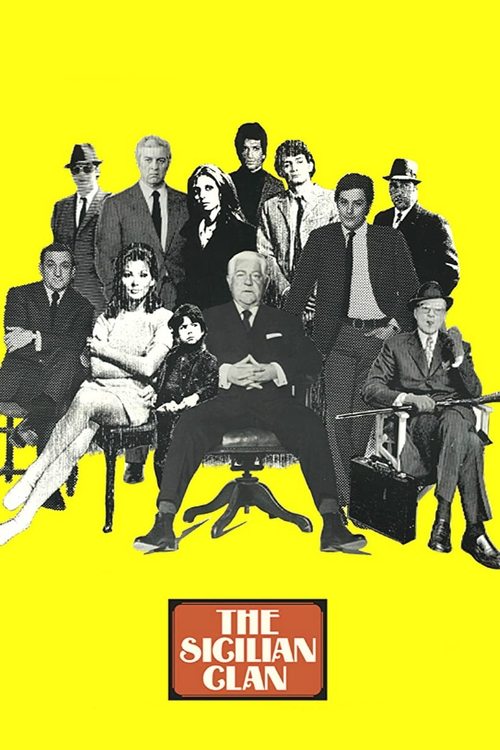
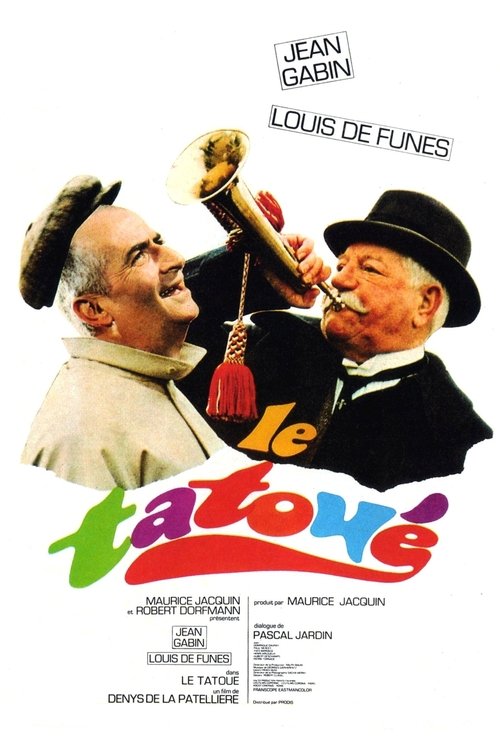
Gabin's career seemed headed for oblivion until the 1954 film Touchez pas au grisbi (Don't Touch the Loot), directed by Jacques Becker, earned him critical acclaim. The film was very profitable internationally. He then worked once again with Renoir in French Cancan, with María Félix and Françoise Arnoul. Gabin played Georges Simenon's detective Jules Maigret in three films in 1958, 1959 and 1963. Over the next 20 years, he made almost 50 more films, most of them very successful commercially and critically, including many for Gafer Films, his production partnership with fellow actor Fernandel. His co-stars included such leading figures of postwar cinema as Brigitte Bardot (En cas de malheur), Alain Delon (Le Clan des Siciliens, Mélodie en sous-sol and Deux hommes dans la ville), Jean-Paul Belmondo (Un singe en hiver) and Louis de Funès (Le Tatoué).