Early life
Ernst Ingmar Bergman was born in Uppsala on 14 July 1918, the son of nurse Karin (née Åkerblom) and Lutheran minister (and later chaplain to the King of Sweden) Erik Bergman. His mother was of Walloon descent. The Bergman family was originally from Järvsö. On his father's side, Bergman was a descendant of the noble Bröms, Ehrenskiöld, and Stockenström clergy families of Finnish, German, and Swedish origin. His father also descended from the German noble families Flach and de Frese introduced at the Swedish Riddarhuset. Bergman's paternal grandmother and maternal grandfather were cousins, making his parents second cousins. On his mother's side, he was descended from Dutch merchant Paul Calwagen, who left Holland for Sweden in the 17th century; Paul's Dutch-Swedish wife, Maria van der Hagen, was a descendant of the court painter Laurens van der Plas. Bergman's mother was also a descendant of the noble Tigerschiöld and Weinholz families, as well as the Bure family.
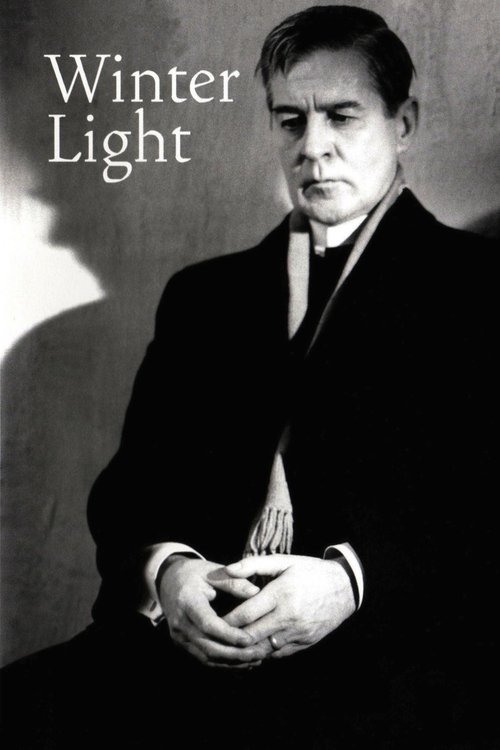
Bergman grew up with his older brother Dag and younger sister Margareta surrounded by religious imagery and discussion. His father was a conservative parish minister with strict ideas of parenting. Ingmar was locked up in dark closets for infractions such as wetting himself. "While father preached away in the pulpit and the congregation prayed, sang, or listened", Ingmar wrote in his autobiography Laterna Magica, "I devoted my interest to the church's mysterious world of low arches, thick walls, the smell of eternity, the coloured sunlight quivering above the strangest vegetation of medieval paintings and carved figures on ceilings and walls. There was everything that one's imagination could desire—angels, saints, dragons, prophets, devils, humans..." Although raised in a devout Lutheran household, Bergman later stated that he lost his faith at age eight, and came to terms with this fact while making Winter Light in 1962. His interest in theatre and film began early; at the age of nine, he traded a set of tin soldiers for a magic lantern. Within a year, he had created a private world by playing with this toy in which he felt completely at home. He fashioned his own scenery, marionettes, and lighting effects and gave puppet productions of Strindberg plays in which he spoke all the parts."
Bergman attended the Palmgren School as a teenager. His school years were unhappy, and he remembered them unfavourably in later years. In a 1944 letter concerning the film Torment (sometimes known as Frenzy), which sparked debate on the condition of Swedish high schools (and which Bergman had written), the school's principal Henning Håkanson wrote, among other things, that Bergman had been a "problem child". Bergman wrote in a response that he had strongly disliked the emphasis on homework and testing in his formal schooling.
In 1934, aged 16, he was sent to Germany to spend the summer holidays with family friends. He attended a Nazi rally in Weimar at which he saw Adolf Hitler. He later wrote in Laterna Magica (The Magic Lantern) about the visit to Germany, describing how the German family had put a portrait of Hitler on the wall by his bed, and that "for many years, I was on Hitler's side, delighted by his success and saddened by his defeats". Bergman commented that "Hitler was unbelievably charismatic. He electrified the crowd. ... The Nazism I had seen seemed fun and youthful." Bergman did two five-month stretches of mandatory military service in Sweden. He later reflected, When the doors to the concentration camps were thrown open, at first I did not want to believe my eyes ... When the truth came out it was a hideous shock for me. In a brutal and violent way I was suddenly ripped of my innocence.
Bergman enrolled at Stockholm University College (later renamed Stockholm University) in 1937, to study art and literature. He spent most of his time involved in student theatre and became a "genuine movie addict". At the same time, a romantic involvement led to a physical confrontation with his father which resulted in a break in their relationship which lasted for many years. Although he did not graduate from the university, he wrote a number of plays and an opera, and became an assistant director at a local theatre. In 1942, he was given the opportunity to direct one of his own scripts, Caspar's Death. The play was seen by members of Svensk Filmindustri, which then offered Bergman a position working on scripts. He married Else Fisher in 1943.