



Hugh Anthony Cregg III (born July 5, 1950), known professionally as Huey Lewis, is an American actor and former singer-songwriter.
Lewis sang lead and played harmonica for his band, Huey Lewis and the News, until being forced into retirement due to hearing loss in 2018; he also wrote or co-wrote many of the band's songs. The band is perhaps best known for its third, and best-selling, album Sports, and its contribution to the soundtrack of the 1985 feature film Back to the Future. Lewis previously played with the band Clover from 1972 to 1979.
Contents
Early life
Huey Lewis was born in New York City. His father, Hugh Anthony Cregg Jr., was an Irish-American from Boston, and his mother, Maria Magdalena Barcinska, was a Polish immigrant, from Warsaw. His grandfather, Hugh Cregg, was district attorney of Essex County, Massachusetts, from 1931 to 1959.
Lewis was raised in Marin County, California, living in Tamalpais Valley and Strawberry, and attending Strawberry Point Elementary School (where he skipped second grade) and Edna Maguire Junior High School in Mill Valley. When he was 13, his parents divorced. He attended and graduated from the Lawrenceville School, a then all-male prep school in New Jersey, in 1967, and he achieved a perfect score of 800 on the math portion of the SAT. He was also an all-state baseball player. Lewis attended Cornell University in Ithaca, New York.
In a podcast interview, he describes that his father "was a doctor by trade, but he was a drummer and a piano player".
His mother had an affair with Beat Generation poet Lew Welch, who became his stepfather. Lewis credits Welch with inspiring him in his early teenage years. His mother was close friends with the Grateful Dead's manager and extended family.
In an interview with David Letterman, Lewis talked about hitchhiking across the country back to New York City and how he learned to play the harmonica while waiting for rides. He talked about hanging out at an airport for three days until he stowed away on a plane to Europe. In later interviews, Lewis would reveal other encounters he had traveling around Europe. While visiting Aberdeen, Scotland, with no money and nowhere to sleep, he claimed that the locals were very hospitable by offering him somewhere to stay. In Madrid, Spain, he became an accomplished blues player as he hitchhiked and supported himself by busking with his harmonica. He gave his first concerts in Madrid, earning enough money to buy a plane ticket back to the US.
Upon his return, Lewis entered the engineering program at Cornell University. While there he made friends with Lance and Larry Hoppen, who later played with Orleans, and with Eddie Tuleja of King Harvest. Initially an active student, Lewis soon lost interest in college. He signed up with a band called Slippery Elm and, in December 1969 during his junior year, he dropped out of Cornell and moved back to the San Francisco Bay Area. He stated that California was where "it was all happening." His aim was to continue playing music, though along the way he also tried other fields of work including landscaping, carpentry, and wedding and event planning, as well as delivering and selling natural foods.
Music career
In 1971, Lewis joined the Bay Area band Clover. Around this time he took the stage name "Hughie Louis", the spelling of which he would tinker with for some years after. Other members of the band (at various points) included John McFee and Alex Call. Lewis played harmonica and sang lead vocals on a few tunes.
In 1976, after playing in the Bay Area with limited success, Clover went to Los Angeles. They had their big break in a club there when their act was caught by Nick Lowe, who convinced Clover to travel to Great Britain with him. However, Clover arrived in Britain just as their folk-rock sound, known as pub rock in Britain, was being replaced by punk rock.
The two Clover albums produced by Robert John "Mutt" Lange for Phonogram were not successful. By this point the spelling of Cregg's stage name had changed to "Huey Louis"; it is under this spelling that he is billed on both of Clover's albums for Phonogram, although for songwriting credits he is billed as "H. Cregg". The band accompanied Elvis Costello on his debut album, My Aim is True, minus Lewis and Alex Call, the singers. As Lewis told Rolling Stone years later, "there isn’t any harmonica. I tell people, 'All the harmonica that isn’t on the Elvis Costello record was played by me.'" In 1978, the band returned to California, McFee joined the Doobie Brothers, and Clover disbanded. McFee and Lewis, credited as Huey Harp, both appear as guest musicians on the George Hatcher Band's 1977 sophomore album, Talkin' Turkey, produced by Tom Allom.
Under the name "Bluesy Huey Lewis", Lewis played harmonica on Thin Lizzy's 1978 landmark album Live and Dangerous. That same year, he was playing at Uncle Charlie's, a club in Corte Madera, California, doing the "Monday Night Live" spot along with future members of the News. At this point, he had adopted the "Huey Lewis" spelling, and the band was billed as Huey Lewis and the American Express. After recording the song "Exodisco" (a disco version of the theme from the film Exodus) simply as American Express, Lewis landed a singles contract from Phonogram, and Bob Brown became his manager.
The band played a few gigs (including an opening for Van Morrison), before adding new guitarist Chris Hayes to the line-up. On Brown's advice, they changed their name again to Huey Lewis and The News. After a failed self-titled debut in 1980, the band finally broke through to Top 40 success with the gold album Picture This (1982). It rose to No. 13 on the albums chart thanks to the Mutt Lange-penned "Do You Believe in Love" (No. 7), the band's first hit.
Acting career
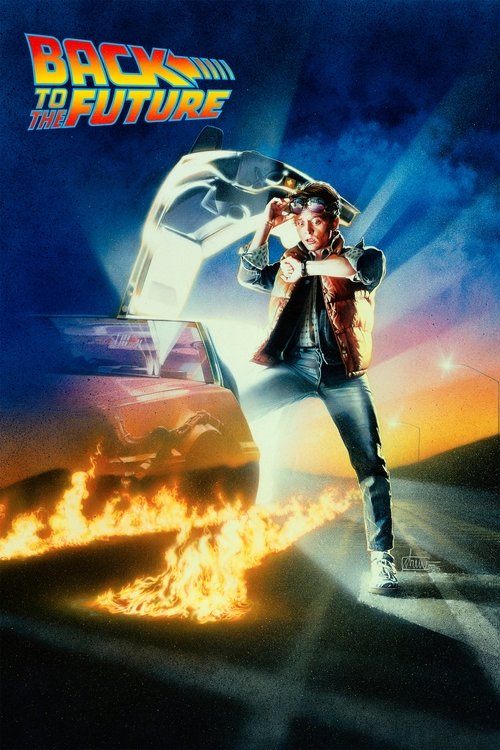
After Lewis's cameo appearance as a teacher in Back to the Future, more substantial roles followed, including Vern Miller in Robert Altman's ensemble feature, Short Cuts, and Ricky Dean in Duets. He has performed in occasional television roles as well, including One Tree Hill, The King of Queens and a recurring character on Hot in Cleveland. Lewis provides the voice of Bulworth the junkyard dog in the animated series Puppy Dog Pals.
In 2013, he played himself in a parody of American Psycho with "Weird Al" Yankovic.
On October 21, 2015, on an episode of Jimmy Kimmel Live, Lewis reprised his role from Back to the Future in a segment where Marty McFly and Doc Brown arrive in the time machine and talk to the host.
On February 12, 2021, he played himself on an episode of The Blacklist.
Lawsuit
In 1985, Lewis sued Ray Parker Jr. over similarities between Parker's theme for the 1984 movie Ghostbusters and Lewis's "I Want a New Drug". The case was settled out of court, with the parties agreeing to keep the settlement secret. In 2001, Parker sued Lewis, alleging that Lewis had discussed the settlement in a Behind the Music episode in violation of their nondisclosure agreement.
Personal life
Lewis lives on a ranch near Stevensville, Montana. He considers it his permanent residence.
He married his manager's secretary, Sidney Conroy, in 1983 in Hawaii. They separated six years later. They have a daughter and a son.
In April 2018, Lewis stated that he had hearing loss as a result of Ménière's disease, and canceled all upcoming tour dates. He remarked in 2025 that his hearing loss had worsened to the point of total deafness and that a cochlear implant had restored enough hearing for him to hear speech, but that he would likely never be able to hear or perform music again.
Recording credits
See Huey Lewis and the News discography for albums and singles by the band. Below are specific contributions by Lewis as a solo artist.
Album appearances
1975: Don Harrison Band Don Harrison Band; harmonica
1977: Talkin' Turkey George Hatcher Band; harmonica
1978: Live and Dangerous Thin Lizzy; harmonica
1979: Labour of Lust Nick Lowe; harmonica
1979: Repeat When Necessary Dave Edmunds; harmonica
1979: The Day the Earth Caught Fire City Boy; harmonica
1980: Solo in Soho, Phil Lynott; harmonica
1985: Back to the Future Soundtrack; producer
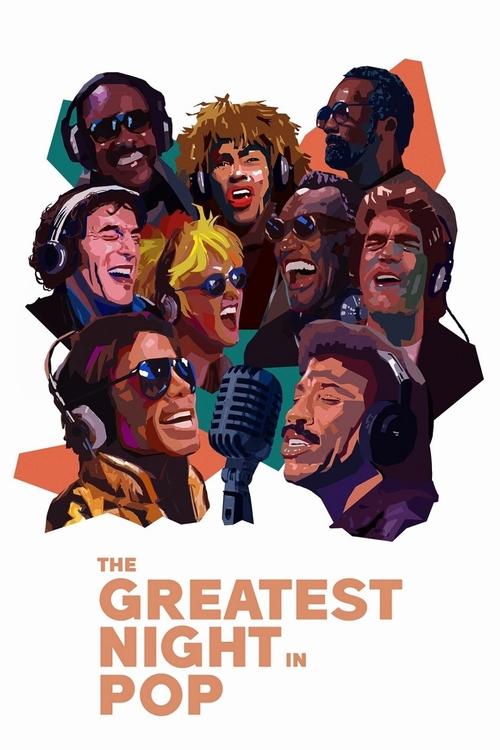
1985: USA for Africa: We Are the World; harmonica, vocals, producer
1986: The Way It Is Bruce Hornsby & the Range; harmonica, vocals, producer
1986: Montana Cafe Hank Williams Jr.; duet on "You Can't Judge a Book (By Looking at the Cover)"
1987: Freight Train Heart Jimmy Barnes; harmonica, background vocals
1988: Scenes from the Southside Bruce Hornsby & the Range; harmonica
1988: Oliver & Company soundtrack; performer on "Once Upon a Time in New York City"
1991: Live at Slim's, Vol. 1 Joe Louis Walker; harmonica
1993: A Tribute to the Music of Bob Wills & the Texas Playboys Asleep at the Wheel; vocals on "Ida Red" and "Hubbin' It"
Singles
The following table denotes singles that Lewis has charted with solo credits: