



Dennis Howard Marks (13 August 1945 – 10 April 2016) was a Welsh drug smuggler and author who achieved notoriety as an international cannabis smuggler through high-profile court cases.
At his peak he claimed to have been smuggling consignments of the drug as large as 30 tons, and was connected with groups as diverse as the CIA, the IRA, MI6, and the Mafia. He was eventually charged by the US Drug Enforcement Administration, convicted and given a 25-year prison sentence; he was released in April 1995 after serving seven years. Though he had up to 43 aliases, he became known as "Mr Nice" after he bought a passport from convicted murderer Donald Nice. After his release from prison, he published a best-selling autobiography, Mr Nice (1996), and campaigned publicly for changes in drugs legislation.
Contents
Early life and education
Marks was born in Kenfig Hill, near Bridgend, Wales, the son of Dennis Marks, a captain in the Merchant Navy, and Edna, a teacher. Brought up as a Baptist, he later turned to Buddhism, though he did not become a devout follower. He attended Garw Grammar School in Pontycymer. He was a fluent Welsh speaker.
He gained a place at Balliol College, Oxford, after he impressed Russell Meiggs in his interview, and read physics there from 1964 to 1967. At the university he was first introduced to cannabis by Denys Irving. After his friend Joshua Macmillan (son of Maurice Macmillan) died, Marks swore off ever getting involved with hard drugs. Among his other friends at Oxford were the epidemiologist Julian Peto and the journalist Lynn Barber. Through a mixture of cheating and last minute cramming, he passed his finals; this was despite months of taking drugs rather than attending classes and a serious infection he developed a few weeks before the exams.
In 1967 he began teacher training, and married Ilze Kadegis, a Latvian student at St. Anne's College, Oxford, who was also training to become a teacher. He gave up teacher training to continue his education at the University of London (1967–68; Grad. Inst P.), then back to Balliol College, Oxford (1968–69; Dip HPh Sc), and then on to the University of Sussex (1969–70) to study philosophy of science.
Marks's daughter, Amber Marks, is a barrister and pharmacology expert.
Drug empire
Though involved with drugs at university, he sold cannabis only to his friends or acquaintances until 1970, when he was persuaded to assist Graham Plinston, who had been arrested in Germany on drug trafficking charges. Through Plinston he met Mohammed Durrani, a Pakistani hashish exporter who was a descendant of the Durranis who had run Afghanistan in the 19th century. With Plinston behind bars, Durrani offered Marks the opportunity to sell the drug on a large scale in London, and he agreed to the proposition. He formed a four-way partnership with Charlie Radcliffe, Charlie Weatherly and a dealer named Jarvis. Durrani never contacted them, and so the group acquired smaller quantities of hashish from various sources and began selling the drug in Oxford, Brighton and London. After six months he returned to Germany to help bail Plinston out of jail. Marks was a useful means of transferring money as he did not have a criminal record.
Now a free man, Plinston gave Marks a job transporting hashish in Frankfurt; Marks in turn hired a New Zealand smuggler named Lang as his driver. After paying Marks £5,000 for his work in Frankfurt, Plinston then sold hashish to Marks and his three friends (Radcliffe, Weatherly and Jarvis) in London; in selling 650 kg (1,430 lb) within a week, the four men made a profit of £20,000. Durrani then arranged for hashish to be smuggled in the furniture of Pakistani diplomats who were moving to London; Marks would then intercept the furniture to find the drugs – this arrangement netted him a profit of £7,500. Marks expanded his enterprise, employing two friends from Wales, Mike Bell and David Thomas, to stash the drugs and help with transportation. The gang became dissatisfied with the way the profits were being split (80% of the money they made went to Durrani) and contacted James McCann, a gunrunner for the Provisional Irish Republican Army (IRA). Marks and Plinston persuaded McCann to smuggle hashish into Ireland from Kabul, which the pair would then ferry over to Wales and into England; McCann would get the drugs into Ireland through the freeport at Shannon Airport using his IRA connections. Marks avoided the attention of HM Revenue and Customs by creating a paper trail that indicated he made his money from selling stamps and dresses.
By 1972, he was making £50,000 with each shipment. By the end of the year he was approached by Hamilton McMillan of the Secret Intelligence Service (MI6), a friend from Oxford University, who recruited Marks to work for MI6 because of his connections in the hashish-producing countries of Lebanon, Pakistan and Afghanistan, for his ability to seduce women, and for his contacts with the IRA. The next year, Marks began exporting cannabis to the United States to The Brotherhood of Eternal Love, hiding the drugs in the music equipment of fictional British pop groups that were supposed to be touring the country; he further expanded his operations with other smugglers and other methods of trafficking, often using his Oxford connections. As McCann was in danger of being executed by the IRA should MI6 tip them off about his involvement in drugs, Marks then gave up the smuggling operation at Shannon airport.
Trial and imprisonment
Marks was taken from Palma to Modelo Prison in Barcelona, and then to Alcalá Meco Prison in Madrid. There he was handed a 40-page document which detailed the allegations of his drug smuggling activities between 1970 and 1987, charging him with operating a racket as described in the RICO act. In his autobiography, Marks stated that "although the charge against Judy and some others were absurd, the formal accusations against me, in general terms, were true." The recently passed Sentencing Reform Act meant that he was facing a minimum of ten years to a maximum life sentence without the possibility for parole. The Audiencia Nacional ordered his extradition to Florida.
After being shown the prosecution evidence against him, Marks attempted to construct the defence that his smuggling operations were directed to Australia and that he never exported to the United States, and therefore never broke US law. He again cultivated the myth that he was a spy for MI6, and claimed that he was set up by the CIA because he had discovered that CIA agents were smuggling drugs into Australia. He and his lawyers spent hours reviewing the phone tapping evidence to make the coded conversations about smuggling into America seem to suggest that the drugs were actually being smuggled into Australia; research was done into weather patterns to prove tentative links between what was said by Marks and his associates and what was happening at the time in Australia. Marks and his wife were extradited in 1989, and he was given the Miranda rights on the flight from Spain to the US.
In Florida, Judy pleaded guilty to her small part in the racket and was released, having already served some months in prison in Spain. The money Marks made from his smuggling operations was spent on legal fees. He refused to plea-bargain or to inform on his associates, gambling that he could again convince a jury that the authorities had got the wrong man. As the trial began in July 1990, Patrick Lane, his brother-in-law and fellow smuggler, wrote to Marks to inform him that he was going to testify against Marks in court to get a more lenient sentence himself. Marks still was confident of beating the DEA in court, but Ernie Combs also agreed to testify for the prosecution so as to secure the release of his wife, and Marks had little choice but to change his plea to guilty to racketeering charges. He was sentenced to 25 years in jail and given a $50,000 fine; though he had originally been sentenced to 15 years he was taken back into court after the judge realised he had misspoken and said that his 10 and 15-year sentences were to run consecutively and not, as he had originally stated, concurrently.
Life after release
Acting
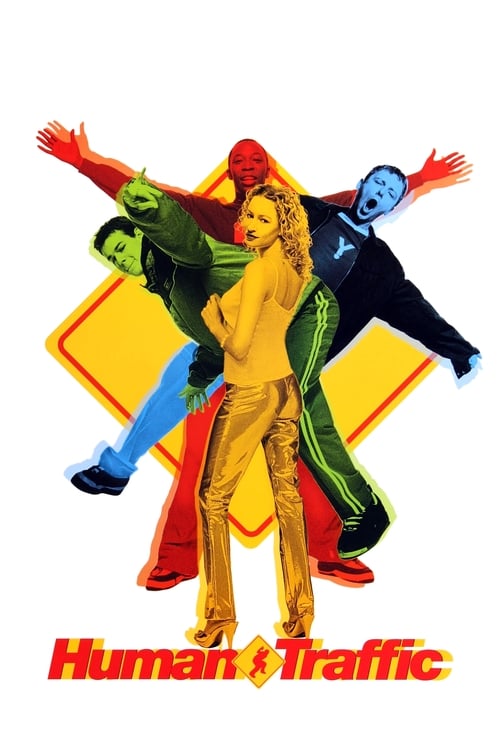
He acted in gangster film Killer Bitch (2010), starred in the film I Know You Know (2009), appeared as Satan in the 2006 movie adaptation of the Dirty Sanchez television series, and had a cameo appearance in the film Human Traffic (1999). He appeared as himself in AmStarDam (aka "Stoner Express") (2016).
Advocacy and politics
Marks stood for election to the UK Parliament in 1997, on the single issue of the legalisation of cannabis. He contested four seats at once—Norwich South (against future Home Secretary Charles Clarke), Norwich North, Neath and Southampton Test—and picked up around 1% of the vote. This led to the formation of the Legalise Cannabis Alliance (LCA) by Alun Buffry in 1999; the party reformed as Cannabis Law Reform in 2011.
He also argued for the legalisation of cannabis in numerous television programmes in the United Kingdom. On 1 October 2010, he was interviewed on Ireland's The Late Late Show. The Dutch Cannabis Seedbank Sensi Seeds dedicated their strain Mr Nice G13 x Hash Plant to Marks for his advocacy work.
His close links to the likes of Gruff Rhys led to Marks being associated with the radical changes of the Cool Cymru movement and the changing face of modern Wales.
Books
Following his release from prison, Marks published an autobiography, Mr Nice (1996), which has been translated into several languages. He also compiled an anthology called The Howard Marks Book of Dope Stories (2001) and a follow-on from his autobiography: Señor Nice: Straight Life From Wales to South America (2006). Señor Nice differs from his previous book as drugs are not central to the story and, while autobiographical, the book is more Marks's own exploration of his claimed ancestor, the pirate Sir Henry Morgan. In 2011, he penned the thriller Sympathy for the Devil.
His final book "Mr Smiley, My Last Pill and Testament" ISBN 978-1-5098-0968-4 was published in 2015 by Pan Macmillan.
Marks held a series of book-readings into 2014. In these live events he regaled his audiences with tales of his smuggling days and his time in prison, as well as offered insight into drug production and the arguments for legalisation of cannabis.
Comedy
He was booked to perform at the Welsh Comedy Festival in July 2007.
Comics and videogame
Marks and comic writer Pat Mills collaborated on comic strips which tied in with Sony's inFamous 2 video game.
Music
In the music world, he appeared as a guest on the BBC music quiz show Never Mind the Buzzcocks. He also collaborated with Welsh group Super Furry Animals on their album Fuzzy Logic (released May 1996), which features a track entitled "Hangin' With Howard Marks". The cover for the album featured a montage of photos of Marks. He also worked on their singles "The Man Don't Give a Fuck" and "Ice Hockey Hair". He featured on the album Angel Headed Hip Hop (2009) with Lee Harris and River Styx. He also worked with former Happy Mondays guitarist Kav Sandhu, and appeared at numerous British music festivals, including: (Glastonbury 2009 and 2011), Beautiful Days, RockNess, Camp Bestival, Kendal Calling, and the Sonisphere Festival. He was featured on the Reverend & The Makers track "MDMAzing" on their third album @Reverend Makers (2012).
Works about Marks
Marks was the subject of the biography High Time (1984) written by David Leigh.
Marks was also the subject of the film Mr Nice (2010), named after his 1997 autobiography. The film featured Rhys Ifans as Marks and Chloë Sevigny as his wife Judy.
In 2013, Marks recounted his story in an episode of the television series Banged Up Abroad.
In November 2024, the BBC released a two part two hour documentary about Marks titled Hunting Mr Nice: The Cannabis Kingpin.
Death
On 25 January 2015, it was announced that Marks had inoperable colorectal cancer. He died of the disease on 10 April 2016, at the age of 70.