




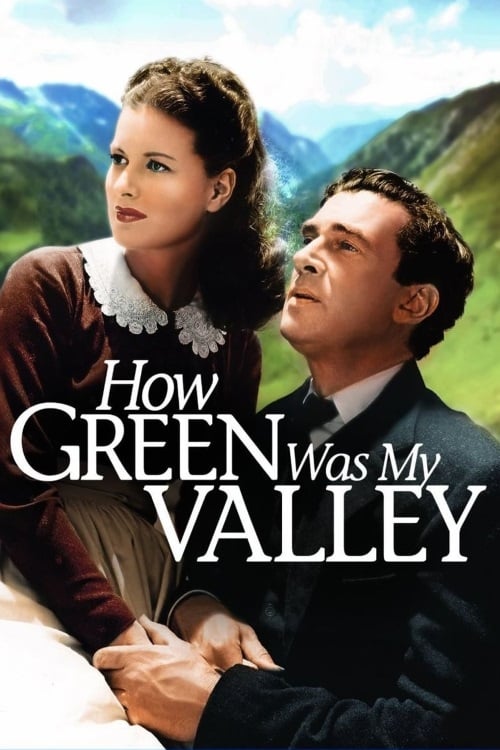
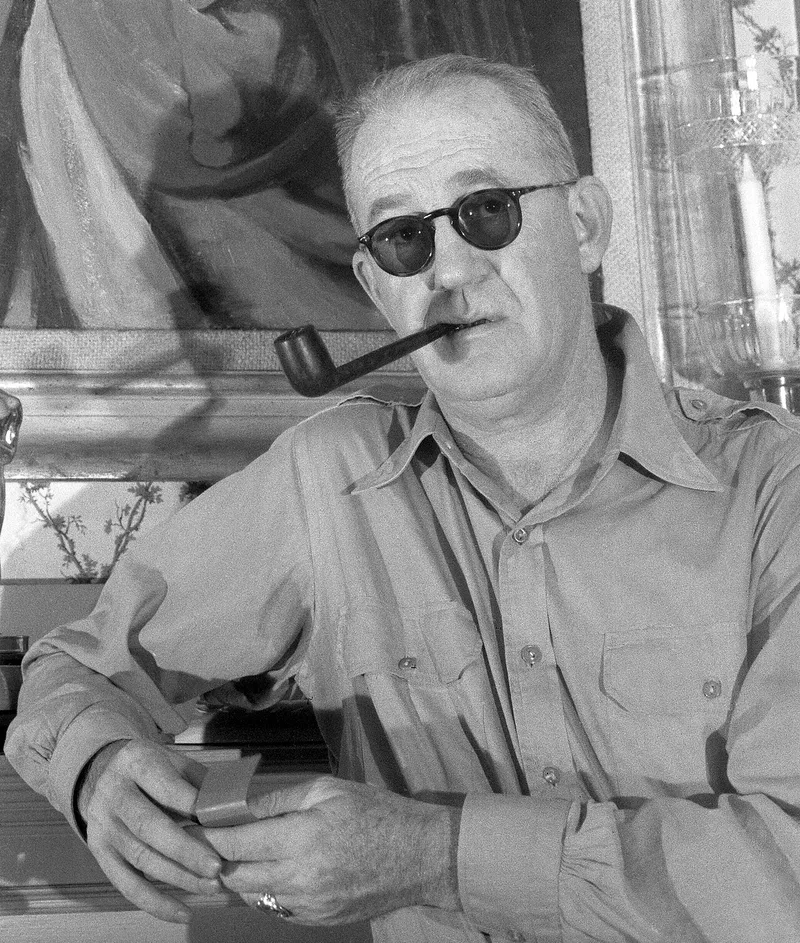



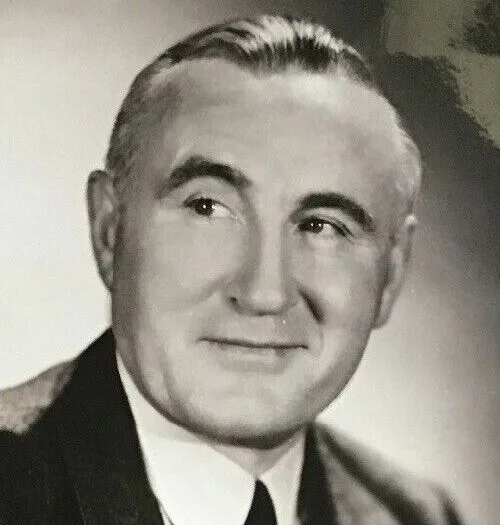
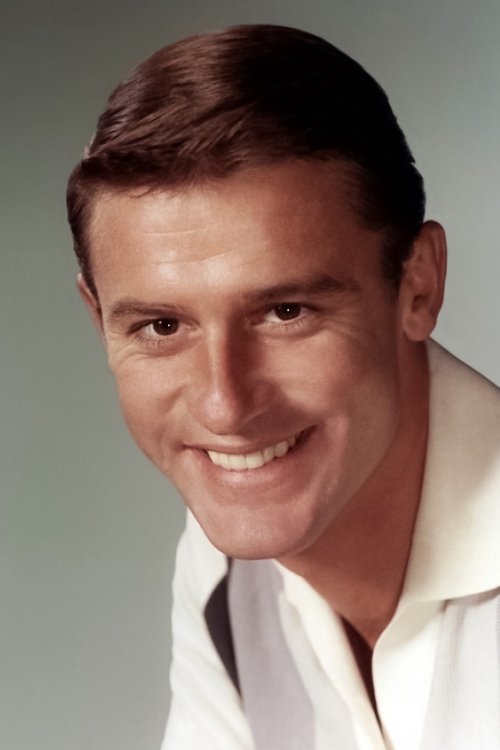
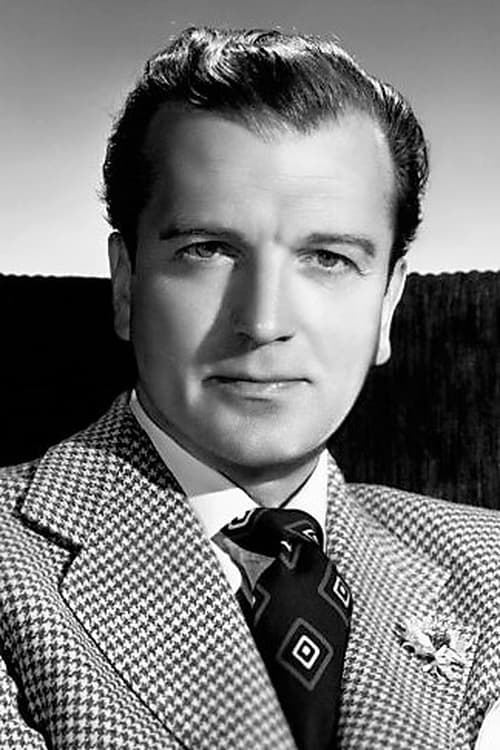
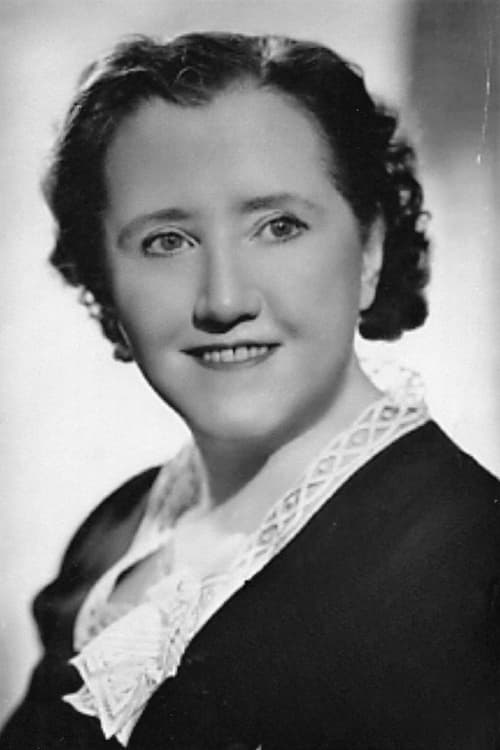
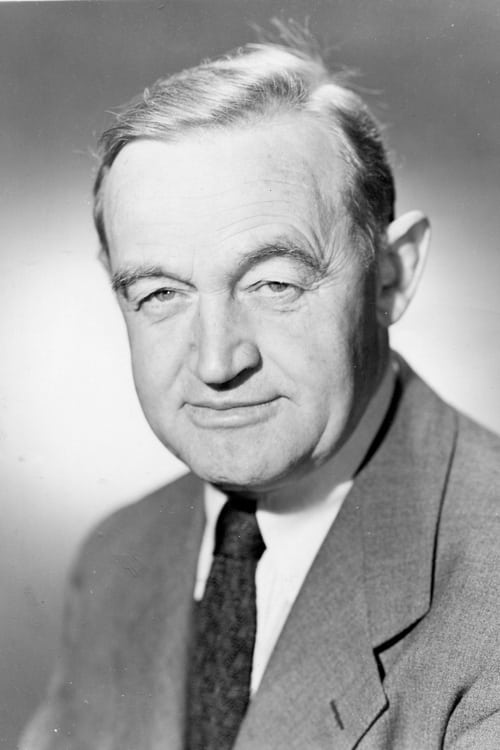
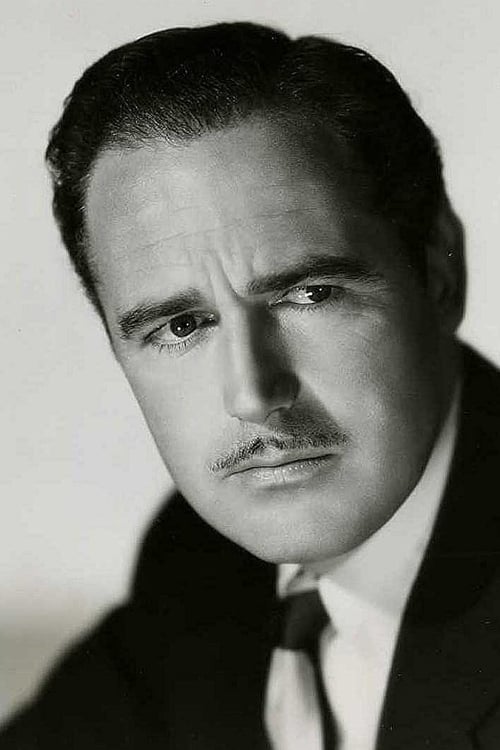
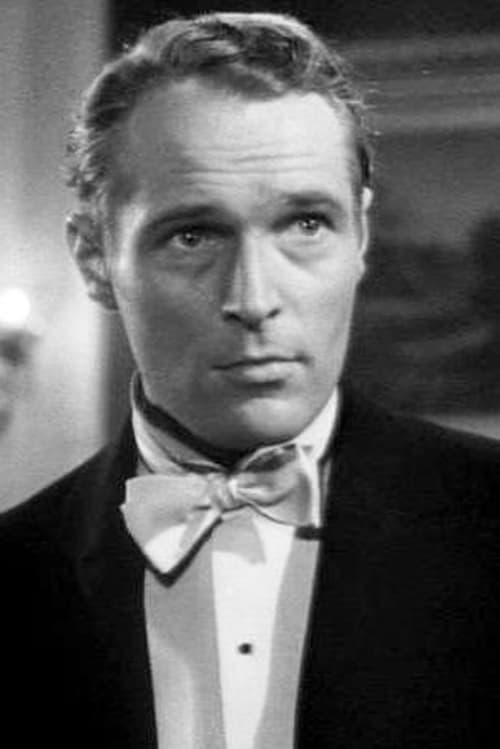
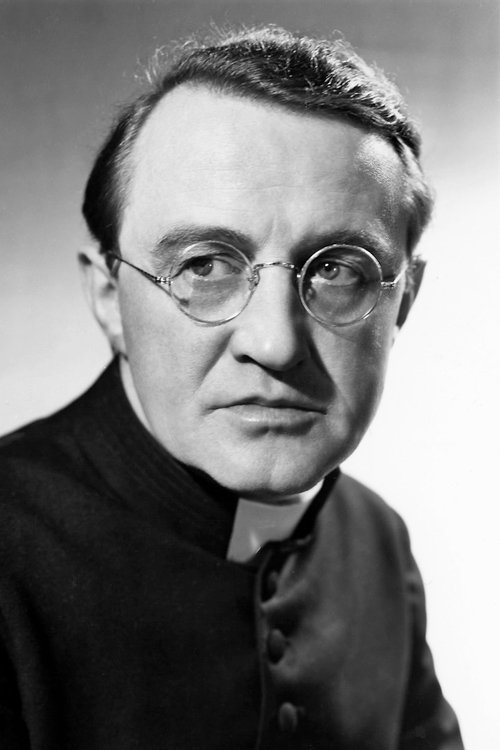
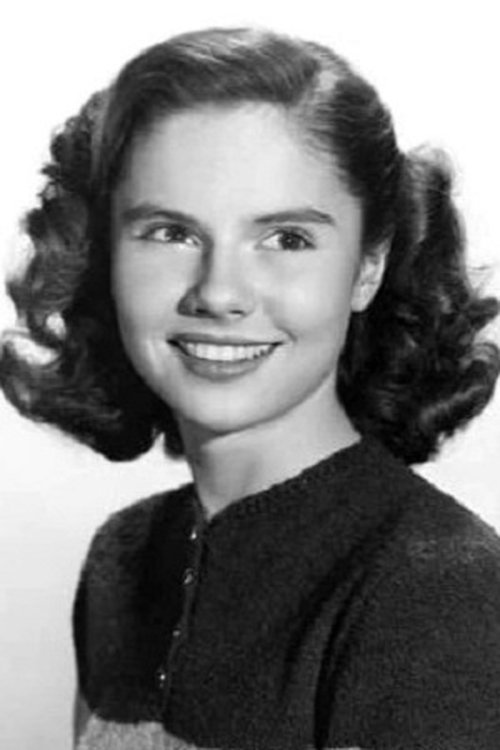
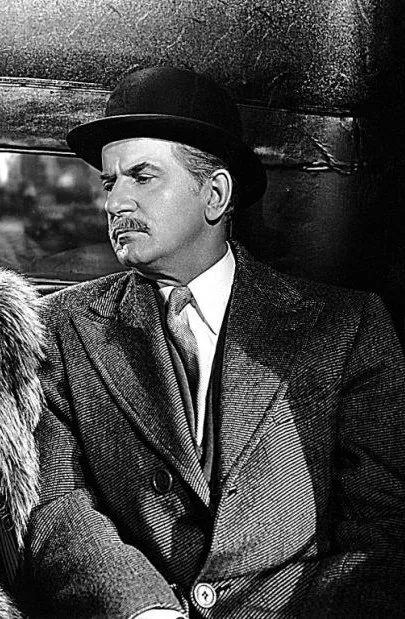


How Green Was My Valley is a 1941 American drama film directed by John Ford, adapted by Philip Dunne from the 1939 novel of the same title by Richard Llewellyn. It stars Walter Pidgeon, Maureen O'Hara, Anna Lee, Donald Crisp, and a young Roddy McDowall.
It tells the story of the Morgans, a hard-working Welsh mining family, from the point of view of the youngest child, Huw, who lives with his affectionate and kind parents as well as his sister and five brothers, in the South Wales Valleys during the late Victorian era. The story chronicles life in the South Wales coalfields, the loss of that way of life and its effects on the family.
The fictional village in the film is based on Gilfach Goch, where Llewellyn spent many summers visiting his grandfather, and it served as the inspiration for the novel. The author had claimed that he based the book on his own personal experiences but this was found to be untrue after his death; Llewellyn was English-born and spent little time in Wales, though he was of Welsh descent. Llewellyn gathered material for the novel from conversations with local mining families in Gilfach Goch.
It was nominated for ten Academy Awards, winning five, famously beating Citizen Kane, Sergeant York and The Maltese Falcon for Best Picture, while Ford won for Best Director, Donald Crisp for Best Supporting Actor, Arthur Miller for Best Cinematography, and Richard Day, Nathan H. Juran and Thomas Little for Best Black-and-White Art Direction-Interior Decoration. In 1990, the film was selected for preservation in the United States National Film Registry of the Library of Congress as being "culturally, historically, or aesthetically significant". The Academy Film Archive preserved How Green Was My Valley in 1998.
Contents
Plot
The Morgans are a mining family in the South Wales Valleys during the late Victorian era. Huw, the youngest son of Gwilym Morgan, walks home with his father to meet his mother, Beth. His older brothers, Ianto, Ivor, Davy, Gwilym Jr., and Owen, all work in the coal mines with their father, while sister Angharad keeps house with their mother. Huw's childhood is idyllic; the town, not yet overrun with mining spoil, is beautiful, the household is warm and loving, and the miners sing as they walk home (in this case "Cwm Rhondda"). Huw is smitten with Bronwyn, a girl engaged to be married to his eldest brother, Ivor. At the boisterous wedding party, Angharad meets the new preacher, Mr. Gruffydd, and there is an obvious mutual attraction.
Trouble begins when the mine owner decreases wages, and the miners strike in protest. Gwilym's attempt to mediate by not endorsing a strike estranges him from the other miners as well as his older sons, who leave home. Beth interrupts a late night meeting of the strikers, threatening to kill anyone who harms her husband. She and Huw head across the fields in a snowstorm in the dark to return home. On their way home, the strikers hear Huw calling for help. They rescue Beth and Huw from the river. Beth has temporarily lost the use of her legs and the doctor fears that Huw, who has also lost the use of his legs, will never walk again. He eventually recovers with the help of Mr. Gruffydd, which further endears the latter to Angharad.
The strike is eventually settled, and Gwilym and his sons reconcile, yet many miners have lost their jobs. The exceptionally beautiful Angharad is courted by the mine owner's son, Iestyn Evans (Marten Lamont), though she loves Mr. Gruffydd. Mr. Gruffydd loves her too, to the malicious delight of the gossipy townswomen, but cannot bear to subject her to the hard, spartan life of an impoverished minister of religion. Angharad submits to a loveless marriage to Evans, and they relocate out of the country.
Huw begins school at a nearby village. Abused by other boys, he is taught to fight by boxer Dai Bando and his crony, Cyfartha. After Huw suffers a beating by the cruel teacher Mr. Jonas, Dai Bando avenges Huw with an impromptu boxing display on Mr. Jonas, to the delight of his pupils.
When a pregnant Bronwyn learns Ivor has been killed in a mine accident, the shock causes her to go into premature labour and she gives birth to a son. Later, two of Morgan's sons are dismissed in favour of less experienced, lower paid labourers. With no job prospects, they leave to seek their fortunes abroad. Huw is awarded a scholarship to university, but, to his father's dismay, he refuses it to work in the mines. He relocates with Bronwyn, to help provide for her and her child.
Production
The script was written by Philip Dunne. He later recalled reading the original novel "in horror, turgid stuff, long speeches about Welsh coal miners on strike."
William Wyler, the original director, saw the screen test of McDowall and chose him for the part. Wyler was replaced by John Ford. Fox wanted to shoot the movie in Wales in Technicolor, but it was impossible to do so during World War II. Instead, Ford had the studio build an 80-acre representation of a typical Welsh mining town at Brent's Crags (subsequently Crags Country Club) in the Santa Monica Mountains near Malibu, California.
John Ford originally hired Rhys Williams, the film's Welsh dialect coach, to record the film's narration as Older Huw. Shortly before release, he had the narration re-dubbed by Irving Pichel, afraid that audiences might recognize Williams' voice from his onscreen role as Dai Bando and be confused. Williams' narration was still used in some prints of the film, including the original British release, and he's credited as such on some secondary sources.
Reception
In his October 29, 1941 review in The New York Times, Bosley Crowther praised the production as "a motion picture of great poetic charm and dignity, a picture rich in visual fabrication and in the vigor of its imagery, and one which may truly be regarded as an outstanding film of the year."
On review aggregator Rotten Tomatoes, How Green Was My Valley held, as of August 2026, an approval rating of 93% based on 89 reviews, with an average rating of 8.0/10. The site's critics consensus reads: "Nostalgic without becoming maudlin, this working-class drama is enlivened by a terrific cast and John Ford's ineffable directorial eye." On Metacritic, the film holds a weighted average score of 88 out of 100 based on 17 critics, indicating "universal acclaim". Tim Dirks of Filmsite lauded the film as "one of John Ford's masterpieces of sentimental human drama."
While the opinion among the Academy Awards committee that it was 1941's Best Picture has been disputed by some later critics, How Green Was My Valley continues to be well received in its own right and, in 1990, was added to the American National Film Registry. Academy Award-winning actor and director Clint Eastwood named it as one of his favorite movies. The film has been criticized in the UK for the actors' poor accents.
Accolades
American Film Institute lists
AFI's 100 Years...100 Movies – Nominated
AFI's 100 Years...100 Movie Quotes:
"Men like my father cannot die. They are with me still -- real in memory as they were in flesh, loving and beloved forever. How green was my valley then." – Nominated
AFI's 100 Years of Film Scores – Nominated
AFI's 100 Years...100 Movies (10th Anniversary Edition) – Nominated
Adaptations
How Green Was My Valley was adapted as a half-hour radio play on the March 22, 1942, broadcast of The Screen Guild Theater, with Sara Allgood, Donald Crisp, Roddy McDowall, Maureen O'Hara and Walter Pidgeon.
It was also adapted for three one-hour broadcasts of the Lux Radio Theatre: on September 21, 1942, with Allgood, Crisp, O'Hara, McDowall and Pidgeon; on March 31, 1947, with Crisp and David Niven; and on September 28, 1954, with Crisp and Donna Reed.