Success in Hungary
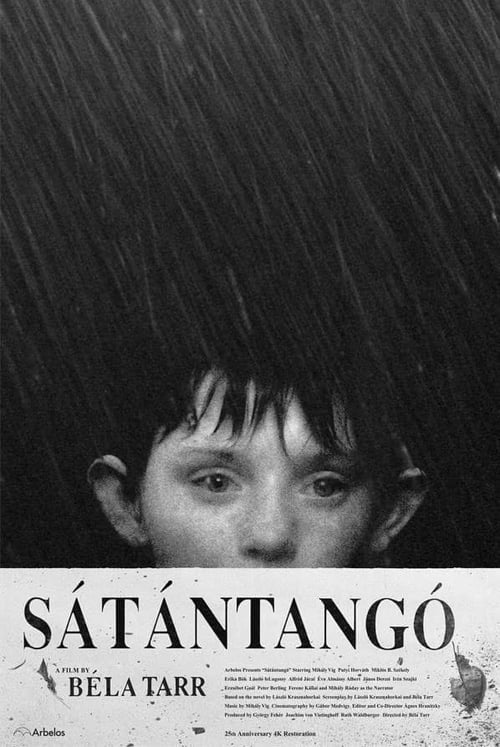
Despite the difficulties in adaptation, Barkó opted to stay in Hungary, where he found additional success before and after that country's own transition to democracy. In 1990, he was directed by Menyhért Szegvári in Don Carlos, as The Inquisitor, and was remarked by critic István Szilárd for his "terrifying" realism. Barkó also satisfied his desire to act in Hungarian films. He had thirty such credits, beginning with a noted performance in Béla Tarr's Sátántangó (1994). In 1997, while filming on Dezső Zsigmond's Blood of the Rose, he traveled about the Tiszahát region. Using his peasant-and-Csángó background, he befriended and coached his debuting co-star, the real-life shepherd András Szim.
Despite offers to join the more prestigious National Theater Budapest, Barkó remained loyal to Pécs. However, by 1995 he had left the PNSz and was mainly active with the city's Third Theater. Until his retirement at age sixty-two, he gave some 300 performances on those two stages. He continued to act sporadically after that moment. In 1999, he appeared as the narrator, Kálmán Mikszáth, in an adaptation of St. Peter's Umbrella for the Eger Lyceum. For that role, he turned to his childhood experiences: Playing Mikszáth is like going home to Transylvania and drinking from the purest spring water. I have the feeling that we have brought too much evil onto the stage in recent decades, an evil that is foreign to us, Western, and which we cannot even play from the heart. We have never needed Mikszáth's beautiful language, his Hungarianness, as much as we do now, when a dozen foreign things have stuck to us. I am a Csángó, so my life is a fairy tale. Life has taught the Csángó man two things the hard way: storytelling and hard work.
Cast by Frigyes Gödrös in the 2000 film Glamour, Barkó was, according to author István Szilágyi, the only member of the ensemble to impress, in what was overall an unintentionally "grotesque allegory" of the Holocaust in Hungary. A similar point was made in relation to Man with the Golden Touch, a Mór Jókai novel adapted for the PNSz by Tibor Csizmadia in early 2001. Dramatist Barbara Ary-Nagy argued that Barkó (as Ali Csorbadzsi) provided one of two actors who "work[ed] cleanly", without "false overtones". Later that year, he was used for another production of The Lower Depths, as Luka the pilgrim—redone as a Székely man, with the entire play reset in Central Europe. Theatrologist Imre Nagy calls his moments on stage the "crowning achievement" of László Bagossy Jr's directorial work. For the 2002 season, he was Mr Bódog in Szakonyi's Adáshiba. It was poorly received by Melinda Sőregi of Criticai Lapok journal, largely because the text seemed antiquated and conventional play, allowing only for "the usual actors with their usual gestures." A similar critique came from columnist László Zappe, regarding a new production of Hamlet, done by Iván Hargitai in 2003. Barkó reappeared as a Gravedigger, but was also The Player King and The Ghost; according to Zappe, only the first role matched his talents, whereas his decision to play The Ghost as "decrepit" was both conventional and questionable.
In 2005, Barkó also appeared on national television's Big Read, which promoted classical books. According to critic Klára Varga, he was the only contributor to that campaign who fit in with his role—namely, as Tüskevár's Uncle Matula. At the PNSz, he was used by director János Vincze in a critically acclaimed rendition of Samuel Beckett's Endgame (as Nagg). After a sabbatical caused by health issues, Barkó also made returns to Cluj's Hungarian Theater, and to post-communist Romania: in 2008, he was cast in Tompa's Three Sisters, which was again in production after a 23-years hiatus; the institution offered him benefits as a lifelong employee. In April 2014, after filming had ended on Zolatan Bičkei's Snevani snegovi, Barkó announced that he was no longer going to appear in any other production. By his count, he had had 5,422 performances in his career.