



Gurinder Kaur Chadha, (born 10 January 1960) is a Kenyan-born British film director of Indian origin, best known for the 2002 film Bend It Like Beckham (2002). Most of her films explore the lives of Indians living in England. The common theme in her work showcases the trials of Indian women residing in the UK and how they must reconcile their converging traditional and modern cultures. Many of her films address social and emotional issues, especially ones faced by immigrants caught between two worlds.
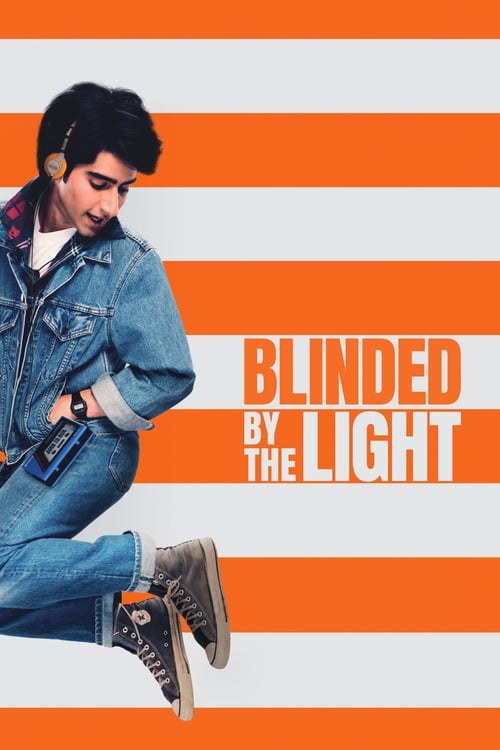
Much of her work also consists of adaptations from book to film. Her work includes the films Bhaji on the Beach (1993), Bride and Prejudice (2004), Angus, Thongs and Perfect Snogging (2008), It's a Wonderful Afterlife (2010), Viceroy's House (2017), Blinded by the Light (2019), the television show Beecham House (2019) and Christmas Karma (2025).
Contents
Early life and education
Gurinder Chadha was born in Nairobi, Kenya, then a British colony. Her Punjabi Sikh Khatri family was part of the Indian diaspora in East Africa. Bhajan, her father (who died in 1999), and her mother were both born in Kenya, and remained there until the political turbulence leading up to independence prompted the family to relocate. Her family held "united citizenship" under the British Nationality Act 1948, which granted them rights of entry and settlement in Britain. Her father moved first and was joined by the family the following year moving to Southall, West London, when she was two years of age, where she attended Clifton Primary School. Chadha's father faced prejudice because of his appearance as a Sikh Indian, wearing a turban and having a beard. Her father had worked as a clerical officer in Barclays Bank in Kenya but was unable to secure the same position due to his appearance. Eventually, the family opened a shop to support the family.
Many of her future films would draw on her personal experience of being Indian and English at the same time, and how she dealt with the duality of her identity. Upon completion of her documentary, I'm British but... Chadha insisted the premiere be held at the Southall Community Center to honour her home community. She would not wear traditional Indian clothing, and refused to cook for her family. In her mind, having all the women in the kitchen cooking while the men sat and ate was oppressive, although it is a living part of Indian culture. Therefore, she sat at the table with the men and was "extremely outspoken." After graduating from the University of East Anglia where she studied politics and developmental economics before radio journalism, Chadha attended the London College of Printing in 1984/85 and studied as a post-graduate. When she decided she wanted to go to the University of East Anglia to do development studies, her teachers suggested a secretarial course, or a lesser university.
Career
After beginning her media career in radio in the mid-1980s, Chadha became a BBC Television news reporter. She directed award-winning documentaries for the British Film Institute, BBC, and Channel Four, and in 1989 released the documentary I'm British but... for Channel 4, which followed the lives of young British Asians. In 1990, Chadha established a production company, Umbi Films, despite having no formal film training. Her first film was the 11-minute Nice Arrangement (1991) about a British Asian wedding. It was selected for the Cannes Film Festival Critic's section in 1991.
Chadha mentions the influence that the Indian film Purab aur Pachhim (1970) had on her work, in an interview with Robert K. Elder for The Film That Changed My Life.
There's a wonderful kind of yearning quality about what is culture and the perils of living in the West and the dangers of what could happen.
Her affinity for stories about families was also attributed to her love for It's a Wonderful Life.
She was empowered by British Bhangra music which combines Punjabi folk rhythms, electronic instrumentation, Bombay film styles, and Western disco; I'm British, but... uses this type of music as a metaphor for syncretic nature of British Asian identity.
Her documentary Acting our Age (1992), set out to understand what it was like being Asian and elderly in Britain. During production she gave film crew to the elderly participants and allowed them to create their own film in order to challenge perception and layer spectator images.
Her first feature was Bhaji on the Beach (1993), which was first full-length feature film made by a British Asian woman, and won numerous international awards. The film concerns a day in the lives of Indian women, across different generations, and how they change in order to converge their cultural background with modern UK living. Chadha utilizes subtlety and nuances in dialogue and fashion in order to relay the fact that these women come from a very specific culture. For example, one character wears a leather jacket over her Indian garb, showing how she is fusing her two cultures. Prejudice comes from both outside and inside the British-Indian community; white men treat the immigrants as garbage, while the older generation of Indian women judge the modern woman is challenged by the progressive views of the younger women, as they try to break free from the "oppression" that Chadha fought hard to break free from herself. Her 1994 interview with Ali Kazimi in Rungh Magazine focusses on many of the main themes in Bhaji on the Beach.
Recognition and awards
Chadha's first feature film, Bhaji on the Beach (1993), won numerous international awards, including a BAFTA Nomination for Best British Film of 1994 and the Evening Standard British Film Award for Best Newcomer to British Cinema. Chadha first received wide recognition for the film in 1993. It was the first full-length feature film made by a British Asian woman.
The British Film Institute's filmography study on the history of British cinema named Chadha as the U.K's most prolific female director working today.
She was honoured with the Sophiya Haque Services to British Television and Film Award at the 2017 Asian Media Awards.
Personal life
Chadha is married to American screenwriter and director Paul Mayeda Berges, and they have twins together, a boy named Ronak and a girl named Kumiko, born in 2007.
Chadha has spoken out about the representation of women in the film industry. At a 2017 Bird's Eye View event at Sands Films in London, Chadha stressed the importance of actively supporting female filmmakers at the cinema, especially on the opening weekend. She also noted that women can no longer be passive in the fight for change within a historically male-dominated industry.
She is an active patron of numerous charities including MAF (Medical Aid Films) is a Creative Mentor and Role Model for Creative Access, Directors UK Inspire, the BFI and the Sundance Directors' Lab, and Patron of Women in Film U.K.
With regard to her religious beliefs, Chadha told the BBC in an October 2014 interview:
For most of my life I've been saying no to that question. But, call it age or whatever, I do believe in something now. I don't think it's a white man with a big beard, but I do think that there are forces around us that we don't necessarily understand. I do believe in fate. That's a very Indian thing, but I do believe that everything happens for a reason and what goes around comes around. I suppose what I'm saying is that I believe in karma. If you're a good person and you do good things and don't think negative thoughts about other people, you actually lead a much better life.
On 20 April 2020, Chadha revealed on social media that her paternal aunt Bhuaji had died of COVID-19.
Filmography
Television
I'm British But... (1989) (TV)
Pain, Passion and Profit (1992) (TV)
Rich Deceiver (1995) (TV film)
Desi Rascals (2015)
Beecham House (2019)
Film
Short film
Feature film
Appearances
Your London (2005)
Koffee with Karan (2005)
Who Do You Think You Are? (2006)
BBC Asian (2010)
Recognition
She was recognized as one of the BBC's 100 Women of 2013.