
Study: Atlantic Current Could Recover, Effects Persist Centuries
A Danish Meteorological Institute study found that the Atlantic Ocean’s AMOC may regain strength if global warming reverses, with no irreversible collapse indicated by the model. Recovery could take centuries, while climate and sea-level effects may persist; melting of the Greenland ice sheet would not be reversed, and an outside researcher cautioned that real-world stability may be lower than the model suggests.
Environment · 5 sources · 17hRead itThe journal
Open the journal →The conversation starts in the journal — be the first to post.
About Greenland ice sheet
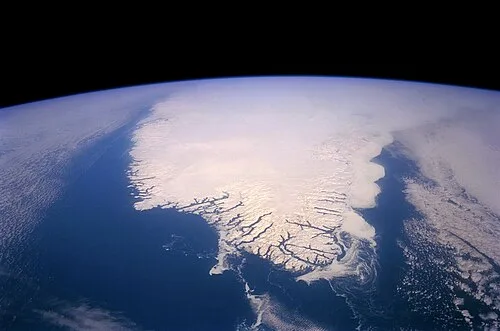
The Greenland ice sheet is an ice sheet which forms the second-largest body of ice in the world. It is an average of 1,673 m (5,489 ft) thick and over 3,488 m (11,444 ft) thick at its maximum. It is almost 2,900 kilometres (1,800 mi) long in a north–south direction, with a maximum width of 1,100 kilometres (680 mi) at a latitude of 77°N, near its northern edge. The ice sheet covers 1,710,000 square kilometres (660,000 sq mi), around 80% of the surface of Greenland, or about 12% of the area of the Antarctic ice sheet. The term 'Greenland ice sheet' is often shortened to GIS or GrIS in scientific literature.
Everything about Greenland ice sheet →- Country
- Greenland