Pre-production and writing
In May 1993, MGM announced that a seventeenth James Bond film was in pre-production, to be based on a screenplay by Michael France. France studied for his script by travelling to Russia to interview former KGB agents and visit nuclear research laboratories. With Broccoli's health deteriorating (he died seven months after the release of GoldenEye), his daughter Barbara Broccoli described him as taking "a bit of a back seat" in the film's production. Barbara and Michael G. Wilson took the lead roles in production, while Albert Broccoli oversaw the production of GoldenEye as a consulting producer, credited as "presenter". Wilson wanted to frame the film in the post-Cold War era and the aftermath of the collapse of the Soviet Union, when there were concerns about proliferation of weapons of mass destruction. Broccoli contacted Dalton, to ask again if he would come back, and now found him open to the idea.
In August 1993, France, having turned in his first draft, continued to work on the script. In further discussion with Broccoli, Dalton expressed excitement over taking the best elements of his previous two films and combining them as a basis for one final film. Broccoli stressed that, after the long gap without a film, Dalton could not come back and just do a single film but needed to return for multiple films. Although France's screenplay was completed by January 1994, production was pushed back with no concrete start. In April 1994, Dalton officially resigned from the role. In a 2014 interview, Dalton revealed that he agreed with Broccoli's expectation but could not commit to appearing in four or five more films.
Further work was done on the screenplay throughout 1994. France's screenplay introduced the character of "Augustus Trevelyan", Bond's MI6 superior and a defector to Soviet Union, as the main villain. As in the completed version, his scheme involved a stolen orbital EMP weapon. The first draft started with an Aston Martin car chase aboard a high-speed train. However, Barbara Broccoli was concerned that France's screenplay was still too unstructured and brought in Jeffrey Caine to rewrite it. Caine kept many of France's ideas but added the prologue before the credits and rewrote Trevelyan closer to his iteration in the final film. Kevin Wade did a three-week rewrite and Bruce Feirstein added the finishing touches. In the film, the writing credit was shared by Caine and Feirstein, while France was credited with only the story, an arrangement he felt was unfair, particularly as he believed that the additions made were not an improvement on his original version. Wade did not receive an official credit, but was acknowledged in the naming of Jack Wade, the CIA character he created.
The opening scene, in which an admiral is seduced and then killed, had to be rewritten following a demand from the US military, after which the nationality of the admiral was changed from American to Canadian.
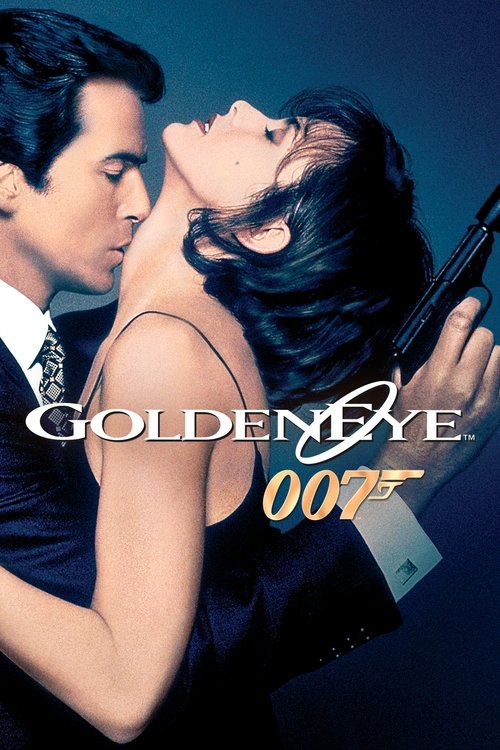
While the story was not based on a work by Ian Fleming, the title GoldenEye came from the name of Fleming's Jamaican estate, where he wrote the Bond novels. Fleming gave a number of origins for the name of his estate, including Carson McCullers' Reflections in a Golden Eye and Operation Goldeneye, a contingency plan Fleming himself developed during the Second World War in case of a Nazi invasion through Spain.
Although GoldenEye was released only six years after Licence to Kill, world politics had changed dramatically in the interim. It was the first James Bond film to be produced after the fall of the Berlin Wall, the collapse of the Soviet Union, and the end of the Cold War, and there was doubt over the character's relevance in the modern world. Some in the film industry felt it would be "futile" for the Bond series to make a comeback, and that the character was best left as "an icon of the past". The producers even thought of new concepts for the series, such as a period piece set in the 1960s, a female 007, or a black James Bond. Ultimately, they chose to return to the basics of the series, not following the sensitive and caring Bond of the Dalton films or the political correctness that started to permeate the decade. The film came to be seen as a successful revitalisation, and it effectively adapted the series for the 1990s. One of GoldenEye's innovations includes the casting of a female M. In the film, the new M quickly establishes her authority, remarking that Bond is a "sexist, misogynist dinosaur" and a "relic of the Cold War". This is an early indication that Bond is portrayed as far less tempestuous than Timothy Dalton's Bond from 1989.
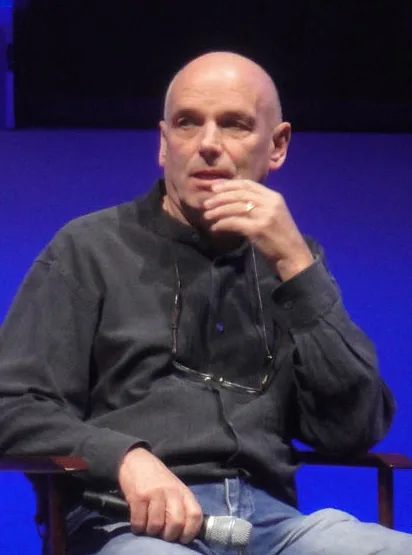
John Woo was approached as the director, and turned down the opportunity, but said he was honoured by the offer. Michael Caton-Jones and Peter Medak were also considered. The producers then chose New Zealander Martin Campbell as the director. Brosnan later described Campbell as "warrior-like in his take on the piece" and said that "there was a huge passion there on both our parts".









.jpg?width=400)