Supermarionation
AP Films' third series was the children's western fantasy-adventure series Four Feather Falls (1959–60). Provis left the partnership, but the company retained the name AP Films for several more years. Four Feather Falls was the first Anderson series to use an early version of the so-called Supermarionation process, though this term had yet to be used.
Despite APF's success with Four Feather Falls, Granada did not commission another series from them, so Anderson took up the offer to direct a film for Anglo-Amalgamated Studios. Crossroads to Crime was a low-budget B-grade crime thriller, and although Anderson hoped that its success might enable him to move into mainstream film-making, it failed at the box office.
By this time, APF was in financial trouble and the company was struggling to find a buyer for their new puppet series. They were rescued by a fortuitous meeting with Lew Grade, the Associated Television (ATV) boss who offered to buy the show. This began a long friendship and a very successful professional association between the two men.
The new series, Supercar, (1960–61) was developed by Anderson, Hill and Sylvia Thamm and marked several important advances for APF. Thamm, whom Anderson married in 1960, took on a larger role and became a partner in the company. The series was also the official debut of Supermarionation, the electronic system that made the marionettes more lifelike and convincing on screen. The system used the audio signal from pre-recorded tapes of the actors' voices to trigger solenoids installed in the heads of the puppets, making their lips move in synchronisation with the voices of the actors, and actresses.
One of Anderson's most successful ventures was inaugurated during the production of Supercar. The establishment of AP Films (Merchandising) Ltd, a separate company set up to handle the licensing of merchandising rights for APF properties, was headed by Keith Shackleton, a long-time friend of Anderson's from their National Service days.
The next series by APF was the futuristic space adventure Fireball XL5 (1962). At the time it was the company's biggest success, garnering the honour of being the only Anderson series sold to an American TV network, NBC. Around this time, Anderson also saw his Supermarionation style attract imitators—most notably Space Patrol which used similar techniques and was made by several former employees and associates of Anderson, including Arthur Provis and Roberta Leigh.
After the completion of Fireball XL5, Lew Grade offered to buy AP Films. Although Anderson was initially reluctant, the deal eventually went ahead, with Grade becoming the managing director, and the Andersons, Hill, and Read becoming directors of the company.
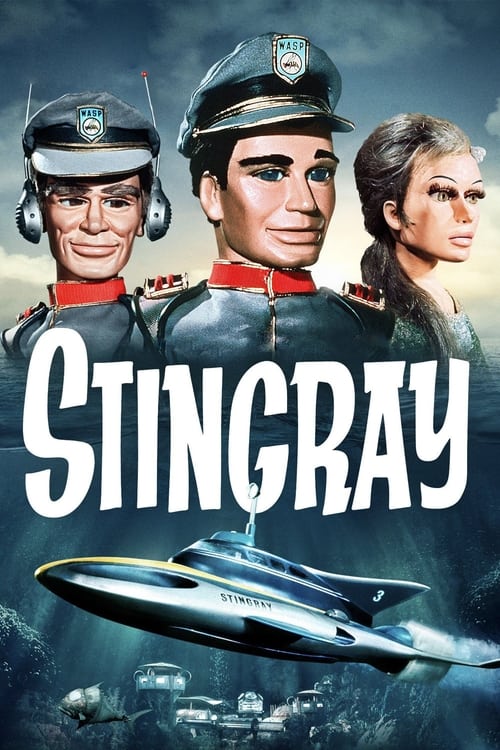
Shortly after the buyout, APF began production on a new marionette series, Stingray (1964), the first British TV series to be filmed entirely in colour. For the new production APF moved to new studios in Slough. The new and bigger facilities allowed them to make major improvements in special effects, notably in the underwater sequences, as well as advances in marionette technology, with the use of a variety of interchangeable heads for each character to convey different expressions.