New programming
In June 1932, Trendle decided to drop the network affiliation to operate WXYZ as an independent station. His station would produce its own radio drama series and broadcast locally produced music programs rather than pay for syndicated programs. Jim Jewell was hired as the station's dramatic director and supplied the actors from his own repertory company, the "Jewell Players." Freelance radio writer Fran Striker was hired to write many of these programs. The earliest dramatic radio series included Thrills of the Secret Service, Dr. Fang, and Warner Lester, Manhunter. Striker wrote many of the scripts and eventually became head of WXYZ's script department.
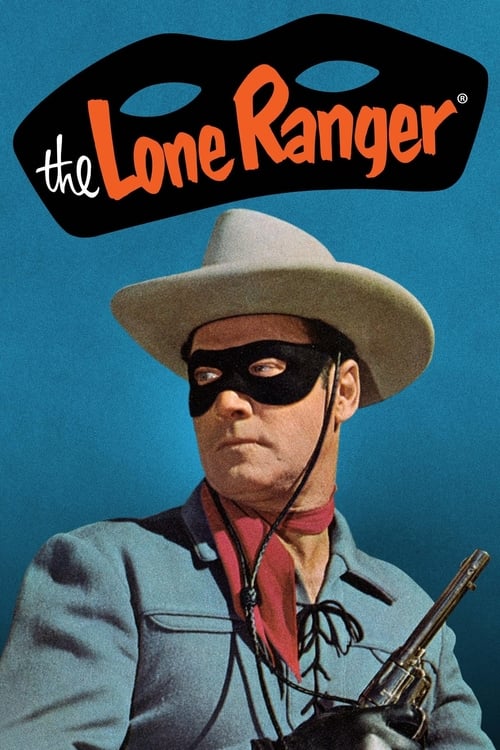
Late in 1932, Trendle began discussing ideas to create a new radio series with a cowboy as the hero. He wanted a mysterious hero who would have the same type of appeal as Zorro or Robin Hood. The target audience included children, so Trendle insisted on a wholesome hero with high moral standards. Violence and romance were to be minimized. Trendle worked out the basic concept of a masked vigilante, a lone Texas ranger with a big white horse, in staff meetings with Jim Jewell and studio manager Harold True. Then it was turned over to Fran Striker to flesh out the details and provide the scripts. His contributions included silver bullets and an Indian companion. The result was The Lone Ranger, which began broadcasting January 30, 1933, on WXYZ and the seven other stations of the Michigan Regional Network.
The Lone Ranger was an almost immediate hit. In May, a free popgun was offered to the first 300 listeners to send a written request; the station received nearly 25,000 replies. In July, the Lone Ranger made a public appearance at a park and a crowd estimated at 70,000 gathered.
Trendle recognized the value of the Lone Ranger and forced Striker and Jewell to sign over all rights. Along with the legal rights, Trendle claimed credit as the creator of the Lone Ranger. Trendle and his partners kept most of the profits from radio syndication, movie rights, and merchandising while Striker and Jewell were given little more than their salaries.
By the beginning of 1934, the show was syndicated to WGN, Chicago, and WOR, Newark. Other stations soon followed. The live broadcasts were transmitted over telephone lines to the other stations. When the Mutual Broadcasting System was created in 1934, WXYZ became a charter member and the Lone Ranger program was featured on the Mutual Network. Although WXYZ dropped out to join NBC Blue about a year later, contractual obligations kept The Lone Ranger on Mutual until 1942, during this period The Lone Ranger was produced at WXYZ but heard in the Detroit area over Mutual's new affiliate, CKLW. It then switched to the NBC Blue Network, which became ABC in 1943. The popularity of the series rapidly grew and it was eventually heard on 249 radio stations nationwide.
In order to service a nationwide audience, the live broadcast was performed three times, once for each time zone. Beginning in February 1938, the third performance was also recorded on a transcription disk for later broadcast on stations that did not have a live connection to the network.
In 1936, The Green Hornet was added to the roster of WXYZ programs. The Green Hornet was a modern-day masked crime fighter named Britt Reid and was descended from the Lone Ranger's nephew Dan Reid. He was assisted by his Japanese (later changed to Filipino when American involvement in World War II grew more likely) valet Kato, who used martial arts. Fran Striker wrote most of the scripts for the series.
In 1937, Trendle licensed Republic Pictures to produce a movie version of The Lone Ranger. Trendle was not happy with changes that were made in the movie adaptations and hired attorney Raymond Meurer to oversee licensing of the franchise. However, Trendle did like the incidental music Republic used on the serial's soundtrack and acquired the right to use it on The Lone Ranger. In 1939, when The Lone Ranger moved from Mutual to NBC (Blue), new arrangements were recorded by The NBC Symphony and used for the rest of the run of the radio series and on the TV series episodes produced by Trendle's company.
In 1938, Trendle asked his writing staff to create an adventure series featuring a dog as the hero. Writer Tom Dougall created Challenge of the Yukon, a series about Sergeant Preston of the North-West Mounted Police and his sled dog Yukon King.
In 1939, Striker created Ned Jordan Secret Agent for WXYZ.
In 1949, Trendle hired former MGM film producer Jack Chertok to produce The Lone Ranger television series. Trendle was credited as executive producer.
In 1950, Trendle began producing Bob Barclay - American Agent. Bob Barclay was an undercover agent for the U.S. Government with a cover identity as a news correspondent. Trendle received complaints from the U.S. Government because the stories sounded too much like actual cases. The American press also complained that the series was hurting the real-life situation of William Oatis. Oatis was a reporter being held on espionage charges in Czechoslovakia. The series was cancelled at the end of its first season.
In July 1954, Trendle sold the rights to the Lone Ranger to the Wrather Corporation for $3 million. The radio series ceased at that time, but the television series continued until 1957 with Jack Wrather as the new executive producer.
From 1955 to 1958, the radio program Challenge of the Yukon was adapted for television as Sergeant Preston of the Yukon. The series was produced by Trendle-Campbell-Meurer Inc. during its first two seasons but was sold to Jack Wrather Productions in 1957.