



George Cooper Stevens (December 18, 1904 – March 8, 1975) was an American film director, producer, screenwriter, and cinematographer. He won the Academy Award for Best Director for A Place in the Sun (1951) and Giant (1956).
Born in Oakland, California, George Stevens worked in his parents' West Coast touring stock theater company as a child actor and stage manager. When cinema was replacing live theater, Stevens's parents relocated to Los Angeles. At the age of 17, Stevens was hired as an assistant cameraman, working on several Western films produced by Hal Roach. Within three years, Stevens became a cameraman on the Our Gang series. Impressed with Stevens's visual knowledge, Roach then appointed him to direct installments of The Boy Friends series.
Stevens next moved to Universal Pictures and then to RKO Pictures. There, he directed several genre films, including Alice Adams starring Katharine Hepburn; Swing Time starring Fred Astaire and Ginger Rogers; and Gunga Din starring Cary Grant. Stevens was loaned to MGM to direct Woman of the Year (1942) based on Hepburn's suggestion, whereby she was paired with Spencer Tracy for the first time. He also directed The Talk of the Town (1942) and The More the Merrier (1943).
In 1941, the United States entered World War II, in which Stevens joined the U.S. Army Signal Corps and headed a film unit. Using his personal 16 mm film camera, Stevens shot color footage of the Liberation of Paris and the entry of American soldiers into the Dachau concentration camp. Stevens returned to Hollywood and directed more serious films, starting with I Remember Mama (1948).
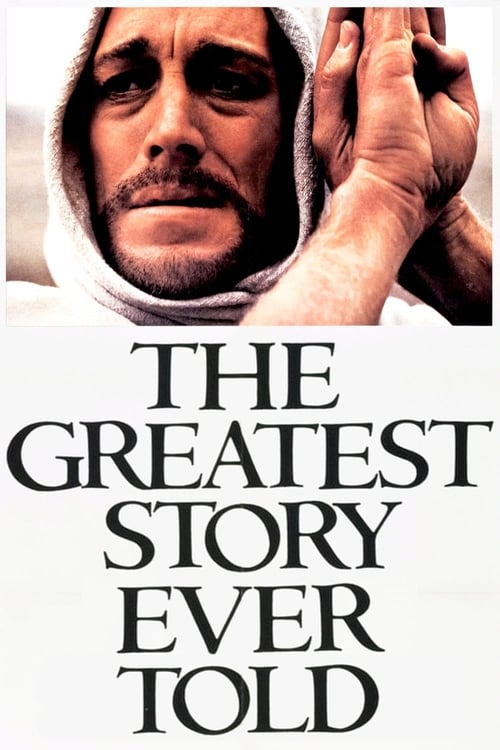
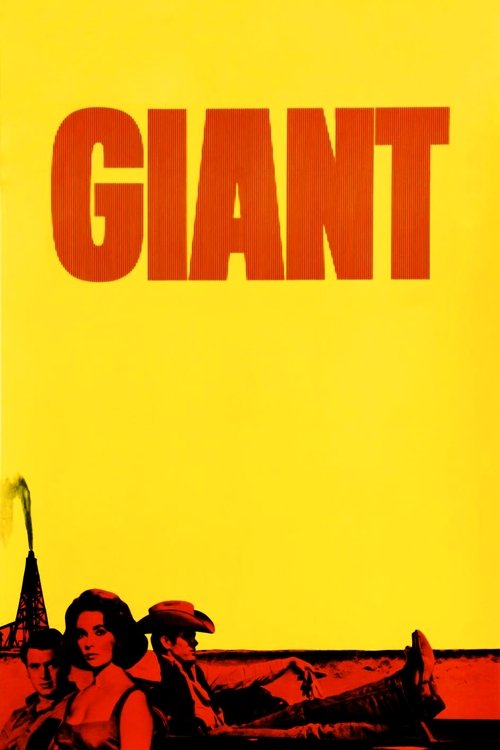
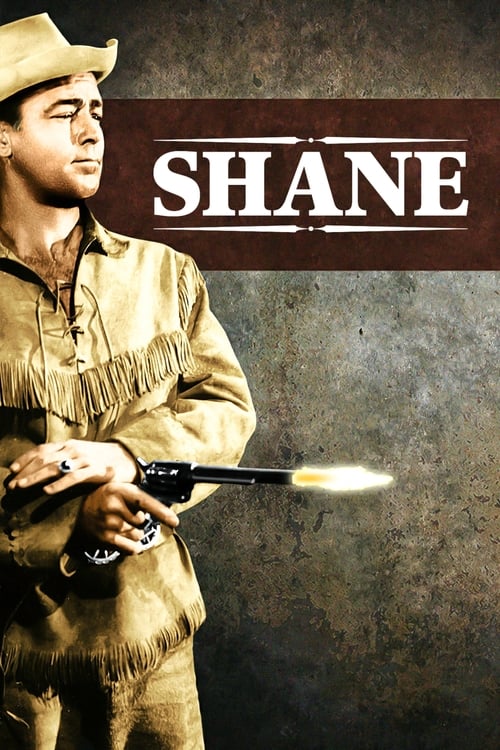
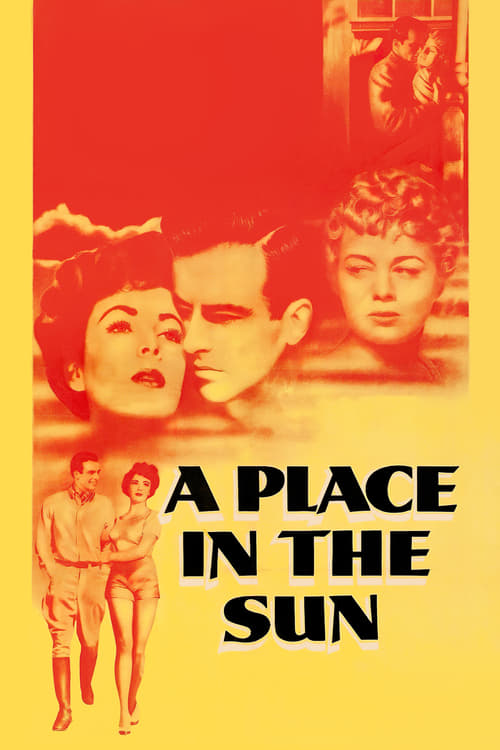
Between 1951 and 1956, Stevens directed his American Trilogy, which includes A Place in the Sun (1951), Shane (1953), and Giant (1956). He next directed widescreen biographical films, The Diary of Anne Frank (1959) and The Greatest Story Ever Told (1965). His final film was The Only Game in Town (1970) starring Elizabeth Taylor and Warren Beatty. Stevens died on March 8, 1975, at the age of 70.
Famed film critic Pauline Kael says of Stevens, that he made films with "good moments" and later became highly regarded for creating expansive films with "obese nuances."
Contents
Early life
Stevens was born on December 18, 1904, in Oakland, California, the son of Landers Stevens and Georgie Cooper, both stage actors. A brother of theatre critic Ashton Stevens, Landers Stevens began his acting career at age 20, and established his own theatrical stock company when he was 24. Landers met Cooper where she was performing at the Tivoli Theatre in San Francisco, and the two were married in 1902.
George had two brothers, Jack, a cinematographer, and writer Aston Stevens. He learned about the stage by watching his parents, and himself, acting in plays in San Francisco. George remembered, "As a kid I helped my father, setting up the entrances and marking the script and holding the lines. Because he was usually acting in the play and because he also was directing, I helped, holding the script."
At the age of 5, George made his stage debut in the play Sappho, appearing alongside Nance O'Neill, at the Alcazar Theatre. At the age of 10, his mother gave him a Brownie camera, and he began photographing the city and portraits of his mother. Landers's theatre troupe toured throughout the West Coast, Utah, Vancouver, and Canada. By 1920, the theatre stock company had waned in popularity, and Stevens's parents set up a tent show in downtown San Francisco.
Stevens's parents relocated to Sonoma County, California, where Jack and George were enrolled in the Flowery School and then Sonora Union High School. The 1920–1921 theatre season was financially unsuccessful, so much that Landers closed his theatre company. Decades later, George reflected: "A movie palace was built right across the street from the theatre where my father worked. First one was built on this corner, then one was built on that corner, and the people were going to them in great numbers. I remember my father peeking out through the brass ring before the curtain went up on his stage show, and there weren't many people out front."
In 1921, the family relocated once more to Glendale so Landers could pursue work in Hollywood. By the age of 16, George was forced to drop out of high school to drive his father to acting auditions. To compensate for his lack of a formal education, George regularly visited the Glendale Public Library.
Career
1922–1933: Assistant cameraman
Stevens worked as an assistant cameraman on Heroes of the Street (1922), a silent drama directed by William Beaudine. He then moved to Ince Studio where he worked on The Destroying Angel (1923) and several Westerns, including The Virginian (1923) released by Preferred Pictures. He was an uncredited assistant cameraman on the 1923 short film Roughest Africa, starring Stan Laurel.
At the age of 17, Stevens was employed at Hal Roach Studios as an assistant cameraman to Fred Jackman. His first project was The Battling Orioles (1923) and was followed by The White Sheep (1924). Within a year, Stevens worked on Black Cyclone (1924), an installment of a silent Western film serial featuring Rex the Wonder Horse.
The next installment was The Devil Horse (1925). Directed by Fred Jackman, Stevens was one of the two cameramen, collaborating with Floyd Jackman (Fred's brother). While trick photography had been used previously, Stevens experimented with using filters on the panchromatic film, by which he filtered "the sky black for night sequences, instead of just tinting it blue, and using long telephoto lenses to bring the background up, things that a kid would do."
The Jackman brothers left Hal Roach Studios, but Stevens stayed to photograph a series of short comedies starring Laurel and Hardy. Oliver Hardy had been under contract with the studio, but Roach hired Stan Laurel from Universal Pictures to write gag stories. Stevens's first project with the duo was Slipping Wives (1927), whereby he worked as director of photography and a gag writer on 35 of their short films, including Bacon Grabbers (1929) and Night Owls (1930). According to Stevens, he learned from this experience that comedy could be "graceful and human".
Filming for one short proved difficult when Laurel's blue eyes failed to register on orthochromatic film, but Stevens made a successful test of him using panchromatic film. By 1930, Stevens began directing film serial installments of The Boy Friends. At one point, Stevens grew tired of directing two-reel gag comedies and refused to direct another film that Roach had asked him. He told Leonard Maltin, in 1970: "[Roach] told me a story he wanted me to do. I couldn't see it at all, and I'd just started on something else. So I thought it over, and I said, 'Hal, I can't do it. I don't understand it.'" A half-hour later, Stevens was informed by a studio manager that he was fired, with the termination effective on New Year's Eve 1931.
1933–1935: Early feature works
Six months later, Stevens was hired by Universal Pictures and collaborated with Warren Doane, a former Roach general manager, and James W. Horne, Stevens's cousin, on several two-reel comedies, such as Yoo Hoo (1932) and Should Crooners Marry? (1933). These comedies featured several actors, including James Gleason, Richard "Skeets" Gallagher, Louise Fazenda, and Vince Barnett. Impressed with Stevens's efficiency, Universal hired Stevens to direct his first feature film, The Cohens and Kellys in Trouble (1933), the final installment of The Cohens and Kellys comedy serials, which had starred George Sidney and Charles Murray. Principal photography began in December 1932 and wrapped in March 1933.
When asked about his directorial process, in an interview with the Los Angeles Daily News, Stevens stated: "In reading over a screenplay I constantly look for the little things of a story; small situations, common incidents, or places where the shrug of a shoulder properly done will give an audience a chance to laugh. For, despite the prolonged depression, everyone is still anxious to laugh." Later that same year, Stevens signed a contract with RKO Pictures with an eight-month guarantee to direct six shorts and one feature film. In September 1933, RKO loaned Stevens to Metro-Goldwyn-Mayer (MGM) to direct a segment featuring Laurel and Hardy in Hollywood Party (1934).
In 1934, Stevens returned to RKO to direct Bachelor Bait, which he filmed from April 30 to May 18. The film starred Stuart Erwin, portraying a kind-hearted man who loses his job at a marriage license office. He then opens Romance Inc., his own matrimonial agency, where he falls in love with a wealthy client, played by Grace Sutton. The Hollywood Reporter called the film "[a] nice, pleasant little comedy that takes time out every once in a while to bowl you over completely with several hilarious wisecracks, thrown in amongst the mild humor which is its general tone." His next film was Kentucky Kernels (1934) starred the comedy duo of Bert Wheeler and Robert Woolsey (collectively known as Wheeler and Woolsey), playing out-of-work men living on a decrepit houseboat and hope to earn money by catching fish. Along the way, they adopt a young boy (Spanky McFarland) who inherits a fortune, while they head for Kentucky, where two families are locked in a bitter feud.
Stevens's next film was Laddie (1935), an adaptation of the 1913 novel Laddie: A True Blue Story by Gene Stratton-Porter. The novel had been previously adapted into a 1926 film. Produced at RKO, George Nicholls Jr. had been set to direct, but it was reassigned to Stevens. Set in the late 19th-century rural Indiana, John Beal stars in the title role as a farmer who falls in love with his English neighbor, Pamela Pryor (Gloria Stuart), but their romance is opposed by Pryor's father (Donald Crisp). The film premiered at the Hilbert Circle Theatre, and was well received by critics and audiences.
1935–1943: Established director
Meanwhile, Pandro S. Berman proceeded on a film vehicle for Katharine Hepburn and selected the 1921 novel Alice Adams by Booth Tarkington. Hepburn admired the novel, and both she and Berman settled on either William Wyler and George Stevens to direct. Hepburn and Berman tossed coins, and Wyler won the first contest. Hepburn went with Stevens, and the coin was tossed in her favor. Before he had time to read Tarkington's novel, Stevens drove over to Hepburn's residence. In a meeting with Hepburn and Berman, he attempted to fake his way around discussing the novel. Unimpressed, Hepburn reportedly told Berman the next day that Stevens was the dumbest man she had met. Berman phoned Stevens stating, "Kate says you had a very pleasant evening, but you didn't say a word about the picture. That puts me in a very difficult situation."
Stevens then read the novel, and within a day, he agreed to direct Alice Adams (1935). He was displeased having read two-thirds of Jane Murfin's script adaptation, and promptly hired Mortimer Offner and Dorothy Yost to rewrite it, retaining much of the novel's dialogue. Principal photography began on May 22, 1935, and wrapped on June 29. However, the novel's original ending concluded with Alice deciding to attend a secretarial school. Murfin's script instead had Alice expressing her love with Arthur. Hepburn and Stevens had opposed the ending, though RKO insisted on the happier ending even before Stevens was hired. During post-production, Stevens and Berman exchanged memos defending their stance. Berman brought in George Cukor to decide, and he felt the novel's ending would be box office poison.
Alice Adams opened at the Radio City Music Hall on August 15, 1935. Andre Sennwald of The New York Times applauded Hepburn's performance and Stevens's direction, writing, "An oddly exciting blend of tenderness, comedy and realistic despair, [the film] touches life intimately at many points during its account of a lonely girl in a typical American small town." At the 8th Academy Awards, the film was nominated for Best Picture, and Hepburn was nominated for Best Actress.
After a successful preview of Alice Adams at Sunset Boulevard, Stevens realized he had to leave as he was scheduled to begin filming Annie Oakley (1935). RKO had purchased a script by Joseph Fields and Ewart Adamson, which fictionalized the life of Annie Oakley. Barbara Stanwyck was cast in the title role after she had left Warner Bros. The film tells of the namesake sharpshooter who becomes a local celebrity at Buffalo Bill's Wild West Show. When Buffalo Bill's manager, Jeff Hogarth (Melvyn Douglas), showcases fellow sharpshooter Toby Walker (Preston Foster), a rivalry develops between Oakley and Walker, which turns romantic. Annie Oakley opened in November 1935 and was well received by film critics and audiences.
1943–1946: World War II
Stevens had seen the Nazi propaganda film Triumph of the Will (1935) and was provoked to join the Allied forces in World War II. On January 6, 1943, Stevens's draft board explained he would be "sent by the Special Service Division of the War Department on a mission outside the continental limits of the United States for an indefinite period." On February 18, he was sworn in as a Major under the U.S. Army Signal Corps division and departed from Los Angeles.
However, he was hospitalized at Fort Jay near Manhattan for pneumonia and took weeks to recover. On April 13, Stevens arrived in Egypt and stayed until June 15. That same month, he arrived in Algiers to document the Tunisian campaign, but later discovered the German Army had been soundly defeated and was one day from surrender.
On June 30, 1943, Stevens was transferred to Iran (then known as Persia). Within two weeks, he arrived at a military post in Andimeshk, a town near the Iran–Iraq border, where refugee Poles, most of whom were women, had escaped to and were being extradited elsewhere. Stevens left Persia on August 20.
Stevens then flew to New York and stayed there and in Washington, D.C. from September 15 through October 26. He landed in London, where he received orders from U.S. General Dwight D. Eisenhower to recruit forty-five people for the Special Coverage Unit (SPECOU). Stevens's unit included writers Irwin Shaw, William Saroyan, and Ivan Moffat; cameramen William C. Mellor, Jack Muth, Ken Marthey, and Dick Hoar; sound operator Bill Hamilton, and assistant director Hollingsworth Morse. The Special Coverage Unit was placed under the control of the Supreme Headquarters Allied Expeditionary Force (SHAEF). This unit recorded footage—including the only color film of the war in Europe (which remained archived for decades)—as well documented the Normandy landings (D-Day).
By the summer of 1944, Stevens's unit accompanied the 4th Infantry Division as they headed toward Paris. Eisenhower allowed the 2nd Armored Division commanded by General Philippe Leclerc to advance into the city first, followed by the American infantry. Stevens obtained permission for his unit to ride with the French, as they documented the liberation of Paris. In a letter to his wife Yvonne, dated September 1, Stevens wrote:
1946–1950: Transition into serious fare
After his military service, Stevens accepted an offer to direct a comedic segment between James Stewart and Henry Fonda featured in On Our Merry Way (1948). The film was produced by Burgess Meredith and Benedict Bogeaus while King Vidor and Leslie Fenton were credited as the directors. John Huston had directed one segment and went uncredited. In Stevens's segment, Stewart and Fonda portray jazz musicians who are members of a traveling jazz band. Their caravan breaks down in the small town of Sycamore, California, where they tried to fix a talent contest so the mayor's son wins. Stevens insisted he be uncredited for his contribution.
In 1944, Frank Capra approached Stevens to join his new independent production company, Liberty Films. Stevens held off on the decision, and while he was in France, he met with Harry Cohn and promised he would rejoin Columbia Pictures when he returned. However, Stevens reneged on his promise and joined Liberty Films. In February 1946, Capra held a press conference announcing Liberty Films, and named Stevens, Samuel Briskin, and William Wyler as his partners. Stevens held a 25 percent ownership of the company's shares. At Liberty Films, Stevens developed a comedy titled One Big Happy Family which was to star Ingrid Bergman. However, he shelved the project as he lacked confidence in the story. Stevens told several friends, "After the war, I don't think I was ever too hilarious again." Capra's It's A Wonderful Life (1946) lost money at the box office, and in January 1947, Capra decided to sell Liberty Films. By May 1947, Paramount Pictures acquired the company, and as part of the buyout, Capra, Stevens and Wyler became contract directors with Paramount.
Beforehand, due to contractual obligations, Stevens had been loaned to RKO to direct I Remember Mama (1948). RKO had purchased the film rights to Kathryn Forbes's 1943 novel Mama's Bank Account. It was then adapted into a 1944 play written by John Van Druten. Harriet Parsons offered the title role to Greta Garbo, but she declined. Irene Dunne was also offered the role, to which she agreed. From a list of five directors, Dunne selected Stevens to direct. Stevens had seen the play, which starred Mady Christians, and connected with the material. In 1974, he stated, "It was set in San Francisco, and I was a kid there during that period. I thought it would be fun to reconstruct the period."
Principal photography began on March 27, 1947, and lasted six months. During production, Stevens worked closely with screenwriter DeWitt Bodeen on revising the shooting script. Bodeen remembered, "It was a long, long production, almost double the budget on several shooting days because George wanted it right..." I Remember Mama opened at the Radio City Music Hall on March 8, 1948, to positive reviews. Herman Schoenfeld of Variety praised the film as "a layer of warm and deeply moving nostalgia that plucks at that special heart-string" while Dunne was praised for "holding down the most demanding role in her career".
1951–1956: The American Trilogy
Stevens had first read Theodore Dreiser's 1925 novel An American Tragedy during its first year of publication. He reread the novel in 1945 and approached Paramount Pictures, which had produced a 1931 filmed version, about a new adaptation. Barney Balaban, president of Paramount, declined, believing an adaptation would not be popular with audiences, and due to Dreiser's alleged Communist affiliation. Paramount also found potential copyright infringement with Patrick Kearney's play adaptation of Dreiser's novel. Frustrated, Stevens filed a lawsuit accusing Paramount of violating his studio contract. In 1949, Paramount relented, and Stevens advanced the project into development, in which he hired Michael Wilson to write the script. Wilson submitted a first draft by April 1949, and Harry Brown was hired for rewrites.
Inspired by a 1906 murder trial, the film tells of an unmarried pregnant woman who is murdered by her boyfriend after he falls in love with a wealthy socialite—albeit with the characters renamed. Montgomery Clift, Elizabeth Taylor, and Shelley Winters were cast in the lead roles, and filming began on October 4, 1949, on the Paramount backlot and then moved to Lake Tahoe, Nevada. As customary, Stevens meticulously filmed multiple takes with the actors stretching over several hours. Winters explained in her memoir, "Stevens would print the first take, then spend the next three hours minutely rehearsing the scene, then film it again." After several title suggestions, Ivan Moffat selected the title A Place in the Sun, which had been based on a phrase used by German Foreign Secretary Bernhard von Bülow.
After nineteen months in post-production, A Place in the Sun premiered at the Fine Arts Theatre in Los Angeles and received nationwide critical acclaim. A. H. Weiler of The New York Times applauded the performances of the cast and believed the film was "a work of beauty, tenderness, power and insight." Variety also applauded: "Stevens has obviously given tremendous thought to every nuance of his own direction to get credibility, movement and all the touches that contribute to making a good film a fine art form." By January 1952, A Place in the Sun had earned $3.5 million in box office rentals in the United States and Canada. The film won six Academy Awards, including Stevens who was awarded the Best Director Oscar.
While editing A Place in the Sun, Stevens accepted an offer to direct Something to Live For (1952). The script had been written by Dwight Taylor, which was partially based on his actress mother Laurette Taylor and her struggle with alcoholism. Joan Fontaine portrays her onscreen equivalent, Jenny Carey, who finds an intimate connection with Alan Miller (Ray Milland), a former alcoholic who is a married man with two children and a pregnant wife. Shooting began in May 1950, but the film was shelved after a preview in August 1951. The film was released in March 1952 to poor critical and audience reception.
1957–1970: Later films
In 1954, Stevens learned that Twentieth Century-Fox had held the film rights to The Diary of Anne Frank. By February 1957, it had been reported that Stevens signed a two-picture contract with the studio. Frances Goodrich and Albert Hackett, who had written the 1955 play, were hired to write the script adaptation. During pre-production, in September 1957, Stevens flew to Amsterdam for research and location scouting, where he visited the attic inside the historical site. He also hired Tony van Renterghem as a technical advisor. Stevens reflected, "Whenever we hit a stumbling block in translating from the stage to the film, not only did I return to the original diary for help, but I also returned to the concentration camp areas and roamed the house in Amsterdam in the quarter where Anne lived, where I talked with countless people who had survived the Nazi period there."
A worldwide casting search for the title role was conducted, with Stevens auditioning more than 100,000 applicants. Audrey Hepburn had been offered the part but she declined. Millie Perkins, a nineteen-year-old model from Fair Lawn, New Jersey, was cast in her screen debut. Joseph Schildkraut, Gusti Huber, and Lou Jacobi reprised their stage roles for the film. Shelley Winters campaigned for the role of Petronella van Daan. A replica of the factory was built on the Twentieth Century-Fox studio backlot, where filming occurred from March to August 1958.
Released in March 1959, The Diary of Anne Frank received largely positive reviews from film critics. Time magazine called the film a "masterpiece", praising Stevens and the screenwriters for depicting "the courage and dignity that man can summon from within himself when the only logical course seems to be to lie down and die." However, the film was a commercial disappointment, earning $2.3 million in estimated box office rentals from the United States and Canada. It won three Academy Awards in 1960, including Best Supporting Actress for Shelley Winters.
In 1958, while filming The Diary of Anne Frank, Stevens became aware that Fox held the screen rights to Fulton Oursler's 1949 novel The Greatest Story Ever Told. Oursler had novelized a half-hour radio series by Henry Denker, which told of the life of Jesus from the four canonical Gospels of the New Testament. Stevens founded an independent company, named after the novel, to film the novel. Stevens affirmed his vision for the film would be stripped of pageantry and spectacle, opposite of Cecil B. DeMille's Biblical epics. In 1960, Stevens collaborated with Ivan Moffat and James Lee Barrett on the script, and then hired Carl Sandburg to revise the script. For the next two years, Fox continually delayed the film's release date until 1963. However, in September 1961, Spyros Skouras, president of Fox, announced the studio had "indefinitely postponed" the project due to concerns about the project's commercial prospects. As a result, Stevens moved the project to United Artists.
Personal life and death
In 1928, he met Yvonne Howell in Oliver Hardy's home; they were married on January 1, 1930. Stevens was the father of television and film writer-producer-director George Stevens, Jr., the founder of the American Film Institute (AFI). George Jr. produced and directed the documentary about his father George Stevens: A Filmmaker's Journey in 1984 and is the father of Stevens's grandson Michael Stevens (1966–2015), who was also a television and film producer-director.
On March 8, 1975, Stevens died of a heart attack on his ranch in Lancaster, California, north of Los Angeles, at the age of 70. He is interred at Forest Lawn Memorial Park in the Hollywood Hills of Los Angeles.
Filmography
Archives
The moving image collection of George Stevens is held at the Academy Film Archive. The film material at AFI is complemented by material in the George Stevens papers at the academy's Margaret Herrick Library.
Awards and honors
Academy Awards
As a lieutenant colonel in the U.S. Army, Stevens headed the Signal Corps unit that filmed D-Day and the liberation of the Dachau concentration camp. For these contributions, he was awarded the Legion of Merit.
Stevens has a star on the Hollywood Walk of Fame at 1701 Vine Street. He won the Academy Award for Best Director twice, in 1951 for A Place in the Sun and in 1956 for Giant. He was also nominated in 1943 for The More the Merrier, in 1954 for Shane, and in 1959 for The Diary of Anne Frank.
He also received both the Irving G. Thalberg Memorial Award and the Lifetime Achievement Award from the Academy of Motion Picture Arts and Sciences (1954). He also received the National Board of Review Award for Best Director and the New York Film Critics Circle Award for Best Director.