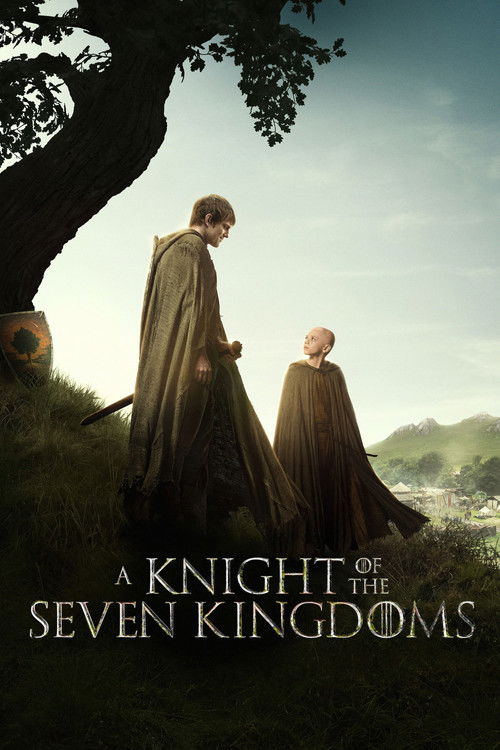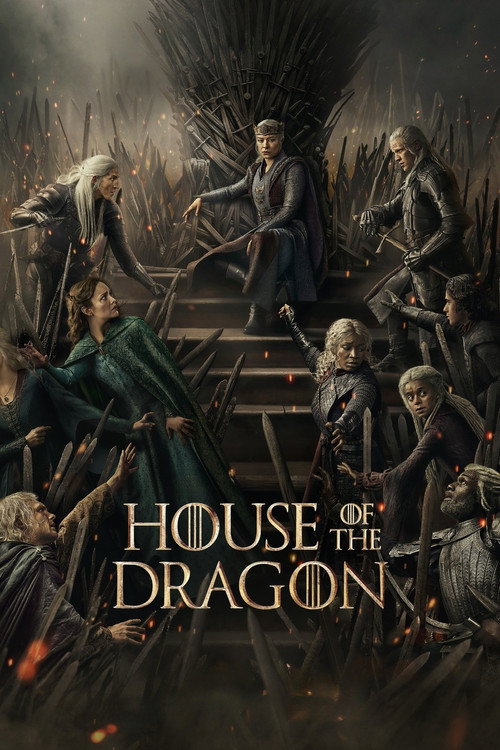




George Raymond Richard Martin (born George Raymond Martin, September 20, 1948), also known by the initials GRRM, is an American author, screenwriter, and television producer. Martin is best known as the author of the epic fantasy novel series A Song of Ice and Fire, which was adapted by HBO into the Primetime Emmy Award–winning television series Game of Thrones (2011–2019) and its prequel series House of the Dragon (2022–present). Martin also wrote a related series of novellas, Tales of Dunk and Egg, which have been adapted by HBO as A Knight of the Seven Kingdoms (2026–present). Outside of A Song of Ice and Fire and its related media, Martin helped create the Wild Cards anthology series and contributed worldbuilding for the video game Elden Ring (2022).
In 2005, Lev Grossman of Time called Martin "the American Tolkien", and in 2011, he was included on the annual Time 100 list of the most influential people in the world. He is a longtime resident of Santa Fe, New Mexico, where he helped fund Meow Wolf and owns the Jean Cocteau Cinema.
Contents
Early life
George Raymond Martin (he adopted the confirmation name Richard at 13 years old) was born on September 20, 1948, in Bayonne, New Jersey, the son of Raymond Collins, a longshoreman, and Margaret (née Brady) Martin. His mother's family had once been wealthy, owning a successful construction business, but lost their wealth in the Great Depression, something Martin was reminded about every day when he passed what had been his family's dock and house. He has two younger sisters, Darleen and Janet. A DNA test on the series Finding Your Roots showed him to be 53.6% "British and Irish", 22.4% Ashkenazi Jewish, and 15.6% "Broadly Northwestern European".
The family first lived in a house on Broadway belonging to Martin's great-grandmother. In 1953, they moved to a federal housing project near the Bayonne docks. During Martin's childhood, his world consisted predominantly of "First Street to Fifth Street", between his grade school and his home. This limited world made him want to travel and experience other places, but he found this impossible except in his imagination, and he became a voracious reader.
Martin began writing and selling monster stories for pennies to other neighborhood children, including dramatic readings. He had to stop once a customer's mother complained about her child's nightmares. He also wrote stories about a mythical kingdom populated by his pet turtles — the turtles died frequently in their toy castle, so he decided they were killing each other off in "sinister plots". Martin had a habit of starting "endless stories" that he never completed, as they did not turn out as well on paper as he had imagined them.
Martin attended Mary Jane Donohoe School and later Marist High School. While there, he became an avid comic-book fan, developing a strong interest in the superheroes being published by Marvel Comics, and later credited Stan Lee for being one of his greatest literary influences; "Maybe Stan Lee is the greatest literary influence on me, even more than Shakespeare or Tolkien." A letter Martin wrote to the editor of Fantastic Four was printed in issue #20 (November 1963); it was the first of many sent, e.g., Fantastic Four #32, #34, and others. Fans who read his letters wrote him letters in turn, and through such contacts, Martin joined the fledgling comics fandom of the era, writing fiction for various fanzines; he bought the first ticket to the world's first Comic-Con, held in New York in 1964. In 1965, Martin won comic fandom's Alley Award for Best Fan Fiction for his prose superhero story "Powerman vs. The Blue Barrier".
Career
Early writing career
Martin began selling science fiction short stories professionally in 1970, at age 21. His first sale was "The Hero", sold to Galaxy magazine and published in its February 1971 issue; other sales soon followed. His first story to be nominated for the Hugo Award and Nebula Awards was "With Morning Comes Mistfall", published in 1973 in Analog magazine. In 1975 his story "...for a single yesterday" about a post-apocalyptic timetripper was selected for inclusion in Epoch, a science fiction anthology edited by Roger Elwood and Robert Silverberg. His first novel, Dying of the Light, was completed in 1976 right before he moved to Dubuque and published in 1977. That same year the enormous success of Star Wars had a huge impact on the publishing industry and science fiction, and he sold the novel for the same amount he would make in three years of teaching.
The short stories he was able to sell in his early twenties gave him some profit but not enough to pay his bills, which prevented him from becoming the full-time writer he wanted to be. The need for a day job occurred simultaneously with the American chess craze which followed Bobby Fischer's victory in the 1972 world chess championship. Martin's own chess skills and experience allowed him to be hired as a tournament director for the Continental Chess Association, which ran chess tournaments on the weekends. This gave him a sufficient income, and because the tournaments only ran on Saturdays and Sundays, it allowed him to work as a writer five days a week from 1973 to 1976. By the time the chess craze subsided and no longer provided an income, he had become much better established as a writer.
Teaching
In the mid-1970s, Martin met English professor George Guthridge from Dubuque, Iowa, at a science fiction convention in Milwaukee. Martin persuaded Guthridge (who later said that at that time he despised science fiction and fantasy) not only to give speculative fiction a second look, but also to write in the field himself. Guthridge has since been a finalist for the Hugo Award and twice for the Nebula Award for science fiction and fantasy. In 1998, Guthridge and Janet Berliner won the Bram Stoker Award for Superior Achievement in the Novel for their Children of the Dusk.
In turn, Guthridge helped Martin in finding a job at Clarke University (then Clarke College). Martin "wasn't making enough money to stay alive" from writing and the chess tournaments, said Guthridge. From 1976 to 1978, Martin was an English and journalism instructor at Clarke, and he became Writer In Residence at the college from 1978 to 1979.
Concentration on writing
While he enjoyed teaching, the sudden death of friend and fellow author Tom Reamy in late 1977 made Martin reevaluate his own life, and he eventually decided to try to become a full-time writer. In 1979 he resigned from his job and moved from Dubuque to Santa Fe, New Mexico at the end of the year. There he would live alone for almost three years, a period he described as tremendously productive in regard to writing.
Martin is a member of the Science Fiction and Fantasy Writers of America (SFWA); he served as the organization's Southwest Regional Director from 1977 to 1979, and as its vice-president from 1996 to 1998. In 1976, for Kansas City's MidAmeriCon, the 34th World Science Fiction Convention (Worldcon), Martin and his friend and fellow writer-editor Gardner Dozois conceived of and organized the first Hugo Losers' Party for the benefit of all past and present Hugo-losing writers on the evening following the convention's Hugo Awards ceremony. Martin was nominated for two Hugos that year but lost both awards, for the novelette "...and Seven Times Never Kill Man" and the novella The Storms of Windhaven, co-written with Lisa Tuttle. Although Martin often writes fantasy or horror, a number of his earlier works are science fiction tales occurring in a loosely defined future history, known informally as "The Thousand Worlds" or "The Manrealm".
In 2017, Martin recalled that he had started writing science fiction-horror hybrids in the late 1970s to disprove a statement from a critic claiming that science fiction and horror were opposites and therefore incompatible. Martin considered Sandkings (1979) the best known of these. Another was the novella Nightflyers (1980), whose screen and television rights were purchased by in 1984 by Vista, which produced a 1987 film adaptation, Nightflyers, with a screenplay co-written by Martin. Martin was unhappy about having to cut plot elements in order to accommodate the film's small budget. While not a hit at theatres, Martin believes that the film saved his career, and that everything he has written since exists in large part because of it. He has also written at least one piece of political-military fiction, "Night of the Vampyres", collected in Harry Turtledove's anthology The Best Military Science Fiction of the 20th Century (2001).
In 1982, Martin published a vampire novel titled Fevre Dream set in the 19th century on the Mississippi River, in the heyday of the great paddle steamers. Unlike traditional vampire novels, in Fevre Dream vampires are not supernatural creatures, but are rather a different species related to humans created by evolution with superhuman powers. Critic Don D'Amassa has praised Fevre Dream for its strong 19th-century atmosphere and wrote: "This is without question one of the greatest vampire novels of all time". Martin followed up Fevre Dream with another horror novel, The Armageddon Rag (1983). The unexpected commercial failure of The Armageddon Rag "essentially destroyed my career as a novelist at the time", he recalled, and made him consider going into real estate instead.
A Song of Ice and Fire
In 1991, Martin briefly returned to writing novels. He had grown frustrated that his TV pilots and screenplays were not getting made and that TV-related production limitations like budgets and episode lengths were forcing him to cut characters and trim battle scenes. This pushed Martin back towards writing books, where he did not have to worry about compromising his imagination. Admiring the works of J. R. R. Tolkien in his childhood, he wanted to write an epic fantasy, though he did not have any specific ideas.
His epic fantasy series, A Song of Ice and Fire, was inspired by the Wars of the Roses, The Accursed Kings and Ivanhoe. Though Martin originally conceptualized it as being three volumes, it is currently slated to comprise seven. The first, A Game of Thrones, was published in 1996, followed by A Clash of Kings in 1998 and A Storm of Swords in 2000. In November 2005, A Feast for Crows, the fourth novel in this series, became The New York Times No. 1 Bestseller. The fifth book, A Dance with Dragons, was published July 12, 2011, and became an international bestseller, including achieving a No. 1 spot on the New York Times Bestseller List and many others; it remained on the New York Times list for 88 weeks.
In 2012, A Dance with Dragons made the final ballot for science fiction and fantasy's Hugo Award, World Fantasy Award, Locus Poll Award, and the British Fantasy Award; the novel went on to win the Locus Poll Award for Best Fantasy Novel. Two more novels are planned in the series: The Winds of Winter and the final volume A Dream of Spring.
On April 25, 2018, Martin announced the release date of his new book, Fire & Blood, dealing with the history of House Targaryen, which was released on November 20, 2018. Should Martin die before finishing the A Song of Ice and Fire series, former collaborators have said that they will not conclude the series for him.
HBO Productions purchased the television rights for the A Song of Ice and Fire series in 2007. Although busy completing A Dance with Dragons and other projects, Martin was heavily involved in the production of the television series adaptation of his books. Martin's involvement included the selection of a production team and participation in scriptwriting; the opening credits list him as a co-executive producer of the series. The original pilot was shot between October 24 and November 19, 2009, on location in Northern Ireland, Scotland and Morocco. It was received so poorly by HBO executives that they did not make a decision for four months after the pilot was delivered. In March 2010, HBO's decision to greenlight the series was announced, with the production of the series scheduled to start June 2010. However, HBO demanded that the first episode be reshot, and wanted all the scenes from Morocco scrapped. The first episode ("Winter Is Coming") premiered on HBO in the United States and Canada on April 17, 2011. It was seen initially by 2.2 million viewers. The first season was nominated for 13 Emmy Awards, ultimately winning two: one for its opening title credits, and one for Peter Dinklage as Best Supporting Actor.
Themes
Martin's work has been described as having "complex story lines, fascinating characters, great dialogue, perfect pacing" by literary critic Jeff VanderMeer. Dana Jennings of the New York Times described Martin's work as "fantasy for grown ups" and Lev Grossman wrote that it was dark and cynical. Martin's first novel, Dying of the Light, set the tone for some of his future work; it unfolds on a mostly abandoned planet that is slowly becoming uninhabitable as it moves away from its sun. This story has a strong sense of melancholy. His characters are often unhappy or, at least, unsatisfied, in many cases holding on to idealisms in spite of an otherwise chaotic and ruthless world, and often troubled by their own self-seeking or violent actions, even as they undertake them. Many have elements of tragic heroes or antiheroes in them; reviewer T. M. Wagner writes: "Let it never be said Martin doesn't share Shakespeare's fondness for the senselessly tragic."
The overall gloominess of A Song of Ice and Fire can be an obstacle for some readers; the Inchoatus Group writes that, "If this absence of joy is going to trouble you, or you're looking for something more affirming, then you should probably seek elsewhere." However, for many fans, it is precisely this level of "realness" and "completeness" – including many characters' imperfections, moral and ethical ambiguity, and (often sudden) consequential plot twists that is endearing about Martin's work. Many find that this is what makes the series' story arcs compelling enough to keep following despite its sheer brutality and intricately messy and interwoven plotlines; as TM Wagner points out:There's great tragedy here, but there's also excitement, humor, heroism even in weaklings, nobility even in villains, and, now and then, a taste of justice after all. It's a rare gift when a writer can invest his story with that much humanity.Martin's characters are multifaceted, each with intricate pasts, aspirations, and ambitions. Publishers Weekly writes of his ongoing epic fantasy A Song of Ice and Fire: "The complexity of characters such as Daenerys, Arya and the Kingslayer will keep readers turning even the vast number of pages contained in this volume, for the author, like Tolkien or Jordan, makes us care about their fates." Misfortune, injury, and death (including false death and reanimation) often befall major or minor characters, no matter how attached the reader has become. Martin has described his penchant for killing off important characters as being necessary for the story's depth: "when my characters are in danger, I want you to be afraid to turn the page, (so) you need to show right from the beginning that you're playing for keeps".
In distinguishing his work from others, Martin makes a point of emphasizing realism and plausible social dynamics above an over-reliance on magic and a simplistic "good versus evil" dichotomy, for which contemporary fantasy writing is often criticized. Notably, Martin's work makes a sharp departure from the prevalent "heroic knights and chivalry" schema that has become a mainstay in fantasy as derived from J. R. R. Tolkien's The Lord of the Rings. He specifically critiques the oversimplification of Tolkien's themes and devices by imitators in ways that he has humorously described as "Disneyland Middle Ages", which gloss over or ignore major differences between medieval and modern societies, particularly social structures, ways of living, and political arrangements. Martin has been described as "the American Tolkien" by literary critics. While Martin finds inspiration in Tolkien's legacy, he aims to go beyond what he sees as Tolkien's "medieval philosophy" of "if the king was a good man, the land would prosper" to delve into the complexities, ambiguities, and vagaries of real-life power: "We look at real history and it's not that simple... Just having good intentions doesn't make you a wise king." Per this fact Martin has been credited with the rise of grimdark fantasy, a modern form of an "anti-Tolkien" approach to fantasy writing which, according to British science fiction and fantasy novelist Adam Roberts, is characterized by its reaction to Tolkien's idealism even though it owes a lot to Tolkien's work. The Canadian fantasy writer R. Scott Bakker "says he wouldn't have been able to publish his fantasy novels without the success George R. R. Martin achieved first". Similarly, Mark Lawrence, author of Prince of Thorns, was inspired by Martin and impressed by his Red Wedding scene.
Producing
In 2017, Martin confirmed he would serve as an executive producer of the HBO television series adaptation of the 2010 science fantasy novel Who Fears Death by Nnedi Okorafor. Martin also contributed to the 2022 video game titled Elden Ring, writing the worldbuilding aspects for it. In February 2021, it was reported that Martin and Kalinda Vazquez were developing a TV adaptation of Roadmarks by Roger Zelazny, which Martin pitched to HBO in 2020. Martin will be an executive producer, Vazquez the showrunner, writer and executive producer. In March 2021, he signed an overall deal with HBO. Martin will serve as an executive producer of the Peacock TV adaptation in development of his Wild Cards book series, together with Melinda M. Snodgrass and Vince Gerardis, Martin's manager. He serves as an executive producer of the AMC series Dark Winds based on Tony Hillerman's Leaphorn & Chee books. In 2021, Martin served as one of the producers of the short film Night of the Cooters based on the eponymous short story by Howard Waldrop. Martin is also producing on the Elden Ring movie after he wrote the backstory of the game originally.
Media appearances
Martin made a guest appearance as himself in "El Skeletorito", an episode of the Adult Swim show Robot Chicken. He appeared in SyFy's Z Nation as a zombie version of himself in season two's "The Collector", where he is still signing copies of his new novel. In Sharknado 3: Oh Hell No!, he is killed when watching a movie at the theatre. In the third-season premiere of the AMC's TV show Dark Winds, he appears as "George", opposite co-executive producer Robert Redford, playing chess in a Navajo jail cell.
Relationship with fans
Martin actively contributes to his blog, Not a Blog. In April 2018, he moved his blog from Livejournal to his own website.
Martin's official fan club is the "Brotherhood Without Banners", which has a regular posting board at the Forum of the website westeros.org, which is focused on his A Song of Ice and Fire fantasy series. At the annual World Science Fiction Convention every year, the Brotherhood Without Banners hosts a large, on-going hospitality suite that is open to all members of the Worldcon.
Martin has criticized writing fan fiction, which he views as a harmful exercise for aspiring professional authors in terms of developing their skills in worldbuilding and character development, and has asked to remain ignorant to fan works due to potential copyright infringement.
Martin responded to backlash on his Not a Blog about the alleged use of generative AI art in the illustrated edition of A Feast For Crows. His art director and licensing developer, Raya Golden, wrote a blog post addressing the controversy, stating that they have not and never willingly would work with AI generative artists.
Conventions
Martin is known for his regular attendance at science fiction conventions and comics conventions, and his accessibility to fans. In the early 1980s, critic and writer Thomas Disch identified Martin as a member of the "Labor Day Group", writers who regularly congregated at the annual Worldcon, usually held on or around the Labor Day weekend. Since the early 1970s, he has also attended regional science fiction conventions; further, since 1986, Martin has participated annually in Albuquerque's smaller regional convention Bubonicon, near his New Mexico home. He was the Guest of Honor at the 61st World Science Fiction Convention in Toronto, held in 2003.
In December 2016, Martin was a key speaker at the Guadalajara International Book Fair 2016 in Mexico where the author provided hints about the next two books in the series A Song of Ice and Fire.
In 2020, Martin fulfilled his duties as "toastmaster" of the Hugo Awards. During the event, he mispronounced several names, including that of R. F. Kuang. Martin later apologized for mispronouncing the names.
Writing pace
Martin has been criticized by his fanbase for the long periods between books in the A Song of Ice and Fire series, notably the six-year gap between the fourth volume, A Feast for Crows (2005), and the fifth volume, A Dance with Dragons (2011), and the fact that the next volume in the series, The Winds of Winter, is still unpublished 15 years later. In 2010, Martin responded to fan criticisms by saying he was unwilling to write only his A Song of Ice and Fire series, noting that working on other prose and compiling and editing different book projects have always been part of his working process.
As the years have gone on without a new book release, ASOIAF fans have grown increasingly upset with Martin, with many giving up hope he will ever finish the books, as there has now been more time since the last book as there was between the first and fifth book. Martin posted a "bitter" and "resentful" rant complaining about his fanbase's reactions to delays in his writing, and over their fears he will die before finishing the series, but continues to say he will finish them. Some fans have attempted to calculate when the next books will come out, with one estimate suggesting The Winds of Winter will be released in late 2027 and the final book in 2042 when Martin would be 94 years old, casting doubt on the completion of the series.
Personal life
In the early 1970s, Martin was in a relationship with fellow science fiction/fantasy author Lisa Tuttle, with whom he co-wrote Windhaven.
While attending an East Coast science fiction convention he met his first wife, Gale Burnick; they were married in 1975 and moved from their Chicago apartment and into a house in Dubuque in 1976. Both of them grew tired of the hard winters there, and when she graduated from Clarke University in June 1979, he resigned from his job and they decided to move to New Mexico. The year before, they had "fallen in love" with Santa Fe on their way to the 36th World Science Fiction Convention which was being held in Phoenix. His wife went down and bought a house while Martin stayed behind to sell their home and finish the semester. The marriage ended in divorce in 1979, before they could be reunited in Santa Fe. Instead he settled there alone from December that same year until September 1981, when Parris McBride, who would become his longtime partner, moved in with him. On February 15, 2011, Martin married McBride during a small ceremony at their Santa Fe home. On August 19, 2011, they held a larger wedding ceremony and reception at Renovation, the 69th World Science Fiction Convention. They have no children.
He and McBride are supporters of the Wild Spirit Wolf Sanctuary in New Mexico. In early 2013, he purchased Santa Fe's Jean Cocteau Cinema and Coffee House, which had been closed since 2006. He had the property completely restored, including its original 35mm capability. The restoration also added digital projection and sound; the Cocteau officially reopened for business on August 9, 2013. In 2019, he opened a bookstore named Beastly Books, after Beauty and the Beast, next to Jean Cocteau. Martin has also supported Meow Wolf, an arts collective in Santa Fe, having pledged $2.7 million toward a new art space in January 2015.
In response to a question on his religious views, Martin replied: "I suppose I'm a lapsed Catholic. You would consider me an atheist or agnostic. I find religion and spirituality fascinating. I would like to believe this isn't the end and there's something more, but I can't convince the rational part of me that makes any sense whatsoever."
Martin is a fan of the New York Jets, the New York Giants and the New York Mets. He is also a fan of the Grateful Dead, and says that the band's music may have influenced his work.
Philanthropy
In 2014, Martin launched a campaign on Prizeo to raise funds for Wild Spirit Wolf Sanctuary and the Food Depot of Santa Fe. As part of the campaign, Martin offered one donor the chance to accompany him on a trip to the wolf sanctuary, including a helicopter ride and dinner. Martin also offered those donating $20,000 or more the opportunity to have a character named after them and "killed off" in an upcoming Song of Ice and Fire novel. The campaign garnered media attention and raised a total of $502,549.
In 2017, Martin announced that he was funding The Miskatonic Scholarship. The Miskatonic Scholarship allows a writer of Lovecraftian cosmic horror to attend the Odyssey Writing Workshop, a six-week writing workshop held at Saint Anselm College in Manchester, New Hampshire.
Martin is a cultural advisor for Colossal Biosciences, a biotech and genetic engineering company. He was invited to meet three dire wolves the company had created in February 2025 stating, "Maybe I was remembering a past life, when I ran with a pack in the Ice Age. ... Whatever the reason, I have to say the rebirth of the direwolf has stirred me as no scientific news has since Neil Armstrong walked on the moon."
Politics
Growing up, Martin avoided the draft to the Vietnam War by being a conscientious objector and did two years of alternative service. He generally opposes war and thought the Vietnam War was a "terrible mistake for America".
While he did not endorse Barack Obama in 2008, Martin endorsed him for re-election in 2012 calling Obama the most intelligent president since Jimmy Carter. In 2014, Martin endorsed Democratic Senator Tom Udall of New Mexico.
In the midst of pressure to pull the 2014 feature film The Interview from theaters, the Jean Cocteau Cinema in Santa Fe, New Mexico, which has been owned by Martin since 2013, decided to show the film. Theater manager Jon Bowman told the Santa Fe New Mexican, "Martin feels strongly about the First Amendment and the idea of artists having the ability to speak their minds and not having to worry about being targets."
Immediately following Bernie Sanders' defeat in the U.S. Democratic primary elections, he supported Democratic nominee Hillary Clinton in the general 2016 United States presidential election, and criticized Donald Trump during the election and following her defeat, commenting that Trump would "become the worst president in American history".
In May 2019, Martin endorsed Joe Biden for president in 2020.
Martin is a member of Writers Against the War on Gaza, an advocacy group critical of the Gaza war.
Awards
Awards and nominations
Other awards won:
1988: Inkpot Award
2004: Edward E. Smith Memorial Award
2009 & 2010: Galaxy Award (Most Popular Foreign Writer)
2012: World Fantasy Award (Life Achievement Award)
2018: International Thriller Writers Awards "Thrillermaster" Award
2019: Irish Book Awards (International Recognition Award)
Published works
As writer
A Song of Ice and Fire and related works:
A Song of Ice and Fire series:
A Game of Thrones (1996)
A Clash of Kings (1998)
A Storm of Swords (2000)
A Feast for Crows (2005)
A Dance with Dragons (2011)
The Winds of Winter (planned)
A Dream of Spring (planned)
Prequels:
Tales of Dunk and Egg series:
A Knight of the Seven Kingdoms (2015), collection of 3 novellas:
The Hedge Knight (1998)
The Sworn Sword (2003)
The Mystery Knight (2010)
Fire & Blood (2018)
House Targaryen novella series:
The Princess and the Queen, or, the Blacks and the Greens (2013) (Novella)
The Rogue Prince, or, a King's Brother (2014) (prequel) (Novelette)
The Sons of the Dragon (2017) (prequel) (Novella)
Companion Books:
The Lands of Ice and Fire (2012)
As editor
New Voices in Science Fiction (1977: new stories by the John W. Campbell Award winners)
New Voices in Science Fiction 2 (1979: more new stories by the John W. Campbell Award winners)
New Voices in Science Fiction 3 (1980: more new stories by the John W. Campbell Award winners)
New Voices in Science Fiction 4 (1981: more new stories by the John W. Campbell Award winners)
The Science Fiction Weight Loss Book (1983) edited with Isaac Asimov and Martin H. Greenberg ("Stories by the Great Science Fiction Writers on Fat, Thin, and Everything in Between")
The John W. Campbell Awards, Volume 5 (1984, continuation of the New Voices in Science Fiction series)
Night Visions 3 (1986)
Wild Cards (1987; contents expanded in 2010 edition with three new stories/authors)
Wild Cards II: Aces High (1987)
Wild Cards III: Jokers Wild (1987)
Wild Cards IV: Aces Abroad (1988; Book I of the Puppetman Quartet; contents expanded in 2015 edition with two new stories/authors)
Wild Cards V: Down & Dirty (1988; Book II of the Puppetman Quartet)
Wild Cards VI: Ace in the Hole (1990; Book III of the Puppetman Quartet)
Wild Cards VII: Dead Man's Hand (1990; Book IV of the Puppetman Quartet)