



Eric Idle (born 29 March 1943) is an English actor, comedian, songwriter, musician, screenwriter and playwright. He was a member of the British comedy group Monty Python and the parody rock band the Rutles. Idle studied English at Pembroke College, Cambridge, and joined Cambridge University Footlights. He has received a Grammy Award as well as nominations for two Tony Awards.
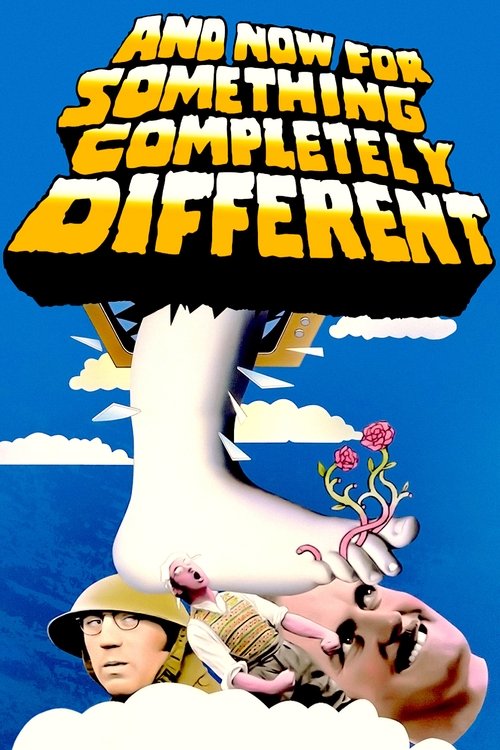
Idle reached stardom in the 1970s when he co-created and acted in the Python sketch comedy series Flying Circus (1969–1974) and the films Holy Grail (1975), Life of Brian, (1979) and The Meaning of Life (1983) with Graham Chapman, John Cleese, Terry Gilliam, Terry Jones, and Michael Palin. Known for his elaborate wordplay and musical numbers, Idle composed and performed many of the songs featured in Python projects, including "Always Look on the Bright Side of Life".
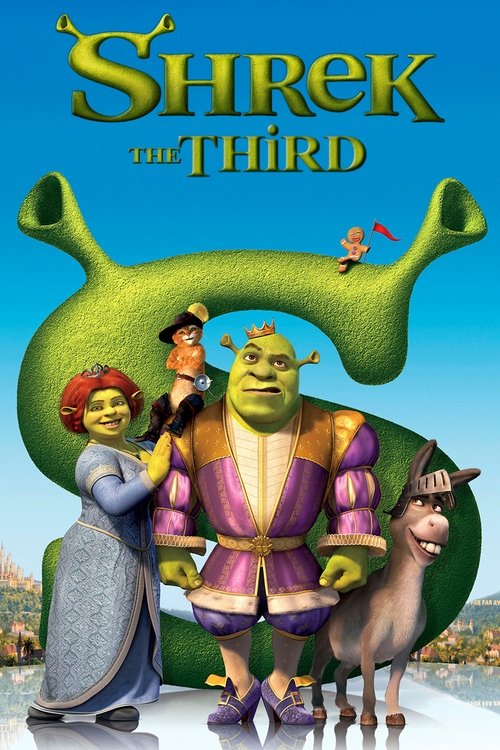
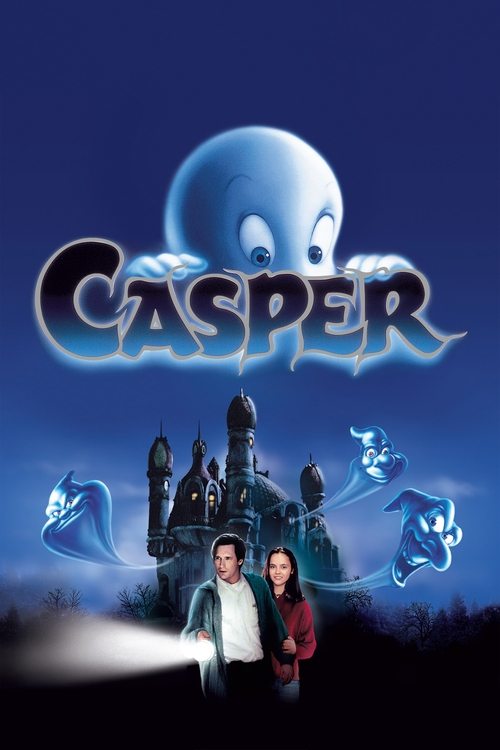
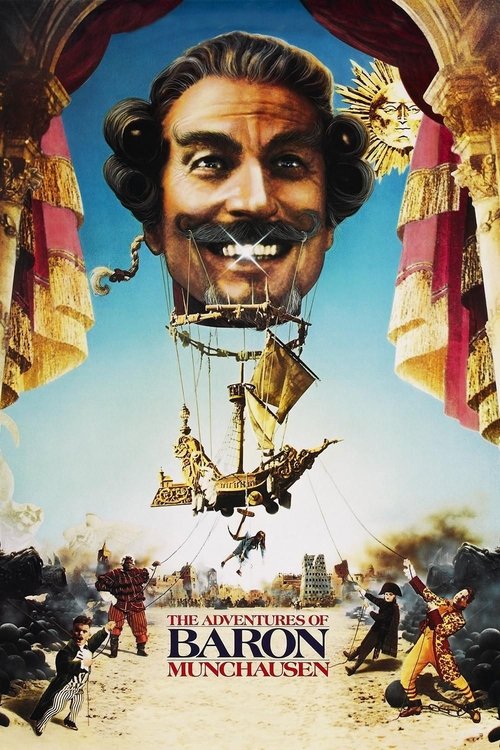
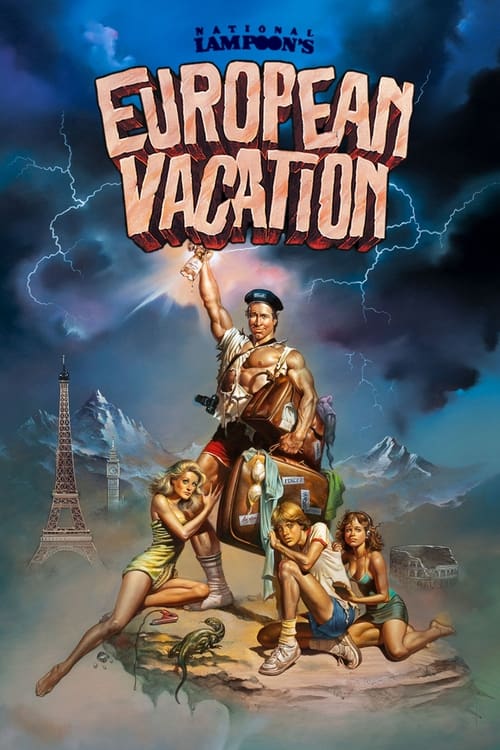
After Flying Circus ended, Idle created another sketch show Rutland Weekend Television (1975–1976), and hosted Saturday Night Live four times (1976–1979). He also acted in films such as National Lampoon's European Vacation (1985), The Transformers: The Movie (1986), The Adventures of Baron Munchausen (1988), Nuns on the Run (1990), Splitting Heirs (1993), Casper (1995), The Wind in the Willows (1996), An Alan Smithee Film: Burn Hollywood Burn (1997), Ella Enchanted (2004), and Shrek the Third (2007).
Idle made his Broadway debut with his adaptation of Holy Grail into the musical, Spamalot (2005), which was a critical and commercial success earning the Tony Award for Best Musical, and Grammy Award for Best Musical Theater Album. He also wrote Not the Messiah (2009) and performed at the London 2012 Olympic Games closing ceremony.
Contents
Early life and education
Eric Idle was born on 29 March 1943 in Harton Hospital, in South Shields. His mother, Norah Barron Sanderson, was a nurse, and his father, Ernest Idle, served in the Royal Air Force during the Second World War, only to be killed in a road accident while hitchhiking home for Christmas in December 1945. Idle said his mother "disappeared for a while into depression" and consequently he was brought up by his grandmother in Swinton, Lancashire. Idle spent part of his childhood in Wallasey, Cheshire, and attended St George's Primary School.
His mother had difficulty coping with a full-time job and bringing up a child, so when Idle was seven, she enrolled him in the Royal Wolverhampton School as a boarder. At that time the school was a charitable foundation dedicated to the education and maintenance of children who had lost one or both parents. Idle said: "It was a physically abusive, bullying, harsh environment for a kid to grow up in. I got used to dealing with groups of boys and getting on with life in unpleasant circumstances and being smart and funny and subversive at the expense of authority. Perfect training for Python."
Idle has stated that the two things that made his life at school bearable were listening to Radio Luxembourg under the bedclothes and watching the local football team, Wolverhampton Wanderers. He disliked other sports, and would sneak out of school every Thursday afternoon to the local cinema. He was eventually caught watching the film BUtterfield 8 (rated as suitable for audiences of age 16 and over under the contemporary film certificates) and stripped of his prefecture, though by that time he was head boy. Idle had already refused to be senior boy in the school cadet force, as he supported the Campaign for Nuclear Disarmament and had participated in the yearly Aldermaston March. He says there was little to do at the school, and boredom drove him to study hard and consequently to secure a place at Cambridge University.
Career
Pre-Python career (1965–1969)
Idle attended Pembroke College, Cambridge, where he studied English. At Pembroke, he was invited to join the prestigious Cambridge University Footlights Club by the president of the Footlights Club, Tim Brooke-Taylor, and Footlights Club member Bill Oddie.
I'd never heard of the Footlights when I got there, but we had a tradition of college smoking-concerts, and I sent in some sketches parodying a play that had just been done. Tim Brooke-Taylor and Bill Oddie auditioned me for the Footlights smoker, and that led to me discovering about and getting into the Footlights, which was great.
Idle started at Cambridge only a year after future fellow-Pythons Graham Chapman and John Cleese. He became Footlights President in 1965 and was the first to allow women to join the club. He starred in the television comedy series Do Not Adjust Your Set co-starring his future Python castmates Terry Jones and Michael Palin. Terry Gilliam provided animations for the show. The show's cast included comic actors David Jason and Denise Coffey. Idle also appeared as guest in some episodes of the television series At Last the 1948 Show, which featured Cleese and Chapman in its principal cast.
Monty Python (1969–1983)
Idle wrote for Python mostly by himself, at his own pace, although he sometimes found it difficult to present material to the others and make it seem funny without the back-up support of a partner. The other Pythons usually worked in teams and Cleese admitted that this was slightly unfair – when the Pythons voted on which sketches should appear in a show, "he (Idle) only got one vote". However, he also says that Idle was an independent person and worked best on his own. Idle himself admitted this was sometimes difficult: "You had to convince five others. And they were not the most un-egotistical of writers, either." He occasionally wrote with Cleese.
Idle's work in Python is often characterised by an obsession with language and communication: many of his characters have verbal peculiarities, such as the man who speaks in anagrams, the man who says words in the wrong order, and the butcher who alternates between rudeness and politeness every time he speaks. A number of his sketches involve extended monologues (for example the customer in the "Travel Agency" sketch who will not stop talking about his unpleasant experiences with holidays), and he would frequently spoof the unnatural language and speech patterns of television presenters. Idle is said to be the master of insincere characters, from the David Frost-esque Timmy Williams, to small-time crook Stig O'Tracy, who tries to deny the fact that organised crime master Dinsdale Piranha nailed his head to the floor.
The second-youngest member of the Pythons, Idle was closest in spirit to the teenagers who made up much of Python's fanbase. Python sketches dealing most with contemporary obsessions like pop music, sexual permissiveness and recreational drugs are usually Idle's work, often characterised by double entendre, sexual references, and other "naughty" subject matter – most famously demonstrated in "Nudge Nudge". Idle originally wrote "Nudge, Nudge" for Ronnie Barker, but it was rejected because there was 'no joke in the words'.
A talented guitarist, Idle composed many of the group's most famous musical numbers, most notably "Always Look on the Bright Side of Life", the closing number of Life of Brian, which has grown to become a Python signature tune. He was responsible for the "Galaxy Song" from The Meaning of Life and "Eric the Half-a-Bee", a whimsical tune that first appeared on the Previous Record album.
Post-Python career (since 1973)
After the success of Python in the early 1970s, all six members pursued solo projects. Idle's first solo work was his own BBC Radio One show, Radio Five (pre-dating the real Radio Five station by 18 years). This ran for two seasons from 1973 to 1974 and involved Idle performing sketches and links to records, playing nearly all the multi-tracked parts himself.
On television, Idle created and wrote Rutland Weekend Television (RWT), a sketch show on BBC2 with music by Neil Innes. RWT was 'Britain's smallest television network'. The name was a parody of London Weekend Television, the independent television franchise contractor that provided Londoners with their ITV services at weekends; Rutland had been England's smallest county, but had recently been 'abolished' in an administrative shake-up. To make the joke complete, the programme went out on a weekday. Other regular performers were David Battley, Henry Woolf, Gwen Taylor and Terence Bayler. George Harrison made a guest appearance on one episode.
A legacy of RWT was the creation, with Innes, of the Rutles, an affectionate parody of the Beatles. The band became a popular phenomenon, especially in the U.S. where Idle was appearing on Saturday Night Live – fans would send in Beatles LPs with their sleeves altered to show the Rutles. In 1978, the Rutles' mockumentary film All You Need Is Cash, a collaboration between Python members and Saturday Night Live, was aired on NBC television, written by Idle, with music by Innes. Idle appeared in the film as "Dirk McQuickly" (the Paul McCartney-styled character of the group), as well as the main commentator, while Innes appeared as "Ron Nasty" (the band's stand-in for John Lennon). Actors appearing in the film included Saturday Night Live's John Belushi, Bill Murray and Gilda Radner, as well as fellow Python Michael Palin, and also real musicians of the 1960s such as former Beatle George Harrison, as well as Mick Jagger and Paul Simon. Idle wrote and directed the Rutles comeback in 2008 for a live show Rutlemania! to celebrate the 30th anniversary. The performances took place in Los Angeles and New York City with a Beatles tribute band.
In 1986, Idle provided the voice of Wreck-Gar, the leader of the Junkions (a race of robots built out of junk that can only speak in film catchphrases and advertising slogans) in The Transformers: The Movie. In 1987, he took part in the English National Opera production of the Gilbert and Sullivan comic opera The Mikado, in which he appeared in the role of the Lord High Executioner, Ko-Ko; a performance of it was taped by Thames Television for broadcast, directed by John Michael Phillips, and subsequently released on DVD by A&E. In 1989, he appeared in the U.S. comedy television series Nearly Departed, about a ghost who haunts the family inhabiting his former home; the series lasted for six episodes as a summer replacement series.
Other credits
Writing
Idle has written several books, both fiction and non-fiction. His novels are Hello Sailor and The Road to Mars. In 1976, he produced a spin-off book to Rutland Weekend Television, titled The Rutland Dirty Weekend Book. In 1982, he wrote a West End farce Pass the Butler, starring Willie Rushton. During his Greedy Bastard Tour of 2003, he wrote the diaries that would be made into The Greedy Bastard Diary: A Comic Tour of America, published in February 2005.
Idle also wrote the book and co-wrote the music and lyrics for the musical Monty Python's Spamalot, based on the film Monty Python and the Holy Grail. It premiered in Chicago before moving to Broadway, where it received the Tony Award for Best Musical of the 2004–05 season. Idle won the Drama Desk Award for Outstanding Lyrics.
In a 2005 poll to find "The Comedians' Comedian" (UK), he was voted 21 in the top 50 greatest comedy acts ever by fellow comedians and comedy insiders.
Songwriting
Idle is a songwriter with about 150 songs to his credit. He composed and performed many of Pythons' most famous comic pieces, including "Eric the Half-a-Bee", "The Philosophers' Song", "Galaxy Song", "Penis Song" and, probably his most recognised hit, "Always Look on the Bright Side of Life", which was written for the closing scene of the Monty Python film Life of Brian, and sung from the crosses during the mass crucifixion. The song has since been covered by Harry Nilsson, Bruce Cockburn, Art Garfunkel, and Green Day. Idle, his fellow Pythons and assorted family and friends performed the song at Graham Chapman's memorial service. Idle performed the song at the closing ceremony of the London 2012 Olympic Games on 12 August 2012 and as the farewell song of the last show of the Python's reunion at the O2 arena, 20 July 2014.
As Ko-Ko in the 1987 English National Opera production of The Mikado, Idle wrote his own 'Little List' on "As some day it may happen". In 1989, Idle co-wrote and sang the theme tune to the popular British sitcom One Foot in the Grave and although the series became immensely popular, the song did poorly in the charts.
When "Always Look on the Bright Side of Life" was adopted as a football chant in the late 1980s, Idle's then neighbour Gary Lineker suggested Idle re-record and release the popular track. With help from BBC Radio 1 breakfast show host Simon Mayo, who gave the song regular airplay and also used the chorus within a jingle, it became a hit, some 12 years after the song's original appearance in Life of Brian, reaching number 3 in the UK charts and landing Idle a set on Top of the Pops in October 1991. The following month Idle, accompanied by opera singer Ann Howard, sang the song at the Royal Variety Performance. He recorded a special version for Mayo's own use on air ("Come on Simon, get another song on now; why don't you put on a nice Cliff Richard record?") and changed the line "life's a piece of shit" to "life's a piece of spit" in order to get daytime airplay on radio.
In 2004, Idle recorded a protest song of sorts, the "FCC Song", in which he lambasts the U.S. FCC for fining him $5,000 for saying "fuck" on national radio. The song contains 14 uses of the word.
In the same year, the musical comedy Spamalot debuted in Chicago; it opened in New York's Shubert Theatre on 14 February 2005. Idle wrote the lyrics and book for Spamalot, collaborating with John Du Prez on much of the music. The original 2005 Broadway theatre production was nominated for 14 Tony Awards and won three: Best Musical, Best Performance by a Featured Actress in a Musical (Sara Ramirez), and Best Direction of a Musical (Mike Nichols).
Personal life
Idle has been married twice. His first marriage was in 1969 to actress Lyn Ashley, with whom he had one son before their divorce in 1975. He met Tania Kosevich, a former model, in 1977 and they married in 1981. They had a daughter. From 1995 they lived in a five-bedroom, 7,000-square-foot (650 m2) mansion in the Hollywood Hills, which they sold in 2023 owing to financial difficulty. Idle has held permanent residency in the United States since about 1997. During and because of Donald Trump's second presidency, Idle was strongly critical of Trump in a question-and-answer session, saying, after permanent residents (and citizens) were deported after criticising the Trump presidency, "I'd be proud to be thrown out because I'd be in very select company. The last English comedian to be thrown out of America for political reasons was Charlie Chaplin."
Idle is a first cousin of Canadian conductor Peter Oundjian. David Bowie made Idle godfather to his son, film director Duncan Jones.
Idle is an atheist, but does not like using the term and is quoted as saying "I don't like that word, it implies that there's a God not to believe in."
In 2019, Idle was diagnosed with pancreatic cancer. He was diagnosed early and underwent successful surgery to remove the tumour, needing no further treatment after this procedure.
As of 2024, Idle lived in Los Angeles, US.
In 2025, he said that he did not watch comedy and watched very little, mainly Netflix thrillers. "I don't go to the movies because they're very boring and for 12-year-olds. I don't watch news and I don't read newspapers."
Tributes
An asteroid, 9620 Ericidle, is named in his honour.
The default Integrated development environment (IDE) of the programming language Python is called IDLE. Although officially IDLE stands for "Integrated DeveLopment Environment", the name was chosen in allusion to Eric Idle, as the name of the programming language Python itself was chosen in allusion to Monty Python.