




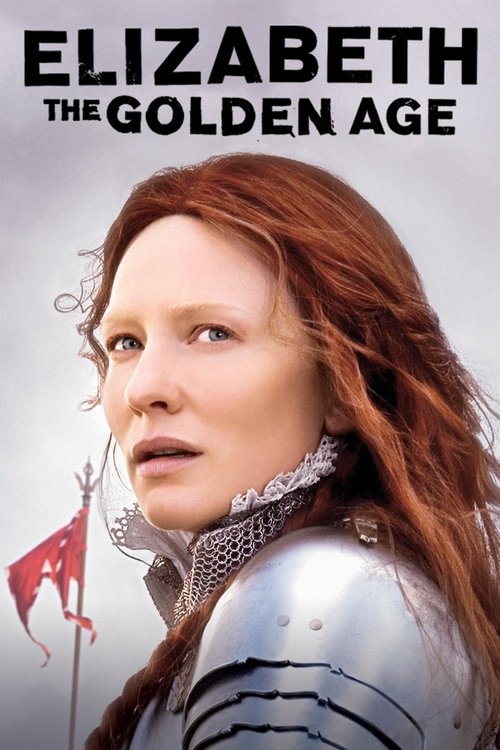

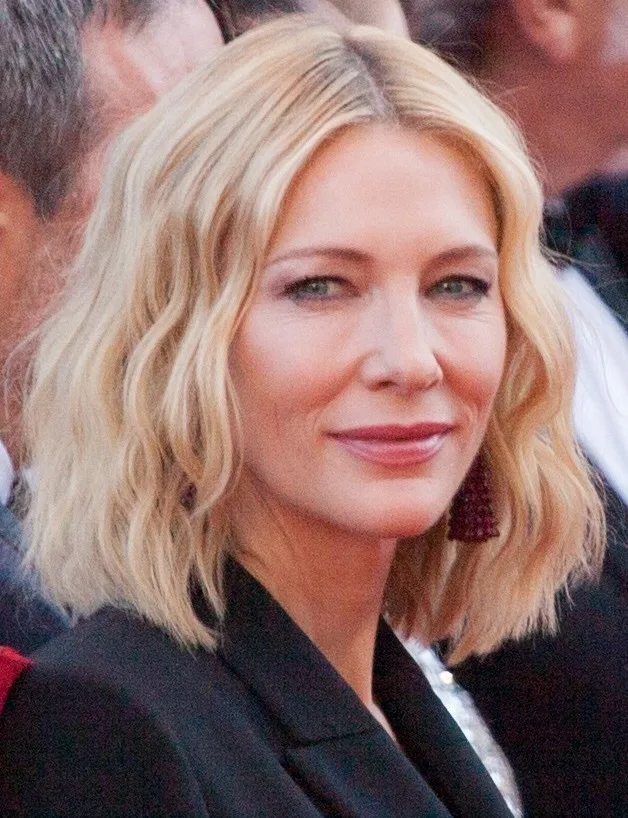
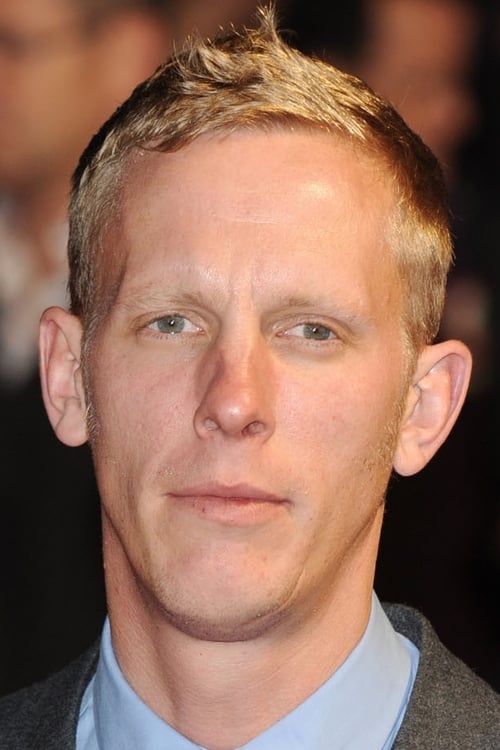


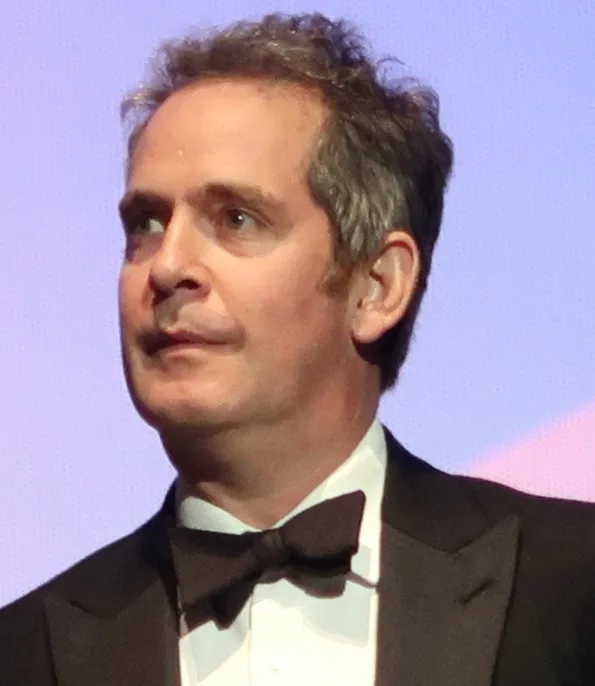
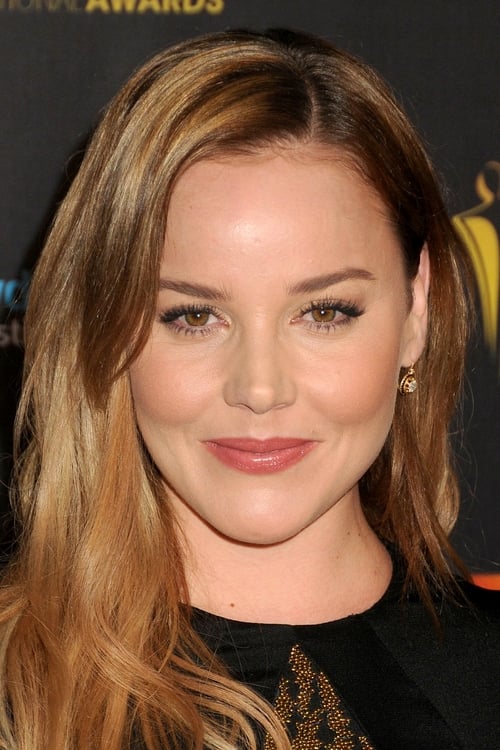
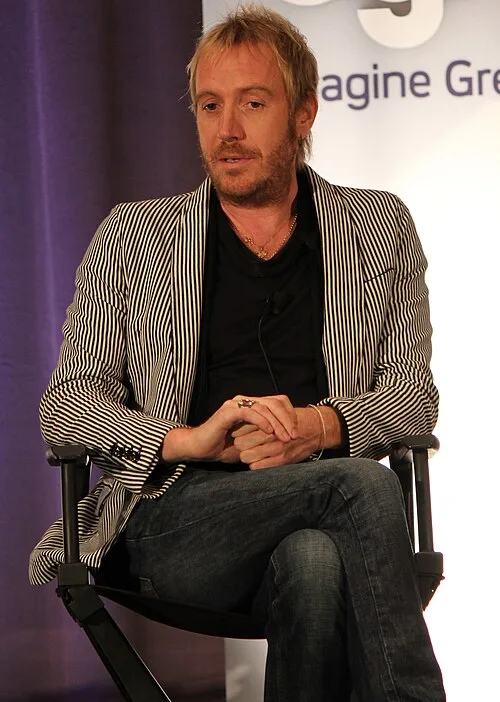

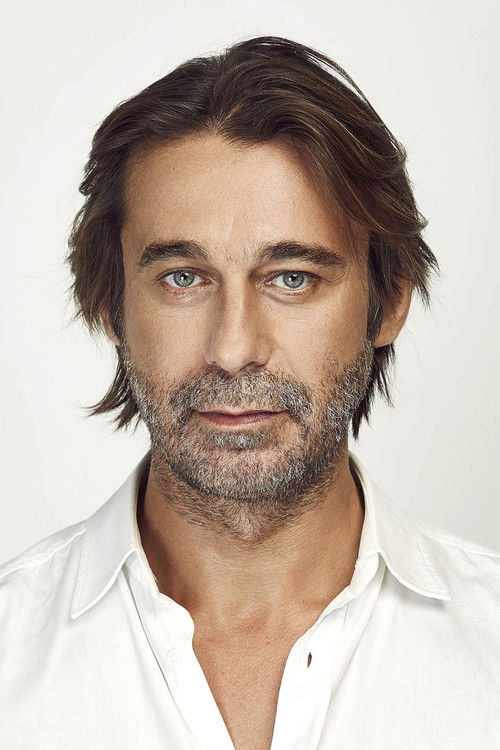

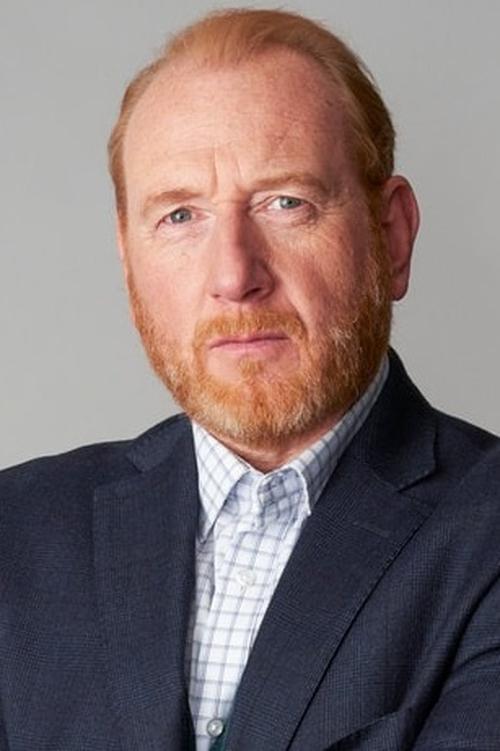




Elizabeth: The Golden Age is a 2007 biographical historical drama film directed by Shekhar Kapur and produced by Universal Pictures and Working Title Films. It stars Cate Blanchett in the title role and is a loose but fact-based portrayal of events during the latter part of the reign of Elizabeth I, forming a sequel to Kapur's 1998 film Elizabeth. The film co-stars Geoffrey Rush (reprising his role from the previous film), Clive Owen, Jordi Mollà, Abbie Cornish, and Samantha Morton. The screenplay was written by William Nicholson and Michael Hirst, and the score composed by Craig Armstrong and A. R. Rahman. Guy Hendrix Dyas was the film's production designer and co-visual effects supervisor, and the costumes were created by Alexandra Byrne. The film was shot at Shepperton Studios and locations around the United Kingdom.
The film premiered on 9 September 2007 at the Toronto International Film Festival. It opened in wide release in the United States on 12 October 2007, premiered in London on 23 October 2007, and opened wide on 2 November 2007 throughout the rest of the UK and Republic of Ireland. At the 80th Academy Awards, the film won Best Costume Design and Blanchett received a nomination for Best Actress.
Contents
Plot
In 1585, Catholic Spain, ruled by King Philip II, is the most powerful country in Europe. Seeing that the Catholic plots against Queen Elizabeth's life that occurred from the 1570s onwards had all failed, Pope Sixtus V approached King Philip, who had amassed the most significant naval force in all of Europe, and convinces him to use this naval force to invade and re-Catholicise England. By doing so, Philip, with the pope's blessing, would overthrow Elizabeth and take control of England. Philip agrees and plots to take over England and install his daughter, Isabella, as Queen of England in Elizabeth's place. Meanwhile, Elizabeth is being pressured by her advisor, Francis Walsingham, to marry; if Elizabeth dies childless, the throne will pass to her first cousin, Mary, Queen of Scots, who is Catholic.
English explorer Walter Raleigh is presented at court, having returned from the New World. Queen Elizabeth is attracted to Raleigh, enthralled by his tales of exploration, and asks Elizabeth "Bess" Throckmorton, her most favoured lady-in-waiting, to observe him. Bess also finds Raleigh attractive and they begin a secret affair. With tensions strained between England and Spain, Elizabeth seeks guidance from her astrologer, Dr. John Dee.
Jesuits in London conspire with Philip to assassinate Elizabeth and replace her with Mary of Scots, in what King Philip calls "The English Enterprise," historically known as the Babington Plot. From her imprisonment, Mary sends secret correspondence to the Jesuits, who recruit Anthony Babington to assassinate Elizabeth. Walsingham continues to warn Queen Elizabeth of Spain's rising power and of the Catholic plots against her, but unlike her predecessor and half-sister, Queen Mary, Elizabeth refuses to force her people to share her religious beliefs.
Walsingham's Catholic brother, who knows of the plot against Elizabeth, is jailed, leading Walsingham to reveal Spain's plan to Queen Elizabeth, who angrily confronts the Spanish diplomats. The Spanish ambassador feigns ignorance, accuses her of receiving stolen Spanish gold from pirates, and insinuates that she has a sexual relationship with Raleigh. Enraged, Elizabeth throws the Spaniards out of England. Meanwhile, Philip is cutting down the forests of Spain to build the Spanish Armada to invade England. Mary writes letters condoning the plot.
Babington storms into a cathedral where Elizabeth is praying and fires a pistol at her, though Elizabeth is unharmed as there was no bullet in the gun. As Elizabeth learns of Mary's involvement in the plot, Walsingham insists Mary be executed to quell any possible revolt. Elizabeth reluctantly agrees. Mary is tried for high treason and beheaded; Walsingham realises this was part of the Jesuits' plan all along: Philip never intended for Mary to become queen, but with the Pope and other Catholic leaders regarding Mary as the true Queen of England, Philip uses Mary's death to obtain papal approval for war. The "murder" of the last legitimate Catholic claimant to the throne gives Philip the pretext he needs to invade England and remove Elizabeth, leaving the way to the English throne free for his own daughter.
Production
Principal photography began 28 April 2006 and completed on 1 August 2006.
Historical background
In November 1558, King Philip II of Spain's second wife, Queen Mary I of England, died. They had married in July 1554, a year after Mary's accession to the English throne, but the English Parliament had refused to grant him much real power as co-monarch of England. On Mary's death he tried unsuccessfully to persuade her sister and successor, Elizabeth I, to marry him.
For many years Philip maintained peace with England, and even defended Elizabeth from the Pope's threat of excommunication. This was a measure taken to preserve a European balance of power. Ultimately, Elizabeth allied England with the Protestant rebels in the Netherlands. Further, English ships began a policy of piracy against Spanish trade and threatened to plunder the great Spanish treasure ships coming from the New World. English ships went so far as to attack a Spanish port. The last straw for Philip was the Treaty of Nonsuch signed by Elizabeth in 1585 – promising troops and supplies to the rebels. Although it can be argued this English action was the result of Philip's Treaty of Joinville with the Catholic League of France, Philip considered it an act of war by England. With the Pope's blessing, he launched the Spanish Armada to attack England, Protestantism, and Elizabeth herself. Sir Walter Raleigh, whom the Queen favoured, married Bess Throckmorton, a ward of Elizabeth's court, after learning she was carrying his child. Elizabeth I had both of them arrested and imprisoned in the Tower of London, but later released them.
Dramatic licence
This representation of a historical period is heavily fictionalised for the purposes of entertainment. The film's lead Cate Blanchett was reported as saying: "It's terrifying that we are growing up with this very illiterate bunch of children, who are somehow being taught that film is fact, when in fact it's invention". Some of the simpler fictions are:
Sir Walter Raleigh is falsely portrayed as a major figure in the defeat of the Spanish Armada, and the film does not credit Sir Francis Drake and other key leaders of the English fleet (a character called "Drake" does appear during the battle with the Spanish; the role is played, uncredited, by actor Malcolm Storry).
Robert Dudley, 1st Earl of Leicester, was lieutenant general at the Armada crisis, but in the film, he is not present at the Tilbury camp, his role having been given to Raleigh. The movie also does not make mention of Dudley's military campaign in the Netherlands.
Charles Howard (then Lord Howard of Effingham, the actual commander of the English fleet), says at one point, "We're losing too many ships." In reality, not a single English ship was lost during the battle.
The film depicts Elizabeth being advised by Dr John Dee. Historically, Dee was travelling on the European mainland throughout the period depicted and did not return until more than a year after the defeat of the Armada. Elizabeth's actual main advisor and chief minister, William Cecil, 1st Baron Burghley, is omitted from the film altogether.
The portrayed Jesuit leader of the Babington Plot, Robert Reston, is completely fictional, though based on the real-life Jesuit John Ballard, who encouraged Babington to initiate the assassination attempt on Elizabeth, which would subsequently begin the chain of events leading to the Spanish invasion. However, because Ballard was depicted being executed in the previous film for participating in the Ridolfi plot, the role of Reston was created to replace him.
In the film, Elizabeth is confronted at the altar of Old St Paul's Cathedral by Anthony Babington, who has a pistol charged with powder but no shot. The real Babington Plot was, like preceding plots against Elizabeth, discovered and thwarted by Francis Walsingham's investigative efforts while still in the planning stages, long before there was any actual attempt to kill Elizabeth.
Filming locations
Baddesley Clinton, Warwickshire, England, UK (Raleigh's house exteriors)
Brean Down, Weston-super-Mare, Somerset, England (Queen Elizabeth addresses her troops)
Burghley House, Stamford, Lincolnshire, England (John Dee's house exteriors/London alley/Paris street scene)
Burnham-on-Sea, Somerset, England
Dorney Court, Dorney, Buckinghamshire, England (Raleigh's house/Walsingham's house/chapel interiors)
Doune Castle, Doune, Stirling, Scotland
Eilean Donan Castle, Kyle of Lochalsh, Highland, Scotland (Fotheringhay Castle exteriors)
Ely Cathedral, Ely, Cambridgeshire, England (Whitehall Palace interior)
Hatfield House, Hatfield, Hertfordshire, England (Chartley Hall, also the interior of Walsingham's house)
Leeds Castle, Kent, England (Chartley Hall/Windsor Castle exteriors)
Petworth House, Petworth, West Sussex, England (Windsor Great Park)
Shepperton Studios, Shepperton, Surrey, England
St. Bartholomew's Hospital, London, England (Fotheringhay Castle/Chartley Hall interiors)
St John's College, Cambridge, Cambridge, Cambridgeshire, England (Whitehall Palace exteriors/Thames scenes)
Soundtrack
The original score was composed by A. R. Rahman and Craig Armstrong. Kapur was thrilled to have both Rahman and Armstrong working together on the music, saying it was fascinating to watch "two people with totally different backgrounds and cultures" interact.
Blanchett had travelled to India in the early 2000s, coming away with several Indian sounds, and badgered Kapur to get Rahman to score Hollywood movies. Antonio Pinto was mentioned as being a collaborator during production, but later Armstrong joined the project. In January 2009, he expressed regret that other compositions from A. R. Rahman were not used in the film, feeling that "the score of Golden Age was not half as good as it could have been." He expressed hope to hear these pieces appear in another project.
"Opening" from the score was used in the BBC's coverage of the Single's Finals at the 2008 Wimbledon Championships. "Storm" is heard in a trailer of the 2013 film Man of Steel.
Home media
The film was released on DVD and HD DVD on 5 February 2008, and on Blu-ray on 27 April 2010.
Reception
Critical reception
Although Cate Blanchett's performance was highly praised, the film received generally mixed to negative reviews from US critics. On the review aggregator Rotten Tomatoes, 34% of critics gave the film a positive rating, based on 163 reviews; the average rating is 5.1/10. The critics consensus reads, "This sequel is full of lavish costumes and elaborate sets, but lacks the heart and creativity of the original Elizabeth." On Metacritic, the film has an average score of 45 out of 100, based on 35 reviews, indicating "mixed or average reviews". Audiences polled by CinemaScore gave the film an average grade of "B" on an A+ to F scale, the same grade as its predecessor.
Roger Ebert gave the film 2 1/2 stars out of 4, saying 'there are scenes where the costumes are so sumptuous, the sets so vast, the music so insistent, that we lose sight of the humans behind the dazzle of the production'. Ebert did, however, praise many of the actors' performances, particularly that of Cate Blanchett as Queen Elizabeth I. He said 'that Blanchett could appear in the same Toronto International Film Festival playing Elizabeth and Bob Dylan, both splendidly, is a wonder of acting'. Blanchett portrayed Bob Dylan in the film I'm Not There and was nominated for an Academy Award for her roles in both movies.
Colin Covert of the Minneapolis Star Tribune gave the film 3 stars out of 4, writing '... as a pseudo-historical fable, a romantic triangle and a blood-and-thunder melodrama, the film can't be faulted' and 'This isn't historical fabrication, it's mutilation. But for all its lapses, this is probably the liveliest, most vibrant Elizabethan production since Baz Luhrmann's Romeo + Juliet.' while Wesley Morris of The Boston Globe said, "Historians might demand a little more history from Elizabeth: The Golden Age. But soap opera loyalists could hardly ask for more soap."
Michael Gove, speaking on BBC Two's Newsnight Review, said: 'It tells the story of England's past in a way which someone who's familiar with the Whig tradition of history would find, as I did, completely sympathetic. It's amazing to see a film made now that is so patriotic ... One of the striking things about this film is that it's almost a historical anomaly. I can't think of a historical period film in which England and the English have been depicted heroically for the last forty or fifty years. You almost have to go back to Laurence Olivier's Shakespeare's Henry V in which you actually have an English king and English armies portrayed heroically'.
Box office
Elizabeth: The Golden Age grossed $6.1 million in 2,001 theatres during its opening weekend in the United States and Canada, ranking #6 at the box office. In the United Kingdom and Republic of Ireland the film entered at No. 4 and earned £1.3 million ($2.7 million) on its opening weekend. As of February 2009 the worldwide total was $74.2 million, including $16.4 million in the US and Canada and $57.8 million elsewhere. In contrast, the film's predecessor, Elizabeth, grossed $30 million in the United States and Canada, and a total of $82.1 million worldwide.
Awards and nominations
The film received two Academy Award nominations, winning the Academy Award for Costume Design for Alexandra Byrne. Cate Blanchett was also nominated for the Academy Award for Best Actress for her performance in the film, becoming the first female actor to receive two Academy Award nominations for playing the same role.
At the 11th Pyongyang International Film Festival held in September 2008, one of the awards for special screening were conferred upon the film.