1990's
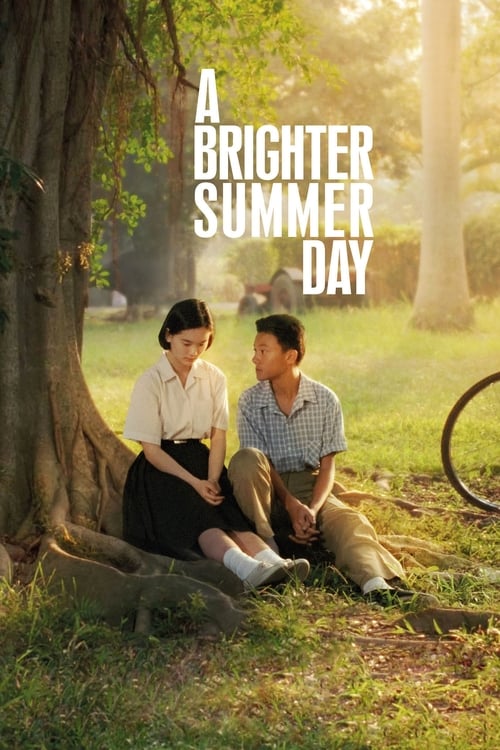
Yang's fourth film was A Brighter Summer Day (1991) (The Chinese title of "Gǔ lǐng jiē shàonián shārén shìjiàn" literally translating to: "The Murder Incident of the Boy on Guling Street"), a sprawling examination of youth-teen gangs, 1949 Taiwanese societal developments, and American pop culture starring a then 15-year-old Chang Chen. The film also stars Lisa Yang, Kuo-Chu Chang, Elaine Jin and Yang's then-wife Tsai Chin in a small role as Wang's wife.
The film is considered by many critics to be Yang's defining masterpiece. For A Brighter Summer Day, Yang won the FIPRESCI Prize and a Special Jury Prize (and was nominated for the Tokyo Grand Prix) at The Tokyo International Film Festival, and a Golden Horse award for Best Film as well as Best Original Screenplay, credited to writers Edward Yang, Hung Hung, Alex Yang, and Mingtai Lai. The film was also nominated for a total of ten other Golden Horse awards, including Best Leading Actor (Chang Chen), Best Leading Actress (Lisa Yang), Best Director (Edward Yang), Best Leading Actor (Kuo-Chu Chang), Best Supporting Actress (Elaine Jin), Best Supporting Actress (Hsiu-Chiung Chang), Best Cinematography (Hui Kung Chang), Best Art Director (Edward Yang and Wei-yen Yu), Best Makeup & Costume Design (Wei-yen Yu), and Best Sound Recording (Duu-Chih Tu and Ching-an Yang). The film also won the Best Film award at the 1991 Asia-Pacific Film Festival, a Best Foreign Language Film Director Award for Yang at the 1993 Kinema Jumpo Awards, another Best Director award for Yang at the Nantes Three Continents Festival (where Yang was also nominated for the Golden Montgolfiere award) and the Silver Screen Award for "Best Director – Asian Feature Film" for Yang at the Singapore International Film Festival.
Yang's fifth film was A Confucian Confusion (1994), a multi-character comedy set in urban Taiwan, which was nominated for a Palme d'Or and in competition at the 1994 Cannes Film Festival and also garnered a Golden Horse Award for Best Screenplay Originally Written for The Screen. The film also won a Best Supporting Actor award (Bosen Wang) and a Best Supporting Actress award (Elaine Jin) at the 1994 Golden Horse Film Festival. Also at the Golden Horse Film Festival that year, the film also received a total of 9 nominations: Best Feature Film (Executive Producer David Sui), Best Leading Actress (Shu-Chun Ni), Best Makeup & Costume Design (Edward Yang and Tsai Chin), Best Original Film Score (Antonio Lee), Best Film Editing (Po-Wen Chen), Best Sound Effects (Duu-Chih Tu), Best Director (Edward Yang), Best Cinematography (Chan Chang, Lung-Yu Li, Arthur Wong and Wu-Hsiu Hung), and Best Art Direction (Edward Yang, Ernest Guan and Jui-Chung Yao).
Yang's sixth film was Mahjong (1996), a sharp, incisive reflection of modern urban-Taiwan seen through foreign eyes, which also starred several foreign actors, which won an Honourable Mention at the 46th Berlin International Film Festival, where it was also nominated for the Golden Berlin Bear award. The film also garnered Yang another Silver Screen Award for "Best Asian Director" at The Singapore International Film Festival, his second award of this type, as well as an Award of the City of Nantes from the Nantes Three Continents Festival, where it was also nominated for a Golden Montgolfiere award. Actor Chi-tsan Wang also won a Best Supporting Actor award at the 1996 Golden Horse Film Festival, where the film was also nominated for a Best Makeup & Costume Design award (Chi-chien Chao).