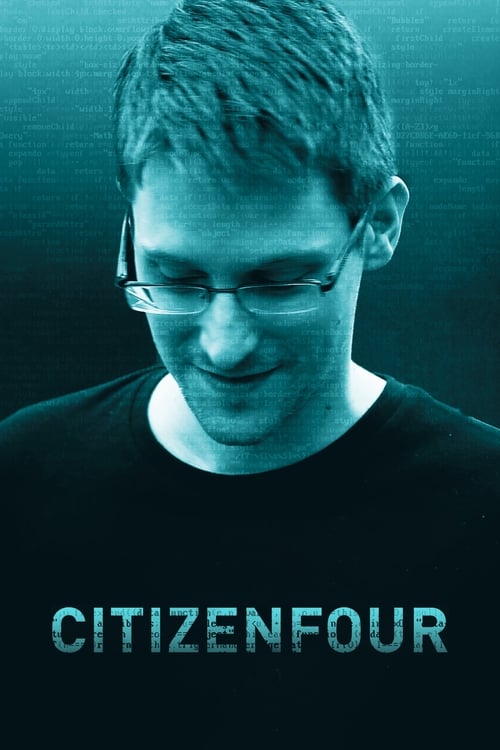




Edward Joseph Snowden (born June 21, 1983) is a former National Security Agency (NSA) intelligence contractor who leaked classified documents revealing the existence of global surveillance programs.
Born in 1983 in Elizabeth City, North Carolina, he attended a community college and later enrolled in a master's programme at the University of Liverpool without finishing it. In 2006, he started working for the Central Intelligence Agency (CIA) and then moved to Dell in 2009, where he managed computer systems for the NSA. In 2013, he worked for two months at Booz Allen Hamilton, with the purpose of gathering more NSA documents.
In May 2013, Snowden flew to Hong Kong, and in early June he revealed thousands of classified NSA documents to journalists Glenn Greenwald, Laura Poitras, Barton Gellman, and Ewen MacAskill. His disclosures revealed numerous global surveillance programs, many run by the NSA and the Five Eyes intelligence alliance with the cooperation of telecommunications companies and European governments, and prompted a cultural discussion about national security and individual privacy.
On June 21, 2013, the United States Department of Justice unsealed charges against Snowden on two counts of violating the Espionage Act of 1917 and theft of government property, following which the Department of State revoked his passport. He stayed in Sheremetyevo International Airport in Moscow for a month before being granted asylum. He became a naturalized Russian citizen in 2022.
In early 2016, Snowden became the president of the Freedom of the Press Foundation, a San Francisco–based nonprofit organization that aims to protect journalists from hacking and government surveillance. He also has a job at an unnamed Russian IT company. In 2017, he married Lindsay Mills. On September 17, 2019, his memoir Permanent Record was published. On September 2, 2020, a US federal court ruled in United States v. Moalin that one of the U.S. intelligence's mass surveillance programs exposed by Snowden was illegal and possibly unconstitutional.
Contents
Early life and education
Edward Joseph Snowden was born on June 21, 1983, in Elizabeth City, North Carolina. Snowden's father, Lonnie "Lon", was a warrant officer in the U.S. Coast Guard, and his mother, Elizabeth, was a clerk at the U.S. District Court for the District of Maryland. His older sister, Jessica, was a lawyer at the Federal Judicial Center in Washington, D.C. His maternal grandfather, Edward J. Barrett, a rear admiral in the Coast Guard, became a senior official with the FBI and was at the Pentagon in 2001 during the September 11 attacks. Edward Snowden said that he had expected to work for the federal government, as had the rest of his family. His parents divorced in 2001, and his father remarried.
In the early 1990s, while still in grade school, Snowden moved with his family to the area of Fort Meade, Maryland. Mononucleosis caused him to miss high school for almost nine months. Rather than returning to school, he claims to have passed the GED test. He took classes at Anne Arundel Community College. Although Snowden had no undergraduate college degree, he worked online toward a master's degree in computer security at the University of Liverpool in 2011. He was interested in Japanese popular culture, had studied the Japanese language, and worked for a now defunct start-up anime company based in the U.S. He also said he had a basic understanding of Mandarin Chinese and was deeply interested in martial arts. At age 20, he listed his religion as Buddhism after working at a U.S. military base in Japan.
In September 2019, as part of interviews relating to the release of his memoir Permanent Record, Snowden revealed to The Guardian that he married Lindsay Mills in a courthouse in Moscow. The couple's first son was born in December 2020, and their second son was born sometime before September 2022.
Career
Snowden enlisted in the United States Army on May 7, 2004, and became a Special Forces candidate through its 18X enlistment option. He did not complete the training due to a leg injury and was given an administrative discharge on September 28, 2004.
Snowden was then employed for less than a year in 2005 as a security guard at the University of Maryland's Center for Advanced Study of Language, a research center sponsored by the National Security Agency (NSA). According to the university, this is not a classified facility, though it is heavily guarded. In June 2014, Snowden told Wired that his job as a security guard required a high-level security clearance, for which he passed a polygraph exam and underwent a stringent background investigation.
Employment at the CIA
After attending a 2006 job-fair focused on intelligence agencies, Snowden accepted an offer for a position at the CIA. The Agency assigned him to the global communications division at CIA headquarters in Langley, Virginia.
In May 2006, Snowden wrote in Ars Technica that he had no trouble getting work because he was a "computer wizard". Snowden was sent to the CIA's secret school for technology specialists, where he lived in a hotel for six months while studying and training full-time.
In March 2007, the CIA stationed Snowden with diplomatic cover in Geneva, Switzerland, where he was responsible for maintaining computer-network security. Assigned to the U.S. Permanent Mission to the United Nations – a diplomatic mission representing US interests before the UN and other international organizations, Snowden received a diplomatic passport and a four-bedroom apartment near Lake Geneva.
According to Greenwald, while there Snowden said he was "considered the top technical and cybersecurity expert" in that country and "was hand-picked by the CIA to support the president at the 2008 NATO summit in Romania". A 2016 report from the US House of Representatives Select Committee on Intelligence said that Snowden's official position at CIA was an entry-level technical services officer.
Snowden described his CIA experience in Geneva as formative, stating that the CIA deliberately got a Swiss banker drunk and encouraged him to drive home. Snowden said that when the latter was arrested for drunk driving, a CIA operative offered to help in exchange for the banker becoming an informant. Ueli Maurer, President of the Swiss Confederation for the year 2013, publicly disputed Snowden's claims in June of that year: "This would mean that the CIA successfully bribed the Geneva police and judiciary. With all due respect, I just can't imagine it." In February 2009, after his supervisor grew suspicious that Snowden was trying to access files he was not authorized to view, Snowden resigned from the CIA.
NSA sub-contractor
In 2009, Snowden began work as a contractor for Dell, which manages computer systems for multiple government agencies. Assigned to an NSA facility at Yokota Air Base near Tokyo, Snowden instructed top officials and military officers on how to defend their networks from Chinese hackers. Snowden looked into mass surveillance in China which prompted him to investigate and then expose Washington's mass surveillance program after he was asked in 2009 to brief a conference in Tokyo.
During his four years with Dell, he rose from supervising NSA computer system upgrades to working as what his résumé termed a "cyber strategist" and an "expert in cyber counterintelligence" at several US locations. In 2010, he had a brief stint in New Delhi, India, where he enrolled himself in a local IT institute to learn core Java programming and advanced ethical hacking.
In 2011, he returned to Maryland, where he spent a year as system administrator and pre-sales technical engineer on Dell's CIA account. In that capacity, he was consulted by the chiefs of the CIA's technical branches, including the agency's chief information officer and its chief technology officer. US officials and other sources familiar with the investigation said Snowden began downloading documents describing the government's electronic spying programs while working for Dell in April 2012. Investigators estimated that of the 50,000 to 200,000 documents Snowden gave to Greenwald and Poitras, most were copied by Snowden while working at Dell.
In March 2012, Dell reassigned Snowden to Hawaii as lead technologist for the NSA's information-sharing office.
On March 15, 2013—three days after what he later called his "breaking point" of "seeing the Director of National Intelligence, James Clapper, directly lie under oath to Congress"—Snowden quit his job at Dell. Although he has said his career high annual salary was $200,000, Snowden said he took a pay cut to work at consulting firm Booz Allen Hamilton, where he sought employment in order to gather data and then release details of the NSA's worldwide surveillance activity.
At the time of his departure from the US in May 2013, he had been employed for 15 months inside the NSA's Hawaii regional operations center, which focuses on the electronic monitoring of China and North Korea, first for Dell and then for two months with Booz Allen Hamilton. While intelligence officials have described his position there as a system administrator, Snowden has said he was an infrastructure analyst, which meant that his job was to look for new ways to break into Internet and telephone traffic around the world. An anonymous source told Reuters that, while in Hawaii, Snowden may have persuaded 20–25 co-workers to give him their login credentials by telling them he needed them to do his job. The NSA sent a memo to Congress saying that Snowden had tricked a fellow employee into sharing his personal private key to gain greater access to the NSA's computer system. Snowden disputed the memo, saying in January 2014, "I never stole any passwords, nor did I trick an army of co-workers." Booz Allen terminated Snowden's employment on June 10, 2013, the day after he went public with his story, and three weeks after he had left Hawaii on a leave of absence.
Whistleblower status
Snowden has described himself as a whistleblower, a description used by many sources, including CNBC, The New Yorker, Reuters, and The Guardian, among others. The term has both informal and legal meanings.
Snowden said that he had told multiple employees and two supervisors about his concerns, but the NSA disputes his claim. Snowden elaborated in January 2014, saying "[I] made tremendous efforts to report these programs to co-workers, supervisors, and anyone with the proper clearance who would listen. The reactions of those I told about the scale of the constitutional violations ranged from deeply concerned to appalled, but no one was willing to risk their jobs, families, and possibly even freedom to go to [sic] through what [Thomas Andrews] Drake did." In March 2014, during testimony to the European Parliament, Snowden wrote that before revealing classified information he had reported "clearly problematic programs" to ten officials, who he said did nothing in response. In a May 2014 interview, Snowden told NBC News that after bringing his concerns about the legality of the NSA spying programs to officials, he was told to stay silent on the matter. He said that the NSA had copies of emails he sent to their Office of General Counsel, oversight, and compliance personnel broaching "concerns about the NSA's interpretations of its legal authorities. I had raised these complaints not just officially in writing through email, but to my supervisors, to my colleagues, in more than one office."
In May 2014, US officials released a single email that Snowden had written in April 2013 inquiring about legal authorities but said that they had found no other evidence that Snowden had expressed his concerns to someone in an oversight position. In June 2014, the NSA said it had not been able to find any records of Snowden raising internal complaints about the agency's operations. That same month, Snowden explained that he had not produced the communiqués in question because of the ongoing nature of the dispute, disclosing for the first time that "I am working with the NSA in regard to these records and we're going back and forth, so I don't want to reveal everything that will come out."
Self-description as a whistleblower and attribution as such in news reports does not determine whether he qualifies as a whistleblower within the meaning of the Whistleblower Protection Act of 1989 (5 USC 2303(b)(8)-(9); Pub. Law 101-12). However, Snowden's potential status as a whistleblower under the 1989 Act is not directly addressed in the criminal complaint against him in the United States District Court for the Eastern District of Virginia (see below) (Case No. 1:13 CR 265 (0MH)). These and similar and related issues are discussed in an essay by David Pozen, in a chapter of the book Whistleblowing Nation, published in March 2020, an adaptation of which also appeared on Lawfare Blog in March 2019. The unclassified portion of a September 15, 2016, report by the United States House Permanent Select Committee on Intelligence (HPSCI), initiated by the chairman and Ranking Member in August 2014, and posted on the website of the Federation of American Scientists, concluded that Snowden was not a whistleblower in the sense required by the Whistleblower Protection Act. The bulk of the report is classified.
Surveillance disclosures
Size and scope of disclosures
The exact size of Snowden's disclosure is unknown, but Australian officials have estimated 15,000 or more Australian intelligence files and British officials estimate at least 58,000 British intelligence files were included. NSA Director Keith Alexander initially estimated that Snowden had copied anywhere from 50,000 to 200,000 NSA documents. Later estimates provided by US officials were in the order of 1.7 million, a number that originally came from Department of Defense talking points. In July 2014, The Washington Post reported on a cache previously provided by Snowden from domestic NSA operations consisting of "roughly 160,000 intercepted e-mail and instant-message conversations, some of them hundreds of pages long, and 7,900 documents taken from more than 11,000 online accounts." A DIA report declassified in June 2015 said that Snowden took 900,000 Department of Defense files, more than he downloaded from the NSA.
Venafi, a cybersecurity company, has claimed to have figured out how Snowden was able to fabricate SSH keys and self-signed certificates to access and exfiltrate the classified documents.
Potential impact on US national security
In March 2014, Army General Martin Dempsey, Chairman of the Joint Chiefs of Staff, told the House Armed Services Committee, "The vast majority of the documents that Snowden ... exfiltrated from our highest levels of security ... had nothing to do with exposing government oversight of domestic activities. The vast majority of those were related to our military capabilities, operations, tactics, techniques, and procedures." When asked in a May 2014 interview to quantify the number of documents Snowden stole, retired NSA director Keith Alexander said there was no accurate way of counting what he took, but Snowden may have downloaded more than a million documents. The September 15, 2016, HPSCI report estimated the number of downloaded documents at 1.5 million.
In a 2013 Associated Press interview, Glenn Greenwald stated:In order to take documents with him that proved that what he was saying was true he had to take ones that included very sensitive, detailed blueprints of how the NSA does what they do. Thus, the Snowden documents allegedly contained sensitive NSA blueprints detailing how the NSA operates, which would allow someone who read them to evade or even duplicate NSA surveillance. Further, a 2015 New York Times article reported that the Islamic State group had studied Snowden's revelations about how the United States gathered information on militants. As a result, the group's top leaders used couriers or encrypted channels to avoid being tracked or monitored by Western analysts.
According to Snowden, he did not indiscriminately turn over documents to journalists, stating that "I carefully evaluated every single document I disclosed to ensure that each was legitimately in the public interest. There are all sorts of documents that would have made a big impact that I didn't turn over" and that "I have to screen everything before releasing it to journalists ... If I have time to go through this information, I would like to make it available to journalists in each country." Despite these measures, the improper redaction of a document by The New York Times resulted in the exposure of intelligence activity against al-Qaeda.
In June 2014, the NSA's recently installed director, US Navy Admiral Michael S. Rogers, said that while some terrorist groups had altered their communications to avoid surveillance techniques revealed by Snowden, the damage done was not significant enough to conclude that "the sky is falling." Nevertheless, in February 2015, Rogers said that Snowden's disclosures had a material impact on the NSA's detection and evaluation of terrorist activities worldwide.
Release of NSA documents
Snowden's decision to leak NSA documents developed gradually following his March 2007 posting as a technician to the Geneva CIA station. Snowden later made contact with Glenn Greenwald, a journalist working at The Guardian. He contacted Greenwald anonymously as "Cincinnatus" and said he had sensitive documents that he would like to share. Greenwald found the measures that the source asked him to take to secure their communications, such as encrypting email, too annoying to employ. Snowden then contacted documentary filmmaker Laura Poitras in January 2013. According to Poitras, Snowden chose to contact her after seeing her New York Times article about NSA whistleblower William Binney. What originally attracted Snowden to Greenwald and Poitras was a Salon article written by Greenwald detailing how Poitras's controversial films had made her a target of the government.
Greenwald began working with Snowden in either February or April 2013, after Poitras asked Greenwald to meet her in New York City, at which point Snowden began providing documents to them. Barton Gellman, writing for The Washington Post, says his first direct contact was on May 16, 2013. According to Gellman, Snowden approached Greenwald after the Post declined to guarantee publication within 72 hours of all 41 PowerPoint slides that Snowden had leaked exposing the PRISM electronic data mining program, and to publish online an encrypted code allowing Snowden to later prove that he was the source.
Snowden communicated using encrypted email, and going by the codename "Verax". He asked not to be quoted at length for fear of identification by stylometry.
According to Gellman, before their first meeting in person, Snowden wrote, "I understand that I will be made to suffer for my actions and that the return of this information to the public marks my end." Snowden also told Gellman that until the articles were published, the journalists working with him would also be at mortal risk from the United States Intelligence Community "if they think you are the single point of failure that could stop this disclosure and make them the sole owner of this information."
In May 2013, Snowden was permitted temporary leave from his position at the NSA in Hawaii, on the pretext of receiving treatment for his epilepsy. In mid-May, Snowden gave an electronic interview to Poitras and Jacob Appelbaum which was published weeks later by Der Spiegel.
Publication
On May 20, 2013, Snowden flew to Hong Kong, where he was staying when the initial articles based on the leaked documents were published, beginning with The Guardian on June 5. Greenwald later said Snowden disclosed 9,000 to 10,000 documents.
Within months, documents had been obtained and published by media outlets worldwide, most notably The Guardian (Britain), Der Spiegel (Germany), The Washington Post and The New York Times (US), O Globo (Brazil), Le Monde (France), and similar outlets in Sweden, Canada, Italy, Netherlands, Norway, Spain, and Australia. In 2014, NBC broke its first story based on the leaked documents. In February 2014, for reporting based on Snowden's leaks, journalists Glenn Greenwald, Laura Poitras, Barton Gellman and The Guardian′s Ewen MacAskill were honored as co-recipients of the 2013 George Polk Award, which they dedicated to Snowden. The NSA reporting by these journalists also earned The Guardian and The Washington Post the 2014 Pulitzer Prize for Public Service for exposing the "widespread surveillance" and for helping to spark a "huge public debate about the extent of the government's spying". The Guardian's chief editor, Alan Rusbridger, credited Snowden for having performed a public service.
Revelations
The ongoing publication of leaked documents has revealed previously unknown details of a global surveillance apparatus run by the NSA in close cooperation with three of its four Five Eyes partners: Australia's ASD, the UK's GCHQ, and Canada's CSE.
On June 5, 2013, media reports documenting the existence and functions of classified surveillance programs and their scope began and continued throughout the entire year. The first program to be revealed was PRISM, which allows for direct access to data on the servers of Microsoft, Yahoo, Google, Facebook, PalTalk, AOL, Skype, YouTube, and Apple. Barton Gellman of The Washington Post was the first journalist to report on Snowden's documents. He said the US government urged him not to specify by name which companies were involved, but Gellman decided that to name them "would make it real to Americans." Reports also revealed details of Tempora, a secret British surveillance program run by the NSA's British partner, GCHQ. The initial reports included details about NSA call database, Boundless Informant, and a secret court order requiring Verizon to hand the NSA millions of Americans' phone records daily, as well as the surveillance of phone and Internet records of French citizens, with specific targets of French people either "suspected of association with terrorist activities" or in "the worlds of business, politics or French state administration." XKeyscore, an analytical tool that allows for collection of "almost anything done on the internet," was described by The Guardian as a program that shed light on one of Snowden's most controversial statements: "I, sitting at my desk [could] wiretap anyone, from you or your accountant, to a federal judge or even the president, if I had a personal email."
The NSA's top-secret black budget, obtained from Snowden by The Washington Post, exposed the successes and failures of the 16 spy agencies comprising the US intelligence community, and revealed that the NSA was paying U.S. private tech companies for clandestine access to their communications networks. The agencies were allotted $52 billion for the 2013 fiscal year.
It was revealed that the NSA was harvesting millions of email and instant messaging contact lists, searching email content, tracking and mapping the location of cell phones, undermining attempts at encryption via Bullrun and that the agency was using cookies to piggyback on the same tools used by Internet advertisers "to pinpoint targets for government hacking and to bolster surveillance." The NSA was shown to be secretly accessing Yahoo and Google data centers to collect information from hundreds of millions of account holders worldwide by tapping undersea cables using the MUSCULAR surveillance program.
Motivations
Snowden first contemplated leaking confidential documents around 2008 but held back, partly because he believed the newly elected Barack Obama might introduce reforms. After the disclosures, his identity was made public by The Guardian at his request on June 9, 2013. "I do not want to live in a world where everything I do and say is recorded
... My sole motive is to inform the public as to that which is done in their name and that which is done against them."
Snowden said he wanted to "embolden others to step forward" by demonstrating that "they can win". He also said that the system for reporting problems did not work. "You have to report wrongdoing to those most responsible for it." He cited a lack of whistleblower protection for government contractors, the use of the Espionage Act of 1917 to prosecute leakers and the belief that had he used internal mechanisms to "sound the alarm", his revelations "would have been buried forever".
In December 2013, upon learning that a US federal judge had ruled the collection of US phone metadata conducted by the NSA as likely unconstitutional, Snowden said, "I acted on my belief that the NSA's mass surveillance programs would not withstand a constitutional challenge, and that the American public deserved a chance to see these issues determined by open courts ... today, a secret program authorized by a secret court was, when exposed to the light of day, found to violate Americans' rights."
In January 2014, Snowden said his "breaking point" was "seeing the Director of National Intelligence, James Clapper, directly lie under oath to Congress". This referred to testimony on March 12, 2013—three months after Snowden first sought to share thousands of NSA documents with Greenwald, and nine months after the NSA says Snowden made his first illegal downloads during the summer of 2012—in which Clapper denied to the US Senate Select Committee on Intelligence that the NSA wittingly collects data on millions of Americans. Snowden said, "There's no saving an intelligence community that believes it can lie to the public and the legislators who need to be able to trust it and regulate its actions. Seeing that really meant for me there was no going back. Beyond that, it was the creeping realization that no one else was going to do this. The public had a right to know about these programs." In March 2014, Snowden said he had reported policy or legal issues related to spying programs to more than ten officials, but as a contractor had no legal avenue to pursue further whistleblowing.
New Zealand
Snowden made a number of claims about the Government Communications Security Bureau (GCSB) of New Zealand. He accused the agency of conducting surveillance on New Zealand citizens and engaging in espionage between 2008 and 2016, when John Key served as the Prime Minister of New Zealand.
Flight from the United States
Hong Kong
In May 2013, Snowden quit his job, telling his supervisors he required epilepsy treatment, but instead fled the United States for Hong Kong on May 20. He chose Hong Kong for its "spirited commitment to free speech and the right of political dissent" at the time. Snowden remained in his room at the Mira Hotel after his arrival in the city, rarely going out.
Snowden vowed to challenge any extradition attempt by the US government, and engaged Hong Kong-based Canadian human rights lawyer Robert Tibbo as a legal adviser. Snowden told the South China Morning Post that he planned to remain in Hong Kong for as long as its government would permit. Snowden also told the Post that "the United States government has committed a tremendous number of crimes against Hong Kong [and] the PRC as well", going on to identify Chinese Internet Protocol addresses that the NSA monitored and stating that the NSA collected text-message data for Hong Kong residents. Glenn Greenwald said Snowden was motivated by a need to "ingratiate himself to the people of Hong Kong and China".
After leaving the Mira Hotel, Snowden was housed for two weeks in several apartments by other refugees seeking asylum in Hong Kong, an arrangement set up by Tibbo to hide Snowden from the US authorities.
The Russian newspaper Kommersant subsequently reported that Snowden was living at the Russian consulate shortly before his departure from Hong Kong to Moscow.
Anatoly Kucherena, who became Snowden's lawyer in July 2013 when Snowden asked him for help in seeking temporary asylum in Russia, said in August 2013 that Snowden did not communicate with Russian diplomats while he was in Hong Kong. In early September 2013, however, Russian president Vladimir Putin said that, a few days before boarding a plane to Moscow, Snowden met in Hong Kong with Russian diplomatic representatives.
Ben Wizner, a lawyer with the American Civil Liberties Union (ACLU) and legal adviser to Snowden, later disputed this, saying in January 2014, "Every news organization in the world has been trying to confirm that story. They haven't been able to, because it's false."
On June 22, 2013, 18 days after the publication of Snowden's NSA documents began, officials revoked his US passport. On June 23, Snowden boarded a commercial Aeroflot flight, SU213, to Moscow, accompanied by Sarah Harrison of WikiLeaks, with an intended final destination of Ecuador arranged in an Ecuadorian emergency travel document that Snowden had acquired. However, Snowden became initially stranded in Russia upon his landing in Moscow when his US passport was revoked. Hong Kong authorities said that Snowden had not been detained for the US because the request had not fully complied with Hong Kong law and there was no legal basis to prevent Snowden from leaving. On June 24, a US State Department spokesman rejected the explanation of technical noncompliance, accusing the Hong Kong government of deliberately releasing a fugitive despite a valid arrest warrant and after having sufficient time to prohibit his travel. That same day, Julian Assange said that WikiLeaks had paid for Snowden's lodging in Hong Kong and his flight out. Assange also asked Fidel Narváez, consul at the Ecuadorian embassy in London, to sign an emergency travel document for Snowden. Snowden said that having the document gave him "the confidence, the courage to get on that plane to begin the journey".
Russia
On June 23, 2013, Snowden landed at Moscow's Sheremetyevo Airport. WikiLeaks said he was on a circuitous but safe route to asylum in Ecuador. Snowden had a seat reserved to continue to Cuba but did not board that onward flight, saying in a January 2014 interview that he intended to transit through Russia but was stopped en route. He said "a planeload of reporters documented the seat I was supposed to be in" when he was ticketed for Havana, but the U.S Department of State canceled his passport. He said the US wanted him to stay in Moscow so "they could say, 'He's a Russian spy.'" Greenwald's account differed on the point of Snowden being already ticketed. According to Greenwald, Snowden's passport was valid when he departed Hong Kong but was revoked during the hours he was in transit to Moscow, preventing him from obtaining a ticket to leave Russia. Greenwald said Snowden was thus forced to stay in Moscow and seek asylum.
According to one Russian report, Snowden planned to fly from Moscow through Havana to Latin America; however, Cuba told Moscow it would not allow the Aeroflot plane carrying Snowden to land. The Russian newspaper Kommersant reported that Cuba had a change of heart after receiving pressure from US officials, leaving him stuck in the transit zone because at the last minute Havana told officials in Moscow not to allow him on the flight. The Washington Post contrasted this version with what it called "widespread speculation" that Russia never intended to let Snowden proceed. Fidel Castro called claims that Cuba would have blocked Snowden's entry a "lie" and a "libel". Describing Snowden's arrival in Moscow as a surprise and likening it to "an unwanted Christmas gift", Russian president Putin said that Snowden remained in the transit area of Sheremetyevo Airport, had committed no crime in Russia, was free to leave and should do so.
Following Snowden's arrival in Moscow, the White House expressed disappointment at Hong Kong's decision to allow him to leave. An anonymous US official not authorized to discuss the matter told the Associated Press Snowden's passport had been revoked before he left Hong Kong, but that a senior official in a country or airline could order subordinates to overlook the withdrawn passport. US Secretary of State John Kerry said that Snowden's passport was canceled "within two hours" of the charges against Snowden being made public which was Friday, June 21. In a July 1 statement, Snowden said, "Although I am convicted of nothing, [the US government] has unilaterally revoked my passport, leaving me a stateless person. Without any judicial order, the administration now seeks to stop me exercising a basic right. A right that belongs to everybody. The right to seek asylum."
Eric Holder letter to Russian justice minister
In a letter to Russian Minister of Justice Aleksandr Konovalov dated July 23, 2013, US Attorney General Eric Holder repudiated Snowden's claim to refugee status and offered a limited validity passport good for direct return to the US. He stated that Snowden would not be subject to torture or the death penalty, and would receive a trial in a civilian court with proper legal counsel. The same day, the Russian president's spokesman reiterated that his government would not hand over Snowden, commenting that Putin was not personally involved in the matter and that it was being handled through talks between the FBI and Russia's FSB.
Criminal charges
On June 14, 2013, United States federal prosecutors filed a criminal complaint against Snowden, charging him with three felonies: theft of government property and two counts of violating the Espionage Act of 1917 (18 U. S. C. Sect. 792 et. seq.; Publ. L. 65-24) through unauthorized communication of national defense information and willful communication of classified communications intelligence information to an unauthorized person.
Specifically, the charges filed in the Criminal Complaint were:
18 U.S.C. 641 Theft of Government Property
18 U.S.C. 793(d) Unauthorized Communication of National Defense Information
18 U.S.C. 798(a)(3) Willful Communication of Classified Intelligence Information to an Unauthorized Person
Each of the three charges carries a maximum possible prison term of ten years. The criminal complaint was initially secret but was unsealed a week later.
Analysis of Criminal Complaint
Stephen P. Mulligan and Jennifer K. Elsea, Legislative attorneys for the Congressional Research Service, provide a 2017 analysis of the uses of the Espionage Act to prosecute unauthorized disclosures of classified information, based on what was disclosed, to whom, and how; the burden of proof requirements e.g. degrees of Mens Rea (guilty mind), and the relationship of such considerations to the First Amendment framework of protections of free speech are also analyzed. The analysis includes the charges against Snowden, among several other cases. The discussion also covers gaps in the legal framework used to prosecute such cases.
Snowden response to Criminal Complaint
Snowden was asked in a January 2014 interview about returning to the US to face the charges in court, as Obama had suggested a few days prior. Snowden explained why he rejected the request: What he doesn't say are that the crimes that he's charged me with are crimes that don't allow me to make my case. They don't allow me to defend myself in an open court to the public and convince a jury that what I did was to their benefit. ... So it's, I would say, illustrative that the president would choose to say someone should face the music when he knows the music is a show trial. Snowden's legal representative, Jesselyn Radack, wrote that "the Espionage Act effectively hinders a person from defending himself before a jury in an open court." She said that the "arcane World War I law" was never meant to prosecute whistleblowers, but rather spies who betrayed their trust by selling secrets to enemies for profit.
Civil lawsuit
On September 17, 2019, the United States filed a lawsuit, Civil Action No. 1:19-cv-1197-LO-TCB, against Snowden for alleged violations of non-disclosure agreements with the CIA and NSA.
The two-count civil complaint alleged that Snowden had violated prepublication obligations related to the publication of his memoir Permanent Record. The complaint listed the publishers Macmillan Publishing Group, LLC d.b.a. Henry Holt and Company and Holtzbrink, as relief-defendants.
The Hon. Liam O'Grady, a judge in the Alexandria Division of the United States District Court for the Eastern District of Virginia found for the United States (Plaintiff) by summary judgment, on both counts of the action. The judgment also found that Snowden had been paid speaker honorariums totaling $1.03 million for a series of 56 speeches delivered by video link. The effect of the ruling was that the US government can collect the proceeds from his book and speeches and means that Snowden has to relinquish more than $5.2 million earned to a "constructive trust", created to transfer the money to the government.
Asylum in Russia
On June 23, 2013, Snowden landed at Moscow's Sheremetyevo Airport aboard a commercial Aeroflot flight from Hong Kong. After 39 days in the transit section, he left the airport on August 1 and was granted temporary asylum in Russia for one year by the Federal Migration Service.
Snowden had the choice to apply for renewal of his temporary refugee status for 12 months or requesting a permit for temporary stay for three years. A year later, his temporary refugee status having expired, Snowden received a three-year temporary residency permit allowing him to travel freely within Russia and to go abroad for up to three months. He was not granted permanent political asylum. In 2017, his temporary residency permit was extended for another three years.
In December 2013, Snowden told journalist Barton Gellman that supporters in Silicon Valley had donated enough bitcoin for him to live on. (A single bitcoin was then worth about $1,000.) In 2017, Snowden secretly married Lindsay Mills. By 2019, he no longer felt the need to be disguised in public and lived what was described by The Guardian as a "more or less normal life." He was able to travel around Russia and make a living from speaking arrangements, locally and over the internet.
Snowden's memoir Permanent Record was released internationally on September 17, 2019, and while US royalties were expected to be seized, he was able to receive an advance of $4 million. The memoir reached the top position on Amazon's bestseller list that day. Snowden said his work for the NSA and CIA showed him that the United States Intelligence Community (IC) had "hacked the Constitution", and that he had concluded there was no option for him but to expose his revelations via the press. In the memoir he wrote, "I realized that I was crazy to have imagined that the Supreme Court, or Congress, or President Obama, seeking to distance his administration from President George W. Bush's, would ever hold the IC legally responsible – for anything". Of Russia he said, "One of the things that is lost in all the problematic politics of the Russian government is the fact this is one of the most beautiful countries in the world" with "friendly" and "warm" people.
Snowden has also used the pseudonym John Dobbertin (after cryptographer Hans Dobbertin). In 2016, from Russia, Snowden participated in the creation ceremony of the zcash cryptocurrency as John Dobbertin, by briefly holding a part of the private cryptographic key for the zcash genesis block, before destroying it.
Political views
Snowden has said that, in the 2008 United States presidential election, he voted for a third-party candidate; he also said that he "believed in Obama's promises". Following the election, he said that Barack Obama was continuing policies instated by George W. Bush.
In accounts published in June 2013, interviewers noted that Snowden's laptop displayed stickers supporting Internet freedom organizations including the Electronic Frontier Foundation (EFF) and the Tor Project. A week after publication of his leaks began, Ars Technica confirmed that Snowden had been an active participant at the site's online forum and IRC channels from 2001 through May 2012, discussing a variety of topics under the pseudonym "TheTrueHOOHA". In an IRC discussion in 2009, Snowden said: "I went to London just last year it's where all of your Muslims live I didn't want to get out of the car. I thought I had gotten off of the plane in the wrong country... It was terrifying." In a January 2009 entry, TheTrueHOOHA exhibited strong support for the US security state apparatus and said leakers of classified information "should be shot in the balls". Snowden disliked Obama's CIA director appointment of Leon Panetta, saying: "Obama just named a fucking politician to run the CIA." Snowden was also offended by a possible ban on assault weapons, writing: "Me and all my lunatic, gun-toting NRA compatriots would be on the steps of Congress before the C-Span feed finished." Snowden disliked Obama's economic policies, was against Social Security, and favored Ron Paul's call for a return to the gold standard.
In 2019, Snowden said that US Senator and then-presidential candidate Bernie Sanders is "the most fundamentally decent man in politics". In 2024, following the United States Supreme Court's decision of Donald Trump's presidential immunity, Snowden blamed the DNC's interference in the 2016 primary for Donald Trump's election, stating that "[t]he DNC is the only reason you're not currently enjoying a second-term [Bernie] Sanders and a sane Supreme Court."
Reaction
United States
In response to outrage by European leaders, President Barack Obama said in early July 2013 that all nations collect intelligence, including those expressing outrage. His remarks came in response to an article in the German magazine Der Spiegel.
In 2014, Obama stated, "our nation's defense depends in part on the fidelity of those entrusted with our nation's secrets. If any individual who objects to government policy can take it into their own hands to publicly disclose classified information, then we will not be able to keep our people safe, or conduct foreign policy." He objected to the "sensational" way the leaks were reported, saying the reporting often "shed more heat than light." He said that the disclosures had revealed "methods to our adversaries that could impact our operations."
During a November 2016 interview with the German broadcaster ARD and the German paper Der Spiegel, then-outgoing President Obama said he "can't" pardon Edward Snowden unless he is physically submitted to US authorities on US soil.
In 2013, Donald Trump made a series of tweets in which he referred to Snowden as a "traitor", saying he gave "serious information to China and Russia" and "should be executed". Later that year he added a caveat, tweeting "if it and he could reveal Obama's [birth] records, I might become a major fan".
In August 2020, Trump said during a press conference that he would "take a look" at pardoning Snowden, and added that he was "not that aware of the Snowden situation". He stated, "There are many, many people – it seems to be a split decision that many people think that he should be somehow treated differently, and other people think he did very bad things, and I'm going to take a very good look at it."
Forbes described Trump's willingness to consider a pardon as "leagues away" from his 2013 views. Snowden responded to the announcement saying, "the last time we heard a White House considering a pardon was 2016, when the very same Attorney General who once charged me conceded that, on balance, my work in exposing the NSA's unconstitutional system of mass surveillance had been 'a public service'." Top members of the House Armed Services Committee immediately voiced strong opposition to a pardon, saying Snowden's actions resulted in "tremendous harm" to national security, and that he needed to stand trial. Liz Cheney called the idea of a pardon "unconscionable". A week prior to the announcement, Trump also said he had been thinking of letting Snowden return to the US without facing any time in jail.
Europe
In an official report published in October 2015, the United Nations special rapporteur for the promotion and protection of the right to freedom of speech, Professor David Kaye, criticized the US government's harsh treatment of, and bringing criminal charges against, whistleblowers, including Edward Snowden. The report found that Snowden's revelations were important for people everywhere and made "a deep and lasting impact on law, policy, and politics." The European Parliament invited Snowden to make a pre-recorded video appearance to aid their NSA investigation. Snowden gave written testimony in which he said that he was seeking asylum in the EU, but that he was told by European Parliamentarians that the US would not allow EU partners to make such an offer. He told the Parliament that the NSA was working with the security agencies of EU states to "get access to as much data of EU citizens as possible." He said that the NSA's Foreign Affairs Division lobbies the EU and other countries to change their laws, allowing for "everyone in the country" to be spied on legally.
Snowden applied for asylum in Austria, Italy and Switzerland.
Snowden, speaking to an audience in Geneva, Switzerland via video link from Moscow, said he would love to return to Geneva, where he had previously worked undercover for the CIA. Swiss media said that the Swiss Attorney General had determined that Switzerland would not extradite Snowden if the US request were considered "politically motivated". Switzerland would grant Snowden asylum if he revealed the extent of espionage activities by the United States government. According to the paper Sonntags Zeitung, Snowden would be granted safe entry and residency in Switzerland, in return for his knowledge of American intelligence activities. Swiss paper Le Matin reported that Snowden's activity could be part of criminal proceedings or part of a parliamentary inquiry.
On September 16, 2019, it was reported that Snowden had said he "would love" to get political asylum in France.
Snowden first applied unsuccessfully for asylum in France in 2013, under then French President François Hollande. His second request, under President Emmanuel Macron, was favorably received by Justice Minister Nicole Belloubet. However, no other members of the French government were known to express support for Snowden's asylum request, possibly due to the potential adverse diplomatic consequences.
Latin and South America
Support for Snowden came from Latin and South American leaders including the Argentinian President Cristina Fernández de Kirchner, Brazilian President Dilma Rousseff, Ecuadorian President Rafael Correa, Bolivian President Evo Morales, Venezuelan President Nicolás Maduro, and Nicaraguan President Daniel Ortega.
Global community
Crediting the Snowden leaks, the United Nations General Assembly unanimously adopted Resolution 68/167 in December 2013. The non-binding resolution denounced unwarranted digital surveillance and included a symbolic declaration of the right of all individuals to online privacy.
In July 2014, Navi Pillay, UN High Commissioner for Human Rights, told a news conference in Geneva that the US should abandon its efforts to prosecute Snowden, since his leaks were in the public interest.
Public opinion polls
Surveys conducted by news outlets and professional polling organizations found that American public opinion was divided on Snowden's disclosures and that those polled in Canada and Europe were more supportive of Snowden than respondents in the US, although more Americans have grown more supportive of Snowden's disclosure. In Germany, Italy, France, the Netherlands, and Spain, more than 80% of people familiar with Snowden view him positively.
Recognition
For his global surveillance disclosures, Snowden has been honored by publications and organizations based in Europe and the United States. He was voted as The Guardian's person of the year 2013, garnering four times the number of votes as any other candidate.
Teleconference speaking engagements
In March 2014, Snowden spoke at the South by Southwest (SXSW) Interactive technology conference in Austin, Texas, in front of 3,500 attendees. He participated by teleconference carried over multiple routers running the Google Hangouts platform. On-stage moderators were Christopher Soghoian and Snowden's legal counsel Wizner, both from the ACLU. Snowden said that the NSA was "setting fire to the future of the internet", and that the SXSW audience was "the firefighters". Attendees could use Twitter to send questions to Snowden, who answered one by saying that information gathered by corporations was much less dangerous than that gathered by a government agency, because "governments have the power to deprive you of your rights". Then-Representative Mike Pompeo (R-KS) of the House Intelligence Committee, later director of the CIA and secretary of state, had tried unsuccessfully to get the SXSW management to cancel Snowden's appearance; instead, SXSW director Hugh Forrest said that the NSA was welcome to respond to Snowden at the 2015 conference.
Later that month, Snowden appeared by teleconference at the TED conference in Vancouver, British Columbia. Represented on stage by a robot with a video screen, video camera, microphones, and speakers, Snowden conversed with TED curator Chris Anderson and told the attendees that online businesses should act quickly to encrypt their websites. He described the NSA's PRISM program as the US government using businesses to collect data for them, and that the NSA "intentionally misleads corporate partners" using, as an example, the Bullrun decryption program to create backdoor access. Snowden said he would gladly return to the US if given immunity from prosecution, but that he was more concerned about alerting the public about abuses of government authority. Anderson invited Internet pioneer Tim Berners-Lee on stage to converse with Snowden, who said that he would support Berners-Lee's concept of an "internet Magna Carta" to "encode our values in the structure of the internet".
On September 15, 2014, Snowden appeared via remote video link, along with Julian Assange, on Kim Dotcom's Moment of Truth town hall meeting held in Auckland. He made a similar video link appearance on February 2, 2015, along with Greenwald, as the keynote speaker at the World Affairs Conference at Upper Canada College in Toronto.
In March 2015, while speaking at the FIFDH (international human rights film festival), he made a public appeal for Switzerland to grant him asylum, saying he would like to return to live in Geneva, where he once worked undercover for the Central Intelligence Agency.
The "Snowden effect"
In July 2013, media critic Jay Rosen defined the "Snowden effect" as "Direct and indirect gains in public knowledge from the cascade of events and further reporting that followed Edward Snowden's leaks of classified information about the surveillance state in the U.S." In December 2013, The Nation wrote that Snowden had sparked an overdue debate about national security and individual privacy. In Forbes, the effect was seen to have nearly united the US Congress in opposition to the massive post-9/11 domestic intelligence gathering system. In its Spring 2014 Global Attitudes Survey, the Pew Research Center found that Snowden's disclosures had tarnished the image of the United States, especially in Europe and Latin America.
Jewel v. NSA
On November 2, 2018, Snowden provided a court declaration in Jewel v. National Security Agency, confirming that a document relied upon in the case, discussing the mass surveillance program known as Stellar Wind, is actually the same document that he came upon during the course of his employment as an NSA contractor.