Film
He found work as an extra for Essanay Studios and World Studios, before landing his first significant role in 1916's The Misleading Lady. He returned to the stage in 1919, and did not appear in movies again until his talkie debut in Okay America! (1932). He recreated one of his stage roles in one of his early films, Whistling in the Dark (1933). His role in the 1935 film Diamond Jim boosted him to stardom. He reprised the role of Diamond Jim Brady in the 1940 film Lillian Russell. He played a similar role in The Toast of New York (1937), another fictionalized version of real-life business chicanery, for which he was billed above Cary Grant on posters, with his name in much larger letters.
Arnold appeared in over 150 movies. Although he was labeled "box office poison" in 1938 by an exhibitor publication (he shared this dubious distinction with Joan Crawford, Greta Garbo, Marlene Dietrich, Mae West, Fred Astaire and Katharine Hepburn), he never lacked work. Rather than continue in leading man roles, he gave up losing weight and went after character parts instead. He said, "The bigger I got, the better character roles I received." He was so sought-after, he often worked on two pictures at once.
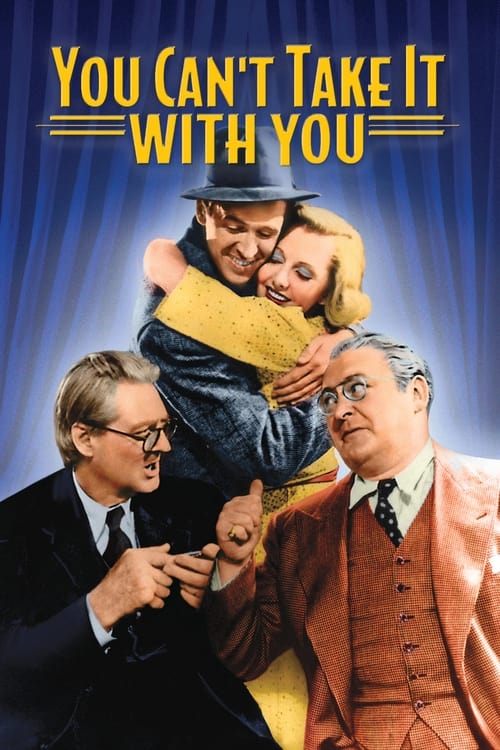
Arnold was expert as rogues and authority figures, and superb at combining the two as powerful villains quietly pulling strings. He was best known for his roles in Come and Get It (1936), Sutter's Gold (1936), the aforementioned The Toast of New York (1937), You Can't Take It with You (1938), Mr. Smith Goes to Washington (1939), Meet John Doe (1941), and a larger than life star turn as Daniel Webster in The Devil and Daniel Webster (1941). He was the first to portray Rex Stout's famous detective Nero Wolfe, starring in Meet Nero Wolfe (1936), based on the first novel in the series.
He played blind detective Duncan Maclain in two movies based on the novels by Baynard Kendrick, Eyes in the Night (1942) and The Hidden Eye (1945).
Leonard Maltin stated, "Few character actors achieved the particular kind of stardom that came to Edward Arnold in the 1930s, playing historical figures and dynamic, larger-than-life characters. Burly and round-faced, with piercing eyes and sharp nose, Arnold was a commanding presence." Leslie Halliwell called him "Rotund but dynamic actor who played go-getter leading roles in the thirties. Although he later became typed as kindly father/apoplectic business man, he never lost his popularity." Halliwell further praised him "For maintaining an ebullient star personality through two decades of talkies, despite his unromantic physique."
An image of Arnold made a posthumous appearance in the 1984 film Gremlins as the deceased husband (visible in a large framed photograph) of Mrs. Deagle, a character much like the rich, heartless characters Arnold was known for. Director Joe Dante mentioned that they received permission from Arnold's family to use his image.