




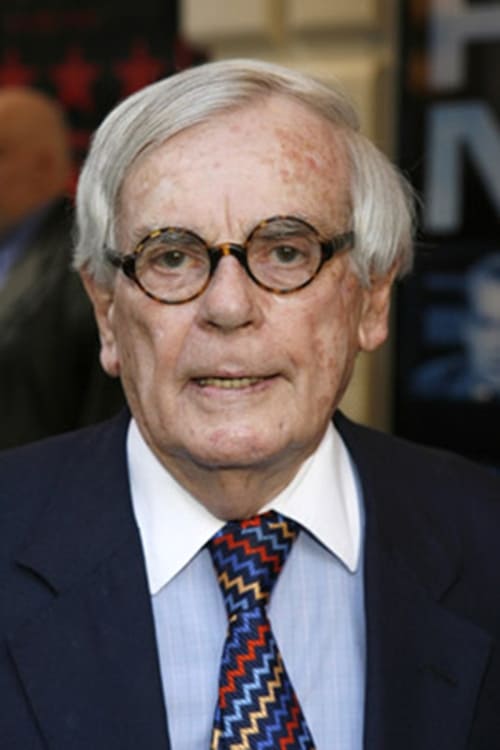
Dominick John Dunne (October 29, 1925 – August 26, 2009) was an American writer, investigative journalist, and producer. He began his career in film and television as a producer of the pioneering gay film The Boys in the Band (1970) and as the producer of the drama film The Panic in Needle Park (1971). He turned to writing in the early 1970s. After the 1982 murder of his daughter Dominique, an actress who had her breakthrough role in the film Poltergeist that year, he began to write about the interaction of wealth and high society with the judicial system. Dunne was a frequent contributor to Vanity Fair, and, beginning in the 1980s, often appeared on television discussing crime.
Contents
Early life
Dunne was born in 1925 into an affluent Irish Catholic family in Hartford, Connecticut, the second of six children of Richard Edwin Dunne, a hospital chief of staff and a heart surgeon, and Dorothy Frances (née Burns). His maternal grandfather, Dominick Francis Burns (1857–1940), was a successful grocer, who, in 1919, co-founded the Park Street Trust Company, a neighborhood savings bank. Although his Irish Catholic family was affluent, Dunne recalled feeling like an outsider in the predominantly WASP West Hartford suburb where he grew up.
As a boy, Dunne was known as Nicky. He attended the Kingswood School and the Canterbury School in New Milford, Connecticut, but was drafted into the Army during his senior year of high school. Dunne served in World War II and received the Bronze Star for heroism during the Battle of Metz. After the war, he attended Williams College, from which he graduated in 1949.
Dunne was the older brother of writer John Gregory Dunne (1932–2003), a screenwriter and a critic who married the writer Joan Didion. The brothers wrote a column for The Saturday Evening Post and they also collaborated on the production of The Panic in Needle Park. Didion and John Gregory Dunne wrote the screenplay, while Dominick Dunne produced the film (which featured Al Pacino in his first leading role).
Career
After graduating from Williams College, Dunne moved to New York City, where he became a stage manager for television. Later, Humphrey Bogart brought him to Hollywood to work on the television version of The Petrified Forest. Dunne worked on Playhouse 90 and became vice president of Four Star Television. He frequently socialized with members of Hollywood's elite, including Elizabeth Montgomery and Elizabeth Taylor. In 1979, beset with addictions, he left Hollywood and moved to rural Oregon. There, he said, he overcame his personal demons and wrote his first book, The Two Mrs. Grenvilles.
In November 1982, his daughter, Dominique Dunne, best known for her part in the film Poltergeist, was murdered by strangulation. Dominique's ex-boyfriend, John Thomas Sweeney, was arrested for the crime, and Dominick Dunne attended the subsequent trial. Sweeney was convicted of voluntary manslaughter and sentenced to six and a half years in prison, but he served only two and a half years of his sentence. Dunne's account of the experience, "Justice: A Father's Account of the Trial of his Daughter's Killer", ran in the March 1984 issue of Vanity Fair.
Dunne started writing regularly for Vanity Fair. He based several bestselling novels on real events, including the murders of Alfred Bloomingdale's mistress, Vicki Morgan (An Inconvenient Woman), and banking heir William Woodward Jr., who was shot by his wife, Ann Woodward (The Two Mrs. Grenvilles). He eventually hosted the TV series Dominick Dunne's Power, Privilege, and Justice on Court TV (later truTV), in which he discussed the justice and injustice of the intersection of celebrity and the judicial system. He covered the famous trials of O. J. Simpson, Claus von Bülow, Michael Skakel, William Kennedy Smith, and the Menendez brothers. The Library of America selected Dunne's account of the Menendez trial, Nightmare on Elm Drive, for inclusion in its two-century retrospective of American true crime writing, published in 2008.
In 2005, former California Congressman Gary Condit won an undisclosed financial settlement and an apology from Dunne, who had earlier implicated him in the disappearance of Condit's intern Chandra Levy in Washington, D.C. Levy was from Condit's Congressional district, and Condit had previously admitted to an extramarital affair with her. As part of the settlement, Dunne issued a brief statement that it was not his intention "to imply that Mr. Condit was complicit in Levy’s disappearance". In November 2006, Condit again sued Dunne for comments Dunne made about him on Larry King Live on CNN. This lawsuit was eventually dismissed.
Final years and tribute
In September 2008, Dunne disclosed that he was being treated for bladder cancer. At the time of his death, he was working on Too Much Money. On September 22, 2008, Dunne complained of intense pain, and was taken by ambulance to Valley Hospital. He died on August 26, 2009, at his home in Manhattan and was buried at Cove Cemetery, in the shadow of Gillette Castle in Hadlyme, Connecticut.
On October 29, 2009 (what would have been Dunne's 84th birthday), many of his family and friends gathered at the Chateau Marmont to celebrate his life. Vanity Fair paid tribute to Dunne and his extensive contributions to the magazine in its November 2009 issue.
Personal life
Dunne was married to Ellen Beatriz Griffin from 1954 to 1965. He was the father of Alexander Dunne and the actors Griffin Dunne and Dominique Dunne, as well as two daughters who died in infancy.
Although he was publicly closeted for most of his life, Dunne told The Times of London in February 2009: "I call myself a closeted bisexual celibate." His son Griffin corroborated this in 2010, after his father's death. Dunne also confirmed his sexuality in several private letters and journals. He donated these papers to the Dolph Briscoe Center for American History at the University of Texas at Austin, and Robert Hofler detailed them in his 2017 biography Money, Murder, and Dominick Dunne: A Life in Several Acts.
In popular culture
Dunne has been portrayed by several actors, including Robert Morse in The People v. O. J. Simpson: American Crime Story and Nathan Lane in Monsters: The Lyle and Erik Menendez Story.