






Detroit ( dih-TROYT, locally also DEE-troyt) is the most populous city in the U.S. state of Michigan. It is situated on the bank of the Detroit River across from the Canadian city of Windsor, Ontario. It is the 26th-most populous city in the United States and the largest U.S. city on the Canada–United States border, with a population of 639,111 at the 2020 census, and an estimated 2025 population of 649,095, its first population increase since 1950. The Metro Detroit area, at over 4.4 million people, is the 14th-largest metropolitan area in the nation and second-largest in the Midwest (after the Chicago metropolitan area). The county seat of Wayne County, Detroit is a significant cultural center known for its contributions to music, art, architecture, and design, in addition to its historical automotive and industrial background.
In 1701, French explorers Antoine de la Mothe Cadillac and Alphonse de Tonty founded Fort Pontchartrain du Détroit. During the late 19th and early 20th centuries, it became an important industrial hub at the center of the Great Lakes region. The city's population rose to be the fourth-largest in the nation by 1920, with the expansion of the automotive industry in the early 20th century. One of its main features, the Detroit River, became the busiest commercial hub in the world. In the mid-20th century, Detroit entered a state of urban decay that has continued to the present, as a result of industrial restructuring, the loss of jobs in the auto industry, and rapid suburbanization. Since reaching a peak of 1.85 million at the 1950 census, Detroit's population has declined by more than 65 percent. In 2013, Detroit became the largest U.S. city to file for bankruptcy, but successfully exited in 2014. In 2025, the U.S. Census Bureau reported that Detroit's population grew for a second consecutive year and led population growth in Michigan for the first time since the 1950s.
Detroit is a port on the Detroit River, one of the four major straits that connect the Great Lakes system to the St. Lawrence Seaway. The city anchors the third-largest regional economy in the Midwest and the 16th-largest in the United States. It is also best known as the center of the U.S. automotive industry, and the "Big Three" auto manufacturers—General Motors, Ford, and Stellantis North America (Chrysler)—are all headquartered in Metro Detroit. Metro Detroit houses the Detroit Metropolitan Airport, one of the most important hub airports in the United States. Detroit and the adjacent Canadian city of Windsor constitute the second-busiest international crossing in North America, after San Diego–Tijuana.
Detroit's culture is marked with diversity, having both local and international influences. Detroit gave rise to the music genres of Motown and techno, and also played an important role in the development of jazz, hip-hop, rock, and punk. As a result of the city's rapid growth in its boom years, Detroit has many globally unique architectural monuments and historic places. Since the 2000s, conservation efforts have managed to save many architectural pieces and achieve several large-scale revitalizations, including the restoration of several historic theaters and entertainment venues, high-rise renovations, new sports stadiums, and a riverfront revitalization project. Detroit is an increasingly popular tourist destination which caters to about 16 million visitors per year. In 2015, Detroit was designated a "City of Design" by UNESCO, the first and only U.S. city to receive this designation.
Contents
Etymology and nicknames
Detroit is named after the Detroit River, connecting Lake St. Clair with Lake Erie. The name comes from the French language word détroit meaning 'strait' as the city was situated on a narrow north–south passage of water linking the two lakes. The river was known as le détroit du Lac Érié in the French language, which means 'the strait of Lake Erie'. In historical contexts, the strait included Lake St. Clair and the Detroit River.
Throughout its history, Detroit has been known by several nicknames. Its founder, Antoine de la Mothe Cadillac, originally envisioned the settlement as a major city within the Pays d'en Haut, calling it the Paris de la Nouvelle-France, (Paris of New France). As the city evolved into the world's automotive center, "Detroit" became a metonym for the industry itself. Its status as the heart of the automotive world is reflected in the nickname Motor City, while its deep musical legacy is famously celebrated through the moniker Motown.
Other nicknames emerged during the 20th century to reflect different aspects of the city's identity. It became known as the City of Champions in the 1930s following a series of sports successes, while the Detroit Red Wings later trademarked the name Hockeytown. In more recent years, it has been called the Renaissance City, a nod to its urban revitalization efforts and the iconic Renaissance Center complex. The city is also frequently referred to as The D, The 313 (its telephone area code), or Rock City, inspired by the Kiss song "Detroit Rock City."
History
Indigenous history
Paleo-Indians inhabited areas near Detroit as early as 11,000 years ago including the culture referred to as the Mound Builders. By the 17th century, the region was inhabited by Huron, Odawa, Potawatomi, and Iroquois peoples. The area is known by the Anishinaabe people as Waawiiyaataanong, translating to 'where the water curves around'.
The first Europeans did not penetrate into the region and reach the straits of Detroit until French missionaries and traders worked their way around the Iroquois League, with whom they were at war in the 1630s. The Huron and Neutral people held the north side of Lake Erie until the 1650s, when the Iroquois pushed them and the Erie people away from the lake and its beaver-rich feeder streams in the Beaver Wars of 1649–1655. By the 1670s, the war-weakened Iroquois laid claim to as far south as the Ohio River valley in northern Kentucky as hunting grounds, and had absorbed many other Iroquoian peoples after defeating them in war. For the next hundred years, virtually no British or French action was contemplated without consultation with the Iroquois or consideration of their likely response.
French era (1701–1760)
On July 24, 1701, the French explorer Antoine de la Mothe Cadillac (1658–1730), with his lieutenant Alphonse de Tonty (1659–1727), and more than a hundred other Royal French settlers traveling south and west from New France (modern Province of Quebec), along the St. Lawrence River valley to the Great Lakes region, began constructing a small fort on the north bank of the Detroit River. Cadillac named the settlement Fort Pontchartrain du Détroit, after Louis Phélypeaux, comte de Pontchartrain (1643–1727), the Secretary of State of the Navy under King Louis XIV (1638–1715). Sainte-Anne de Détroit was founded on July 26 and is the second-oldest continuously operating Roman Catholic parish in the United States. France offered free land to colonists to attract families further west into the Great Lakes region interior of the North American continent to Detroit; when it eventually reached a population of about 800 by 1765, after the colonial conflict of the French and Indian War (1753–1763), (Seven Years' War in Europe), it became the largest European settlement between the important towns of Montreal and New Orleans, both also French settlements, in the former colonies of New France and La Louisiane (further south on the Mississippi River, on the coast of the Gulf of Mexico), respectively. The region's then colonial economy was based on the lucrative fur trade, in which numerous Native American peoples had important roles as trappers and traders.
British era (1760–1796)
During the French and Indian War (1753–63)—the North American front of the Seven Years' War in Europe between the Kingdom of Great Britain and the Kingdom of France—British troops gained control of the settlement a few years into the conflict in 1760 and shortened its name to Detroit. Several regional Native American tribes, such as the Potowatomi, Ojibwe and Huron, launched Pontiac's War (1763–1766), and laid siege in 1763 to Fort Detroit along the Detroit River in the Great Lakes but failed to capture it. In defeat, France ceded its territory in North America of New France and south of the lakes east of the Mississippi to the Appalachian Mountains to Britain following the war.
When Great Britain evicted France from its colonial possessions in New France (Canada) in the peace terms of the Treaty of Paris of 1763, it also removed one barrier to American colonists migrating west across the mountains. British negotiations with the Iroquois would both prove critical and lead to the Royal Proclamation of 1763, which limited settlements South of and below the Great Lakes and west of the Alleghenies / Appalachians. Many colonists and pioneers in the Thirteen Colonies along the East Coast, resented and then simply defied this restraint, later becoming supporters of the rebellious American Revolution. By 1773, after the addition of increasing numbers of the Anglo-American settlers, the population of Detroit and Fort Detroit, was edging up to 1,400 (doubled in the previous decade). During the American Revolutionary War (1775–1783), the indigenous and loyalist raids of 1778 and the resultant 1779 decisive Sullivan Expedition reopened the Ohio Country (north of the Ohio River and west of the mountains) to even more westward emigration, which began almost immediately to get away from the eastern warfare. By 1778, its population had doubled again, reaching 2,144 and it was the third-largest town in what was known then as the Province of Quebec since the British takeover of former French colonial possessions in North America in 1763.
After the American Revolutionary War (1775–1783) and the establishment and recognition of the United States as an independent country, Great Britain ceded Detroit and other territories in the interior region of the continent, south of the Great Lakes and west of the Appalachian Mountains to the Mississippi River under the peace of the terms of the 1783 Treaty of Paris. The new Northwest Territory established the southern border with Great Britain's remaining colonial provinces in British North America and became provinces of Upper Canada and Lower Canada. However, the disputed border area remained under British control with several military forts and trading posts for another decade, and its forces did not fully withdraw until 1796, following the negotiations and ratification of the subsequent Jay Treaty of 1794 between the British and Americans. By the turn of the 19th century, white American settlers began pouring westwards across the Appalachians and through the Great Lakes.
Early American era (1796–1900)
After the Great Fire of 1805 destroyed nearly all of Detroit's colonial buildings, the town was quickly rebuilt with aid from both local residents and those from Quebec. The town of Detroit was first incorporated as a city in 1806, but the incorporation was repealed just three years later. It was reincorporated in 1815 following the War of 1812. In 1824, the city held its first mayoral election, with John R. Williams becoming the first elected mayor. Following Michigan's admission to the Union in 1837, Detroit served as the state's first capital and hosted the inaugural state elections that same year.
Between 1815 and 1900, the city borders expanded significantly through the annexation of land from surrounding townships, such as Hamtramck, Springwells, Greenfield, and Grosse Pointe, before many of those townships incorporated as independent cities in the 20th century. Public land sales began in 1818, and by 1836, the city formalized its public water supply by establishing a municipal water works. It followed the end of the second cholera pandemic that had devastated Detroit and many other North American cities.
The city's population grew steadily throughout the 19th century, fueled by immigrants from Germany, Poland, Italy, Greece, and Belgium. By the 1830s, Germans had become the city's predominant ethnic group. During the Irish Great Famine of the 1840s, a wave of Irish immigrants arrived, settling primarily in the Corktown neighborhood. Detroit's Black population remained small during the 19th century; it constituted less than four percent of the city's population by the time of the 1863 race riot during the Civil War, numbering roughly 1,500 to 1,600 residents.
Detroit's unique geography provided easy access to raw materials like iron ore, copper, coal, and timber. Coupled with the opening of the Erie Canal in 1825, this proximity shifted the city's local economy toward heavy industries such as machinery, metalworking, and engine production in the mid-19th century. Well before the automotive era, the city led the nation in the construction of railroad cars and freighters; the Michigan-Peninsular Car Company was the city's largest manufacturer during that period, while the Detroit Dry Dock Company built hulls for the largest ships on the Great Lakes. By the 1870s, cast-iron stoves manufacturing had become Detroit's largest single industry. The city also became a major producer of pharmaceuticals, seeds, tobacco, and beer, with companies like the Ferry-Morse Seed Company and pharmaceutical companies Parke-Davis and Frederick Stearns & Co. emerging as national industry leaders. The Detroit International Exposition and Fair (1889–1892) showcased the city's expanding economy in the late 19th century.
Early 20th century
Detroit saw explosive growth in the auto industry in the early 20th century. In 1913, Henry Ford's moving assembly line revolutionized automotive manufacturing, reducing chassis assembly time by nearly 90%. This efficiency enabled low-cost mass production, with a new Model T rolling off the line every 24 seconds at peak capacity. By 1920, Detroit's automakers, including Ford, Buick (GM), Chevrolet (GM), Dodge Brothers (Chrysler), and Maxwell (Chrysler), were producing one million cars annually, accounting for roughly half of the world's total production. The city was undoubtedly the automotive capital of the world.
Even before the rise of the auto industry, Detroit was already a primary gateway for iron ore, coal, and grain moving through the Great Lakes. Its shipping tonnage frequently exceeded that of the world's major saltwater ports; in 1907 alone, the Detroit River carried over 67 million tons of cargo, surpassing that of the ports of London (18.7 million) and New York City (20.4 million) combined. The subsequent surge in auto production after 1914 fueled a parallel expansion in the city's commerce. However, the increasing traffic at the Detroit-Windsor crossing frequently caused bottlenecks, as railroads and automobiles still relied on slow ferries. The opening of the Michigan Central Railway Tunnel, the Ambassador Bridge, and the Detroit–Windsor Tunnel largely replaced these ferries, significantly reducing the shipment and storage costs of essential commodities.
Between 1900 and 1930, the city's population more than quintupled, soaring from roughly 285,000 to 1.6 million. By 1950, Detroit's population peaked at 1.85 million, making it the fifth-largest city in the U.S. At the time, residents enjoyed the highest per capita income in the country, driven by high-paying manufacturing jobs in the booming automotive industry. In fact, a typical Ford worker earned an annual wage more than twice the national median. During this era, Detroit also maintained a lower poverty rate than its suburbs. With a median household income approximately 20% above the national number and one of the highest homeownership rates in the country, Detroit was the wealthiest city in the U.S. and, by some accounts, had the highest standard of living in the world.
The Great Depression hit Detroit hard as car sales plummeted, leading to mass unemployment. The city saw the formation of several labor unions, notably the United Auto Workers, founded in Detroit in 1935. Around this same time, the Teamsters strengthened their Detroit operations in the early 1930s, largely through James Hoffa's organizing of warehouse and freight drivers. As the city emerged from the Depression, racial tensions escalated between white residents and Black Southerners who had arrived during the Great Migration. This friction, fueled by intense competition for jobs and housing, eventually culminated in the 1943 race riot.
Late 20th century
The first signs of Detroit's decline appeared in the 1950s with the onset of industrial deconcentration and suburbanization. The Packard Automotive Plant closed during that decade, and the massive Hudson Motor Plant at East Jefferson and Conner was largely demolished by 1961. Studebaker ended its manufacturing presence in Detroit in 1956, and Kaiser-Frazer ceased local passenger car production in the mid-1950s.
In 1961, under the Louis Miriani administration, the city recorded its first post-war budget deficit of $16 million. This shortfall resulted from a sharp decline in tax revenue as major industries and residents moved to the suburbs. Since its 1950 peak of 1.85 million, Detroit has lost 65% of its population.
As the city's overall population declined, its Black population nearly doubled between 1950 and 1970, and the city officially became majority-Black in the 1970s. Most migrated from the Deep South, drawn by auto industry jobs. However, these newcomers were often relegated to lower-paying roles, while higher-paying positions remained dominated by longtime white residents. Furthermore, discriminatory redlining policies frequently denied them access to essential financial services. This era was defined by the civil rights movement; notably, in June 1963, Dr. Martin Luther King Jr. delivered a major speech during the Detroit Walk to Freedom that foreshadowed his "I Have a Dream" speech in Washington, D.C., just two months later. Despite the passage of federal civil rights legislation, deep-seated racial tensions ignited the 12th Street Riot in 1967, which remains one of the deadliest and costliest civil disturbances in U.S. history.
In 1973, Coleman Young was elected as Detroit's first Black mayor. Throughout his 20-year tenure, the city's economy continued to deteriorate as businesses and residents fled. Early in his first term, Young faced a looming "near-bankruptcy" situation. To maintain a balanced budget, he implemented aggressive tax increases and spending cuts. While these policies were intended to ensure the city's solvency, critics often argue they actually accelerated the exodus of businesses and residents, creating a "financial death spiral." As income tax rates rose to cover budget gaps, the resulting departure of taxpayers inadvertently led to further deficits.
During the recession of the early 1980s, triggered by the 1979 oil crisis, the automotive industry suffered massive layoffs, leaving Detroit with a $119 million deficit by 1981. To avoid bankruptcy, Young successfully campaigned for an income tax hike and sold up to $125 million in emergency bonds. By his final year in office in 1993–94, the city faced a $271 million deficit. To address this, Young mandated a 10% salary cut for city employees before leaving office.
21st century
Starting in the mid-2000s, the city relied heavily on borrowing to address persistent budget gaps and pension liabilities, including $1.4 billion in 2005 alone. This initiated a seven-year streak of annual deficits, each exceeding $150 million. The then-Mayor, Kwame Kilpatrick, was forced to resign in 2008 after felony convictions, and was later sentenced to 28 years in federal prison. His actions were estimated to have cost the city approximately $20 million.
Between 2000 and 2010, the U.S. Census recorded Detroit's largest single-decade population drop in its history, at approximately 25%. This severe population decline resulted in a massive reduction in state revenue sharing, as constitutional revenue sharing is distributed on a per capita basis. Furthermore, foreclosures caused by unemployment reduced property values across the city following the Great Recession, further reducing the tax base. In 2011, the city government recorded that roughly half of its 305,000 property owners failed to pay their taxes, leaving over $246 million uncollected. By 2013, Detroit faced a $327 million budget deficit and more than $18 billion in total long-term debt and liabilities.
Facing a financial crisis, then-Mayor Dave Bing and the City Council accepted state oversight in exchange for financial aid from the state. In March 2013, Michigan Governor Rick Snyder declared a financial emergency in Detroit, leading the Local Emergency Financial Assistance Loan Board to appoint Kevyn Orr as the city’s emergency manager. After negotiations for cuts failed, Orr announced on June 14 that Detroit would default on approximately $2.5 billion in unsecured debt and skipped a $39.7 million interest payment. On July 18, 2013, Detroit became the largest U.S. city by population to file for Chapter 9 bankruptcy.
In 2014, Mike Duggan, the former CEO of the Detroit Medical Center, was elected mayor as the city exited bankruptcy in December, having cut $7 billion in debt and invested $1.7 billion in services. To reduce operating costs between 2012 and 2015, Detroit cut its full-time workforce by nearly 40%. It also eliminated annual maintenance and operation expenses for Belle Isle by leasing the park to the state. The lease is set for 30 years, with the option for two 15-year renewals. Additionally, the Detroit Institute of Arts became a private organization to help fund the city's recovery following legal battles.
Following its bankruptcy exit, Detroit has stabilized its finances with a string of budget surpluses under the Duggan administration. The city now maintains roughly $550 million in reserves. These funds are earmarked for the city’s rainy day fund, retiree protection, and various liability funds to mitigate potential economic slumps. The city resumed payments to its two pension funds in 2024, ending a nine-year period during which the state of Michigan and private organizations handled those contributions.
Geography
Topography
According to the U.S. Census Bureau, the city has a total area of 142.87 square miles (370.03 km2), of which 138.75 square miles (359.36 km2) is land and 4.12 square miles (10.67 km2) is water. Detroit is the principal city in Metro Detroit and Southeast Michigan. It is situated in the Midwestern United States and the Great Lakes region.
The Detroit River International Wildlife Refuge is the only international wildlife preserve in North America and is uniquely located in the heart of a major metropolitan area. The refuge includes islands, coastal wetlands, marshes, shoals, and waterfront lands along 48 miles (77 km) of the Detroit River and western Lake Erie shoreline.
The city slopes gently from the northwest to southeast on a till plain composed largely of glacial and lake clay. The most notable topographical feature in the city is the Detroit Moraine, a broad clay ridge on which the older portions of Detroit and Windsor are located, rising approximately 62 feet (19 m) above the river at its highest point. The highest elevation in the city is directly north of Gorham Playground on the northwest side approximately three blocks south of 8 Mile Road, at a height of 675 to 680 feet (206 to 207 m). Detroit's lowest elevation is along the Detroit River, at a surface height of 572 feet (174 m).
Cityscape
Detroit's waterfront showcases a variety of architectural styles, with the postmodern Neo-Gothic spires of Ally Detroit Center paying homage to the city's Art Deco skyscrapers. Together with the Renaissance Center, these buildings form a distinctive and recognizable skyline. Examples of the Art Deco style include the Guardian Building and Penobscot Building downtown, as well as the Fisher Building and Cadillac Place in New Center. Prominent cultural landmarks from the early 20th century include the Fox Theatre, Detroit Opera House, and Detroit Institute of Arts.
While Downtown Detroit and New Center feature high-rise buildings, much of Detroit consists of low-rise structures and single-family homes. Residential high-rises are concentrated in upscale neighborhoods such as the East Riverfront, extending toward Grosse Pointe, and Palmer Park. The University Commons-Palmer Park district anchors historic areas including Palmer Woods, Sherwood Forest, and the University District near the University of Detroit Mercy.
42 significant structures in the city are listed on the National Register of Historic Places. Pre-World War II neighborhoods exhibit architectural styles of the era, with working-class areas featuring wood-frame and brick houses, while middle- and upper-class neighborhoods such as Brush Park, Woodbridge, Indian Village, Palmer Woods, and Boston-Edison contain larger, more ornate homes and mansions. Multi-million dollar restorations and new developments have revitalized neighborhoods such as West Canfield and Brush Park.
The city has one of the United States' largest surviving collections of late 19th- and early 20th-century buildings. Architecturally significant churches and cathedrals in the city include St. Joseph's, Old St. Mary's, the Sweetest Heart of Mary, and the Cathedral of the Most Blessed Sacrament. Historic preservation efforts continue to thrive, with downtown redevelopment projects revitalizing parts of the city, among them Campus Martius Park, Grand Circus Park near the city's theater district, Ford Field, Comerica Park, and Little Caesars Arena.
Detroit has a variety of neighborhood types. The revitalized Downtown, Midtown, Corktown, New Center areas feature many historic buildings and are high density, while further out, particularly in the northeast and on the fringes, high vacancy levels are problematic, for which a number of solutions have been proposed. In 2007, Downtown Detroit was recognized as the best city neighborhood in which to retire among the United States' largest metro areas by CNNMoney editors.
Monuments and parks
Detroit Parks & Recreation maintains 308 public parks, covering 4,950 acres (2,003 ha), or about 5.6% of the city's land area. Grand Circus Park, established in 1847 as part of the original Woodward plan, was the city's first official municipal park. Other major parks include Campus Martius, Belle Isle, River Rouge, Palmer, and Chene Park. The Detroit International Riverfront also serves as a key recreation space, featuring a 3.5-mile promenade from Hart Plaza to Belle Isle, with a second phase planned to extend the promenade to the Ambassador Bridge.
In the surrounding Metro Area, the Huron–Clinton Metroparks system (established in 1940) includes 13 regional parks. These span over 24,000 acres (97 km2) along the Huron and Clinton Rivers.
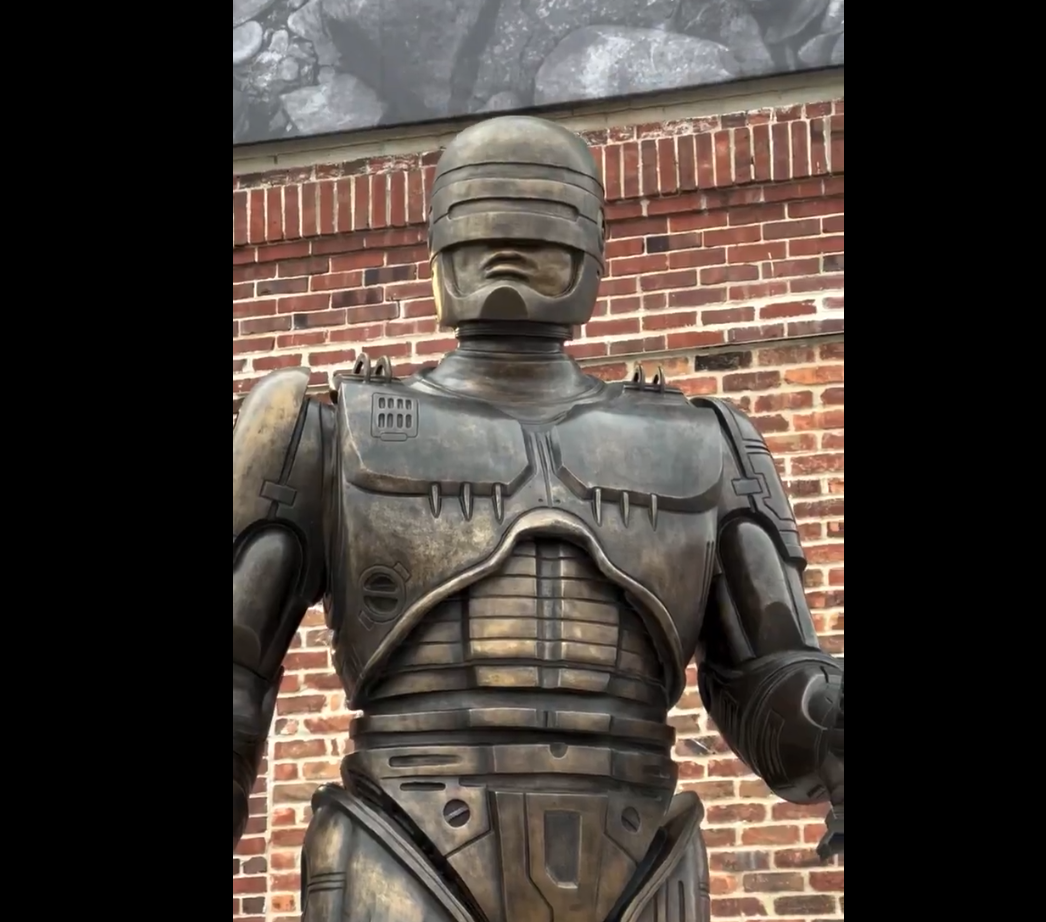
Detroit is also renowned for its outdoor public art. Many of its fountains serve as monumental landmarks, including the Bagley Memorial Fountain, the Horace E. Dodge and Son Memorial Fountain in Hart Plaza, and the James Scott Memorial Fountain on Belle Isle.
An important civic sculpture is The Spirit of Detroit by Marshall Fredericks at the Coleman Young Municipal Center. The image is often used as a symbol of Detroit, and the statue is occasionally dressed in sports jerseys to celebrate when a Detroit team is doing well. A memorial to Joe Louis is located at the intersection of Jefferson and Woodward Avenues. The sculpture, commissioned by Sports Illustrated and executed by Robert Graham, is a 24-foot (7.3 m) long arm with a fist suspended by a pyramidal framework.
Climate
Detroit and the rest of southeastern Michigan have a hot-summer humid continental climate (Köppen: Dfa) which is influenced by the Great Lakes like other places in the state; the city and close-in suburbs are part of USDA Hardiness zone 6b, while the more distant northern and western suburbs generally are included in zone 6a. Winters are cold, with moderate snowfall and temperatures not rising above freezing on an average 44 days annually, while dropping to or below 0 °F (−18 °C) on an average 4.4 days a year; summers are warm to hot with temperatures exceeding 90 °F (32 °C) on 12 days. The warm season runs from May to September. The monthly daily mean temperature ranges from 25.6 °F (−3.6 °C) in January to 73.6 °F (23.1 °C) in July. Official temperature extremes range from 105 °F (41 °C) on July 24, 1934, down to −21 °F (−29 °C) on January 21, 1984; the record low maximum is −4 °F (−20 °C) on January 19, 1994, while, conversely the record high minimum is 80 °F (27 °C) on August 1, 2006, the most recent of five occurrences. A decade or two may pass between readings of 100 °F (38 °C) or higher, which last occurred July 17, 2012. The average window for freezing temperatures is October 20 through April 22, allowing a growing season of 180 days.
Precipitation is moderate and somewhat evenly distributed throughout the year, although the warmer months such as May and June average more, averaging 33.5 inches (850 mm) annually, but historically ranging from 20.49 in (520 mm) in 1963 to 47.70 in (1,212 mm) in 2011. Snowfall, which typically falls in measurable amounts between November 15 through April 4 (occasionally in October and very rarely in May), averages 42.5 inches (108 cm) per season, although historically ranging from 11.5 in (29 cm) in 1881–82 to 94.9 in (241 cm) in 2013–14. A thick layer of snow is not often seen, with an average of only 27.5 days with 3 in (7.6 cm) or more of snow cover. Thunderstorms are frequent in the Detroit area. These usually occur during spring and summer.
See or edit raw graph data.
Demographics
Detroit is the center of a three-county urban area (with a population of 3,776,890 within an area of 1,337 square miles (3,460 km2) according to the 2020 census), six-county metropolitan statistical area (population of 5,322,219 in an area of 3,913 square miles [10,130 km2] as of the 2010 census), and a nine-county Combined Statistical Area (population of 5.3 million within 5,814 square miles [15,060 km2] as of 2010).
In the 2020 United States census, the city had 639,111 residents, ranking it the 27th-most populous city in the US. Of the large shrinking cities in the US, Detroit has had the most dramatic decline in the population of the past 70 years (down 1,210,457) and the second-largest percentage decline (down 65.4%). While the drop in Detroit's population has been ongoing since 1950, the most dramatic period was the significant 25% decline between the 2000 and 2010 census.
The population density was 5,144.3 people per square mile (1,986.2 people/km2). There were 349,170 housing units at an average density of 2,516.5 units per square mile (971.6 units/km2).
Race, ethnicity, and religion
Beginning with the rise of the automobile industry, Detroit's population increased more than sixfold during the first half of the 20th century as an influx of European (Polish, German), Middle Eastern (Lebanese, Assyrian), and Southern migrants brought their families to the city. With this economic boom following World War I, the African American population grew from a mere 6,000 in 1910 to more than 120,000 by 1930. Perhaps one of the most overt examples of neighborhood discrimination occurred in 1925 when African American physician Ossian Sweet found his home surrounded by an angry mob of his hostile white neighbors violently protesting his new move into a traditionally white neighborhood. Sweet and ten of his family members and friends were put on trial for murder as one of the mob members throwing rocks at the newly purchased house was shot and killed by someone firing out of a second-floor window.
Detroit has a relatively large Mexican-American population. In the early 20th century, thousands of Mexicans came to Detroit to work in agricultural, automotive, and steel jobs. During the Mexican Repatriation of the 1930s many Mexicans in Detroit were willingly repatriated or forced to repatriate. By the 1940s much of the Mexican community began to settle what is now Mexicantown. Immigration from Jalisco significantly increased the Latino population in the 1990s. By 2010 Detroit had 48,679 Hispanics, including 36,452 Mexicans: a 70% increase from 1990. Per the 2023 American Community Survey five-year estimates, the Mexican American population was 35,273 comprising over 75% of the Latino population with Puerto Ricans as the next largest group at 5,887.
After World War II, an influx of Appalachian migrants formed communities with children raised with acquired southern accents, Along with Lithuanians in the World War II era, concentrating in the city's Southwest side in the West Vernor area, where the renovated Lithuanian Hall reopened in 2006.
While African Americans in 2020 comprised 13.5% of Michigan's population, they made up nearly 77.2% of Detroit's population. The next largest population groups were non-Hispanic whites, at 10.1%, and Hispanics, at 8.0%. In 2001, 103,000 Jews, or about 1.9% of the population, were living in the Detroit area. According to the 2010 census, segregation in Detroit decreased in absolute and relative terms and in the first decade of the 21st century, about two-thirds of the total black population in the metropolitan area resided within the city limits of Detroit. The number of integrated neighborhoods increased from 100 in 2000 to 204 in 2010. After being ranked the most segregated metropolitan area in the United States in 2000, Detroit was ranked fourth most-segregated in 2010. A 2011 op-ed in The New York Times attributed the decreased segregation rating to the overall exodus from the city, cautioning that these areas may soon become more segregated.
Age and gender
There was a wide distribution of age in the city, with 31.1% under the age of 18, 9.7% from 18 to 24, 29.5% from 25 to 44, 19.3% from 45 to 64, and 10.4% 65 years of age or older. The median age was 31 years. For every 100 females, there were 89.1 males. For every 100 females age 18 and over, there were 83.5 males.
Households and income
Detroit's 639,111 residents represent 269,445 households, and 162,924 families residing in the city. Of the 269,445 households, 34.4% had children under the age of 18 living with them, 21.5% were married couples living together, 31.4% had a female householder with no husband present, 39.5% were non-families, 34.0% were made up of individuals, and 3.9% had someone living alone who was 65 years of age or older. The average household size was 2.59, and the average family size was 3.36.
The loss of industrial and working-class jobs in the city has resulted in high rates of poverty and associated problems. From 2000 to 2009, the city's estimated median household income fell from $29,526 to $26,098. As of 2010, the mean income of Detroit is below the overall U.S. average by several thousand dollars. Of every three Detroit residents, one lives in poverty. Luke Bergmann, author of Getting Ghost: Two Young Lives and the Struggle for the Soul of an American City, said in 2010, "Detroit is now one of the poorest big cities in the country".
In the 2018 American Community Survey, median household income in the city was $31,283, compared with the median for Michigan of $56,697. The median income for a family was $36,842, well below the state median of $72,036. 33.4% of families had income at or below the federally defined poverty level. Out of the total population, 47.3% of those under the age of 18 and 21.0% of those 65 and older had income at or below the federally defined poverty line.
The city of Detroit has a higher than average percentage of households without a car. In 2016, 24.7% of Detroit households lacked a car, much higher than the national average of 8.7%. Detroit averaged 1.15 cars per household in 2016, compared to a national average of 1.8.
Crime
Detroit has gained notoriety for its high amount of crime, having struggled with it for decades. The number of homicides in 1974 was 714. The homicide rate in 2022 was the third highest in the nation at 50.0 per 100,000. Downtown typically has lower crime than national and state averages. According to a 2007 analysis, Detroit officials note about 65 to 70 percent of homicides in the city were drug related, with the rate of unsolved murders roughly 70%.
Although the rate of violent crime dropped 11% in 2008, violent crime in Detroit has not declined as much as the national average from 2007 to 2011. The violent crime rate is one of the highest in the United States. "Neighborhoodscout.com" reported a crime rate of 62.18 per 1,000 residents for property crimes, and 16.73 per 1,000 for violent crimes (compared to national figures of 32 per 1,000 for property crimes and 5 per 1,000 for violent crime in 2008). In 2012, crime in the city was among the reasons for more expensive car insurance.
Areas of the city adjacent to the Detroit River are also patrolled by the United States Border Patrol.
Economy
Several major corporations are based in the city, including three Fortune 500 companies. The most heavily represented sectors are manufacturing (particularly automotive), finance, technology, and health care. The most significant companies based in Detroit include General Motors, Rocket Mortgage, Ally Financial, Compuware, Shinola, American Axle, Little Caesars, DTE Energy, Lowe Campbell Ewald, Blue Cross Blue Shield of Michigan, and Rossetti Architects.
About 80,500 people work in downtown Detroit, comprising one-fifth of the city's employment base. Aside from the numerous Detroit-based companies listed above, downtown contains large offices for Comerica, Stellantis (formerly Chrysler), Fifth Third Bank, HP Enterprise, Deloitte, PricewaterhouseCoopers, KPMG, and Ernst & Young. Ford Motor Company is in the adjacent city of Dearborn.
Thousands more employees work in Midtown, north of the central business district. Midtown's anchors are the city's largest single employer Detroit Medical Center, Wayne State University, and the Henry Ford Health System in New Center. Midtown is also home to watchmaker Shinola and an array of small and startup companies. New Center bases TechTown, a research and business incubator hub that is part of the Wayne State University system. Like downtown, Corktown Is experiencing growth with the new Ford Corktown Campus under development.
Many downtown employers are relatively new, as there has been a marked trend of companies moving from satellite suburbs into the downtown core. Compuware completed its world headquarters in downtown in 2003. OnStar, Blue Cross Blue Shield, and HP Enterprise Services are at the Renaissance Center. PricewaterhouseCoopers Plaza offices are adjacent to Ford Field, and Ernst & Young completed its office building at One Kennedy Square in 2006. Perhaps most prominently, in 2010, Quicken Loans, one of the largest mortgage lenders, relocated its world headquarters and 4,000 employees to downtown Detroit, consolidating its suburban offices. In July 2012, the U.S. Patent and Trademark Office opened its Elijah J. McCoy Satellite Office in the Rivertown/Warehouse District as its first location outside Washington, D.C.'s metropolitan area.
In April 2014, the United States Department of Labor reported the city's unemployment rate at 14.5%. In 2023 the city of Detroit reported a poverty rate of 33.8%.
Arts and culture
In the central portions of Detroit, the population of young professionals, artists, and other transplants is growing and retail is expanding. This dynamic is luring additional new residents, and former residents returning from other cities, to the city's Downtown along with the revitalized Midtown and New Center areas.
A desire to be closer to the urban scene has attracted some young professionals to reside in inner ring suburbs such as Ferndale and Royal Oak. The proximity to Windsor provides for views and nightlife, along with Ontario's minimum drinking age of 19. A 2011 study by Walk Score recognized Detroit for its above average walkability among large U.S. cities. About two-thirds of suburban residents occasionally dine and attend cultural events or take in professional games in the city.
Music
Live music has been a prominent feature of Detroit's nightlife since the late 1940s, bringing the city recognition under the nickname "Motown". The metropolitan area has many nationally prominent live music venues. Concerts hosted by Live Nation perform throughout the Detroit area. The theater venue circuit is the United States' second largest and hosts Broadway performances.
The city has a rich musical heritage and has contributed to many genres over the decades. Important music events include the Detroit International Jazz Festival, the Detroit Electronic Music Festival, the Motor City Music Conference (MC2), the Urban Organic Music Conference, the Concert of Colors, and the hip-hop Summer Jamz festival.
In the 1940s, Detroit blues artist John Lee Hooker became a long-term resident in the Delray neighborhood. Hooker, among other important blues musicians, migrated from his home in Mississippi, bringing the Delta blues to Detroit. Hooker recorded for Fortune Records, the biggest pre-Motown blues/soul label. During the 1950s, the city became a center for jazz, with stars performing in the Black Bottom neighborhood. Prominent emerging jazz musicians included trumpeter Donald Byrd (who attended Cass Tech and performed with Art Blakey and the Jazz Messengers early in his career) and saxophonist Pepper Adams (who enjoyed a solo career and accompanied Byrd on several albums). The Graystone International Jazz Museum documents jazz in Detroit.
Other prominent Motor City R&B stars in the 1950s and early 1960s were Nolan Strong, Andre Williams, and Nathaniel Mayer—who all scored local and national hits on the Fortune Records label. According to Smokey Robinson, Strong was a primary influence on his voice as a teenager. The Fortune label, a family-operated label on Third Avenue, was owned by the husband-and-wife team of Jack Brown and Devora Brown. Fortune—which also released country, gospel and rockabilly LPs and 45s—laid the groundwork for Motown, which became Detroit's most legendary record label.
Berry Gordy, Jr. founded Motown Records, which rose to prominence during the 1960s and early 1970s with acts such as Stevie Wonder, the Temptations, the Four Tops, Smokey Robinson & the Miracles, Diana Ross & the Supremes, the Jackson 5, Martha and the Vandellas, the Spinners, Gladys Knight & the Pips, the Marvelettes, the Elgins, the Monitors, the Velvelettes, and Marvin Gaye. Artists were backed by in-house vocalists the Andantes and the Funk Brothers.
Performing arts
Major theaters in Detroit include the Fox Theatre (5,174 seats), Music Hall Center for the Performing Arts (1,770 seats), the Gem Theatre (451 seats), Masonic Temple Theatre (4,404 seats), the Detroit Opera House (2,765 seats), the Fisher Theatre (2,089 seats), The Fillmore Detroit (2,200 seats), Saint Andrew's Hall, the Majestic Theater, and Orchestra Hall (2,286 seats), which hosts the renowned Detroit Symphony Orchestra. The Nederlander Organization, the largest controller of Broadway productions in New York City, originated with the purchase of the Detroit Opera House in 1922 by the Nederlander family.
Motown Motion Picture Studios with 535,000 square feet (49,700 m2) produces movies in Detroit and the surrounding area based at the Pontiac Centerpoint Business Campus for a film industry expected to employ over 4,000 people in the metro area.
Tourist attractions
Detroit is home to the world's first destination marketing organization, the Detroit Metro Convention and Visitor's Bureau, also known as Visit Detroit. Founded in 1896, the organization now operates at 211 West Fort Street as Visit Detroit.
Because of its unique culture, distinctive architecture, and revitalization and urban renewal efforts in the 21st century, Detroit has enjoyed increased prominence as a tourist destination in recent years. The New York Times listed Detroit as the ninth-best destination in its list of 52 Places to Go in 2017, while travel guide publisher Lonely Planet named Detroit the second-best city in the world to visit in 2018. Time named Detroit as one of the 50 World's Greatest Places of 2022 to explore.
Many of the area's prominent museums are in the historic cultural center neighborhood around Wayne State University and the College for Creative Studies. These museums include the Detroit Institute of Arts, the Detroit Historical Museum, Charles H. Wright Museum of African American History, the Detroit Science Center, as well as the main branch of the Detroit Public Library. Other cultural highlights include Motown Historical Museum, the Ford Piquette Avenue Plant museum, the Pewabic Pottery studio and school, the Tuskegee Airmen Museum, Fort Wayne, the Dossin Great Lakes Museum, the Museum of Contemporary Art Detroit, the Contemporary Art Institute of Detroit, and the Belle Isle Conservatory.
In 2010, the G.R. N'Namdi Gallery opened in a 16,000-square-foot (1,500 m2) complex in Midtown. Important history of America and the Detroit area are exhibited at The Henry Ford in Dearborn, the United States' largest indoor-outdoor museum complex. The Detroit Historical Society provides information about tours of area churches, skyscrapers, and mansions. Inside Detroit hosts tours, educational programming, and a downtown welcome center. Other sites of interest are the Detroit Zoo in Royal Oak, the Cranbrook Art Museum in Bloomfield Hills, the Anna Scripps Whitcomb Conservatory on Belle Isle, and Walter P. Chrysler Museum in Auburn Hills.
Greektown and three downtown casino resort hotels serve as part of an entertainment hub. The Eastern Market farmer's distribution center is the largest open-air flowerbed market in the United States and has more than 150 foods and specialty businesses. On Saturdays, about 45,000 people shop there. The annual Detroit Festival of the Arts in Midtown draws about 350,000 people.
Sports
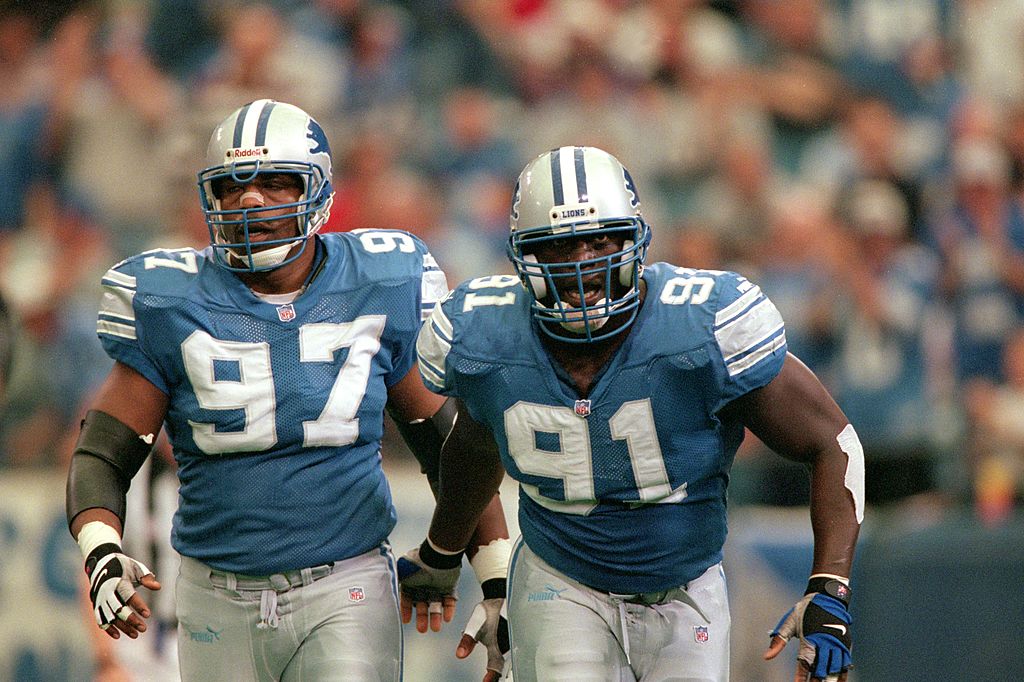
Detroit is one of four U.S. cities that have venues within the city representing the four major sports in North America. Detroit is the only city to have its four major sports teams play within its downtown district. Detroit is also the only city that has a team in all "Big Four" leagues, but lacks an MLS team. Venues include: Comerica Park (home of Major League Baseball's Detroit Tigers), Ford Field (home of the National Football League's Detroit Lions), and Little Caesars Arena (home of the National Hockey League's Detroit Red Wings and the National Basketball Association's Detroit Pistons).
Detroit has won titles in all four of the major professional sports leagues. The Tigers have won four World Series titles (1935, 1945, 1968, and 1984). The Red Wings have won 11 Stanley Cups (1935–36, 1936–37, 1942–43, 1949–50, 1951–52, 1953–54, 1954–55, 1996–97, 1997–98, 2001–02, 2007–08) (the most by an American NHL franchise and also having the third most championships by an NHL team behind the Toronto Maple Leafs and Montreal Canadiens respectively). The Lions have won 4 NFL titles (1935, 1952, 1953, 1957). The Pistons have won three NBA titles (1989, 1990, 2004). In the years following the mid-1930s, Detroit was referred to as the "City of Champions" after the Tigers, Lions, and Red Wings captured the three major professional sports championships in existence at the time in a seven-month period (the Tigers won the World Series in October 1935; the Lions won the NFL championship in December 1935; the Red Wings won the Stanley Cup in April 1936).
Founded in 2012 as a semi-professional soccer club, Detroit City FC now plays professional soccer in the USL Championship. Nicknamed, Le Rouge, the club are two-time champions of NISA since joining in 2020. They play their home matches in Keyworth Stadium, which is located in the enclave of Hamtramck.
In college sports, Detroit's central location within the Mid-American Conference (MAC) has made it a frequent site for the league's championship events. While the MAC Basketball Tournament moved permanently to Cleveland starting in 2000, the MAC Football Championship Game has been played at Ford Field since 2004 and annually attracts 25,000 to 30,000 fans. The University of Detroit Mercy has an NCAA Division I program, and Wayne State University has both NCAA Division I and II programs. The NCAA football GameAbove Sports Bowl (formerly, Quick Lane Bowl) is held at Ford Field each December.
Government
The city is governed pursuant to the home rule Charter of the City of Detroit. The government is run by a mayor, the nine-member Detroit City Council, the eleven-member Board of Police Commissioners, and a clerk. All of these officers are elected on a nonpartisan ballot, with the exception of four of the police commissioners, who are appointed by the mayor. Detroit has a "strong mayoral" system, with the mayor approving departmental appointments. The council approves budgets, but the mayor is not obligated to adhere to any earmarking. The city clerk supervises elections and is formally charged with the maintenance of municipal records. City ordinances and substantially large contracts must be approved by the council. The Detroit City Code is the codification of Detroit's local ordinances.
Presently three Community Advisory Councils advise City Council representatives. Residents of each of Detroit's seven districts have the option of electing Community Advisory Councils. The city clerk supervises elections and is formally charged with the maintenance of municipal records. Municipal elections for mayor, city council and city clerk are held at four-year intervals, in the year after presidential elections. Following a November 2009 referendum, seven council members will be elected from districts beginning in 2013 while two will continue to be elected at-large.
Detroit's courts are state-administered and elections are nonpartisan. The Probate Court for Wayne County is in the Coleman A. Young Municipal Center in downtown. The Circuit Court is across Gratiot Avenue in the Frank Murphy Hall of Justice. The city is home to the Thirty-Sixth District Court, as well as the First District of the Michigan Court of Appeals and the United States District Court for the Eastern District of Michigan. The city provides law enforcement through the Detroit Police Department and emergency services through the Detroit Fire Department.
Politics
Beginning with its incorporation in 1802, Detroit has had a total of 74 mayors. Detroit's last mayor from the Republican Party was Louis Miriani, who served from 1957 to 1962. In 1973, the city elected its first black mayor, Coleman Young. Despite development efforts, his combative style during his five terms in office was not well received by many suburban residents. Mayor Dennis Archer, a former Michigan Supreme Court Justice, refocused the city's attention on redevelopment with a plan to permit three casinos downtown. By 2008, three major casino resort hotels established operations in the city.
In 2000, the city requested an investigation by the United States Justice Department into the Detroit Police Department which was concluded in 2003 over allegations regarding its use of force and civil rights violations. The city proceeded with a major reorganization of the Detroit Police Department. In 2013, felony bribery charges were brought against seven building inspectors. In 2016, further corruption charges were brought against 12 principals, a former school superintendent and supply vendor for a $12 million (~$15.3 million in 2024) kickback scheme. However, law professor Peter Henning argues Detroit's corruption is not unusual for a city its size, especially when compared with Chicago.
In 2025, the city elected its first woman as mayor, Mary Sheffield.
Detroit is sometimes referred to as a sanctuary city because it has "anti-profiling ordinances that generally prohibit local police from asking about the immigration status of people who are not suspected of any crime". The city in recent years has been a stronghold for the Democratic Party, with around 90% of votes in the city going to incumbent vice president, Kamala Harris, the Democratic candidate in the 2024 Presidential election.
Education
Primary and secondary schools
As of 2016 many K-12 students in Detroit frequently change schools, with some children having been enrolled in seven schools before finishing their K-12 careers. There is a concentration of senior high schools and charter schools in the downtown area, which had wealthier residents and more gentrification relative to other parts of Detroit: Downtown, northwest Detroit, and northeast Detroit have 1,894, 3,742, and 6,018 students of high school age, respectively, while they have 11, three, and two high schools, respectively. As of 2016 because of the lack of public transportation and the lack of school bus services, many Detroit families have to rely on themselves to transport children to school.
With about 66,000 public school students (2011–12), the Detroit Public Schools (DPS) district is the largest school district in Michigan. Detroit has an additional 56,000 charter school students for a combined enrollment of about 122,000 students. As of 2009 there are about as many students in charter schools as there are in district schools. As of 2016 DPS continues to have the majority of the special education pupils. In addition, some Detroit students, as of 2016, attend public schools in other municipalities.
With growing charter schools enrollment as well as a continued exodus of population, the city planned to close many public schools. State officials report a 68% graduation rate for Detroit's public schools adjusted for those who change schools. Traditional public and charter school students in the city have performed poorly on standardized tests. c. 2009 and 2011, while Detroit traditional public schools scored a record low on national tests, the publicly funded charter schools did even worse than the traditional public schools. As of 2016 there were 30,000 excess openings in Detroit traditional public and charter schools, bearing in mind the number of K-12-aged children in the city. In 2016, Kate Zernike of The New York Times stated school performance did not improve despite the proliferation of charters, describing the situation as "lots of choice, with no good choice".
Detroit public schools students scored the lowest on tests of reading and writing of all major cities in the United States in 2015. Among eighth-graders, only 27% showed basic proficiency in math and 44% in reading. Nearly half of Detroit's adults are functionally illiterate.
Detroit is served by various private schools, as well as parochial Roman Catholic schools operated by the Archdiocese of Detroit. As of 2013 there are four Catholic grade schools and three Catholic high schools in the City of Detroit, with all of them in the city's west side. The Archdiocese of Detroit lists a number of primary and secondary schools in the metro area as Catholic education has emigrated to the suburbs. Of the three Catholic high schools, two are operated by the Society of Jesus and the third is co-sponsored by the Sisters, Servants of the Immaculate Heart of Mary and the Congregation of St. Basil.
Post-secondary education
Detroit is home to several institutions of higher learning, including Wayne State University and the University of Detroit Mercy. Grand Valley State University's Detroit Center hosts workshops, seminars, professional development, and other large gatherings. Sacred Heart Major Seminary, founded in 1919, is affiliated with Pontifical University of Saint Thomas Aquinas, Angelicum in Rome and offers pontifical degrees as well as civil undergraduate and graduate degrees. Other institutions in the city include the College for Creative Studies and Wayne County Community College. In June 2009, the Michigan State University College of Osteopathic Medicine which is based in East Lansing opened a satellite campus at the Detroit Medical Center.
Detroit has many vocational training institutes that provide technical training to prepare students for careers in the skilled trades.
Media
The Detroit Free Press and The Detroit News are the major daily newspapers in the city. From 1989 until their agreement expired in December 2025, both broadsheet publications were managed by a joint venture called the Detroit Media Partnership, with the Free Press under the ownership of USA Today Co. (formerly Gannett) and the News under MediaNews Group. In March 2009, both newspapers reduced home delivery to three days per week, printed reduced newsstand issues on non-delivery days, and began focusing resources on Internet-based news delivery. In January 2026, USA Today acquired the News with plans to continue operating each newspaper separately.
The Metro Times, founded in 1980, is a weekly publication covering news, arts, and entertainment. Founded in 1935 and based in Detroit, the Michigan Chronicle is one of the oldest and most respected African-American weekly newspapers in America, covering politics, entertainment, sports, and community events. Media philanthropy includes the Detroit Free Press high school journalism program, the Old Newsboys' Goodfellow Fund of Detroit, and the Community Foundation for Southeast Michigan's Detroit Journalism Engagement Fund.
Detroit's television market is the 11th largest in the United States, according to estimates that do not include audiences in large areas of Ontario (including Windsor and Ottawa) who receive and watch Detroit television stations.
Detroit also has the 11th largest radio market in the United States, though this ranking also does not take into account Canadian audiences. Nearby Canadian stations such as Windsor's CKLW (whose jingles formerly proclaimed "CKLW - the Motor City") are popular in Detroit.
Infrastructure
Health systems
There are over a dozen major hospitals, which include the Detroit Medical Center (DMC), Henry Ford Health System, St. John Health System, and the John D. Dingell VA Medical Center. DMC, a regional Level I trauma center, consists of Detroit Receiving Hospital and University Health Center, Children's Hospital of Michigan, Harper University Hospital, Hutzel Women's Hospital, Kresge Eye Institute, Rehabilitation Institute of Michigan, Sinai-Grace Hospital, and the Karmanos Cancer Institute. DMC has more than 2,000 licensed beds and 3,000 affiliated physicians. It is the largest private employer in the city. The center is staffed by physicians from the Wayne State University School of Medicine, the largest single-campus medical school in the United States and the fourth largest medical school overall.
DMC formally became a part of Vanguard Health Systems on December 30, 2010, as a for-profit corporation. Vanguard has agreed to invest nearly $1.5 B in the DMC complex. Vanguard has agreed to assume all debts and pension obligations.
In 2011, DMC and Henry Ford Health System substantially increased investments in medical research facilities and hospitals in the city's Midtown and New Center. In 2012, two major construction projects were begun in New Center. The Henry Ford Health System started the first phase of a $500 million, 300-acre revitalization project, with the construction of a new $30 million, 275,000-square-foot, Medical Distribution Center for Cardinal Health, Inc. and Wayne State University started construction on a new $93 million, 207,000-square-foot, Integrative Biosciences Center (IBio). As many as 500 researchers and staff will work out of the IBio Center.
Transportation
With its proximity to Canada and its facilities, ports, major highways, rail connections and international airports, Detroit is an important transportation hub.
Detroit has four border crossings: the Gordie Howe International Bridge which opened in 2026, the Ambassador Bridge and the Detroit–Windsor tunnel provide motor vehicle thoroughfares, with the Michigan Central Railway Tunnel providing railroad access to and from Canada. Until 2023, the Detroit–Windsor Truck Ferry serviced the border crossing near the Windsor Salt Mine and Zug Island.
In 2015 Canadian Transport Minister Lisa Raitt announced Canada agreed to pay the entire cost to build a $250 million U.S. Customs plaza adjacent to the planned new Detroit–Windsor bridge, now the Gordie Howe International Bridge. Canada had already planned to pay for 95% of the bridge, which will cost $2.1 billion and is expected to open in early 2026. "This allows Canada and Michigan to move the project forward immediately to its next steps which include further design work and property acquisition on the U.S. side of the border", Raitt said issued after she spoke in the House of Commons.
Mass transit in the region is provided by bus services. The Detroit Department of Transportation provides service within city limits up to the outer edges of the city. From there, the Suburban Mobility Authority for Regional Transportation (SMART) provides service to the suburbs and the city regionally with local routes and SMART's FAST service. FAST is a new service provided by SMART which offers limited stops along major corridors throughout the Detroit metropolitan area connecting the suburbs to downtown. The new high-frequency service travels along three of Detroit's busiest corridors, Gratiot, Woodward, and Michigan, and only stops at designated FAST stops. Cross border service between the downtown areas of Windsor and Detroit is provided by Transit Windsor via the Tunnel Bus. Intercity bus service is offered at the Detroit Bus Station. Greyhound Lines, Flixbus, Indian Trails, and Barons Bus Lines connect Detroit with numerous cities across the Midwest.
An elevated rail system known as the People Mover, completed in 1987, provides daily service around a 2.94-mile (4.73 km) loop downtown. The QLine serves as a link between the People Mover and the Amtrak station via Woodward Avenue.
Postal service
Detroit has a floating post office, the J. W. Westcott II, which serves lake freighters along the Detroit River. Its ZIP Code is 48222. The ZIP Code is used exclusively for the J. W. Westcott II, which makes it the only floating ZIP Code in the United States. It has a land-based office at 12 24th Street, just south of the Ambassador Bridge. The J.W. Westcott Company was established in 1874 by Captain John Ward Westcott as a maritime reporting agency to inform other vessels about port conditions, and the J. W. Westcott II vessel began service in 1949 and is still in operation today.
Sister cities
Detroit's sister cities include the following:
Chongqing, China
Dubai, United Arab Emirates
Huế, Vietnam
Kitwe, Zambia
Minsk, Belarus
Nassau, Bahamas
Toyota, Japan
Turin, Italy