



David Judah Simon (born 1960) is an American author, journalist, screenwriter, and producer best known for his work on The Wire (2002–2008).
He worked for The Baltimore Sun City Desk for twelve years (1982–1995), wrote Homicide: A Year on the Killing Streets (1991), and co-wrote The Corner: A Year in the Life of an Inner-City Neighborhood (1997) with Ed Burns. The former book was the basis for the NBC series Homicide: Life on the Street (1993–1999), on which Simon served as a writer and producer. Simon adapted the latter book into the HBO mini-series The Corner (2000).
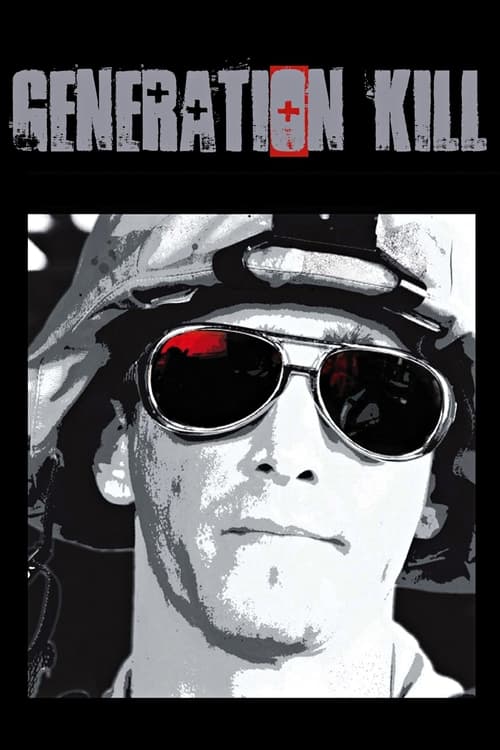
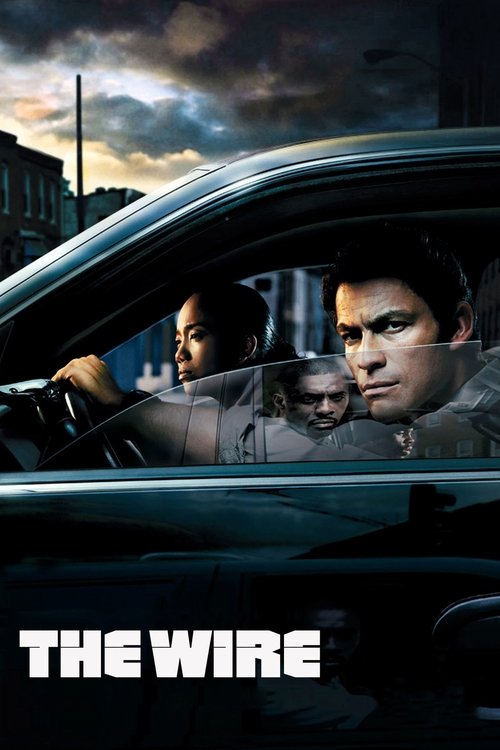
He is the creator, executive producer, head writer, and showrunner of the HBO television series The Wire (2002–2008). He adapted the non-fiction book Generation Kill into a television mini-series and served as the showrunner for the project. He was selected as one of the 2010 MacArthur Fellows and named an Utne Reader visionary in 2011. Simon also created the HBO series Treme with Eric Overmyer, which aired for four seasons. Following Treme, Simon adapted former New York Times reporter Lisa Belkin's nonfiction Show Me A Hero (1999), into an HBO mini-series, with journalist William F. Zorzi, a colleague at The Baltimore Sun and on The Wire. Simon and frequent collaborator George Pelecanos reunited to create original series The Deuce. The drama about the New York porn industry in the 1970s and 1980s starred producer Maggie Gyllenhaal and executive producer James Franco and aired from 2017 to 2019. Simon's next series, The Plot Against America, debuted in 2020.
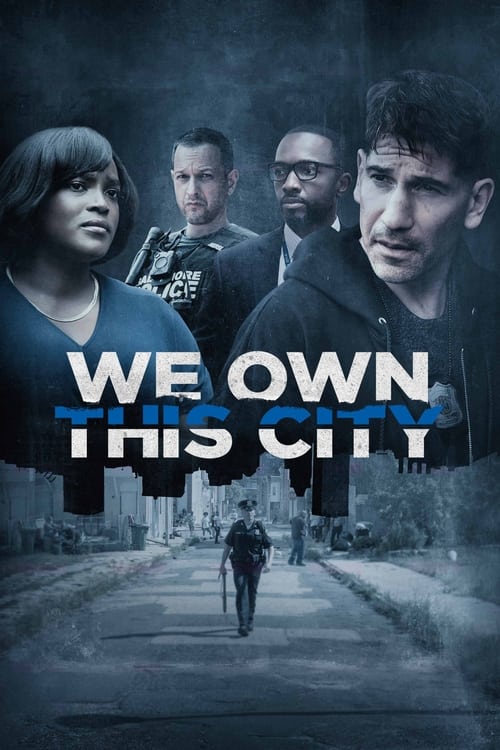
We Own This City was developed and written by George Pelecanos and Simon and directed by Reinaldo Marcus Green. The six-episode limited series premiered on HBO on April 25, 2022.
Contents
Early life and education
Simon was born in Washington, D.C., the son of Dorothy Simon (née Ligeti), a homemaker, and Bernard Simon, a former journalist and then public relations director for B'nai B'rith for 20 years. Simon was raised in a Jewish family, and had a bar mitzvah ceremony. His family roots are in Russia, Belarus, Hungary, and Slovakia (his maternal grandfather had changed his surname from "Leibowitz" to "Ligeti"). He has a brother, Gary Simon, and a sister, Linda Evans, who died in 1990.
In March 1977, when Simon was still in high school, Simon's father was one of a group of over 140 people held hostage (and later released) in Washington, D.C., by former national secretary of the Nation of Islam Hamaas Abdul Khaalis in the Hanafi Siege.
Simon graduated from Bethesda-Chevy Chase High School in Bethesda, Maryland, and wrote for the school newspaper, The Tattler. In 1983, he graduated from the University of Maryland, College Park. While at college he wrote and was editor for The Diamondback, and became friends with contemporary David Mills.
Career
Journalism
Upon leaving college, Simon worked as a police reporter at The Baltimore Sun from 1982 to 1995. Simon was hired by the Baltimore Sun for a piece he wrote about Lefty Driesell, who was then the men's basketball coach at the University of Maryland. Driesell had been extremely frustrated that one of his players was suspended from playing for sexual impropriety and called the victim, threatening to destroy her reputation if she did not withdraw her complaint. This was all done while the university administration was listening to the call, but they did nothing. Lefty Driesell was later given a 5-year contract and, in 2018, he was inducted into the ACC Hall of Fame.
Simon spent most of his career covering the crime beat. A colleague has said that Simon loved journalism and felt it was "God's work". Simon says that he was initially altruistic and was inspired to enter journalism by The Washington Post's coverage of Watergate but became increasingly pragmatic as he gained experience.
Simon was a union captain when the writing staff went on strike in 1987 over benefit cuts. He remained angry after the strike ended and began to feel uncomfortable in the writing room. He searched for a reason to justify a leave of absence and settled on the idea of writing a novel. "I got out of journalism because some sons of bitches bought my newspaper and it stopped being fun," said Simon.
In 1988, disillusioned, Simon took a year's leave to go into the Baltimore Police Department Homicide Unit to write a book.
Book
Simon's leave of absence from The Sun resulted in his first book Homicide: A Year on the Killing Streets (1991). The book was based on his experiences shadowing the Baltimore Police Department homicide unit during 1988. The idea came from a conversation on Christmas Eve 1985 in the unit office, where Det. Bill Lansey told him, "If someone just wrote down what happens in this place for one year, they'd have a goddamn book." Simon approached the police department and the editors of the paper to receive approval. The detectives were initially slow to accept him, but he persevered in an attempt to "seem … like part of the furniture". However, he soon ingratiated himself with the detectives, saying in the closing notes of the book, "I shared with the detectives a year's worth of fast-food runs, bar arguments and station house humor: Even for a trained observer, it was hard to remain aloof." During one instance, Simon even assisted with an arrest. Two detectives Simon was riding with pulled their car to a curb to apprehend two suspects, but Detective Dave Brown got his trenchcoat caught in a seat belt when he tried to exit the car. Brown told Simon to assist Detective Terry McLarney himself, and Simon helped apprehend and search one of the suspects.
The book won the 1992 Edgar Award for Best Fact Crime book. The Associated Press called it "a true-crime classic". The Library Journal also highly recommended it, and Newsday described it as "one of the most engrossing police procedural mystery books ever written". Simon credits his time researching the book as altering his writing style and informing later work. He learned to be more patient in research and writing, and said a key lesson was not promoting himself but concentrating on his subjects. Simon told Baltimore's City Paper in 2003 that Homicide was not traditional journalism. "I felt Homicide the book and The Corner were not traditional journalism in the sense of coming from some artificially omniscient, objective point of view," said Simon. "They're immersed in the respective cultures that they cover in a way that traditional journalism often isn't."
Television
The publishers of Homicide: A Year on the Killing Streets were eager for a screen adaptation and submitted it to numerous directors but there was little interest. Simon suggested that they send the book to Baltimore native and film director Barry Levinson. Levinson's assistant Gail Mutrux enjoyed the book and both she and Levinson became attached as producers. The project became the award-winning TV series Homicide: Life on the Street (1993–1999), on which Simon worked as a writer and producer.
Simon was asked by Mutrux to write the show's pilot episode but declined, feeling he did not have the necessary expertise. He collaborated with his old college friend David Mills to write the season two premiere "Bop Gun". The episode was based on a story by executive producer Tom Fontana and featured Robin Williams in a guest starring role that garnered the actor an Emmy nomination. Simon and Mills won the WGA Award for Best Writing in a Drama for the episode. Simon also received Austin Film Festival's Outstanding Television Writer Award in 2010.
Simon left his job with the Baltimore Sun in 1995 to work full-time on Homicide: Life on the Street during the production of the show's fourth season. Simon wrote the teleplay for the season four episodes "Justice: Part 2" and "Scene of the Crime" (with Anya Epstein). For season five he was the show's story editor and continued to contribute teleplays writing the episodes "Bad Medicine" and "Wu's on First?" (again with Epstein). He was credited as a producer on the show's sixth and seventh seasons. He wrote the teleplays for parts two and three of the sixth-season premiere "Blood Ties" (the latter marking his third collaboration with Epstein) and provided the story for the later sixth-season episodes "Full Court Press" and "Finnegan's Wake" (with James Yoshimura). He provided the story for the seventh season episodes "Shades of Gray" (with Julie Martin), "The Same Coin" (again with Yoshimura) and "Self Defense" (with Eric Overmyer). Simon wrote the story and teleplay for the seventh season episodes "The Twenty Percent Solution" and "Sideshow: Part 2". Simon, Martin and teleplay writer T. J. English won the Humanitas Prize in the 60 minutes category for the episode "Shades of Gray". Simon was nominated for a second WGA Award for Best Writing in a Drama for his work on "Finnegan's Wake" with Yoshimura and Mills (who wrote the teleplay).
Simon has said that he thought the show was a "remarkable drama" but that it did not reflect the book. He has also said that when writing for the show he had to put his experiences of the real detectives aside as the characters became quite different, particularly in their more philosophical approach to the job. Simon said that TV must find shorthand ways of referencing anything real.
Cancelled and upcoming projects
Parting the Waters: With Taylor Branch, James McBride, Ta-Nehisi Coates, and Eric Overmyer. About Martin Luther King Jr. and the Civil Rights Movement, based on one of the volumes of the books America in the King Years written by Taylor Branch, specifically At Canaan's Edge: America in the King Years, 1965–1968. The project was to be produced by Oprah Winfrey, but was shelved.
The Avenue: A book with William F. Zorzi Jr., on the Baltimore drug epidemic from 1951 to late 1980s.
The Good Friday Plot: Miniseries about Abraham Lincoln based upon Manhunt: The Twelve-Day Chase for Lincoln's Killer by James L. Swanson and American Brutus: John Wilkes Booth and the Lincoln Conspiracies by Michael W. Kauffman. The show was to be executive produced by Simon and Tom Fontana. Manhunt was later adapted by a different team as a miniseries for Apple TV+ in 2024, created by Monica Beletsky.
Capitol Hill: A collaboration with Carl Bernstein set in Capitol Hill, it examines partisanship and the role money plays in influencing national governance. The series was ordered to pilot by HBO in 2015, but has not received a subsequent season order.
Legacy of Ashes: On the Central Intelligence Agency, based on the 2007 book Legacy of Ashes by Tim Weiner. The show was taken to the BBC and would have had Anthony Bourdain and Ed Burns on the writing staff.
The Pogues: Musical project with the help of the late Philip Chevron in development at The Public Theater in New York City, with Laura Lippman and George Pelecanos, focused on the band The Pogues.
A Dry Run: The Lincolns in Spain: A historical miniseries set during the Spanish Civil War about the Abraham Lincoln and George Washington Battalions, which were composed of volunteers from the United States who wanted to help the Spanish Republic overcome fascism. Mark Johnson will be the series producer and Mediapro will be the series' production company.
Writing process
Simon is known for his realistic dialogue and journalistic approach to writing. He says that authenticity is paramount and that he writes not with a general audience in mind but with the opinions of his subjects as his priority. He has described his extensive use of real anecdotes and characters in his writing as "stealing life".
In a talk that Simon gave to a live audience in April 2007 at the Creative Alliance's storytelling series, Simon disclosed that he had started writing for revenge against John Carroll and Bill Marimow, the two most senior editors at The Baltimore Sun when Simon was a reporter at the paper. Simon said he had watched Carroll and Marimow "single-handedly destroy" the newspaper and that he spent over ten years trying to get back at them.
Anything I've ever accomplished as a writer, as somebody doing TV, anything I've ever done in life, down to, like, cleaning up my room, has been accomplished because I was going to show people that they were fucked up, wrong, and that I was the fucking center of the universe and the sooner they got hip to that, the happier they would all be.
One of the actions Simon took was to name a character in The Wire after Marimow and make the character "a repellent police-department toady." Carroll left The Baltimore Sun to become editor at the Los Angeles Times and resigned in 2005 after budget cuts were announced. "He stands up like a [bleeping] hero, takes a bullet," said Simon. In 2006 Marimow was diagnosed with prostate cancer, something that Simon said "took the edge off" his grudge. Carroll and Marimow "were fuel for 10 years of my life. ... And now, I got nothing," Simon said.
When asked about these comments, Simon said that he had spoken with "some hyperbole and, I hope, comic effect", adding that his basic viewpoint was: "that simple revenge is both empty and beside the point and that a good story carefully told has to speak to larger themes. You do not tell an ornate, careful story over ten hours of HBO airtime merely to bust on any given soul."
Views on journalism
In an interview in Reason in 2004, Simon said that since leaving the newspaper business he has become more cynical about the power of journalism. "One of the sad things about contemporary journalism is that it actually matters very little. The world now is almost inured to the power of journalism. The best journalism would manage to outrage people. And people are less and less inclined to outrage," said Simon. "I've become increasingly cynical about the ability of daily journalism to effect any kind of meaningful change. I was pretty dubious about it when I was a journalist, but now I think it's remarkably ineffectual."
While testifying at a May 2009 Senate hearing regarding the future of journalism in America, Simon indicated what he saw as poor online journalism, calling the phrase citizen journalist "Orwellian to [his] ears." Simon ended his testimony by declaring, "I don't think anything can be done to save high-end journalism." The next month, Simon spoke about the future of professional journalism in remarks at a National Press Club meeting.
Political views
Simon has described himself as a social democrat, broadly supporting the existence of capitalism while opposing "raw, unencumbered capitalism, absent any social framework, absent any sense of community, without regard to the weakest and most vulnerable classes in society", which he described as "a recipe for needless pain, needless human waste, (and) needless tragedy". He has criticized the idea of trickle-down economics.
In 2013, Simon compared the global surveillance disclosures uncovered by Edward Snowden to a 1980s effort by the City of Baltimore to record the numbers dialed from all pay phones. The city believed that drug traffickers were using pay phones and pagers, and a municipal judge allowed the city to record the dialed numbers. The placement of the payphone number recorders formed the basis of The Wire's first season. Simon argued that the media attention regarding the surveillance disclosures is a "faux scandal."
During a November 2013 speech at the Festival of Dangerous Ideas in Sydney, he said that America has become "a horror show" of savage inequality as a result of capitalism run amok, and that "unless we reverse course, the average human being is worthless on planet Earth. Unless we take stock of the fact that maybe socialism and the socialist impulse has to be addressed again; it has to be married as it was married in the 1930s, the 1940s and even into the 1950s, to the engine that is capitalism."
Simon has also spoken out publicly against crime journalist Kevin Deutsch, disputing the portrayal of Baltimore's illegal drug trade in Deutsch's book, Pill City: How Two Honor Roll Students Foiled the Feds and Built a Drug Empire. Simon has described the book as "a wholesale fabrication."
During the 2016 Democratic presidential primaries, Simon praised Bernie Sanders for "rehabilitating and normalizing the term socialist back into American public life", but opposed some attacks against Hillary Clinton which he felt focused on her presumed motives rather than the substance of policies.
In April 2022, David Simon thanked Russian opposition leader Alexei Navalny for using a quote from the TV series The Wire in his court speech and wished good luck to the politician.
Personal life
In 1991, Simon married graphic artist Kayle Tucker. They had a son. The marriage ended in divorce.
In 2006, Simon married best-selling Baltimore novelist and former Sun reporter Laura Lippman in a ceremony officiated by John Waters. They have a daughter, who was born in 2010. Lippman and Simon separated in 2020, divorcing in 2024. The two continue to co-parent their daughter.
Simon's nephew, Jason Simon, is a guitarist and vocalist for the psychedelic rock band Dead Meadow. The band was mentioned in an episode of The Wire.
Simon was the 2012 commencement speaker for the Georgetown University College of Arts and Sciences, as well as the speaker for the Bethesda-Chevy Chase High School graduation.
In 2019, Simon joined several other writers in firing their agents as part of the Writers Guild of America's stand against the Association of Talent Agents after failing to come to an agreement on their "Code of Conduct". Simon's statement to the writers union was widely circulated. He had previously criticized the practice of packaging by the major talent agencies.
Works and publications
Commentary
Simon, David (January 20, 2008). "Does the News Matter To Anyone Anymore?". The Washington Post. Archived from the original on May 16, 2008. Retrieved October 31, 2025.
Simon, David (March 1, 2009). "In Baltimore, No One Left to Press the Police". The Washington Post. Archived from the original on March 12, 2009. Retrieved October 31, 2025.
Simon, David (July–August 2009). "Build the Wall". Columbia Journalism Review. Archived from the original on October 4, 2009. Retrieved October 31, 2025.
Non-fiction books
Simon, David (1991). Homicide: A Year on the Killing Streets. Boston: Houghton Mifflin. ISBN 978-0-395-48829-4. OCLC 23356235. OL 2157541W. Wikidata Q1387845.
Simon, David; Burns, Edward (1997). The Corner: A Year in the Life of an Inner-City Neighborhood. New York: Broadway Books. ISBN 978-0-767-90030-0. OCLC 36857674