Critical response
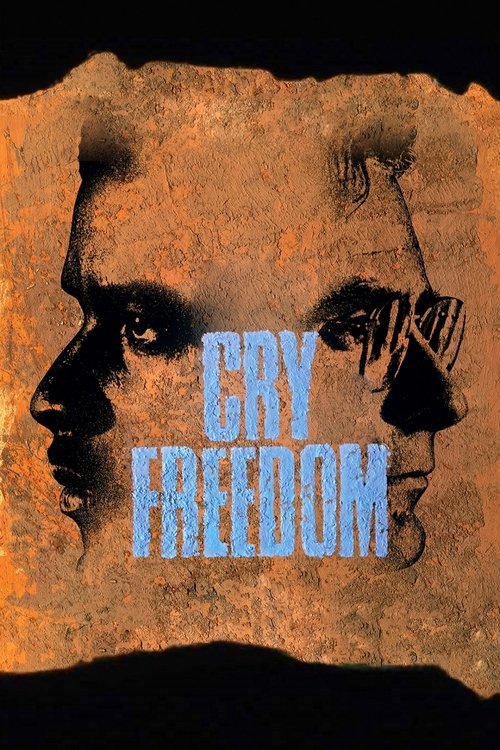
Among mainstream critics in the U.S., the film received mostly positive reviews. Rotten Tomatoes reported that 74% of 27 sampled critics gave the film a positive review, with an average score of 6.5 out of 10. Metacritic assigned the film a weighted average score of 59 out of 100 based on 15 critic reviews, indicating "mixed or average reviews." Audiences polled by CinemaScore gave the film an average grade of "A" on an A+ to F scale.
Rita Kempley, writing in The Washington Post, said actor Washington gave a "zealous, Oscar-caliber performance as this African messiah, who was recognized as one of South Africa's major political voices when he was only 25." Also writing for The Washington Post, Desson Howe thought the film "could have reached further" and felt the story centring on Woods's character was "its major flaw". He saw director Attenborough's aims as "more academic and political than dramatic". Overall, he expressed his disappointment by exclaiming, "In a country busier than Chile with oppression, violence and subjugation, the story of Woods' slow awakening is certainly not the most exciting, or revealing."
Roger Ebert in the Chicago Sun-Times offered a mixed review calling it a "sincere and valuable movie" while also exclaiming, "Interesting things were happening, the performances were good and it is always absorbing to see how other people live." But on a negative front, he noted how the film "promises to be an honest account of the turmoil in South Africa but turns into a routine cliff-hanger about the editor's flight across the border. It's sort of a liberal yuppie version of that Disney movie where the brave East German family builds a hot-air balloon and floats to freedom."
Janet Maslin writing in The New York Times saw the film as "bewildering at some points and ineffectual at others" but pointed out that "it isn't dull. Its frankly grandiose style is transporting in its way, as is the story itself, even in this watered-down form." She also complimented the African scenery, noting that "Cry Freedom can also be admired for Ronnie Taylor's picturesque cinematography". The Variety Staff felt Washington did "a remarkable job of transforming himself into the articulte [sic] and mesmerizing black nationalist leader, whose refusal to keep silent led to his death in police custody and a subsequent coverup." On Kline's performance, they noticed how his "low-key screen presence serves him well in his portrayal of the strong-willed but even-tempered journalist." Film critic Gene Siskel of the Chicago Tribune gave the film a thumbs up review calling it "fresh" and a "solid adventure" while commenting "its images do remain in the mind ... I admire this film very much." He thought both Washington's and Kline's portrayals were "effective" and "quite good". Similarly, Michael Price writing in the Fort Worth Press viewed Cry Freedom as often "harrowing and naturalistic but ultimately self-important in its indictment of police-state politics."
Mark Salisbury of Time Out wrote of the lead acting to be "excellent" and the crowd scenes "astonishing", while equally observing how the climax was "truly nerve-wracking". He called it "an implacable work of authority and compassion, Cry Freedom is political cinema at its best." James Sanford, however, writing for the Kalamazoo Gazette, did not appreciate the film's qualities, calling it "a Hollywood whitewashing of a potentially explosive story." Rating the film with 3 Stars, critic Leonard Maltin wrote that the film was a "sweeping and compassionate film". He did, however, note that the film "loses momentum as it spends too much time on Kline and his family's escape from South Africa". But in positive followup, he pointed out that it "cannily injects flashbacks of Biko to steer it back on course."
John Simon of the National Review called Cry Freedom "grandiosely inept".
In 2013, the movie was one of several discussed by David Sirota in Salon in an article concerning white saviour narratives in film.