



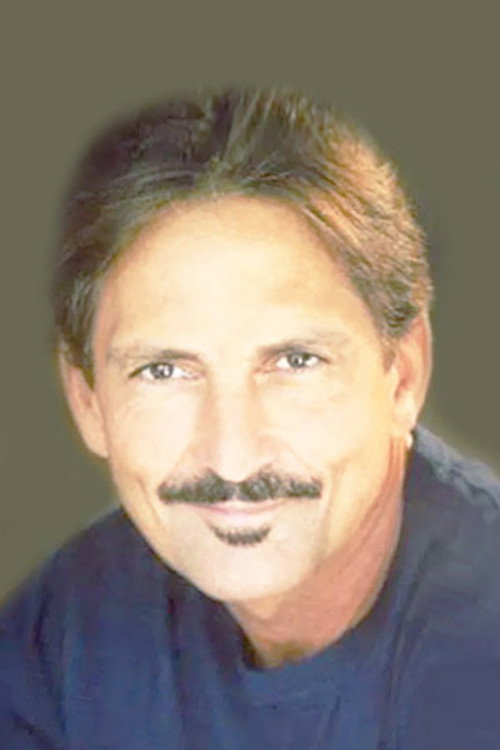
Conrad Dunn (born March 9, 1950) is an American actor. He began his screen career with the role of Francis "Psycho" Soyer in Stripes (1981). Working for some ten years under the name George Jenesky, he achieved soap-opera stardom in Days of Our Lives as Nick Corelli, a misogynistic pimp who evolved from bad guy to romantic lead. He returned to the name Conrad Dunn and began working extensively in Canadian as well as U.S. film and television. He excels as a villain, and has found depth in such TV films as We the Jury (1996) and the miniseries The Last Don (1997–1998). For two seasons he portrayed the freelance detective Saul Panzer in the A&E TV series Nero Wolfe (2001–2002). He is also a veteran stage performer and director who studied at East Los Angeles College, the American Academy of Dramatic Arts in Los Angeles and the Stella Adler Conservatory in New York.
Life and career
Born and raised in Los Angeles, Conrad Dunn studied at East Los Angeles College, the American Academy of Dramatic Arts in Los Angeles, and with Stella Adler in New York. After seeing him on the stage, a casting director asked him to read for the role of Francis "Psycho" Soyer in Stripes (1981), his first feature film. His introductory speech, described by one reviewer as "Conrad Dunn's adroit tribute to Travis Bickle", was singled out by film critic Roger Ebert:
The movie has especially good writing in several scenes. My favorite comes near the beginning, during a session when recruits in the new platoon get to know one another. One obviously psycho draftee, who looks like Robert De Niro, quietly announces that if his fellow soldiers touch him, touch his stuff, or interfere in any way with his person or his privacy, he will quite simply be forced to kill them.
The response from drill sergeant Hulka, played by Warren Oates—"Lighten up, Francis"—became a popular movie quote.
Taking the name George Jenesky, Dunn performed over seven seasons (1981–1990) in the NBC daytime soap opera Days of Our Lives. His character, Nick Corelli, became a fan favorite, a despicable pimp who evolved into a romantic lead and one of the show's main characters. Nick's murder was one of the series' notable whodunits.
He has made numerous appearances in films and on television, frequently as the villain. In the mid-1990s he returned to the name Conrad Dunn and began working extensively in Canada as well as the U.S. Notable TV roles include an antagonistic juror in the USA Network film We the Jury (1996), a remorseless mobster in two CBS miniseries (1997–1998) adapted from Mario Puzo's The Last Don, and the arch villain in the 2000 pilot for TNT's supernatural drama series Witchblade. In 2001 he joined the principal cast of the A&E TV series Nero Wolfe (2001–2002), portraying the superlatively competent freelance detective Saul Panzer for two seasons. His later appearances include the films Chicago (2002), Owning Mahowny (2003) and Ving Rhames' Animal 2 (2007), and the TV series Suits (2012).
In addition to his work in film and television, Dunn was artistic director of three acting companies—The Frances Farmer Memorial Players (1977–1979), The Fly by Night Players (1981–1982) and The Dakota Repertory Theatre Company (1983–1991). He produced and performed in two notable Los Angeles productions—the award-winning Guests of the Nation (1989), and the first Equity performance of Seed of Darkness: The Final Tale of Edgar Allan Poe (1990)—that were both directed by Ron Burrus, leading exponent of the work of Stella Adler.
Dunn's other stage credits include a 1994 production of Edward Albee's The Zoo Story, simultaneously performed in American Sign Language. "Notwithstanding the value of bringing this important work to a non-hearing audience, the energy of the gestures generated by the actors actually underscores the emotional impact of their fateful encounter," wrote Variety. He later performed in Jim Garrard's Peggy's Song in Toronto (2012), North Hollywood (2019) and Kingston, Ontario (2020), and was recognized as best actor in a play at the 2019 Valley Theatre Awards. Dunn has also directed many original one-act plays showcasing the writers and actors at the Actors Workout Studio, in the NoHo Arts District of Los Angeles.