






Claude Joséphine Rose "Claudia" Cardinale (Italian: [ˈklaudja kardiˈnaːle]; 15 April 1938 – 23 September 2025) was an Italian-Tunisian actress. Regarded as one of the leading female figures of Italian cinema, alongside Sophia Loren, Monica Vitti, Silvana Mangano, Anna Magnani, and Gina Lollobrigida, she achieved international recognition during a career spanning more than six decades. Celebrated in the 1960s as "the most beautiful woman in the world" and widely considered a sex symbol of the era, Cardinale appeared in more than 175 films, primarily in Italy and France, across genres including comedy, drama, spaghetti westerns, and historical epics. She collaborated with acclaimed directors such as Federico Fellini, Sergio Leone, and Werner Herzog, and several of her films are regarded as significant works in the history of cinema. At the time of her death, she was one of the last surviving stars from the Golden Age of European cinema.
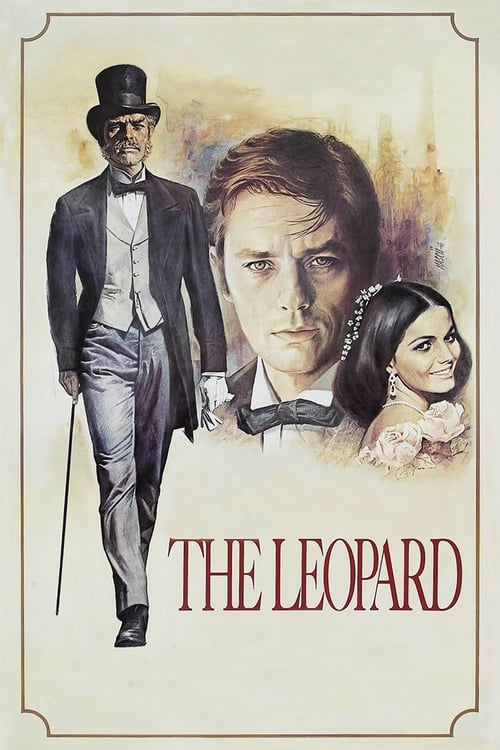
Born and raised in La Goulette, a municipality in Tunisia near Tunis, Cardinale won the "Most Beautiful Italian Girl in Tunisia" competition in 1957, the prize being a trip to Italy, which quickly led to film contracts, due above all to the involvement of producer Franco Cristaldi, who acted as her mentor for a number of years and later married her. After making her debut in a minor role with Egyptian star Omar Sharif in Goha (1958), Cardinale became one of the best-known actresses in Italy, with roles in films such as Rocco and His Brothers (1960), Girl with a Suitcase (1961), Cartouche (1962), The Leopard (1963) and Federico Fellini's 8½ (1963).
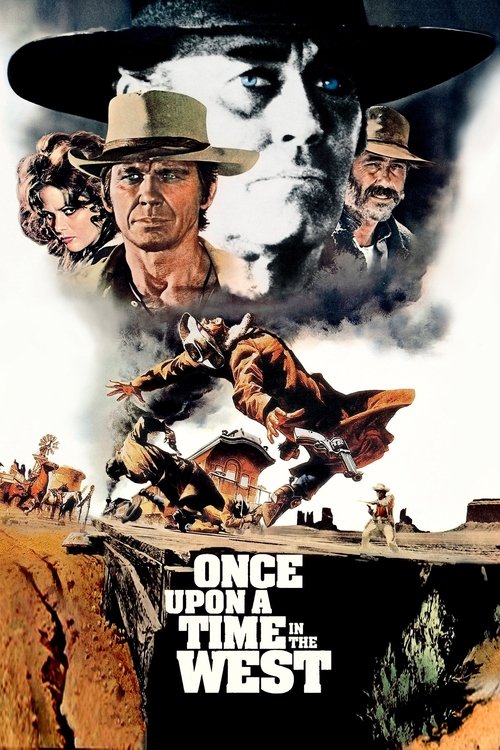
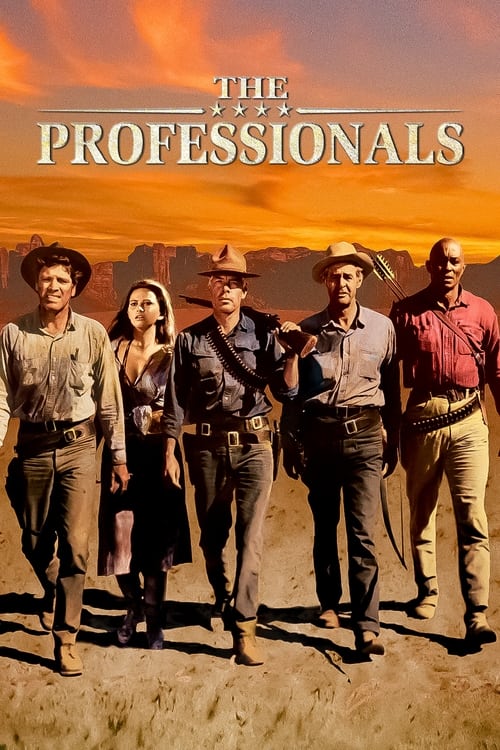
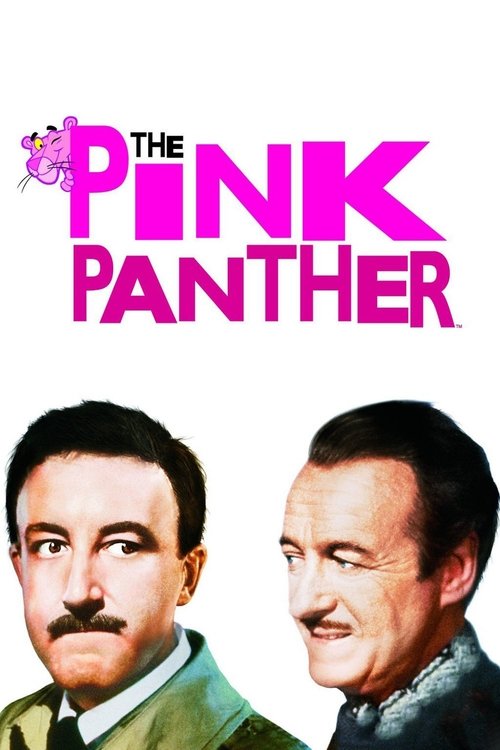
From 1963, Cardinale appeared in The Pink Panther opposite David Niven. She went on to appear in the Hollywood films Blindfold (1966), Lost Command (1966), The Professionals (1966), Don't Make Waves (1967) with Tony Curtis, The Hell with Heroes (1968), The Red Tent (1969), A Fine Pair (1968), The Salamander (1981), and the Sergio Leone Western Once Upon a Time in the West (1968), a joint U.S.–Italian production, in which she was praised for her role as a former prostitute opposite Jason Robards, Charles Bronson and Henry Fonda.
Jaded with Hollywood and not wanting to become a cliché, Cardinale returned to Italian and French cinema and garnered the David di Donatello for Best Actress award for her roles in The Day of the Owl (1968) and as a prostitute alongside Alberto Sordi in A Girl in Australia (1971). In 1974, Cardinale met director Pasquale Squitieri, who would become her partner. She frequently featured in his films, including Blood Brothers (1974), Father of the Godfathers (1978) and Claretta (1984), the last of which won her the Nastro d'Argento Award for Best Actress. In 1982, she co-starred with Klaus Kinski in Werner Herzog's Fitzcarraldo. In 2010, Cardinale received the Best Actress Award at the 47th Antalya "Golden Orange" International Film Festival for her performance as an elderly Italian woman who takes in a young Turkish exchange student in Signora Enrica.
Over the years, Cardinale was outspoken about women's rights and became a UNESCO goodwill ambassador for the Defence of Women's Rights beginning in March 2000. In February 2011, the Los Angeles Times Magazine named Cardinale among the 50 most beautiful women in film history.
Contents
Early life
Cardinale was born in La Goulette, a port municipality near Tunis, on 15 April 1938. Her father, Francesco Cardinale, was an Italian railway worker of French-Piedmontese and Sardianian-Sicilian origins. Her mother, Yolande Greco, was born in the then Italian Tripolitania to Sardinian-Ligurian parents. They later settled in La Goulette, which had a large Italian community. She grew up speaking only French language and Tunisian Arabic, and did not learn Italian until she started being cast in Italian films.
Cardinale was educated at the Saint-Joseph-de-l'Apparition School of Carthage, which she attended along with her younger sister, Blanche. She then studied at the Paul Cambon School with the intention of becoming a teacher. As a teenager she was described as "silent, weird and wild" and like other young women of her generation was fascinated by Brigitte Bardot, who came to prominence in the 1956 film And God Created Woman, directed by Roger Vadim.
Career
1950s
Cardinale's first film work was participating, along with classmates, in a short film by French director René Vautier, Anneaux d'or, successfully presented at the Berlin Film Festival. The film made her a minor local celebrity and led to her being spotted by Jacques Baratier, who offered her a small role in Goha. She accepted it reluctantly after Baratier explained he wanted a Tunisian actress rather than an Italian to star in the main role opposite Egyptian actor Omar Sharif. The appearance nonetheless marked her feature-film debut. The turning point came in 1957 during the Italian Cinema Week in Tunis, when she won a competition for the "Most Beautiful Italian Girl in Tunisia", with a trip to the Venice Film Festival as first prize. After being spotted by several film producers at the event, she was invited to study at the Experimental Cinematography Centre in Rome under Tina Lattanzi. She attended briefly as, despite her extremely photogenic looks, she had trouble with her acting assignments (partly owing to her difficulties with the Italian language). She left at the end of her first term and decided to return home, earning herself a cover story in the popular weekly Epoca triggered by her unexpected decision to turn her back on a career as a film star.
Back in Tunis, however, Cardinale discovered unexpectedly that she was pregnant, the result of what she later described as a "terrible" relationship with a Frenchman, some 10 years her senior, which began when she was only 17 and lasted for about a year. On this discovery he wanted her to have an abortion but she decided to keep the child. She solved her problems by signing a seven-year exclusive contract with Franco Cristaldi's production company Vides. Cristaldi largely managed her early career and she was married to him from 1966 until 1975.
Under the new contract, in 1958 Cardinale was given a minor role with Italian actors Vittorio Gassman, Totò, Marcello Mastroianni and Renato Salvatori in Mario Monicelli's internationally successful criminal comedy Big Deal on Madonna Street (I soliti ignoti). She portrayed Carmelita, a Sicilian girl virtually imprisoned in her home by her overpowering brother. The comedy was a huge success, making Cardinale instantly recognisable. Some newspapers were already referring to her as "la fidanzata d'Italia" (Italy's sweetheart). Later that year she had a leading role alongside Yvonne Monlaur in Claudio Gora's romantic comedy Three Strangers in Rome.
Cardinale was able to work into her seventh month of pregnancy and kept it hidden from co-workers and the public.
1960s
In 1960, Cardinale starred opposite Marcello Mastroianni in Mauro Bolognini's Golden Leopard-winning drama film Il bell'Antonio. The film marked the start of a fruitful partnership. Cardinale stated that her films with Bolognini were among the most joyful of her career, considering him to be "a great director, a man of rare professional capability, great taste and culture. Beyond that, for me personally, a sensitive and sincere friend." In Bolognini's films, thanks to her aesthetic femininity, Cardinale took roles of manipulative women who lead men to perdition. During the filming of Il bell'Antonio, her co-star Marcello Mastroianni fell in love with her, but she rejected him, as she did not take his love seriously, considering him to be one of those actors who cannot help but fall in love with their co-stars. Mastroianni insisted that his feelings were genuine, even after many years. The genuine empathy between the two actors proved to be ideal for reproducing the tension between the characters in the film. Cardinale next portrayed Pauline Bonaparte in Abel Gance's French film Austerlitz, and after appearing opposite Vittorio Gassman and Salvatori in the sequel to Big Deal on Madonna Street, Audace colpo dei soliti ignoti, she portrayed Ginetta, the fiancée of Spiros Focás, alongside Salvatori and Alain Delon in Luchino Visconti's critically acclaimed Rocco and His Brothers. However, her leading performance in Francesco Maselli's Silver Spoon Set gained her most attention during this period. Francesco Freda felt the film paved her way "to great success", noting the "sweetness of her smile" which struck a chord with the public. In her early Italian roles, Cardinale was usually dubbed, as producers considered her voice too hoarse and she still spoke Italian with an accent at that point.
In 1961, Cardinale portrayed a sultry nightclub singer and young mother in Valerio Zurlini's Girl with a Suitcase. As a result of her own experience of early motherhood, Cardinale naturally conveyed the concerns of a teenaged mother, identifying fully with the character of Aida. Such was her psychological involvement that she needed several months to overcome her apprehensions and prepare for the part. Zurlini chose her for such a difficult role against everyone's advice, as she was not yet considered a "real" actress, nor was she (yet) one of the most celebrated Italian beauties. He was very close and supportive of Cardinale during the production though and a true friendship developed between the two, based on a deep mutual understanding. Cardinale remarked: "Zurlini was one of those who really love women: he had an almost feminine sensitivity. He could understand me at a glance. He taught me everything, without ever making demands on me. ... He was really very fond of me." Cardinale was warmly praised by the critics for her performance in Girl with a Suitcase, Dennis Schwartz considering her to have been at her "charming best". Later in 1961, Cardinale starred as a prostitute opposite Jean-Paul Belmondo in Bolognini's The Lovemakers. Both Girl with a Suitcase and The Lovemakers were presented at the 1961 Cannes Film Festival. At the time, Cardinale was not considered comparable to the two divas of Italian cinema, Sophia Loren and Gina Lollobrigida, but several newspapers and magazines, including Paris Match, began to consider her to be a credible young rival to Brigitte Bardot. Cardinale's 1961 appearances also included Henri Verneuil's French comedy The Lions Are Loose and Auguste, in which she had a cameo role.
1970s
In 1970, Cardinale starred opposite Peter McEnery and Eli Wallach in Jerzy Skolimowski's comedy film The Adventures of Gerard, based on The Exploits of Brigadier Gerard by Arthur Conan Doyle. In 1971, she formed a duo with Brigitte Bardot in the French Western-comedy The Legend of Frenchie King (French: Les Pétroleuses) and appeared as a prostitute opposite Alberto Sordi in Luigi Zampa's comedy A Girl in Australia. The film, shot on location in February and March 1971, earned Cardinale a Best Actress award at the David di Donatello Awards the following year. In 1972, Cardinale appeared in Marco Ferreri's The Audience, which was screened at the 22nd Berlin International Film Festival. She also featured in La Scoumoune with Jean-Paul Belmondo and Michel Constantin. After a role as a Russian aristocrat opposite Oliver Reed in One Russian Summer (1973), set in prerevolutionary Russia, Cardinale starred opposite Franco Nero in Blood Brothers (1974), a historical drama film with "poliziotteschi" and "noir" elements. Cardinale and the director Pasquale Squitieri met for the first time on set and he soon became her husband.
In 1975, Cardinale played the daughter of a political exile (Adolfo Celi) in Mauro Bolognini's Libera, My Love, a character who becomes "increasingly incensed by the fascist government of Italy and makes a number of bold and very personal gestures against it". Later that year she appeared in the comedies The Immortal Bachelor with Vittorio Gassman and Blonde in Black Leather with Monica Vitti. Vitti's biographer noted how Cardinale and Vitti stood out as the female duo in a predominantly masculine cast.
In 1976, Cardinale appeared in the sex comedy A Common Sense of Modesty, which was directed and written by Alberto Sordi, who also co-starred. The following year, she had a biblical role as the adulteress in the Jesus of Nazareth miniseries, which featured Robert Powell as Jesus, Anne Bancroft as Mary Magdalene, and Ernest Borgnine as Cornelius the Centurion. Cardinale starred in her husband's I Am the Law, which tells the story of Cesare Mori (Giuliano Gemma), an Italian prefect that before and during the Fascist period was best known as "the Iron Prefect". In 1978, Cardinale appeared in Damiano Damiani's political thriller, Goodbye & Amen – L'uomo della CIA, and again featured alongside Gemma in her husband's gangster picture, Father of the Godfathers, set in 1950s Sicily.
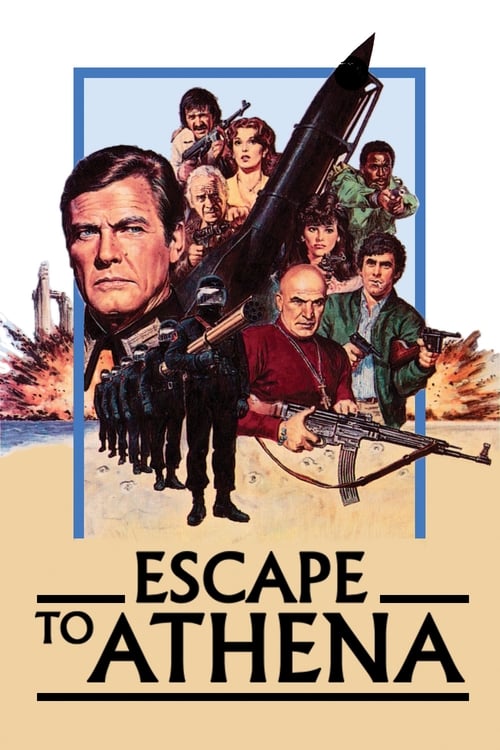
After a role in another Squitieri film in 1978, L'arma, Cardinale portrayed Eleana, a Greek "gutsy brothel madame" and the girlfriend of Telly Savalas in George P. Cosmatos's adventure war film, Escape to Athena (1979).
1980s
After a role in Si salvi chi vuole (1980) and a smaller part in Peter Zinner's The Salamander opposite Franco Nero, Anthony Quinn, and Christopher Lee, Cardinale played the love interest of Marcello Mastroianni in Liliana Cavani's war picture The Skin, a film which also reunited her with Burt Lancaster. In 1982, Cardinale appeared in Werner Herzog's Fitzcarraldo, playing a successful brothel owner who funds Klaus Kinski's purchase of an old steamship in South America. Critic Vincent Canby of The New York Times observed that although Cardinale's screen time in the film was not substantial, she "not only lights up her role, she also lights up Mr. Kinski", her performance helping transform him "into a genuinely charming screen presence". Later that year, Cardinale played opposite Pierre Mondy in the sex farce Bankers Also Have Souls, a role which biographers Lancia and Minelli say was played with a "mature charm and expressiveness".
In 1983, Cardinale had a role in the Waris Hussein miniseries Princess Daisy and featured alongside Lino Ventura and Bernard Giraudeau in the French-Canadian film The Ruffian. In 1984, she played the love interest of Marcello Mastroianni in a Marco Bellocchio production of Henry IV, based on the Luigi Pirandello play of the same name. It was entered into the 1984 Cannes Film Festival. Squitieri's Claretta (1984), featuring Cardinale and Gemma, was entered into the competition at the 41st Venice International Film Festival. Cardinale's performance as Claretta Petacci garnered her the Nastro d'Argento for Best Actress. In 1985, Cardinale starred opposite Ben Gazzara and Lina Sastri in Alberto Bevilacqua's Woman of Wonders. It entered the competition at the 42nd Venice International Film Festival.
In 1986, Cardinale was involved in the making of two films for television. In Comencini's La storia (from Elsa Morante's novel), Cardinale portrayed a widow raising a son during World War II. In her husband's Naso di Cane, a miniseries, Enrico Lancia and Roberto Poppi praised her for her "light comic touch". In 1987, Cardinale starred opposite Peter Coyote, Greta Scacchi, and Jamie Lee Curtis in Diane Kurys's film A Man in Love (Un homme amoureux). Cardinale's performance as Scacchi's cancer-stricken mother was praised by critics, with Desson Howe of The Washington Post highlighting the "warm and radiant" elements that she brought to the role, and Hal Hinson, also of The Post, comparing Scacchi to having "the same kind of sensuality that Cardinale brought to her earlier roles". After a role in the comedy, Blu elettrico (1988), Cardinale portrayed Yolande de Polastron, a favourite of Marie Antoinette's, in the two-part film La Révolution française in 1989.
1990s
In 1990, Cardinale starred opposite Bruno Cremer in Squitieri's Atto di dolore, and appeared in the Morocco-set Soviet-Italian production, The Battle of the Three Kings.
In 1991, Cardinale featured alongside Richard Berry and Omar Sharif in Henri Verneuil's Mayrig (meaning "mother"), a film about the struggles of an Armenian family that emigrates to Marseille from Turkey after the Armenian genocide of 1915. Such was the success of the film that Verneuil made a sequel the following year, 588, rue Paradis, also featuring mostly the same cast. Cardinale was praised by critics for her role as the mother; the Armenian General Benevolent Union of America noted the "flawless performance of these intrepid actors, especially of Claudia Cardinale". In 1993, Cardinale won the Leone d'oro alla carriera award at the Venice Film Festival, at which she was honoured along with Roman Polanski, Robert De Niro, and Steven Spielberg. Cardinale agreed to reunite with Blake Edwards, Herbert Lom, and Burt Kwouk to celebrate the 30th anniversary of The Pink Panther by making Son of the Pink Panther.
In 1994, Cardinale had a role in Charlotte Dubreuil's Elles ne pensent qu'à ça..., and the following year appeared in the French TV serial 10-07: L'affaire Zeus.
In 1997, Cardinale featured in the British-Italian television drama miniseries Nostromo, an adaptation of Joseph Conrad's novel directed by Alastair Reid. Cardinale and the cast were nominated for an ALMA Award for Outstanding Latino/a Cast in a Made-for-Television Movie or Mini-Series. Later in 1997, Cardinale appeared in the films Sous les pieds des femmes and her husband's Stupor Mundi, in which she portrayed Constance of Aragon. In the French picture Riches, belles, etc. (1998), Cardinale portrayed a wealthy baroness who leaves her hotel in the care of her daughter (played by Lola Naymark) during her absence. The following year, Cardinale played the peasant mother of two children who are members of Carmine Crocco's (Enrico Lo Verso's) army during the Garibaldi era, in Squitieri's historical film Li chiamarono... briganti!.
2000s
In 2000, Cardinale embarked on her stage career, starring in Maurizio Scaparro's stage production of La Venexiana, adapted by René de Ceccatty, at the Théâtre du Rond-Point in Paris.
She also appeared in her husband's television film, Élisabeth - Ils sont tous nos enfants. Two years later, Cardinale went on a theatrical tour of Italy, performing in Luigi Pirandello's Come tu mi vuoi, which Squitieri directed. She appeared as what Roger Ebert described as a "faded countess" opposite Jeremy Irons in Claude Lelouch's thriller film And Now... Ladies and Gentlemen, portraying a character who spends her time in Fez, Morocco, with handsome gigolos. The film was screened out of competition at the 2002 Cannes Film Festival. And Now... Ladies and Gentlemen received mixed reviews; A. O. Scott of The New York Times dismissed it as "sublimely silly", but praised the "impeccable CinemaScope compositions" and the "lush, suave score" by Michel Legrand.
In 2005, Cardinale appeared in a Philippe Adrien stage production of Tennessee Williams's Sweet Bird of Youth, and in the 2006/2007 season also featured in another Williams play, The Glass Menagerie, directed by Andrea Liberovici, in which she played the character of Amanda. In 2007, Cardinale appeared in the Aline Issermann comedy film Cherche fiancé tous frais payés, opposite Alexandra Lamy and Bruno Salomone, in a role which Patrick Besson described as "atrocious". After a role in the TV movie Hold-up à l'italienne (2008), the following year Cardinale starred in the critically acclaimed The String, playing a Tunisian mother who has a tempestuous relationship with her French-educated gay son. Michael D. Klemm of cinemaqueer.com praised Cardinale's "terrific" acting and portrayal of the "overbearing" mother.
2010s
In 2010, Cardinale received the Golden Orange Best Actress Award at the 47th Antalya "Golden Orange" International Film Festival for her performance as an elderly Italian woman who takes in a young Turkish exchange student in Signora Enrica. The Turkish-Italian co-production was shot in locations in Istanbul and Rimini.
In 2012, Cardinale featured opposite Jeanne Moreau and Michael Lonsdale in the final feature film to be directed by Portuguese director Manoel de Oliveira, Gebo and the Shadow. The Hollywood Reporter praised its "ensemble of superb older performers". Another film in which Cardinale acted, released in 2012, was The Artist and the Model. In it, she starred along with Jean Rochefort. In 2013, Cardinale starred alongside supporting actresses Patricia Black and Chloé Cunha in Nadia Szold's Joy de V., and had a role in Ernst Gossner's war drama The Silent Mountain, a love story set in the Dolomite Mountains in 1915 at the outbreak of World War I between Italy and Austria-Hungary. Gossner described her as "a terrific spirit on the set", and noted that Cardinale told the production team "legendary stories" about Marcello Mastroianni. In 2014, Cardinale portrayed an Italian chaperone viscountess in the British period drama film Effie Gray, for which Variety reviewer Guy Lodge deemed her and fellow cast members "overqualified" and "given far little to do". While promoting Effie Gray, in an interview Cardinale said: "I still continue to work, it's 142 movies now. Usually when you are old you don't work any more, but I still work, which is good.... I've been very lucky because I've had many fantastic directors with me, Fellini, Visconti, Blake Edwards, lots and lots...".
On 11 October 2018 she received the Tabernas de Cine award in the Almería Western Film Festival.
2020s
In 2020, Cardinale headlined the Swiss miniseries Bulle. Later that year, she had a role in the Netflix film Rogue City; her performance was among those praised by Elisabeth Vincentelli's New York Times review.
Personal life
When she was 19, she was kidnapped and raped by a man whose name she never revealed. This resulted in a pregnancy, her first child, a son named Patrick. For the first seven years, Patrick was raised as her younger brother. Later, she revealed her true identity to him, and the child was adopted by Cardinale's then-partner, Franco Cristaldi.
Cardinale met Cristaldi in 1958. According to Cardinale, the couple had a marriage party but did not marry, and they became increasingly detached. Cristaldi later married Eritrean model and actress Zeudi Araya and had no further relationship with Cardinale.
Cardinale lived with Pasquale Squitieri, an Italian film director, for 42 years, from 1975 until Squitieri died on 18 February 2017, aged 78. They had a daughter, Claudia. Her niece Francesca is also an actress.
Cardinale was fluent in French, Sicilian, Italian, English, Arabic, and Spanish. She was a heavy smoker for much of her life and smoked two packs a day. She only gave up the habit in the last year of her life.
Cardinale was a political liberal who supported feminist causes over the years. Although she lived in Paris, Cardinale was fiercely outspoken about being identified as an Italian, and in 2018 was awarded the rank of Knight Grand Cross of the Order of Merit of the Italian Republic. She was a UNESCO goodwill ambassador for the Defence of Women's Rights since March 2000, and was a goodwill ambassador for the UNESCO World Water Day for 2006.
Cardinale published an autobiography with Anne Mori, Io Claudia, Tu Claudia, in 1995. She was a regular attendee of the Academy Awards. Her awards include an honorary Golden Lion at the 1993 Venice Film Festival, and an Honorary Golden Bear at the 2002 Berlin Film Festival. The Los Angeles Times Magazine, in a February 2011 online feature, named Cardinale among the 50 most beautiful women in film history. Cardinale said of her acting, "I never felt scandal and confession were necessary to be an actress. I've never revealed myself or even my body in films. Mystery is very important." It was an important aspect of her acting career that, through her varied roles, she would preserve her mystery in order to stay true to herself, independent and determined, in what was then a man's world. In a 2014 interview, she revealed her secret of success: "If you want to practise this craft, you have to have inner strength. Otherwise, you'll lose your idea of who you are. Every film I make entails becoming a different woman. And in front of a camera, no less! But when I'm finished, I'm me again."
Death and tributes
Cardinale died, at the age of 87, on 23 September 2025, at her home in Nemours, Île-de-France. Her funeral was held at Saint-Roch in Paris.
Cardinale attracted many tributes after her death. The President of Italy, Sergio Mattarella, described her as "an extraordinary artist, an unforgettable heroine of Italian and international cinema, always loved by the public and highly esteemed by great directors". French President Emmanuel Macron declared that the French "[...] will always carry this Italian and world star in our hearts, in the eternity of cinema".
Alessandro Giuli, Italy's Minister of Culture, said she was "one of the greatest Italian actresses of all time", highlighting "her grace, her special beauty and her long career". Anouchka Delon and Antonio Banderas paid tribute to the memory of Cardinale.