



Claude Henri Jean Chabrol (French: [klod ʃabʁɔl]; 24 June 1930 – 12 September 2010) was a French film director and a member of the French New Wave (nouvelle vague) group of filmmakers who first came to prominence at the end of the 1950s. Like his colleagues and contemporaries Jean-Luc Godard, François Truffaut, Éric Rohmer and Jacques Rivette, Chabrol was a critic for the influential film magazine Cahiers du Cinéma before beginning his career as a filmmaker.
His feature debut, Le Beau Serge (1958), was inspired by Hitchcock's Shadow of a Doubt (1943). Thrillers became a trademark for Chabrol, with an approach characterized by a distanced objectivity. This is especially apparent in Les Biches (1968), La Femme infidèle (1969), and Le Boucher (1970) – all featuring Stéphane Audran, who was his wife at the time.
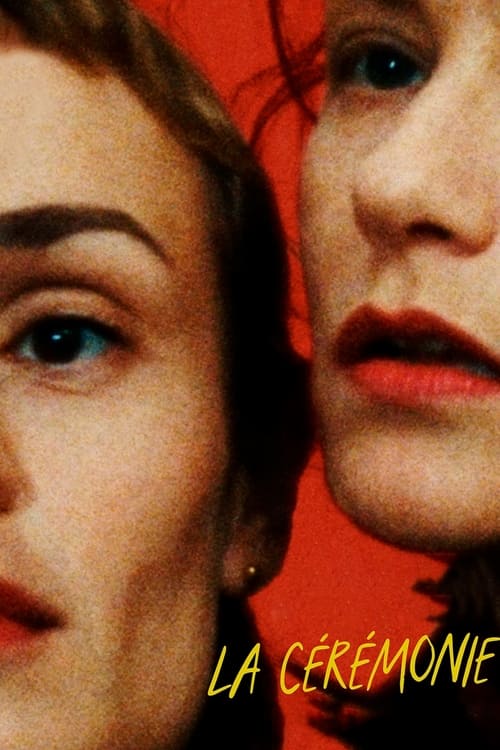
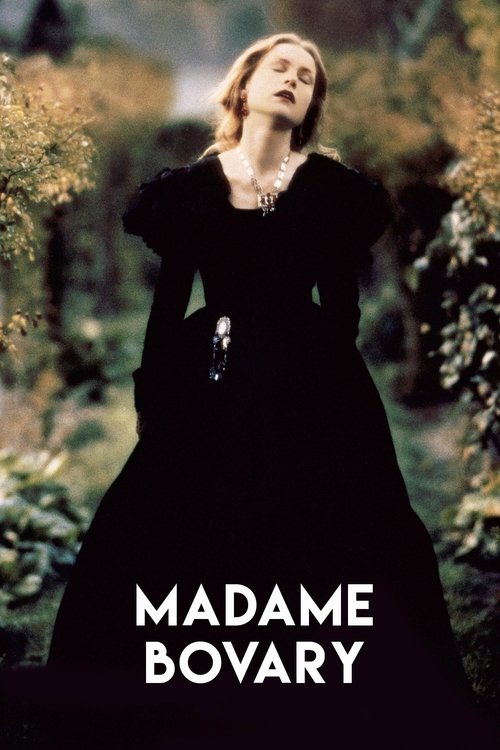
Sometimes characterized as a "mainstream" nouvelle vague filmmaker, Chabrol remained prolific and popular throughout his half-century career. In 1978, he cast Isabelle Huppert as the lead in Violette Nozière. On the strength of that effort, the pair went on to others including the successful Madame Bovary (1991) and La Cérémonie (1995). Film critic John Russell Taylor has stated that "there are few directors whose films are more difficult to explain or evoke on paper, if only because so much of the overall effect turns on Chabrol's sheer hedonistic relish for the medium...Some of his films become almost private jokes, made to amuse himself." James Monaco has called Chabrol "the craftsman par excellence of the New Wave, and his variations upon a theme give us an understanding of the explicitness and precision of the language of the film that we don't get from the more varied experiments in genre of Truffaut or Godard."
Contents
Life and career
Early life
Claude Henri Jean Chabrol was born on 24 June 1930 to Yves Chabrol and Madeleine Delarbre in Paris and grew up in Sardent, France, a village in the region of Creuse 400 km (240 miles) south of Paris. Chabrol said that he always thought of himself as a country person, and never as a Parisian. Both Chabrol's father and grandfather had been pharmacists, and Chabrol was expected to follow in the family business. But as a child, Chabrol was "seized by the demon of cinema" and ran a film club in a barn in Sardent between the ages of 12 and 14. It was at this time that he developed his passion for the thriller genre, detective stories and other forms of popular fiction.
Early years in Paris
After World War II, Chabrol moved to Paris to study pharmacology and literature at the Sorbonne, where he received a licence en lettres. Some biographies also state that he briefly studied law and political science at the École Libre des Sciences Politiques. While living in Paris Chabrol became involved with the postwar cine club culture and frequented Henri Langlois's Cinémathèque Française and the Ciné-Club du Quartier Latin, where he first met Éric Rohmer, Jacques Rivette, Jean-Luc Godard, François Truffaut and other future Cahiers du Cinéma journalists and French New Wave filmmakers. After graduating, Chabrol served his mandatory military service in the French Medical Corps, serving in Germany and reaching the rank of sergeant. Chabrol has said that while in the army he worked as a film projectionist. After he was discharged from the army, he joined his friends as a staff writer for Cahiers du Cinéma, who were challenging then-contemporary French films and championing the concept of Auteur theory. As a film critic, Chabrol advocated realism both morally and aesthetically, mise-en-scene, and deep focus cinematography, which he wrote "brings the spectator in closer with the image" and encourages "both a more active mental attitude on the part of the spectator and a more positive contribution on his part to the action in progress." He also wrote for Arts magazine during this period. Among Chabrol's most famous articles were "Little Themes", a study of genre films, and "The Evolution of Detective Films".
In 1955 Chabrol was briefly employed as a publicity man at the French offices of 20th Century Fox, but was told that he was "the worst press officer they'd ever seen" and was replaced by Jean-Luc Godard, who they said was even worse. In 1956 he helped finance Jacques Rivette's short film Le coup du berger, and later helped finance Rohmer's short Véronique et son cancre in 1958. Unlike all of his future New Wave contemporaries, Chabrol never made short film nor did he work as an assistant on other directors' work before making his feature film debut. In 1957 Chabrol and Eric Rohmer co-wrote Hitchcock (Paris: Éditions Universitaires, 1957), a study of the films made by director Alfred Hitchcock through the film The Wrong Man. Chabrol had said that Rohmer deserves the majority of the credit for the book, while he mainly worked on the sections pertaining to Hitchcock's early American films, Rebecca, Notorious, and Stage Fright. Chabrol had interviewed Hitchcock with François Truffaut in 1954 on the set of To Catch a Thief, where the two famously walked into a water tank after being starstruck by Hitchcock. Years later, when Chabrol and Truffaut had both become successful directors themselves, Hitchcock told Truffaut that he always thought of them when he saw "ice cubes in a glass of whiskey."
1957–1967: Early film career
The most prolific of the major New Wave directors, Chabrol averaged almost one film a year from 1958 until his death. His early films (roughly 1958–1963) are usually categorized as part of the New Wave and generally have the experimental qualities associated with the movement; while his later early films are usually categorized as being intentionally commercial and far less experimental. In the mid-sixties it was difficult for Chabrol to obtain financing for films so he made a series of commercial "potboilers" and spy spoofs, which none of the other New Wave filmmakers did.
Chabrol had married Agnès Goute in 1952 and in 1957 his wife inherited a large sum of money from relatives. In December of that year Chabrol used the money to make his feature directorial debut with Le Beau Serge. Chabrol spent three months shooting in his hometown of Sardent using a small crew and little known actors. The film's budget was $85,000. The film starred Jean-Claude Brialy as François and Gérard Blain as Serge, two childhood friends reunited when the recent medical school graduate François returns to Sardent and discovers that Serge has become an alcoholic after the stillbirth of his physically retarded first child. Despite suffering from tuberculosis, François drags Serge through a snowstorm to witness the birth of his second child, thus giving Serge a reason to live while killing himself in the process. Le Beau Serge is considered the inaugural film of the French New Wave Film movement that would peak between 1959 and 1962. Chabrol was the first of his friends to complete a feature film (although Jacques Rivette had already begun filming his first feature Paris nous appartient), and it immediately received critical praise and was a box office success. It won the Grand Prix at the Locarno Film Festival and the Prix Jean Vigo. Critics noticed similarities to Hitchcock's films, such as the motifs of doubling and re-occurrences and the "Catholic guilt transference" that Chabrol had also written about extensively in his and Rohmer's book the year earlier. Chabrol stated that he made the film as a "farewell to Catholicism", and many critics have called his first film vastly different from any of his subsequent films.
Chabrol quickly followed this success up with Les Cousins in 1958. The film is a companion piece and a reversal to Le Beau Serge in many ways, such as having the responsible student Brialy now play the decadent and insensitive Paul while the reckless Blain now plays the hard-working law student Charles. In this film, the country cousin Charles arrives in the big city of Paris to live with his corrupt cousin Paul while attending school. This was the first of many Chabrol films to include characters named Paul and Charles, and later films would often include a female named Hélène. More so than his first film, Les Cousins features many characteristics that would be seen as "Chabrolian", including the Hitchcock influence, a depiction of the French bourgeoisie, characters with ambiguous motives and a murder. It was also Chabrol's first film co-written with his longtime collaborator Paul Gégauff, of whom Chabrol once said "when I want cruelty, I go off and look for Gégauff. Paul is very good at gingering things up...He can make a character look absolutely ridiculous and hateful in two seconds flat." Les Cousins was another box office success in France and won the Golden Bear at the 9th Berlin International Film Festival.
1968–1978: "Golden Era"
In 1968 Chabrol began working with film producer André Génovès and started to make more critically acclaimed films that would later be considered his "Golden Era". Most of these films revolved around themes of bourgeois characters and a murder is almost always part of the plot. Unlike his earlier films, most of these films centered around middle aged people. Chabrol often worked with the same people during this period including actors Audran and Michel Bouquet, cinematographer Jean Rabier, editor Jacques Gaillard, sound technician Guy Chichignoud, composer Pierre Jansen, set designer Guy Littaye, as well as producer Génovés and co-writer Paul Gégauff.
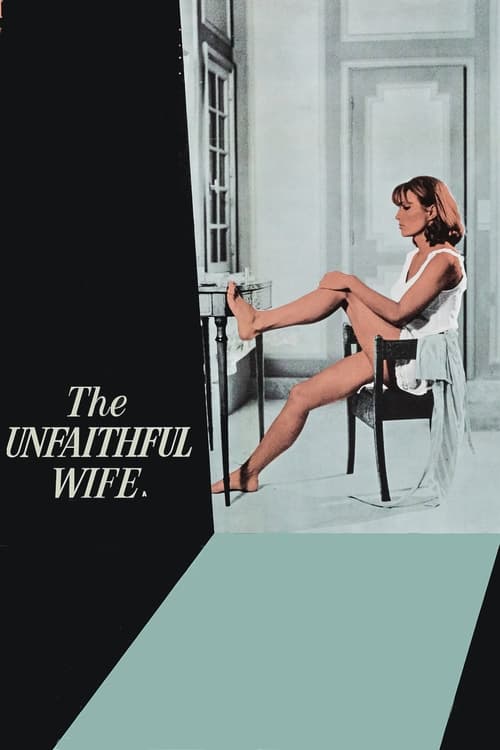
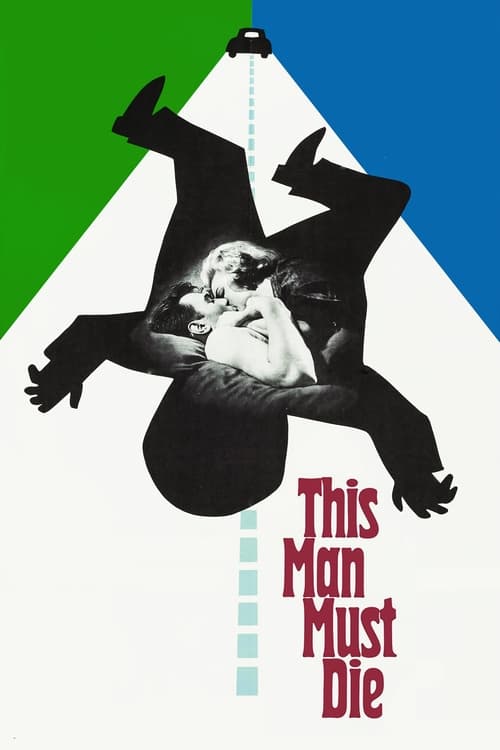
In 1968 Chabrol made Les Biches, one of his most acclaimed works. The film stars Stéphane Audran as the dominant and bisexual Frédérique, who finds a young protege in the bisexual Why (Jacqueline Sassard), until they both become the lover of a young architect named Paul (Jean-Louis Trintignant). Why ends up killing Frédérique, but it is unclear whether she murdered her cheating lover or the person that her lover was cheating with. The film received critical praise and was a box office hit. Chabrol followed this with a similar film The Unfaithful Wife (La Femme infidèle), in which a husband named Charles murders the lover of his cheating wife. It was later remade in 2002 by director Adrian Lyne. Chabrol finished the decade with This Man Must Die (Que la bête meure) in 1969. Based on an original story by Cecil Day-Lewis, in the film Charles (Michel Duchaussoy) plots to kill Paul (Jean Yanne) after Paul killed Charles' son in a hit and run car accident. However the film's ending is left intentionally ambiguous, and Chabrol has stated that "you'll never see a Charles kill a Paul. Never." The film was especially praised for its landscape cinematography.
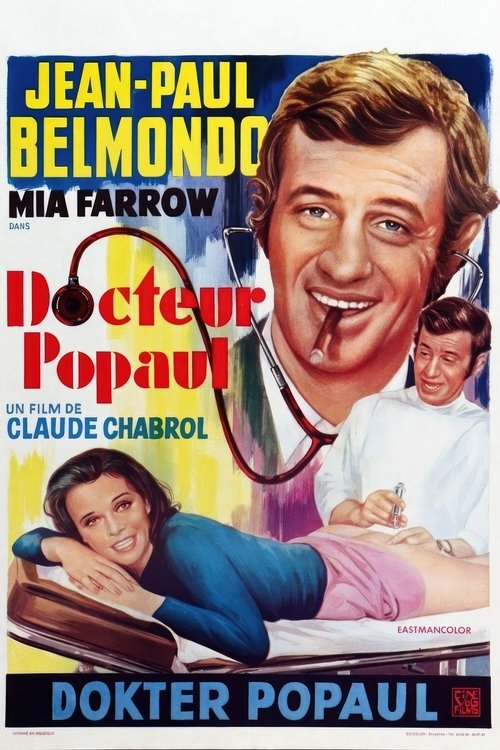
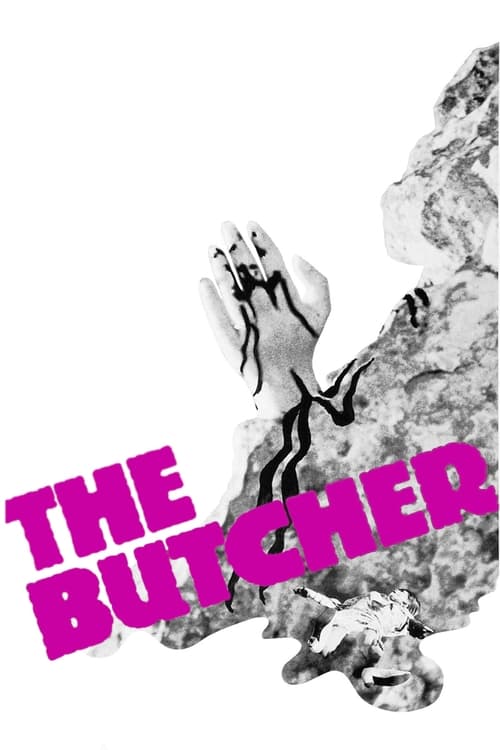
In 1970 Chabrol made The Butcher (Le boucher) starring Jean Yanne and Stéphane Audran. Yanne plays Popaul, a former war hero known for his violent behavior, much like that depicted in the prehistoric cave drawings that the characters look at in their Périgord community. The French newspaper Le Figaro called it "the best French film since the liberation." After another examination of bourgeois life in The Breach (La Rupture) in 1970, Chabrol made Just Before Nightfall (Juste avant la nuit) in 1971. The film stars Michel Bouquet as an ad executive named Charles who kills his mistress but cannot handle the guilt, so he confesses his crime to her husband (François Périer) and his wife (Stéphane Audran), expecting their condemnation. To his surprise they are only compassionate and forgiving to his crime and Charles cannot find relief from the guilt of what he has done. Later in 1971 Chabrol made Ten Days' Wonder (La Décade prodigieuse), based on a novel by Ellery Queen. The film was shot in English and starred Michel Piccoli, Anthony Perkins and Orson Welles. It received poor critical reviews. He followed this with the equally disliked Dr. Popaul, starring Jean-Paul Belmondo and Mia Farrow. Critics compared the film unfavorably with Chabrol's earlier film that centered on a "Landru-like" theme. Critic Jacques Siclier said that "the novelty of Docteur Popaul comes from the offhandedness with which the criminal history is treated."
1979–2009: Later work
In the 1980s and 1990s Chabrol engaged himself with many different projects for both TV and the silver screen. His films Poulet au vinaigre (1985) and Masques (1987) were entered into the 38th Cannes Film Festival and 37th Berlin International Film Festival respectively. Madame Bovary (1991) was nominated for the Golden Globe Award for Best Foreign Language Film and for the Academy Award for Best Costume Design. It was also entered into the 17th Moscow International Film Festival. La Cérémonie (1995) is perhaps his most acclaimed film from this period, as it was nominated for numerous César Awards and was entered into the 52nd Venice International Film Festival among other. His 1999 film The Color of Lies was entered into the 49th Berlin International Film Festival.
In 1995 Chabrol was awarded the Prix René Clair from the Académie française for his body of work.
Chabrol continued directing films and TV series well into the 2000s.
Personal life
Chabrol's first marriage to Agnès Goute (1956–1962) produced a son, Matthieu Chabrol, a composer who scored most of his father's films from the early 1980s. He divorced Agnès to marry the actress Stéphane Audran, with whom he had a son, actor Thomas Chabrol. They remained married from 1964 to 1978. His third wife was Aurore Paquiss, who has been a script supervisor since the 1950s. He had four children. Chabrol was a known gourmet chef and shot 10 Days Wonder in Alsace only because he wanted to visit its restaurants. Although he acknowledges the influence of Alfred Hitchcock in his work, Chabrol has stated that "others have influenced me more. My three greatest influences were Murnau, the great silent film director...Ernst Lubitsch and Fritz Lang."
Chabrol died on 12 September 2010 of leukemia. He is buried in Père Lachaise Cemetery in north-eastern Paris.
Filmography
TV work
Histoires insolites (1974), 5 episodes
Nouvelles de Henry James (1974), 2 episodes – based on stories by Henry James
Il était un musicien (1978), 3 episodes
Madame le juge (1978), 1 episode
"Jeunesse et Spiritualité" Cyprien Katsaris (1979) Official site
Fantômas (1980), 2 episodes – Remake of Fantômas
Le système du docteur Goudron et du professeur Plume (1981) – based on The System of Doctor Tarr and Professor Fether by Edgar Allan Poe
Elective Affinities (1982) – based on Elective Affinities by Johann Wolfgang von Goethe
M. le maudit (1982, short)
La danse de mort (1982) – based on The Dance of Death by August Strindberg
Les dossiers secrets de l'inspecteur Lavardin (1988), 2 episodes
Les redoutables (2001), 1 episode
Chez Maupassant (2007), 2 episodes – based on stories by Guy de Maupassant
Au siècle de Maupassant: Contes et nouvelles du XIXème siècle (2010), 2 episodes