




Emily "Cissy" Houston (née Drinkard; September 30, 1933 – October 7, 2024) was an American soul and gospel singer and choir director. Nicknamed The Duchess of Gospel, she is best known as the mother of American singer and actress Whitney Houston and the aunt of American singers Dionne Warwick and Dee Dee Warwick.
Born and raised in Newark, New Jersey, Houston began her singing career as the founding member of the family gospel group the Drinkard Singers, starting at the age of five. The group turned professional in 1951 and would continue performing until the early 1960s as Houston began a career as a session vocalist for several artists. In 1967, she formed the Sweet Inspirations, a Grammy-nominated girl group that backed Aretha Franklin and Elvis Presley before starting a full fledged solo career in 1970.
Her best-known solo singles include the top 20 R&B chart single, "I'll Be There", the original rendition of "Midnight Train to Georgia" and the top 5 dance single, "Think It Over". Her solo career culminated with two Grammy Award wins, both in the Traditional Gospel Album category.
Houston was honored by several institutions over her career. In 1990, she received the Stellar Award of Excellence for her contributions to gospel music. Five years later, in 1995, Houston earned the Rhythm and Blues Foundation Pioneer Award for her contributions to rhythm and blues and soul music. With the Sweet Inspirations, Houston was inducted into the National Rhythm and Blues Hall of Fame in 2014. In 2020, she was inducted into the New Jersey Hall of Fame. In 2025, Houston was inducted into the Gospel Music Hall of Fame Missouri in St. Louis, Missouri.
Contents
Early life and family
Emily Drinkard was born on September 30, 1933 at City Hospital in Newark, New Jersey to Delia Mae "Dee Dee" (née McCaskill) and Nicholas “Nitch” Drinkard, the youngest of eight children.
Houston was the granddaughter of a black landowner in Blakely, Georgia, who later shared the land he owned with Houston's father Nitch during a time when it was unusual for black people to have large landholdings. The asset was gradually depleted as they sold small portions of land over time to resolve the continued legal troubles of a close relative, which later led to the entire family relocating to Newark during the Great Migration a decade before Houston's birth.
Houston stated that she possessed some Dutch and Native American ancestry due to her grandparents Susan Bell (née Fuller) and John Drinkard Jr., respectively.
The Drinkards first settled at an apartment in a three-story tenement at Newark's 199 Court Street, located at the city's Third Ward projects. After a flash fire destroyed the building, they relocated to 38 Hillside Place. Houston's parents placed a high priority upon their children's education and church involvement.
Around the time of Houston's fifth birthday in September 1938, her mother Delia suffered a stroke. To help her recovery, and to lift the family's spirits, Houston's father encouraged her and her elder siblings Anne, Nicholas Jr. ("Nicky") and Larry to sing sacred hymns.
Later, the siblings formed the Drinkard Four and sang jubilees in various churches, including their own St. Luke's A.M.E. Church. The experience, Houston said, ended her "carefree childhood".
Houston later told Rolling Stone in 1978: "I used to get so mad. We'd be out playing in the sun with the other kids and my older sister, Marie, would make us come in for rehearsal."
Three years later, in May 1941, Delia Drinkard died of a cerebral hemorrhage after suffering a fatal seizure in her bed; Houston was just seven at the time of her mother's death.
Career
The Drinkard Singers
Houston first began singing in the sibling jubilee quartet, the Drinkard Four, at the age of five. A little while later, they changed the name to the Drinkard Jubilairs and then, after the inclusions of sisters Lee and Marie ("Reebie") by 1943, the Drinkard Singers.
Houston contended in both her 1998 memoirs, How Sweet the Sound: My Life with God and Gospel and her 2013 book, Remembering Whitney: A Mother's Story of Love, Loss and the Night the Music Died, that the group didn't sing professionally until radio announcer Joe Bostic hired them to open for Clara Ward and Mahalia Jackson at the first ever gospel showcase, named the "Negro Gospel and Religious Music Festival" at Carnegie Hall in October 1951. Not long after that, the group sang on Bostic's Gospel Train New York radio show, becoming regulars on the program. During this period, the group recorded several singles for Savoy Records and toured at various churches throughout the Eastern Seaboard.
During this time, Houston was romantically involved with Sam Cooke, then lead singer of the Soul Stirrers and the two were even engaged at one point but eventually Houston broke it off because Cooke was "wild".
In October 1957, the group, which now included Judy Clay, joined Sister Rosetta Tharpe and Mahalia Jackson as one of several gospel acts to perform at the Newport Jazz Festival, leading to appearances on a live album recorded at the festival that year.
Shortly after the Newport performance, they landed a recording deal with RCA Victor Records where they recorded and released the album, A Joyful Noise, in 1958, which made history as one of the first gospel albums to be released on a major label.
By the early 1960s, the group landed on the Sunday morning television gospel show, TV Gospel Time. By the end of 1963, however, the group had permanently split due to the other Drinkard members settling with their families and Houston's growing career as a session vocalist for secular recording artists.
The Sweet Inspirations
By the early 1960s, Houston's nieces Dionne and Dee Dee, Sylvia Shemwell and their close friend Doris Troy had found success under the group the Gospelaires, singing background for various artists including the Drifters. One night, around September 1961, when Dionne Warrick began working with producer Burt Bacharach, Houston's then-boyfriend, John Houston Jr., who managed the Gospelaires, convinced Houston to replace Dionne in a recording session for Canadian-American rockabilly singer Ronnie Hawkins. After John Houston showed her the money she had made from the session, Houston was convinced to begin a professional singing career as a session vocalist and quit working at RCA Electronics.
The group soon found themselves singing for artists such as Solomon Burke, Ben E. King and the Drifters. Dionne Warrick (who later changed her last name to Warwick) and Doris Troy soon departed from the group and Houston recruited Myrna Smith to be Troy's replacement. This lineup backed Warwick and Troy on their solo hits, such as "Don't Make Me Over" and "Just One Look".
In 1963, Houston and her nieces Dionne and Dee Dee sang background on Kai Winding's original rendition of "Time Is On My Side". Estelle Brown, then aged 19, joined the group in 1965 after Dee Dee embarked on a solo career. During this busy period, the group backed several acts such as Garnet Mimms, Solomon Burke, Wilson Pickett and Jackie DeShannon.
In 1967, the group was hired to back Irish soul singer Van Morrison on his composition, "Brown Eyed Girl", in 1967. After the song hit the top ten that year, Jerry Wexler of Atlantic Records offered the group a recording contract of their own and advised them to change their name from "The Group" to "the Inspirations". Only after learning that another group had that name, Wexler added "Sweet" in front of their name. Following the release of their first single, the group began touring the Chitlin' Circuit.
Their first album, The Sweet Inspirations, charted, reaching number 90 on the Billboard 200 and number 12 on the Billboard Best-Selling R&B Albums chart, producing three Billboard Hot 100 singles, including "Sweet Inspiration", which reached number 18 on the Hot 100 and number 5 on the Best Selling R&B Singles chart and later earned the group a Grammy Award nomination for Best Rhythm & Blues Performance by a Duo or Group at the 11th Annual Grammy Awards in 1969.
Solo career
Houston first recorded solo in 1963, cutting her first solo R&B record, "This Is My Vow" on M'n'M Records under the name Cecily Blair. Three years later, in a one-off deal with Congress Records, she released the single "Bring Him Back" b/w "World Of Broken Hearts" (1966). Her final 1960s solo single before recording with the Sweet Inspirations was "Don't Come Running To Me" b/w "One Broken Heart For Sale" released on Kapp Records in 1967. On most of these early singles, her name is spelled as "Sissie Houston".
In 1970, Houston signed a recording contract with Commonwealth United Records and recorded her solo debut LP Presenting Cissy Houston which was released in 1970. It contained several well received singles, including covers of "I'll Be There" and "Be My Baby", both of which made the Billboard R&B charts as well as the Billboard Hot 100. Following the release of the album, Houston's contract was sold to Janus Records.
She recorded another album and several more singles in the early 1970s, which included the original recording of Jim Weatherly's "Midnight Train to Georgia" in 1972, which was a minor hit for Houston, and later became a number one hit for Gladys Knight & the Pips.
Starting around 1973, Houston began regularly performing all over Manhattan's jazz and cabaret clubs, headlining at venues such as Sweetwaters, Fat Tuesday, Reno Sweeney, Seventh Avenue South and Mikell's and would regularly perform at the venues up until the mid-1980s.
Houston continued to record with Janus Records until 1975. In 1976, Houston was featured in Gospel Fuse, a gospel opera composed by Carman Moore and performed with the San Francisco Symphony orchestra, conducted by Seiji Ozawa.
In 1977, Houston was signed by Private Stock Records, working with Michael Zager on three albums. The first, a self-titled effort produced two modest hits, including a soulful, gospel-influenced rendition of "Tomorrow". The second included her big disco hit "Think It Over", which climbed to number 32 on the Billboard Hot Selling Soul Singles chart in 1979 and number 5 on the same magazine's Disco Action Top 80 chart.
The success of "Think It Over" gave Houston a strong and loyal gay following. Houston's daughter Whitney, who began backing her mother during Houston's performances in this period, later recalled to the LGBTQ publication, Out:
Personal life
Houston married twice. In 1955, she married Fred Garland, with whom she gave birth to her first child, Gary Garland (b. 1957), an NBA basketball player and DePaul University Athletic Hall of Famer. Houston's marriage to Garland ended in divorce in 1959. Houston filed for divorce prior to giving birth to Gary.
Houston met John Russell Houston Jr. in 1958 at the Newark Symphony Hall. The couple had two children: son Michael Houston (b. 1961) and daughter Whitney Houston (1963–2012), a singer who became a worldwide megastar.
Houston recalled first hearing the news of being pregnant with Whitney following the chart debut of Dionne Warwick's "Don't Make Me Over" in December 1962. Cissy remembered being in the recording studio throughout the pregnancy, recalling "whether I was singing on a hard preachin' Solomon Burke record... or we were yelling like banshees in the cool asphalt jungle of the Drifters's 'On Broadway', this was bound to be an interesting child." Whitney was born hours after her mother's Friday recording session at Atlantic Studios; according to Cissy, she was "well past her due date" when Whitney was born.
According to Cissy, she initially didn't believe she had delivered a girl even after John Houston told her, not believing it due to John being a prankster. Only after a female nurse confirmed John's claim did Cissy believe it. Cissy named her daughter after actress Whitney Blake, a co-star of the 1960s sitcom Hazel, and John's mother Sarah Elizabeth Houston. After Whitney's father gave her the nickname "Nippy" due to her rambunctious and mischievous behavior, everyone else including Cissy referred to her under that name.
Later, during Whitney's adolescence, Houston began protecting her from school bullies who were bothering her. Houston took her to New Hope regularly afterwards. Whitney soon enjoyed going to church because, said Houston: "No one was looking at her clothes, no one was jealous of her. New Hope Baptist Church became Whitney's second home."
When Whitney was "thirteen or fourteen", she attended a Pentecostal church down a few blocks from New Hope and remembered "the Holy Spirit coming into that church and just taking over." After that experience, Whitney said she "[accepted] the Savior in my life and in my heart... knowing that He was real. It wasn't fake." Houston later stated, "She never let go of that faith, even through all the turmoil and hard times to come." Though Whitney didn't regularly go to church as an adult, the singer kept praying and kept playing gospel music throughout her life.
Whitney Houston's death
On February 11, 2012, Whitney Houston died in her hotel suite at the Beverly Hilton Hotel in Beverly Hills, California, aged 48, after being found submerged from her bathtub. Whitney's untimely death was eventually ruled as an "accidental drowning".
Houston was the last person to speak to Whitney on the phone at the time of her death. Houston later claimed that her daughter "seemed to be fine". Minutes later, Houston later wrote, she heard her doorbell rang at least three times. When she called the concierge from the front desk and asked if anyone had come up to see her, the concierge replied that no one hadn't.
Not long after that, Houston's son Gary called her frantically screaming, "oh Mommy, it's Nippy! It's Nippy!" When a panicked Houston asked Gary if Whitney was dead, Gary replied that she was. Said Houston: "And that was the moment my whole world shattered."
Earlier in the year, Houston remembered Whitney telling her she was going to the Grammy Awards and then would come see her. The singer said she later took solace from the three times her doorbell rang that Whitney had kept her promise to see her.
Cissy helped to organize her daughter's funeral after Whitney's body was flown back to New Jersey. There were rumors spreading that a public memorial service for Whitney would be held at the 18,000-seated Prudential Center. However, Houston turned down that plan, telling people that she "shared Whitney with the public long enough".
Instead, the family agreed to have a more private, invitation-only funeral at New Hope. The decision to do so was to have a more private and intimate memorial to remember her “rather than at a large event or an arena.”
Following the end of the three-hourlong service, Whitney's casket was lifted off by pallbearers as the sound of her famous rendition of "I Will Always Love You" played on the speakers; as the casket was lifted up, Houston could be heard wailing loudly, "my baby, my baby!" She was then carried off tearfully by family members as Whitney's casket left the church.
Granddaughter's death
On January 31, 2015, Houston's granddaughter and Whitney's only child, Bobbi Kristina Brown, was found face down in a bathtub in her home in Alpharetta, Georgia. Houston's boyfriend Nick Gordon and a mutual friend began CPR until emergency medical services personnel arrived. According to the police spokesperson, Brown was alive and breathing after being transported to North Fulton Hospital in Roswell, Georgia. At first, they found no evidence to indicate that drugs or alcohol caused the incident, but this was later disputed. Doctors placed Brown in an induced coma after determining her brain function was "significantly diminished", and her family was told a meaningful recovery would be "a miracle".
Brown died in hospice care on July 26, 2015, at age 22. Her death was considered similar to her mother's death, as both had died from effects of being submerged in a bathtub. The initial autopsy found no "obvious underlying cause of death and no significant injuries", and the Fulton County Medical Examiner's office said more tests were forthcoming. A statement released by the family thanked "everyone for their tremendous amount of love and support during these last few months".
Houston's statements on Dee Dee Warwick abuse allegations
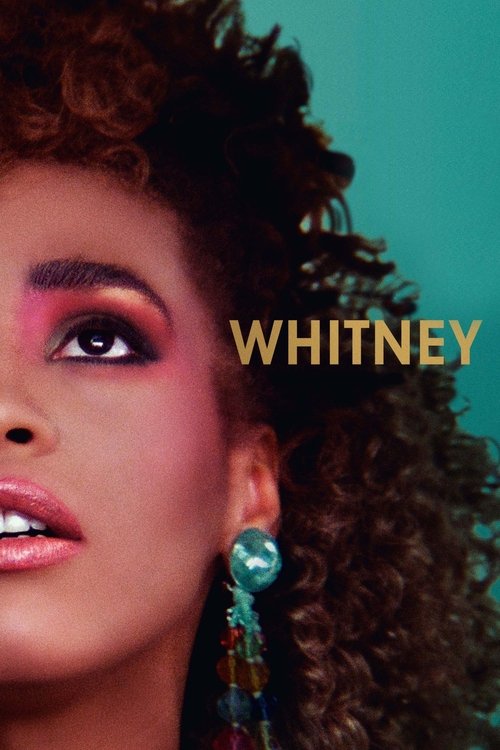
In the 2018 documentary film Whitney, directed by Kevin Macdonald, Whitney Houston's personal assistant Mary Jones claimed Whitney was sexually abused by her cousin and Houston’s niece, Grammy-nominated soul singer Dee Dee Warwick.
Houston's son Gary Garland claimed that at times Warwick babysat for him and his siblings growing up as they were being "shuffled with four or five different families". Gary claimed that between the ages of seven and nine, he was abused by a "female relative" without specifically naming Warwick by name. When asked if he believed his sister was also abused by the same relative, he believed so.
Jones claimed that Whitney didn't tell her mother "out of fear of the repercussions". "I think she was ashamed," said Jones, adding that the abuse made the singer, whose sexuality was heavily debated and discussed over the years, "question her sexual preference".
Warwick's sister Dionne and Houston both expressed doubt regarding the truthfulness of the allegations with Houston saying the claims were “unfathomable”.
In a statement, Cissy wrote:
"We cannot, however, overstate the shock and horror we feel and the difficulty we have believing that my niece Dee Dee Warwick (Dionne’s sister) molested two of my three children, I spent many years in recording studios (sometimes with Dionne and/or Dee Dee) where I earned my living. I also went 'on the road' with my group The Sweet Inspirations to try to help provide a good life for my family BUT my children always came first in my heart and in my life.
When I was away they did not stay with four or five different families; they stayed at home where their longtime babysitter, Phyllis, or my dear friend Bae or their father took care of them. In all the years I traveled, Dee Dee, who was 21 years older than Whitney, NEVER BABYSAT for them.
Dee Dee may have had her personal challenges but the idea that she would have molested my children is overwhelming and for us unfathomable. Neither I, Dionne, nor my son Michael who was very close to his sister, and in the film is VERY candid about their drug use, has ever heard these allegations; we have never heard anything remotely connected to the crimes charged against Dee Dee in the film. How can that be fair to my daughter, to Dee Dee, or to our family?
Later years and death
In January 2020, Houston's daughter Whitney was announced as one of the inductees into the Rock and Roll Hall of Fame after she was voted in on her first ballot and ten years after she was eligible. That November, alongside her daughter-in-law Pat, Houston accepted Whitney's induction at her Newark residence.
During her acceptance speech on behalf of her late daughter, Houston said "I’m so very, very proud that Whitney’s being inducted into the Rock & Roll Hall of Fame. She wanted to be something, not anything. She worked hard at it too". It would be Houston's last public appearance before her death.
Cissy Houston died at her Newark home on October 7, 2024, at the age of 91. She had been in hospice care for Alzheimer's disease. A star-studded funeral was held at New Hope Baptist Church a week later. There, Houston was honored by niece Dionne Warwick, fellow gospel and R&B musician BeBe Winans, longtime friend and soul singer Darlene Love and son Gary.
Newark mayor Ras Baraka read a proclamation created in her honor and state governor Phil Murphy called Houston a "musical legend" who "embodied the very soul of New Jersey." Following the memorial service, Houston was laid to rest at Fairview Cemetery in Westfield, New Jersey beside her ex-husband John, granddaughter Bobbi Kristina and daughter Whitney.
Legacy and accolades
Following her death in 2024, Houston was acknowledged and recognized in several obituaries. Newark's WGBO radio station held Houston as a "Newark legend who impacted the lives of so many around the world... [spanning] generations and genres from gospel to pop." The New York Times hailed her as a "gifted stylist whose powerful voice and deeply expressed religious faith made her an influential figure in gospel circles for decades."
Robert Darden, a professor of journalism at Baylor University and the author of several books on gospel music, said Ms. Houston was "a significant figure not because she sold a lot of records, but because of the people she influenced who did sell a lot and because of her work as a sustainer and nurturer of the gospel music tradition."
In their obituary, Ebony magazine hailed Houston as a "trailblazer" and stated her "soulful career inspired many and left a lasting impact on R&B and gospel music."
Stephanie Holland of The Root credited Houston as "one of the artists that made gospel music accessible and mainstream".
In 1990, Houston received the Stellar Award of Excellence at the Stellar Awards by her daughter Whitney and the sibling duo BeBe & CeCe Winans.
Five years later, in 1995, Houston was awarded the Pioneer Award for her legendary background vocal work at the Rhythm and Blues Foundation, which was presented to her by Whitney, who sang "His Eye Is on the Sparrow" before calling her mother to the stage.
In 2014, Houston was inducted into the National Rhythm and Blues Hall of Fame as a member of the Sweet Inspirations, the same night her daughter was posthumously inducted into the same hall; an ailing Houston and Estelle Brown were the only surviving members to accept the induction as Sylvia Shemwell and Myrna Smith had died prior to the induction.
A year later, Houston received the Lifetime Achievement Award at the Gospel Image Awards.
Discography
Albums
1958: A Joyful Noise (RCA Records/Victor)
1967: The Sweet Inspirations (Atlantic)
1968: Songs of Faith & Inspiration (Atlantic)
1968: What the World Needs Now Is Love (Atlantic)
1969: Sweets for My Sweet (Atlantic)
1970: Presenting Cissy Houston (Major Minor)
1977: Cissy Houston (Private Stock)
1978: Think It Over (Private Stock)
1979: Warning - Danger (Columbia)
1980: Step Aside For A Lady (Columbia)
1992: I'll Take Care of You (Shanachie)
1996: Face To Face (House of Blues)
1997: He Leadeth Me (A&M)
2001: Love Is Holding You (Neon)
2012: Walk on By Faith (Harlem)
1995: Midnight Train to Georgia: Janus Years (Ichiban)
1999: Cissy Houston & Whitney Houston (Delta Music)
2000: The Definitive Collection (Connoisseur)
2005: Cissy Houston Collection (Intersound)
Singles
1970: "I'll Be There" (#54 US pop, #20 US R&B)
1971: "Be My Baby" (#92 US pop, #31 US R&B)
1979: "Think It Over" (#32 US R&B, #5 US dance)
Filmography
Film
1978: The Wiz (uncredited voice) – The Wiz Singers Adult Choir
1984: Taking My Turn (TV)
1994: The Vernon Johns Story (TV) as Rose
aka Freedom Road: The Vernon Johns Story (UK)
aka The Road to Freedom: The Vernon Johns Story (USA: alternative title)
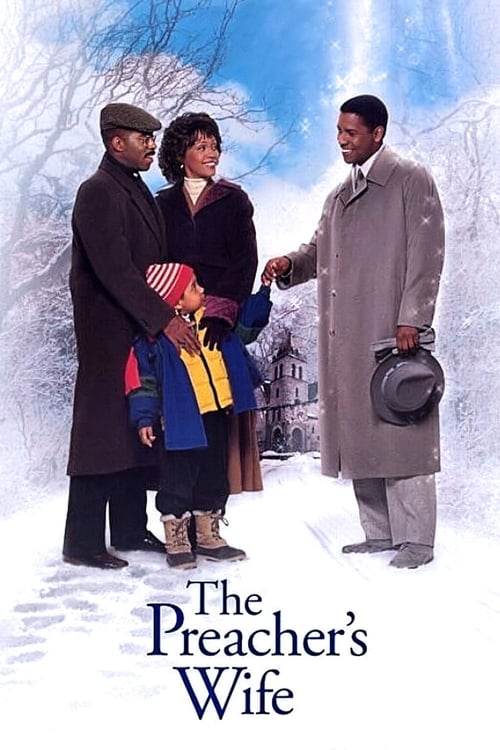
1996: The Preacher's Wife as Mrs. Havergal
2018: God's Not Dead: A Light in Darkness
2018: Whitney
Television
1970: The Tonight Show Starring Johnny Carson (3 episodes)
1979: Gangsters (herself)
aka Hoodlums (USA: video title)
1985: Late Night with David Letterman; August 28 episode
1986: Ebony/Jet Showcase; October 10 episode
1987: The 1st Annual Soul Train Music Awards
1988: The 15th Annual American Music Awards
1988: Nelson Mandela 70th Birthday Tribute
1991: Welcome Home Heroes with Whitney Houston
1992: Whitney Houston: This Is My Life
1997: Classic Whitney: Live from Washington, D.C.
1998: Late Show with David Letterman December 23 episode
2001: BET Awards
2004: Intimate Portrait Dionne Warwick episode
2008: This Time (herself)
2012: BET Awards
2013: Oprah Prime (Season 2; Episode 50)
2013: The Houstons: On Our Own
Awards and nominations
Grammy Awards
The Grammy Awards are awarded annually by the National Academy of Recording Arts and Sciences. Houston has won 2 awards from 2 nominations.