



Charles Laughton (; 1 July 1899 – 15 December 1962) was an English actor and director. Over his career he received an Academy Award and a Grammy Award as well as nominations for two BAFTAs and a Golden Globe. He earned a motion picture star on the Hollywood Walk of Fame in 1960.
Born in the North Riding of Yorkshire, Laughton was trained in London at the Royal Academy of Dramatic Art and first appeared professionally on the stage in 1926. He played a wide range of classical and modern roles both on West End and Off West End, making an impact in Shakespeare at the Old Vic. His acting career took him to Broadway and then Hollywood, where he portrayed everything from monsters and misfits to kings. He earned the Academy Award for Best Actor for his portrayal of the title character in the historical drama The Private Life of Henry VIII (1933).
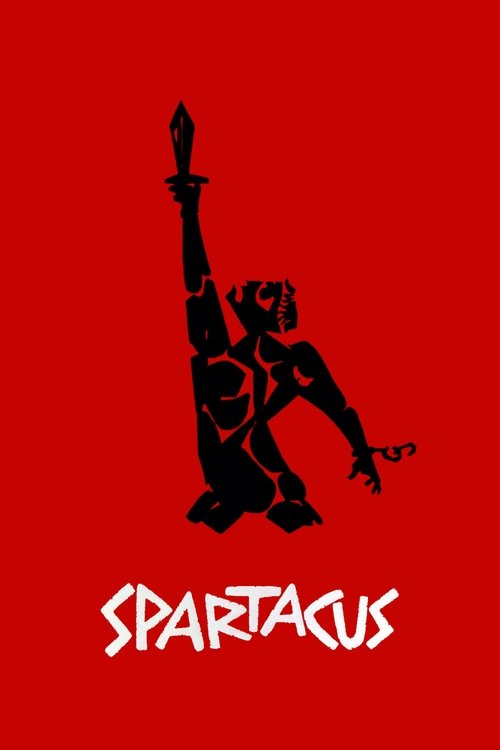
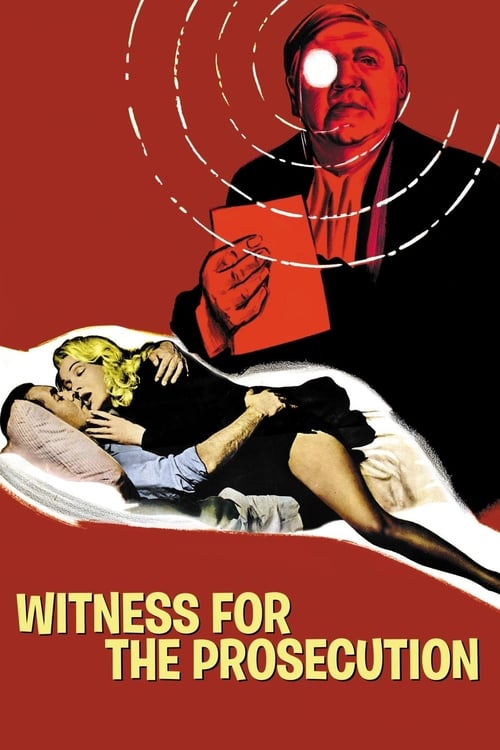
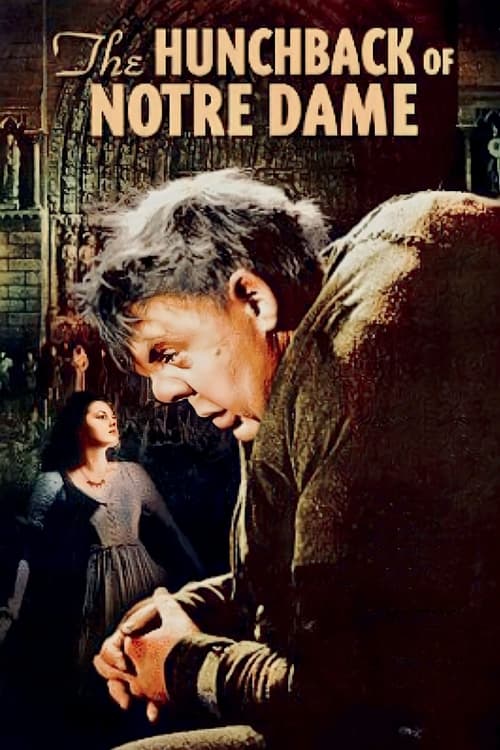
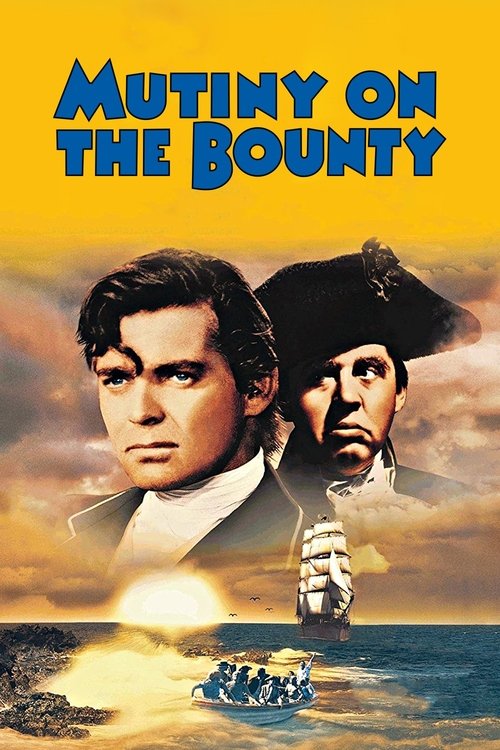
Laughton was further Oscar-nominated for his roles as Captain William Bligh in the action adventure Mutiny on the Bounty (1935) and an irascible barrister in the courtroom drama Witness for the Prosecution (1957). Among his biggest film hits were The Barretts of Wimpole Street (1934), Ruggles of Red Gap (1935), Rembrandt (1936), Jamaica Inn (1939), The Hunchback of Notre Dame (1939), The Big Clock (1948), Young Bess (1953), Hobson's Choice (1954) and Spartacus (1960). His final film role was in Advise & Consent (1962).
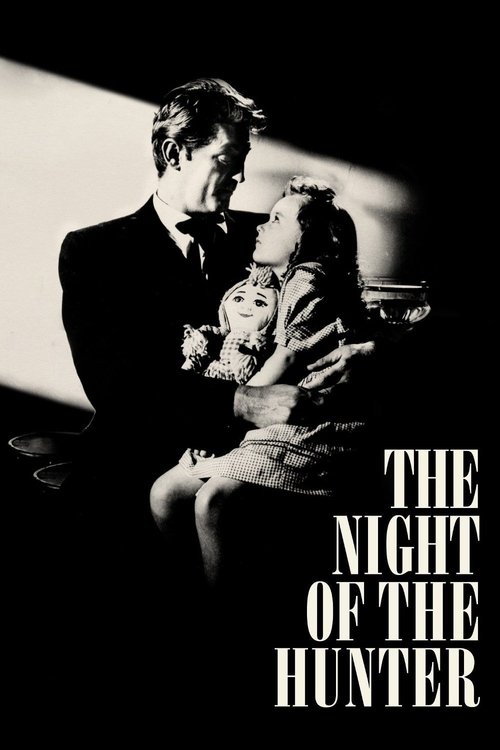
He directed one film, the acclaimed thriller The Night of the Hunter (1955). In his later career, Laughton took up stage directing, notably in the dramas The Caine Mutiny Court-Martial, and Don Juan in Hell, in which he also starred.
Contents
Life and career
Early years
Laughton was born on 1 July 1899 in Scarborough, North Riding of Yorkshire, the son of Robert Laughton (1869–1924) and Eliza (née Conlon; 1869–1953), Yorkshire hotel keepers. A blue plaque marks his birthplace. His mother was a devout Roman Catholic of Irish descent, and she sent him to briefly attend a local boys' school, Scarborough College, before sending him to Stonyhurst College, the pre-eminent English Jesuit school. Laughton served in World War I, during which he was gassed, serving first with the 2/1st Battalion of the Huntingdonshire Cyclist Battalion, and then with the 7th Battalion of the Northamptonshire Regiment.
He started work in the family hotel, though also participating in amateur theatrical productions in Scarborough. He was permitted by his family to become a drama student at RADA in 1925, where actor Claude Rains was one of his teachers. Laughton made his first professional appearance on 28 April 1926 at the Barnes Theatre, as Osip in the comedy The Government Inspector, in which he also appeared at London's Gaiety Theatre in May. He impressed audiences with his talent and had classical roles in two Chekov plays, The Cherry Orchard and The Three Sisters. Laughton played the lead role as Harry Hegan in the world premiere of Seán O'Casey's The Silver Tassie in 1928 in London. He played the title roles in Arnold Bennett's Mr Prohack (Elsa Lanchester was also in the cast) and as Samuel Pickwick in Mr. Pickwick at the Theatre Royal (1928–29) in London.
He played Tony Perelli in Edgar Wallace's On the Spot and William Marble in Payment Deferred. He took the last role across the Atlantic and made his United States debut on 24 September 1931, at the Lyceum Theatre. He returned to London for the 1933–34 Old Vic season and was engaged in four Shakespeare roles (as Macbeth, Henry VIII, Angelo in Measure for Measure and Prospero in The Tempest) and also as Lopakhin in The Cherry Orchard, Canon Chasuble in The Importance of Being Earnest, and Tattle in Love for Love. In 1936, he went to Paris and on 9 May appeared at the Comédie-Française as Sganarelle in the second act of Molière's Le Médecin malgré lui, the first English actor to appear at that theatre, where he performed the role in French and received an ovation.
Laughton commenced his film career in Great Britain while still acting on the London stage. He also accepted small roles in three short silent comedies starring his wife Elsa Lanchester, Daydreams, Blue Bottles, and The Tonic (all 1928), which had been specially written for her by H. G. Wells and were directed by Ivor Montagu. He made a brief appearance as a disgruntled diner in another silent film Piccadilly with Anna May Wong in 1929. He appeared with Lanchester again in Comets (1930), a film revue featuring assorted British variety acts, in which they sang a duet, "The Ballad of Frankie and Johnnie". He made two other early British talkies: Wolves with Dorothy Gish (1930) from a play set in a whaling camp in the frozen north, and Down River (1931), in which he played a drug-smuggling ship's captain.
Theatre
Laughton made his London stage debut in Gogol's The Government Inspector (1926). He appeared in many West End plays in the following few years and his earliest successes on the stage were as Hercule Poirot in Alibi (1928); he was the first actor to portray the Belgian detective in this stage adaptation of The Murder of Roger Ackroyd, and as William Marble in Payment Deferred, making his Lyceum Theatre (New York) debut in 1931.
In 1926, he played the role of the criminal Ficsur in the original London production of Ferenc Molnár's Liliom (The play became a musical in 1945 by Rodgers and Hammerstein as Carousel, where Ficsur became Jigger Craigin, but Laughton never appeared in the musical version). While Laughton is most remembered for his film career, he continued to work in the theatre, as when, after the success of The Private Life of Henry VIII he appeared at the Old Vic Theatre in 1933 as Macbeth, Lopakin in The Cherry Orchard, Prospero in The Tempest and Angelo in Measure for Measure. In the US, Laughton worked with Bertolt Brecht on a new English version of Brecht's play Galileo. Laughton played the title role at the play's premiere in Los Angeles on 30 July 1947 and later that year in New York. This staging was directed by Joseph Losey. The processes by which Laughton painstakingly, over many weeks, created his Galileo—and incidentally, edited and translated the play along with Brecht—are detailed in an essay by Brecht, "Building Up A Part: Laughton's Galileo."
Laughton had one of his most notable successes in the theatre by directing and playing the Devil in Don Juan in Hell beginning in 1950. The piece is actually the third act sequence from George Bernard Shaw's play Man and Superman, frequently cut from productions to reduce its playing time, consisting of a philosophical debate between Don Juan and the Devil with contributions from Doña Ana and the statue of Ana's father. Laughton conceived the piece as a staged reading and cast Charles Boyer, Cedric Hardwicke and Agnes Moorehead (billed as "The First Drama Quartette") in the other roles. Boyer won a special Tony Award for his performance.
He directed several plays on Broadway, mostly under the production of his friend and Broadway producer Paul Gregory. His most notable box-office success as a director came in 1954, with The Caine Mutiny Court-Martial, a full-length stage dramatisation by Herman Wouk of the court-martial scene in Wouk's novel The Caine Mutiny. The play, starring Henry Fonda as defence attorney Barney Greenwald, opened the same year as the film starring Humphrey Bogart as Captain Queeg and José Ferrer as Greenwald based on the original novel, but did not affect that film's box-office performance. Laughton also directed a staged reading in 1953 of Stephen Vincent Benét's John Brown's Body, a full-length poem about the American Civil War and its aftermath. The production starred Tyrone Power, Raymond Massey (re-creating his film characterisations of Abraham Lincoln and John Brown), and Judith Anderson. Laughton did not appear himself in either production, but John Brown's Body was recorded complete by Columbia Masterworks. He directed and starred in George Bernard Shaw's, Major Barbara which ran on Broadway from approximately 1 November 1956, to 18 May 1957. Others in the cast were Glynis Johns, Burgess Meredith, Cornelia Otis Skinner, and Eli Wallach.
Recordings
Laughton's voice, equally capable of a penetrating, theatre-filling shout and a soft, velvety tone, first appeared on 78-rpm records with the release of five British Regal Zonophone 10-inch discs entitled Voice of the Stars issued annually from 1934 to 1938. These featured short soundtrack snippets from the year's top films. He is heard on all five records in, respectively, The Private Life of Henry VIII, The Barretts of Wimpole Street, Mutiny on the Bounty, I, Claudius (curiously, since this film was unfinished and thus never released), and Vessel of Wrath. In 1937 he recorded Lincoln's Gettysburg Address on a 10-inch Columbia 78, having made a strong impression with it in Ruggles of Red Gap.
He made several other spoken-word recordings, one of his most famous being his one-man album of Charles Dickens's Mr. Pickwick's Christmas, a twenty-minute version of the Christmas chapter from Dickens's The Pickwick Papers. It was first released by American Decca in 1944 as a four-record 78-rpm set, but was afterward transferred to LP. It frequently appeared on LP with a companion piece, Decca's 1941 adaptation of Dickens's A Christmas Carol, starring Ronald Colman as Scrooge. Both stories were released together on a Deutsche Grammophon CD for Christmas 2005.
In 1943, Laughton recorded a reading of the Nativity story from St. Luke's Gospel, and this was released in 1995 on CD on a Nimbus Records collection entitled Prima Voce: The Spirit of Christmas Past. A Brunswick/American Decca LP entitled Readings from the Bible featured Laughton reading Garden of Eden, The Fiery Furnace, Noah's Ark, and David and Goliath. It was released in 1958. Laughton had previously included several Bible readings when he played the title role in the film Rembrandt. Laughton also narrated the story on the soundtrack album of the film that he directed, Night of the Hunter, accompanied by the film's score. This album has also been released on CD. Also, and derived from the film they made together, a complete radio show (18 June 1945) of The Canterville Ghost was broadcast which featured Laughton and Margaret O'Brien. It has been issued on a Pelican LP.
A two-LP Capitol Records album was released in 1962, the year of Laughton's death, entitled The Story Teller: A Session with Charles Laughton. Taken from Laughton's one-man stage shows, it compiles dramatic readings from several sources. Three of the excerpts are broadcast annually on a Minnesota Public Radio Thanksgiving program entitled Giving Thanks. The Story Teller won a Grammy in 1962 for Best Spoken Word Recording. Although the album has yet to be released on compact disc, it can now be heard in its entirety online.
Television
Laughton was the fill-in host on 9 September 1956, when Elvis Presley made his first of three appearances on CBS's The Ed Sullivan Show, which garnered 60.7 million viewers (Ed Sullivan was recuperating from a car accident). That same year, Laughton hosted the first of two programmes devoted to classical music entitled "Festival of Music", and telecast on the NBC television anthology series Producers' Showcase. One of his last performances was on Checkmate, in which he played a missionary recently returned from China. He threw himself into the role, travelling to China for several months to better understand his character.
Personal life
Marriage
In 1927, Laughton began a relationship with Elsa Lanchester, at the time a castmate in a stage play. The two were married in 1929, became US citizens in 1950, and remained together until Laughton's death. Over the years, they appeared together in several films, including Rembrandt (1936), Tales of Manhattan (1942), The Vessel of Wrath (1938), and The Big Clock (1948). Lanchester portrayed Anne of Cleves, Henry VIII's fourth wife, opposite Laughton in The Private Life of Henry VIII. They both received Academy Award nominations for their performances in Witness for the Prosecution (1957)—Laughton for Best Actor, and Lanchester for Best Supporting Actress—but neither won.
Sexuality
Laughton's bisexuality was corroborated by several of his contemporaries and is generally accepted by Hollywood historians. Hollywood procurer and prostitute Scotty Bowers alleged in his memoir Full Service that Laughton was in love with Tyrone Power and that his sex life was exclusively homosexual. Actress Maureen O'Hara, a friend and co-star of Laughton, disputed the contention that his sexuality was the reason Laughton and Lanchester did not have children, saying Laughton told her he had wanted children but that it had not been possible because of a botched abortion that Lanchester had early in her career as a burlesque performer. In her autobiography, Lanchester acknowledged two abortions in her youth—one of the pregnancies purportedly by Laughton—but did not mention infertility. According to her biographer, Charles Higham, the reason she did not have children was that she did not want any.
Interests
Laughton owned an estate on the bluffs above Pacific Coast Highway at 14954 Corona Del Mar in Pacific Palisades. The property suffered a landslide in 1944, referenced by Bertolt Brecht in his poem "Garden in Progress".
Death and legacy
Laughton checked in to Cedars of Lebanon Hospital in July 1962 with what was described as a ruptured disc. He had surgery for the collapse of a vertebra and it was found that the vertebra had fractured due to a spinal metastasis. He left the hospital at the end of November. He was in a coma for some time and died at home on 15 December 1962 from renal cancer and bladder cancer. His ashes were interred at Forest Lawn Memorial Park (Hollywood Hills).
English actor Daniel Day-Lewis cited Laughton as one of his inspirations, saying: "He was probably the greatest film actor who came from that period of time. He had something quite remarkable. His generosity as an actor; he fed himself into that work. As an actor, you cannot take your eyes off him."
Awards and honours
For his contributions to the motion picture industry, Laughton has a star on the Hollywood Walk of Fame, at 7021 Hollywood Blvd.