Television roles
In the 1960s, O'Connor appeared in episodes of notable television series such as The Americans, The Untouchables, Naked City, Death Valley Days, Bonanza, The Defenders, The Outer Limits, The Fugitive, The Man from U.N.C.L.E., Voyage to the Bottom of the Sea, Ben Casey, Dr. Kildare, I Spy, The Wild Wild West, Mission: Impossible, The Time Tunnel, That Girl and Gunsmoke.
O'Connor also performed in anthology television shows such as NBC Sunday Showcase, The United States Steel Hour, Armstrong Circle Theatre, The Play of the Week, The Dick Powell Show, Alcoa Premiere, The DuPont Show of the Week, Profiles in Courage and Bob Hope Presents the Chrysler Theatre.
He was among the actors considered for the roles of the Skipper on Gilligan's Island, and Dr. Smith in the TV show Lost in Space. He was the visual template in the creation of Batman nemesis Rupert Thorne, a character who debuted at the height of All in the Family's success in Detective Comics No. 469, published May 1976 by DC Comics.
O'Connor was living in Italy in 1968 when producer Norman Lear asked him to come to New York City and star in a series that he was creating for ABC titled Justice for All. Lear recruited O'Connor to play the role of Archie Justice, a bigot who was able to bring forth some measure of empathy from the audience. After two television pilots of the sitcom were produced between 1968 and 1970, the hosting network was changed to CBS. For the third pilot, the last name of its main character was changed to Bunker, and its title was changed to All in the Family. The show was based on the BBC's Till Death Us Do Part, and Bunker was based on Alf Garnett, but he was somewhat less abrasive than the original British character.
O'Connor's Queens background and his ability to speak with a working-class New York accent both influenced Lear to set the show in Queens.
Desiring a well known actor to play the lead, Lear approached Mickey Rooney, but he declined the role. O'Connor accepted the role because he did not expect the show to succeed, and he believed that he would move back to Europe when it failed. In her book Archie & Edith, Mike & Gloria: the Tumultuous History of All in the Family, Donna McCrohan revealed that O'Connor had requested that Lear provide him with a return airplane ticket to Rome as a condition of his acceptance of the role so that he could return to Italy when the show failed. Instead, All in the Family became the highest-rated show on American television for five consecutive seasons.
While O'Connor's personal politics were liberal, he understood the Bunker character and played him not only with bombast and humor but with touches of vulnerability. The show's writing was consistently left of center, but O'Connor, while his character held right-wing views, could also deftly skewer the liberal pieties of the day. Bunker was famous for his English language malapropisms, but O'Connor was in truth a highly educated and cultured man and taught English before he turned to acting. Archie Bunker's long-suffering wife Edith was played by Jean Stapleton, also from New York City, a Broadway actress whom Lear remembered from the play and film Damn Yankees. The show also starred then-unknown character actors Rob Reiner as Archie's liberal son-in-law Michael "Meathead" Stivic and Sally Struthers as Gloria, Archie and Edith's only child and Mike's wife.
CBS debated whether the controversial subject matter of All in the Family would mesh with a sitcom. Racial issues, ethnicities, religions, sexuality, class, education, women's equality, gun control, politics, inflation, the Vietnam War, energy crisis, Watergate and other timely topics of the 1970s were addressed. Like its British predecessor Till Death Us Do Part, the show lent dramatic social substance to the traditional sitcom format. Archie Bunker's popularity made O'Connor a top-billing star of the 1970s. O'Connor was apprehensive of being typecast for playing the role, but at the same time he was protective, not just of his character, but of the entire show.
A contract dispute between O'Connor and Lear marred the beginning of the show's fifth season. Eventually O'Connor received a raise and appeared in the series until it ended. For his work as Archie Bunker, he was nominated for eight Emmy Awards as Outstanding Lead Actor in a Comedy Series; he won the award four times (1972, 1977, 1978 and 1979). At the end of the eighth season in 1978, Reiner and Struthers left the series to pursue other projects.
Rob Reiner said in a 2014 interview about his on- and off-screen chemistry with O'Connor: "We did over 200 shows in front of a live audience. So I learned a lot about what audiences like, what they don't like, how stories are structured. I would spend a lot of time in the writing room and I actually wrote some scripts. And from Carroll O'Connor I learned a lot about how you perform and how important the script and story are for the actors. So the actor doesn't have to push things. You can let the story and the dialogue support you if it's good. I had great people around me, and I took from all the people who were around." Comparing O'Connor's character to Archie Bunker, Reiner said: "Carroll O'Connor brought his humanity to the character even though he had these abhorrent views. He's still a feeling human being. He loved his wife even though he acted the way he did, and he loved his daughter. Those things come out. I don't think anybody's all good or all bad."
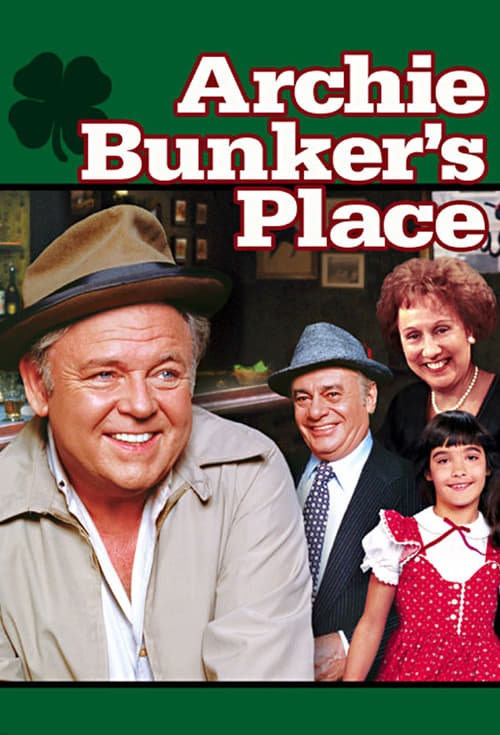
When All in the Family ended after nine seasons, Archie Bunker's Place continued in its place and ran from 1979 to 1983. Longtime friend and original series star Jean Stapleton appeared as Edith Bunker on the new show, but made only five guest appearances during the first season. Stapleton decided she did not want to continue in the role, and in the second-season premiere, it was revealed that her character had died of a stroke, leaving Archie to cope with the loss. At the time, O'Connor was receiving $200,000 an episode, making him one of the highest paid stars on television. The show was canceled in 1983. O'Connor was angered about the show's cancellation, maintaining that the show ended with an inappropriate finale. He later worked for CBS again when he starred in In the Heat of the Night on NBC and they decided not to renew the series. CBS allowed the series to continue for two more years and have a proper ending.
While coping with his son's drug problem, O'Connor starred as Sparta, Mississippi, Police Chief Bill Gillespie, a tough veteran cop on In the Heat of the Night. Based on the novel by John Ball and the 1967 movie of the same name. The series debuted on NBC in March 1988 and performed well. He cast his inexperienced son Hugh O'Connor as Officer Lonnie Jamison. The headquarters of the Sparta Police Department was actually the library in Covington, Georgia.
In 1989, while working on the set, O'Connor was hospitalized and underwent open heart surgery, which caused him to miss four episodes at the end of the second season. Actor Joe Don Baker took his place in those episodes as an acting police chief. O'Connor later served as one of the executive producers for the series, starting with the third season. In 1992, the series was transferred from NBC to CBS. In 1994, it was cancelled after its seventh season. From October 1994 to May of 1995, O'Connor reprised his role in four two-hour In the Heat of the Night television films.
While on the series, O'Connor recorded "Bring a Torch, Jeanette Isabella" for the 1991 In the Heat of the Night Christmas CD Christmas Time's A Comin'. He was joined by Grand Ole Opry star mandolinist Jesse McReynolds, Nashville accordionist Abe Manuel Jr., and Nashville fiddlers Buddy Spicher and Randall Franks. CD Producer and series co-star Randall Franks created the arrangement which was co-produced by series co-star Alan Autry. He joined other members of the cast for a recording of "Jingle Bells" with vocals by Country Music Hall of Fame members Little Jimmy Dickens, Kitty Wells, Pee Wee King, The Marksmen Quartet, Bobby Wright, Johnnie Wright and Ken Holloway. According to MeTV, O'Connor wrote several episodes under the pseudonym Matt Harris.