Critical response
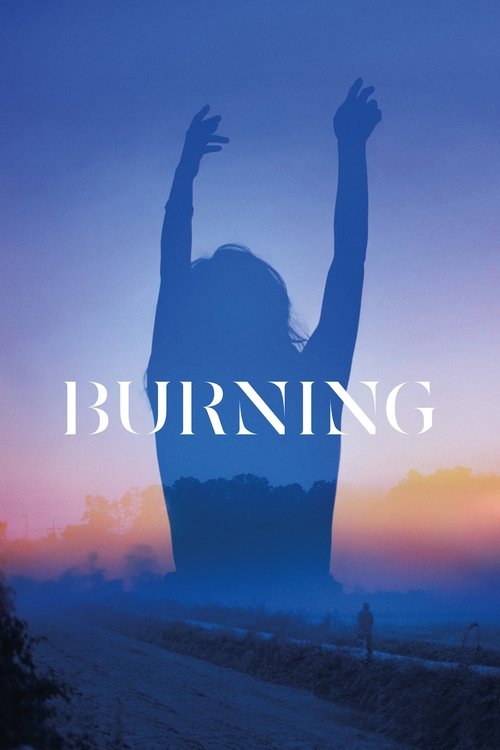
On review aggregator Rotten Tomatoes, the film holds an approval rating of 95% from 197 reviews, with an average rating of 8.6/10. The website's critical consensus reads, "Burning patiently lures audiences into a slow-burning character study that ultimately rewards the viewer's patience – and subverts many of their expectations." On Metacritic, the film has a weighted average score of 91 out of 100, based on 38 critics, indicating "universal acclaim".
Los Angeles Times's Justin Chang called it "a masterpiece of psychological unease – the most lucid and absorbing new movie I've seen this year, as well as the most layered and enigmatic". The Guardian's Peter Bradshaw called it "a gripping nightmare" and lavished praise on how "Lee creates a sense of mood and place with masterly flair." Sight & Sound rated it the third best film of 2018, and Jessica Kiang wrote in her Cannes review, "The embers are banked up so gradually that it's not until a few hours after the ending of this elusive, riveting masterpiece that you are far enough away to appreciate the scale of the conflagration." Tim Robey in The Daily Telegraph observed, "This is Lee's closest ever film to a thriller, but it defies expectations, offering multiple, murky solutions to a set of mysteries at once." Vulture's Emily Yoshida praised the film for its "perception of the rich vampirizing youth – not directly biologically or physically or financially, but emotionally" but considered that "Burning lost its steam in its second half". Peter Debruge of Variety suggested that "[t]he degree to which Burning succeeds will depend largely on one's capacity to identify with the unspoken but strongly conveyed sense of jealousy and frustration its lower-class protagonist feels". Rolling Stone's Peter Travers wrote that the film "sizzles with a cumulative power that will knock the wind out of you" and declared that "Lee has crafted a hypnotic and haunting film that transcends genre to dig deep into the human condition. You won't be able to get it out of your head."
Geoff Andrew of Time Out was similarly positive, hailing it as a "movie rich in teasing ambiguities and possible lies... Lee's interest lies not in crime-solving but in exploring Jongsu's emotional confusion... Both a slow-burn suspense drama and an intriguing enigma, his film is beautifully executed". Todd McCarthy of The Hollywood Reporter reacted enthusiastically to the film, writing that "[t]his is a beautifully crafted film loaded with glancing insights and observations into an understated triangular relationship, one rife with subtle perceptions about class privilege, reverberating family legacies, creative confidence, self-invention, sexual jealousy, justice and revenge". For The Canadian Press, David Friend said the film includes "simmering layers of subtext and tension build over the film's two-and-a-half hour runtime".
Nick Pinkerton, writing in Artforum, was more muted, writing that "Burning is strewn with all sorts of information whose exact meaning and validity is impossible to determine... a film with such a diffident, often passive protagonist must generate its tensions and attractions elsewhere – memorable supporting players, a tactile atmosphere, a complex sense of the social sphere, an emphatic emotionalism". Writing in the Korea Times, David Tizzard argued that Ben may function not as an autonomous character but as Jeong-su’s projected double—a "Fight Club–style" manifestation of his fantasies, resentments, and dissociated self. This reading suggests that Ben and Jeong-su form a single psychological entity, with their mirrored actions, shared habits, and overlapping memories implying two figures occupying one fractured consciousness.
The depiction of the female character Hae-mi in the film attracted some criticism. However, Adam Nayman from Film Society of Lincoln Center argued and emphasized for The Ringer that the story is "told fully from Jongsu's point of view", so "it's fair to ask whether Lee Chang Dong is cultivating true audience solidarity or urging us to understand the story exclusively through the lens of his hero's prejudices: to see Haemi and Ben as idealized and demonized figures, respectively." Phoebe Chen of the Film Feminist Journal: Another Gaze, analyzed that Haemi's existence had a grander purpose in the film, and wrote, "If you know Burning is adapted from a Haruki Murakami short story, however loosely, you know that Haemi will vanish. The trope of the missing woman is built into Murakami's narrative DNA: her vanishing will preoccupy the protagonist, neurotically at first, then fade over the months and years to a dull malaise", and "The mystery of Haemi's disappearance is technically 'solved', but becomes supplanted by one grander: the mystery of a world that tantalises with the hope of futurity while locking its millions of subjects in a cold impasse." Alexandra Heller-Nicholas of Alliance of Women Film Journalists wrote that the character of Hae-mi is much more than simply a missing woman as a plot device, but one of the most powerful parts of a film that casually yet firmly addresses the pressures on women.