Later years
The Times, in its obituary of Hurst in 1986, commented that Dangerous Moonlight (1941) was his best-known movie, "a big popular success" which "launched a cycle of pictures with concerti as their theme music" because of its successful utilisation of Richard Addinsell's Warsaw Concerto.
Hurst worked for the Ministry of Information during the Second World War, for which his films included A Call for Arms (1940), Miss Grant Goes to the Door (1940) and his homeland film, A Letter From Ulster (1943), in which Hurst, Terence Young (as scriptwriter), and his fellow Ulsterman and Assistant Director, William MacQuitty, created a film "promoting a sense of community" between the people of Northern Ireland and over one hundred thousand troops from the USA based in Northern Ireland at the time. Brian McIlroy explained that "Hurst was able to persuade one Catholic and one Protestant soldier to write letters home, explaining their impressions of their stay. From these letters, Terence Young, the scriptwriter, was able to construct a sequence of activities that revealed the different traditions of Ireland."
Hurst's The Hundred Pound Window (1944) cast a young Richard Attenborough in his first credited role. Hurst directed scenes in Caesar and Cleopatra (1945), in which he gave Roger Moore his first film role, and helped pay for Moore to attend RADA.
For Theirs is the Glory (1946), Hurst took 200 members of the 1st Airborne back to Arnhem and Oosterbeek to direct and "remake" their role in the Battle of Arnhem. Every person in the film served with the 1st Airborne or was a civilian from Oosterbeek or Arnhem. Hurst said, "The film is my favourite because of the wonderful experience of working with soldiers and because it is a true documentary reconstruction of the event. I say without modesty it is one of the best war films ever made".
The premiere of Theirs is the Glory was on the second anniversary of the battle in September 1946 and was attended by the Prime Minister. King George VI commanded a private screening at Balmoral Castle. Theirs is the Glory and A Bridge Too Far were compared in the battlefields magazine Against All Odds and the comparison is stark and revealing "A Bridge Too Far is a slow moving epic, well worth a viewing with some authentic scenes, but is unconvincing in its portrayal of the battle of Oosterbeek ... Theirs is the Glory is the only feature film currently released that accurately portrays the events at Oosterbeek in atmospheric and chronological terms, despite its jerky portrayal of events. This is a film to watch.".
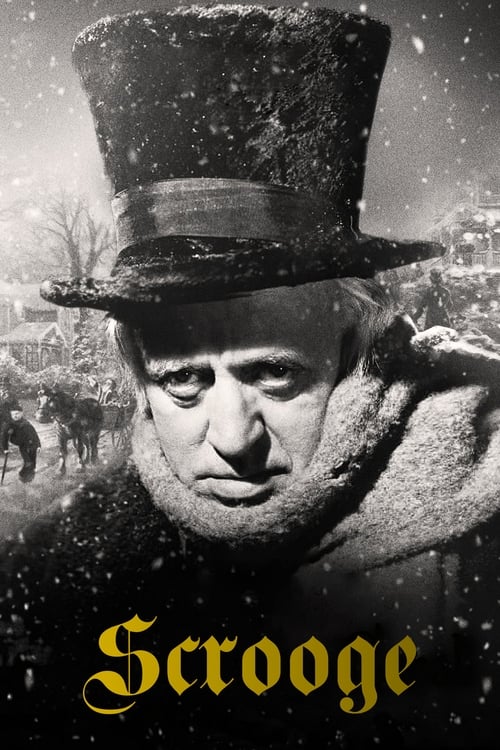
Hurst's post-war career included producing and directing the Christmas film Scrooge (1951) which is the "best of the many screen versions of Dickens's warm-as-mince-pies A Christmas Carol, with Alastair Sim as Scrooge incarnate: his miserly humbuggery is a delight. So is Michael Hordern's ghostly Jacob Marley and the snowy, atmospheric photography of C.M. Pennington-Richards".
Hurst produced Tom Brown's Schooldays (1951) and directed the box office success Malta Story (1953), featuring Alec Guinness as an RAF pilot helping to defend Malta. "The combination of an A list cast, the portrayal of the iron reliance of the Maltese people, the gallantry of the RAF pilots and a tragic love story were the four components of its success".
Hurst went on to direct Simba (1955), featuring Dirk Bogarde and Donald Sinden, and The Black Tent (1956), featuring Donald Pleasence, Anthony Steel and Donald Sinden again. The Black Tent was based on a short story of the same title by Robin Maugham. Hurst also made a period film, Dangerous Exile.
Hurst's Behind the Mask (1958) sees a young Vanessa Redgrave obtaining her first credited role (alongside her father, Sir Michael Redgrave).
Hurst's only excursion into farce was His and Hers (1961), which saw a strong cast of Terry Thomas joining the carry-on stalwarts Kenneth Williams, Joan Sims and Kenneth Connor, supported by Oliver Reed. In 1962, in his late 60s, Hurst returned to John Millington Synge, adapting the script and producing and directing The Playboy of the Western World, his last film.
Hurst gave early film roles to Richard Attenborough, Roger Moore and Vanessa Redgrave. The first four scriptwriting roles of later Bond director Terence Young were for the Hurst-directed films: On the Night of the Fire (1939), A Call For Arms (1940),Dangerous Moonlight (1941) and A Letter From Ulster (1942). They worked together again on the scripts of Theirs is the Glory (1946) and Hungry Hill (1947), and remained good friends.