




Bob Dylan (legally Robert Dylan; born Robert Allen Zimmerman, May 24, 1941) is an American singer-songwriter. Described as one of the greatest songwriters of all time, Dylan has been a major figure in popular culture over his 69-year career. Dylan added increasingly sophisticated lyrical techniques to the folk music of the early 1960s, infusing it "with the intellectualism of classic literature and poetry". His lyrics incorporated political, social, and philosophical influences, defying pop music conventions and appealing to the burgeoning counterculture.
Dylan was born in St. Louis County, Minnesota. He moved to New York City in 1961 to pursue a music career. His 1962 debut album, Bob Dylan, containing traditional folk and blues material, was followed by his breakthrough album, The Freewheelin' Bob Dylan (1963), which included "Girl from the North Country" and "A Hard Rain's a-Gonna Fall", adapting older folk songs. His songs "Blowin' in the Wind" (1963) and "The Times They Are a-Changin'" (1964) became anthems for the civil rights and antiwar movements. Dylan created controversy when he used electrically amplified rock instrumentation for his albums Bringing It All Back Home, Highway 61 Revisited (both 1965), and Blonde on Blonde (1966). His six-minute single "Like a Rolling Stone" (1965) expanded commercial and creative boundaries in popular music.
After a motorcycle crash in 1966, Dylan ceased touring for seven years. During this period, he recorded a large body of songs with members of the Band, which produced the album The Basement Tapes (1975). Dylan explored country music and rural themes on the albums John Wesley Harding (1967), Nashville Skyline (1969), and New Morning (1970). He gained acclaim for Blood on the Tracks (1975) and Time Out of Mind (1997), the latter of which earned him the Grammy Award for Album of the Year. Dylan still releases music and has toured continually since the late 1980s on what has become known as the Never Ending Tour. Since 1994, Dylan has published ten books of paintings and drawings, and his work has been exhibited in major art galleries. His life has been profiled in several films, including the Oscar-nominated biopic A Complete Unknown (2024).
With an estimated 125 million records sold worldwide, Dylan is one of the best-selling musicians of all time. His accolades include an Academy Award and ten Grammy Awards. He was honored with Kennedy Center Honors in 1997 and the Presidential Medal of Freedom in 2012. Dylan has been inducted into the Rock and Roll Hall of Fame and the Songwriters Hall of Fame. He was awarded a Pulitzer Prize special citation in 2008, and the 2016 Nobel Prize in Literature "for having created new poetic expressions within the great American song tradition".
Contents
Early life and education
Bob Dylan was born Robert Allen Zimmerman (his Hebrew name being Shabtai Zisl ben Avraham; שבתאי-זיסל בן אברהם) on May 24, 1941, at St. Mary's Hospital, in Duluth, Minnesota. Dylan's paternal grandparents, Anna Kirghiz and Zigman Zimmerman, emigrated from Odessa in the Russian Empire (now Ukraine) to the United States after the 1905 pogroms against Jews. His maternal grandparents, Florence and Ben Stone, were Lithuanian Jews who had arrived in the US in 1902. Dylan wrote that his paternal grandmother's family was originally from the Kağızman District of Kars Province, northeastern Turkey.
Dylan's father Abram Zimmerman and his mother Beatrice "Beatty" Stone were part of a small, close-knit Jewish community. They lived in Duluth until Dylan was six, when his father contracted polio and the family returned to his mother's hometown of Hibbing, where they lived for the rest of Dylan's childhood, and his father and paternal uncles ran a furniture and appliance store.
As a teenager, Dylan heard rock and roll on radio stations broadcasting from Shreveport and Little Rock. Dylan formed several bands while attending Hibbing High School: the Golden Chords performed covers of songs by Little Richard and Elvis Presley. Their performance of Danny & the Juniors' "Rock and Roll Is Here to Stay" at their high school talent show was so loud that the principal cut the microphone. On January 31, 1959, 17-year-old Dylan saw Buddy Holly perform at the Duluth Armory, four days before Holly's fatal plane crash. Dylan was electrified, and in his Nobel Prize lecture, he explained: "Buddy wrote songs – songs that had beautiful melodies and imaginative verses. And he sang great – sang in more than a few voices. He was the archetype. Everything I wasn't and wanted to be."
In 1959, Dylan's high school yearbook carried the caption "Robert Zimmerman: to join 'Little Richard'". That year, as Elston Gunnn, he performed twice with Bobby Vee, playing piano and clapping. In September 1959, Dylan enrolled at the University of Minnesota. and began to perform at the Ten O'Clock Scholar, a coffeehouse near campus, becoming part of the Dinkytown folk music circuit. His focus on rock and roll gave way to American folk music, as he explained in a 1985 interview:
The thing about rock'n'roll is that for me anyway it wasn't enough.... There were great catch-phrases and driving pulse rhythms ... but the songs weren't serious or didn't reflect life in a realistic way. I knew that when I got into folk music, it was more of a serious type of thing. The songs are filled with more despair, more sadness, more triumph, more faith in the supernatural, much deeper feelings.
Career
1960–1962: Move to New York and stardom
Dylan dropped out of college in May 1960 at the end of his first year. In January 1961, he traveled to New York City to perform and to visit his musical idol Woody Guthrie at Greystone Park Psychiatric Hospital in New Jersey. Guthrie had been a revelation to Dylan and influenced his early performances. "The songs themselves had the infinite sweep of humanity in them," Dylan wrote in Chronicles: Volume One, his 2004 memoir. Guthrie "was the true voice of the American spirit. I said to myself I was going to be Guthrie's greatest disciple." He wrote that his early songwriting was also shaped by Robert Johnson's blues and what he called the "architectural forms" of Hank Williams's country songs.
From February 1961, Dylan played at clubs around Greenwich Village, befriending and picking up material from folk singers, including Dave Van Ronk, Fred Neil, Odetta, the New Lost City Ramblers and Irish musicians the Clancy Brothers and Tommy Makem. In September, the New York Times critic Robert Shelton boosted Dylan's career with an enthusiastic review of his performance at Gerde's Folk City: "Bob Dylan: A Distinctive Folk-Song Stylist". That month, Dylan played harmonica on folk singer Carolyn Hester's third album, bringing him to the attention of the album's producer John Hammond, who signed Dylan to Columbia Records. Dylan's debut album, Bob Dylan, released March 19, 1962, consisted of traditional folk, blues and gospel material with just two original compositions, "Talkin' New York" and "Song to Woody". The album sold 5,000 copies in its first year, just breaking even.
On August 9, 1962, Dylan legally changed his name to Robert Dylan in the St. Louis County Court, Hibbing. His father, Abraham Zimmerman, was the witness. That month, Dylan signed a management contract with Albert Grossman. Grossman remained Dylan's manager until 1970, and was known for his sometimes confrontational personality and protective loyalty. Dylan said, "He was kind of like a Colonel Tom Parker figure ... you could smell him coming." Tension between Grossman and John Hammond led to Hammond's suggesting that Dylan work with the jazz producer Tom Wilson, who produced several tracks for Dylan's second album and went on to produce Dylan's next three albums.
Dylan made his first visit to England from December 1962 to January 1963, invited by TV director Philip Saville to appear in the play Madhouse on Castle Street, which Saville directed for BBC Television. At the end of the play, Dylan performed "Blowin' in the Wind", one of its first public performances. While in London, Dylan performed at several folk clubs, including the Troubadour, Les Cousins, and Bunjies. He also learned material from UK performers, including Martin Carthy.
1963–1965: Protest music and Another Side
In May 1963, Dylan's political profile rose when he walked out of The Ed Sullivan Show. During rehearsals, Dylan had been told by CBS television's head of program practices that "Talkin' John Birch Paranoid Blues" was potentially libelous to the John Birch Society. Rather than comply with censorship, Dylan refused to appear. Dylan and Baez were prominent in the civil rights movement, singing together at the March on Washington on August 28, 1963. Dylan performed "Only a Pawn in Their Game" and "When the Ship Comes In".
Dylan's third album, The Times They Are a-Changin', reflected a more politicized Dylan. The songs often took as their subject matter contemporary stories, with "Only a Pawn in Their Game" addressing the murder of civil rights worker Medgar Evers, and the Brechtian "The Lonesome Death of Hattie Carroll" the death of Black hotel barmaid Hattie Carroll at the hands of young White socialite William Zantzinger. "Ballad of Hollis Brown" and "North Country Blues" addressed despair engendered by the breakdown of farming and mining communities.
The final track on the album expressed Dylan's angry response to a hostile profile published in Newsweek. As biographer Clinton Heylin puts it, the profile wrote about "the way the Bar Mitzvah boy from Hibbing, Minnesota, had reinvented himself as the prince of protest", emphasising his birth name, his attendance at the University of Minnesota, and his close relationship with his parents from whom he claimed to be estranged. The day after the article appeared, Dylan returned to the studio to record "Restless Farewell" which ends with his vow to "make my stand/ And remain as I am/ And bid farewell and not give a damn".
By the end of 1963, Dylan felt manipulated and constrained by the folk and protest movements. Accepting the "Tom Paine Award" from the Emergency Civil Liberties Committee three weeks after the assassination of John F. Kennedy, an intoxicated Dylan questioned the role of the committee, characterized the members as old and balding, and claimed to see something of himself and of every man in Kennedy's assassin, Lee Harvey Oswald.
Johnny Cash supported Dylan in his refusal to conform when he wrote a letter to Broadside in March 1964, expressing admiration for Dylan's writing and ending with the injunction: "Shut up! And let him sing!" When Cash died in 2003, Dylan remembered: "Johnny wrote the magazine saying to shut up and let me sing, that I knew what I was doing. This was before I had ever met him, and the letter meant the world to me." Cash and Dylan met for the first time at the Newport Folk Festival in July 1964 and became friends.
1965–1969: Going electric and motorcycle accident
Dylan's March 1965 album, Bringing It All Back Home featured his first recordings with electric instruments, under producer Tom Wilson's guidance. The first single, "Subterranean Homesick Blues", owed much to Chuck Berry's "Too Much Monkey Business", its free-association lyrics described as harking back to the energy of beat poetry and as a forerunner of rap and hip-hop. The album's second side contained four long songs on which Dylan accompanied himself on acoustic guitar and harmonica. "Mr. Tambourine Man" became one of his best-known songs when The Byrds recorded an electric version that reached number one in the US and UK. The album's final two songs, "It's All Over Now, Baby Blue" and "It's Alright, Ma (I'm Only Bleeding)", are among Dylan's most important compositions.
In May 1965, Dylan played an eight-concert tour in England which would be memorialized in Dont Look Back, D. A. Pennebaker's 1967 cinéma vérité presentation. The movie opens with an early music video for "Subterranean Homesick Blues" in which Dylan, instead of lipsynching the lyrics, dropped cue cards containing key words to the ground. Pennebaker said the sequence was Dylan's idea; it has been imitated in music videos and advertisements.
On July 25, 1965, headlining the Newport Folk Festival, Dylan performed his first electric set since high school with a pickup group featuring Mike Bloomfield on guitar and Al Kooper on organ. Dylan had appeared at Newport in 1963 and 1964, but in 1965 he was met with cheering and booing and left the stage after three songs. One version has it that the boos were from folk fans whom Dylan had alienated by appearing, unexpectedly, with an electric guitar. Murray Lerner, who filmed the performance, said: "I absolutely think that they were booing Dylan going electric." Others claim audience members were upset by poor sound and a short set.
Dylan's performance provoked a hostile response from the folk music establishment. In the September issue of Sing Out!, Ewan MacColl wrote: "Our traditional songs and ballads are the creations of extraordinarily talented artists working inside disciplines formulated over time.... 'But what of Bobby Dylan?' scream the outraged teenagers.... Only a completely non-critical audience, nourished on the watery pap of pop music, could have fallen for such tenth-rate drivel". On July 29, four days after Newport, Dylan was back in the studio in New York, recording "Positively 4th Street". The lyrics contained images of vengeance and paranoia, and have been interpreted as Dylan's put-down of former friends from the folk community he had known in clubs along West 4th Street.
1970–1979: Return to touring and Christian music
In the early 1970s, critics charged that Dylan's output was varied and unpredictable. Greil Marcus asked "What is this shit?" upon first hearing Self Portrait, released in June 1970. It was a double LP including few original songs and was poorly received. In October 1970, Dylan released New Morning which included "Day of the Locusts", his account of receiving an honorary degree from Princeton University on June 9, 1970. New Morning was widely considered a return to form.
Tarantula, a freeform book of prose-poetry, had been written by Dylan during a creative burst in 1964–65. Dylan shelved his book for several years, apparently uncertain of its status, until he suddenly informed Macmillan at the end of 1970 that the time had come to publish it. The book attracted negative reviews but later critics have suggested its affinities with Finnegans Wake and A Season in Hell.
Between March 16 and 19, 1971, Dylan recorded with Leon Russell at Blue Rock, a small studio in Greenwich Village. These sessions resulted in "Watching the River Flow" and a new recording of "When I Paint My Masterpiece". On November 4, 1971, Dylan recorded "George Jackson", which he released a week later. For many, the single was a surprising return to protest material, mourning the killing of Black Panther George Jackson in San Quentin State Prison. Dylan's surprise appearance at Harrison's Concert for Bangladesh on August 1, 1971, attracted media coverage as his live appearances had become rare.
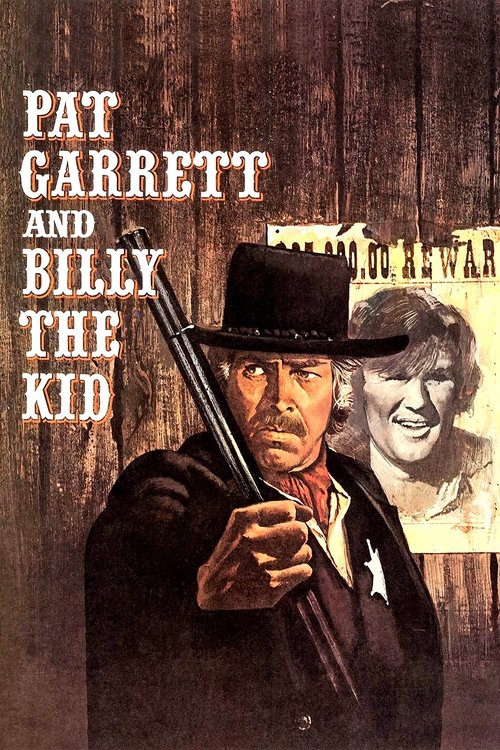
In 1972, Dylan joined Sam Peckinpah's film Pat Garrett and Billy the Kid, providing the soundtrack and playing "Alias", a member of Billy's gang. Despite the film's failure at the box office, "Knockin' on Heaven's Door" became one of Dylan's most covered songs.
Dylan began 1973 by signing with a new label, David Geffen's Asylum Records, when his contract with Columbia Records expired. His next album, Planet Waves, was recorded in the fall of 1973, using the Band as his backing group as they rehearsed for a major tour. The album included two versions of "Forever Young", which became one of his most popular songs. As one critic described it, the song projected "something hymnal and heartfelt that spoke of the father in Dylan", and Dylan said "I wrote it thinking about one of my boys and not wanting to be too sentimental". Columbia Records simultaneously released Dylan, a collection of studio outtakes, widely interpreted as a churlish response to Dylan's signing with a rival record label.
1980–1989: Career fluctuations
Dylan's second Christian album, Saved (1980), received mixed reviews, described by Michael Gray as "the nearest thing to a follow-up album Dylan has ever made, Slow Train Coming II and inferior". His third Christian album was Shot of Love (1981). The album featured his first secular compositions in more than two years, mixed with Christian songs. The lyrics of "Every Grain of Sand" recall William Blake's "Auguries of Innocence". Elvis Costello wrote that "Shot of Love may not be your favorite Bob Dylan record, but it might contain his best song: 'Every Grain of Sand'."
Reception of Dylan's 1980s recordings varied. Gray criticized Dylan's 1980s albums for carelessness in the studio and for failing to release his best songs. Infidels (1983) employed Knopfler again as lead guitarist and also as producer; the sessions resulted in several songs that Dylan left off the album. Best regarded of these were "Blind Willie McTell", which was both a tribute to the eponymous blues musician and an evocation of African American history, "Foot of Pride" and "Lord Protect My Child". These three songs were later released on The Bootleg Series Volumes 1–3 (Rare & Unreleased) 1961–1991.
Between July 1984 and March 1985, Dylan recorded Empire Burlesque. Arthur Baker, who had remixed hits for Bruce Springsteen and Cyndi Lauper, was asked to engineer and mix the album. Baker said he felt he was hired to make Dylan's album sound "a little bit more contemporary". In 1985 Dylan sang on USA for Africa's famine relief single "We Are the World". He also joined Artists United Against Apartheid, providing vocals for their single "Sun City". On July 13, 1985, he appeared at the Live Aid concert at JFK Stadium, Philadelphia. Backed by Keith Richards and Ronnie Wood, he performed a ragged version of "Ballad of Hollis Brown", a tale of rural poverty, and then said to the worldwide audience: "I hope that some of the money ... maybe they can just take a little bit of it, maybe ... one or two million, maybe ... and use it to pay the mortgages on some of the farms and, the farmers here, owe to the banks". His remarks were widely criticized as inappropriate, but inspired Willie Nelson to organize a concert, Farm Aid, to benefit debt-ridden American farmers.
In October 1985, Dylan released Biograph, a box set featuring 53 tracks, 18 of them previously unreleased. Stephen Thomas Erlewine wrote: "Historically, Biograph is significant not for what it did for Dylan's career, but for establishing the box set, complete with hits and rarities, as a viable part of rock history." Biograph also contained liner notes by Cameron Crowe in which Dylan discussed the origins of some of his songs.
1990–1999: Return to folk music and resurgence
Dylan's 1990s began with Under the Red Sky (1990), an about-face from the serious Oh Mercy. It contained several apparently simple songs, including "Under the Red Sky" and "Wiggle Wiggle". The album was dedicated to "Gabby Goo Goo", a nickname for the daughter of Dylan and Carolyn Dennis, Desiree Gabrielle Dennis-Dylan, who was four. Musicians on the album included George Harrison, Slash, David Crosby, Bruce Hornsby, Stevie Ray Vaughan, and Elton John. The record received negative reviews and sold poorly. In 1990 and 1991 Dylan was described by his biographers as drinking heavily, impairing his performances on stage. In an interview with Rolling Stone, Dylan dismissed allegations that drinking was interfering with his music: "That's completely inaccurate. I can drink or not drink. I don't know why people would associate drinking with anything I do, really".
Defilement and remorse were themes Dylan addressed when he received a Grammy Lifetime Achievement Award from Jack Nicholson in February 1991. The event coincided with the start of the Gulf War and Dylan played "Masters of War"; Rolling Stone called his performance "almost unintelligible". He made a short speech: "My daddy once said to me, he said, 'Son, it is possible for you to become so defiled in this world that your own mother and father will abandon you. If that happens, God will believe in your ability to mend your own ways'". This was a paraphrase of 19th-century Orthodox Rabbi Samson Raphael Hirsch's commentary on Psalm 27. On October 16, 1992, the thirtieth anniversary of Dylan's debut album was celebrated with a concert at Madison Square Garden, christened "Bobfest" by Neil Young and featuring John Mellencamp, Stevie Wonder, Lou Reed, Eddie Vedder, Dylan and others. It was recorded as the live album The 30th Anniversary Concert Celebration.
Over the next few years Dylan returned to his roots with two albums covering traditional folk and blues songs: Good as I Been to You (1992) and World Gone Wrong (1993), backed solely by his acoustic guitar. Many critics and fans noted the quiet beauty of the song "Lone Pilgrim", written by a 19th-century teacher. In August 1994, he played at Woodstock '94; Rolling Stone called his performance "triumphant". In November, Dylan recorded two live shows for MTV Unplugged. He said his wish to perform traditional songs was overruled by Sony executives who insisted on hits. The resulting album, MTV Unplugged, included "John Brown", an unreleased 1962 song about how enthusiasm for war ends in mutilation and disillusionment.
2000–2009: Oscar win, memoir, and Modern Times
In 2001, Dylan won an Academy Award for Best Original Song for "Things Have Changed", written for the film Wonder Boys. "Love and Theft" was released on September 11, 2001. Recorded with his touring band, Dylan produced the album under the alias Jack Frost. Critics noted that Dylan was widening his musical palette to include rockabilly, Western swing, jazz and lounge music. The album won the Grammy Award for Best Contemporary Folk Album. Controversy ensued when The Wall Street Journal pointed out similarities between the album's lyrics and Junichi Saga's book Confessions of a Yakuza. Saga was not familiar with Dylan's work, but said he was flattered. Upon hearing the album, Saga said of Dylan: "His lines flow from one image to the next and don't always make sense. But they have a great atmosphere."
In 2003, Dylan revisited the evangelical songs from his Christian period and participated in the project Gotta Serve Somebody: The Gospel Songs of Bob Dylan. That year, Dylan released Masked & Anonymous, which he co-wrote with director Larry Charles under the alias Sergei Petrov. Dylan starred as Jack Fate, alongside a cast that included Jeff Bridges, Penélope Cruz and John Goodman. The film polarized critics. In The New York Times, A. O. Scott called it as an "incoherent mess"; a few treated it as a serious work of art.
In 2004, Dylan published the first part of his memoir, Chronicles: Volume One. Confounding expectations, Dylan devoted three chapters to his first year in New York City in 1961–1962, virtually ignoring the mid-1960s when his fame was at its height, while devoting chapters to the albums New Morning (1970) and Oh Mercy (1989). The book reached number two on The New York Times' Hardcover Non-Fiction bestseller list in December 2004 and was nominated for a National Book Award.
Critics noted that Chronicles contained many examples of pastiche and borrowing; sources included Time and the novels of Jack London.
Biographer Clinton Heylin queried the veracity of Dylan's autobiography, noting "Not a single checkable story held water; not one anecdote couldn't be shot full of holes by any half-decent researcher."
Martin Scorsese's Dylan documentary No Direction Home was broadcast on September 26–27, 2005, on BBC Two in the UK and as part of American Masters on PBS in the US. It covers the period from Dylan's arrival in New York in 1961 to his motorcycle crash in 1966, featuring interviews with Suze Rotolo, Liam Clancy, Joan Baez, Allen Ginsberg, Pete Seeger, Mavis Staples and Dylan himself. The film earned a Peabody Award and a Columbia-duPont Award. The accompanying soundtrack featured unreleased songs from Dylan's early years.
2010–2019: Tempest and continued recordings
On Dylan's 70th birthday in 2011, the universities of Mainz, Vienna, and Bristol invited literary critics and historians to give papers on Dylan's work. Other events, including tribute bands, discussions and singalongs, took place. The Guardian wrote: "From Moscow to Madrid, Norway to Northampton and Malaysia to his home state of Minnesota, self-confessed 'Bobcats' will gather today to celebrate the 70th birthday of a giant of popular music."
Dylan's 35th studio album, Tempest, was released on September 11, 2012. The album features a tribute to Lennon, "Roll On John", and the title track is a 14-minute song about the sinking of the Titanic. In Rolling Stone, Will Hermes gave Tempest five out of five stars: "Lyrically, Dylan is at the top of his game, joking around, dropping wordplay and allegories that evade pat readings and quoting other folks' words like a freestyle rapper on fire".
Volume 10 of Dylan's Bootleg Series, Another Self Portrait (1969–1971), was released in August 2013. The album contained 35 previously unreleased tracks, including alternative takes and demos from Dylan's 1969–71 recording sessions during the making of the Self Portrait and New Morning albums. The box set included a live recording of Dylan's performance with the Band at the Isle of Wight Festival in 1969. Thom Jurek wrote, "For fans, this is more than a curiosity, it's an indispensable addition to the catalog." Columbia Records released a boxset containing all 35 studio albums, six albums of live recordings and a collection of non-album material (Sidetracks) as Bob Dylan: Complete Album Collection: Vol. One, in November. To publicize the box set, a video of "Like a Rolling Stone" was released on Dylan's website. The interactive video, allowed viewers to switch between 16 simulated TV channels, all featuring characters lip-synching the lyrics.
Dylan appeared in a commercial for the Chrysler 200 which aired during the 2014 Super Bowl. In it, he says that "Detroit made cars and cars made America... So let Germany brew your beer, let Switzerland make your watch, let Asia assemble your phone. We will build your car." Dylan's ad was criticized for its protectionist implications, and people wondered whether he had "sold out". The Lyrics: Since 1962 was published by Simon & Schuster in the fall of 2014. The book was edited by literary critic Christopher Ricks, Julie Nemrow and Lisa Nemrow and offered variant versions of Dylan's songs, sourced from out-takes and live performances. A limited edition of 50 books, signed by Dylan, was priced at $5,000. "It's the biggest, most expensive book we've ever published, as far as I know", said Jonathan Karp, Simon & Schuster's president and publisher. A comprehensive edition of the Basement Tapes was released as The Bootleg Series Vol. 11: The Basement Tapes Complete in November 2014. The album included 138 tracks which Dylan and the Band had recorded at their homes in Woodstock, New York in 1967. The Basement Tapes Complete won the Grammy Award for Best Historical Album, and the box set earned a score of 99 on Metacritic.
2020–present: Rough and Rowdy Ways
On March 26, 2020, coinciding with the Covid-19 pandemic, Dylan released "Murder Most Foul", a seventeen-minute song revolving around the Kennedy assassination, on his YouTube channel. Billboard reported on April 8 that "Murder Most Foul" had topped the Rock Digital Song Sales Chart, the first time that Dylan had scored a number one song on a pop chart under his own name. Three weeks later, on April 17, 2020, Dylan released another new song, "I Contain Multitudes". The title is from Walt Whitman's poem "Song of Myself". On May 7, Dylan released a third single, "False Prophet", accompanied by the news that the three songs would all appear on a forthcoming double album.
Rough and Rowdy Ways, Dylan's 39th studio album and his first album of original material since 2012, was released on June 19 to favorable reviews. Alexis Petridis wrote: "For all its bleakness, Rough and Rowdy Ways might well be Bob Dylan's most consistently brilliant set of songs in years: the die-hards can spend months unravelling the knottier lyrics, but you don't need a PhD in Dylanology to appreciate its singular quality and power." Rob Sheffield wrote: "While the world keeps trying to celebrate him as an institution, pin him down, cast him in the Nobel Prize canon, embalm his past, this drifter always keeps on making his next escape. On Rough and Rowdy Ways, Dylan is exploring terrain nobody else has reached before—yet he just keeps pushing on into the future". The album earned a score of 95 on Metacritic, indicating "universal acclaim". In its first week of release Rough and Rowdy Ways reached number one on the UK album chart, making Dylan "the oldest artist to score a No. 1 of new, original material".
In December 2020, Dylan sold his entire song catalog to Universal Music Publishing Group, including both the income he receives as a songwriter and his control of their copyright. Universal, a division of the French media conglomerate Vivendi, will collect all future income from the songs. The New York Times estimated the price at more than $300 million", although other reports suggested the figure was closer to $400 million.
Dylan's 80th birthday was commemorated by a virtual conference, Dylan@80, organized by the University of Tulsa Institute for Bob Dylan Studies. Several new biographies and studies of Dylan were published.
Dylan suspended his Never Ending Tour due to the global Covid-19 pandemic; in July 2021, livestream platform Veeps presented a 50-minute performance by Dylan, Shadow Kingdom: The Early Songs of Bob Dylan. Filmed in black and white with a film noir look, Dylan performed 13 songs in a club setting with an audience. The performance was favorably reviewed, and one critic suggested the backing band resembled the style of the musical Girl from the North Country. The soundtrack to the film was released on 2 LP and CD formats in June 2023. In September, Dylan released Springtime in New York: The Bootleg Series Vol. 16 (1980–1985), issued in 2 LP, 2 CD and 5 CD formats. It comprises rehearsals, live recordings, out-takes and alternative takes from Shot of Love, Infidels and Empire Burlesque. In The Daily Telegraph, Neil McCormick wrote: "These bootleg sessions remind us that Dylan's worst period is still more interesting than most artists' purple patches". Springtime in New York received an aggregate score of 85 on Metacritic.
Never Ending Tour
The Never Ending Tour commenced on June 7, 1988. Dylan has played roughly 100 dates a year since, a heavier schedule than most performers who started in the 1960s. By April 2019, Dylan and his band had played more than 3,000 shows, anchored by long-time bassist Tony Garnier.
To the dismay of some of his audience, Dylan's performances are unpredictable as he often alters his arrangements and changes his vocal approach. These variable performances have divided critics. Richard Williams and Andy Gill argued that Dylan has found a successful way to present his rich legacy of material. Others have criticized his live performances for changing "the greatest lyrics ever written so that they are effectively unrecognisable", and giving so little to the audience that "it is difficult to understand what he is doing on stage at all".
In April, Dylan announced a Summer 2026 tour beginning in Troutdale, Oregon on June 4, and ending in Nashville, Tennessee on August 1. In July, Dylan announced a European tour, starting in Oslo on October 17, 2026, and finishing in London on December 8.
Alex Ross has summarised Dylan's touring career: "his shows cause his songs to mutate, so that no definitive or ideal version exists. Dylan's legacy will be the sum of thousands of performances, over many decades ... Every night, whether he's in good or bad form, he says, in effect, 'Think again.'"
Personal life
Dylan's primary residence is reportedly in Point Dume, on the coast of Malibu, California. He formerly owned an estate in the Scottish Highlands and a townhouse in Harlem, New York City.
Romantic relationships
Echo Helstrom was Dylan's high school girlfriend. The couple listened together to rhythm-and-blues on the radio, and her family exposed him to singers such as Jimmie Rodgers on 78 RPM records, and a range of folk music magazines, sheet music, and manuscripts. Helstrom is believed by some to be the inspiration for Dylan's song "Girl from the North Country", though this is disputed.
Dylan's first serious relationship was with artist Suze Rotolo, a daughter of Communist Party USA radicals. According to Dylan, "She was the most erotic thing I'd ever seen ... The air was suddenly filled with banana leaves. We started talking and my head started to spin". Rotolo was photographed arm-in-arm with Dylan on the cover of his album The Freewheelin' Bob Dylan. Critics have connected Rotolo to some of Dylan's early love songs, including "Don't Think Twice It's All Right". The relationship ended in 1964. In 2008, Rotolo published a memoir about her life in Greenwich Village and relationship with Dylan in the 1960s, A Freewheelin' Time.
When Joan Baez met Dylan in April 1961, she had already released her first album and was acclaimed as the "Queen of Folk". On hearing Dylan perform his song "With God on Our Side", Baez later said, "I never thought anything so powerful could come out of that little toad". In July 1963, Baez invited Dylan to join her on stage at the Newport Folk Festival, setting the scene for similar duets over the next two years. By the time of Dylan's 1965 tour of the UK, their romantic relationship had begun to fizzle out, as captured in D. A. Pennebaker's documentary film Dont Look Back. Baez later toured with Dylan as a performer on his Rolling Thunder Revue in 1975–76. Baez also starred as "The Woman In White" in the film Renaldo and Clara (1978), directed by Dylan. Dylan and Baez toured together again in 1984 with Carlos Santana.
Baez recalled her relationship with Dylan in Martin Scorsese's documentary film No Direction Home (2005). Baez wrote about Dylan in two autobiographies—admiringly in Daybreak (1968), and less admiringly in And A Voice to Sing With (1987). Her song "Diamonds & Rust" has been described as "an acute portrait" of Dylan.
Dylan married Sara Lownds, who had worked as a model and secretary at Drew Associates, on November 22, 1965. They had four children: Jesse Byron (born January 6, 1966), Anna Lea (born July 11, 1967), Samuel Isaac Abram (born July 30, 1968), and Jakob Luke (born December 9, 1969). Dylan also adopted Sara's daughter from a prior marriage, Maria Lownds (later Dylan, born October 21, 1961). Sara Dylan played the role of Clara in Dylan's film Renaldo and Clara (1978). Bob and Sara Dylan were divorced on June 29, 1977.
Religious beliefs
Growing up in Hibbing, Minnesota, Dylan and his family were part of the area's small, close-knit Jewish community, and Dylan had his bar mitzvah in May 1954. Around the time of his 30th birthday, in 1971, Dylan visited Israel, and also met Rabbi Meir Kahane, founder of the New York-based Jewish Defense League.
In the late 1970s, Dylan converted to Christianity. In November 1978, guided by his friend Mary Alice Artes, Dylan made contact with the Vineyard Christian Fellowship. He claimed to have experienced a new birth and to have become an evangelical Christian. From January to March 1979, Dylan attended Vineyard's Bible study classes in Reseda, California.
By 1984, Dylan was distancing himself from the "born again" label. He told Kurt Loder of Rolling Stone: "I've never said I'm 'born again'. That's just a media term. I don't think I've been an agnostic. I've always thought there's a superior power, that this is not the real world and that there's a world to come." In 1997, he told David Gates of Newsweek:
Here's the thing with me and the religious thing. This is the flat-out truth: I find the religiosity and philosophy in the music. I don't find it anywhere else. Songs like "Let Me Rest on a Peaceful Mountain" or "I Saw the Light"—that's my religion. I don't adhere to rabbis, preachers, evangelists, all of that. I've learned more from the songs than I've learned from any of this kind of entity. The songs are my lexicon. I believe the songs.
Dylan has supported the Chabad Lubavitch movement, and has privately participated in Jewish religious events, including his sons' bar mitzvahs and services at Hadar Hatorah, a Chabad Lubavitch yeshiva. In 1989 and 1991, he appeared on the Chabad telethon.
Dylan has continued to perform songs from his gospel albums in concert, occasionally covering traditional religious songs. He has made passing references to his religious faith, such as in a 2004 interview with 60 Minutes, when he told Ed Bradley, "the only person you have to think twice about lying to is either yourself or to God". He explained his constant touring schedule as part of a bargain he made a long time ago with the "chief commander—in this earth and in the world we can't see".
Accolades and honors
Dylan has been inducted into the Rock and Roll Hall of Fame, Nashville Songwriters Hall of Fame and Songwriters Hall of Fame. In 1997, US President Bill Clinton presented Dylan with a Kennedy Center Honor in the East Room of the White House, saying: "He probably had more impact on people of my generation than any other creative artist. His voice and lyrics haven't always been easy on the ear, but throughout his career Bob Dylan has never aimed to please. He's disturbed the peace and discomforted the powerful". In 2008, the Pulitzer Prize jury awarded him a special citation for "his profound impact on popular music and American culture, marked by lyrical compositions of extraordinary poetic power".
Dylan received the Presidential Medal of Freedom in May 2012. President Barack Obama, presenting Dylan with the award, said "There is not a bigger giant in the history of American music." Obama praised Dylan's voice for its "unique gravelly power that redefined not just what music sounded like but the message it carried and how it made people feel". In November 2013, Dylan was awarded France's highest honor, the Légion d'Honneur, despite the misgiving of the grand chancellor of the Légion, who had declared him unworthy. In February 2015, Dylan accepted the MusiCares Person of the Year award from the National Academy of Recording Arts and Sciences, in recognition of his philanthropic and artistic contributions.
Nobel Prize in Literature
In 1996, Gordon Ball of the Virginia Military Institute nominated Dylan for the Nobel Prize in Literature, initiating a campaign that lasted for 20 years. On October 13, 2016, the Nobel committee announced that it would award Dylan the prize "for having created new poetic expressions within the great American song tradition". Horace Engdahl, a member of the Nobel Committee, described Dylan as "a singer worthy of a place beside the Greek bards, beside Ovid, beside the Romantic visionaries, beside the kings and queens of the blues, beside the forgotten masters of brilliant standards". The New York Times reported: "Mr. Dylan, 75, is the first musician to win the award, and his selection was perhaps the most radical choice in a history stretching back to 1901." Dylan remained silent for days after receiving the award, and then told journalist Edna Gundersen that it was "amazing, incredible. Whoever dreams about something like that?" Dylan's Nobel lecture was posted on the Nobel Prize website on June 5, 2017. Andrea Pitzer suggested in Slate that Dylan may have taken some references to Moby-Dick in his Nobel lecture from SparkNotes.
Legacy
Dylan has been described as one of the most influential cultural figures of the 20th century. He was included in the Time 100: The Most Important People of the Century, where he was called "master poet, caustic social critic and intrepid, guiding spirit of the counterculture generation". Paul Simon suggested that Dylan's early compositions virtually took over the folk genre: "[Dylan's] early songs were very rich ... with strong melodies. 'Blowin' in the Wind' has a really strong melody. He so enlarged himself through the folk background that he incorporated it for a while. He defined the genre for a while."
For many critics, Dylan's greatest achievement was the cultural synthesis exemplified by his mid-1960s trilogy of albums—Bringing It All Back Home, Highway 61 Revisited and Blonde on Blonde. In Mike Marqusee's words:
Between late 1964 and the middle of 1966, Dylan created a body of work that remains unique. Drawing on folk, blues, country, R&B, rock'n'roll, gospel, British beat, symbolist, modernist and Beat poetry, surrealism and Dada, advertising jargon and social commentary, Fellini and Mad magazine, he forged a coherent and original artistic voice and vision. The beauty of these albums retains the power to shock and console.
Michael Gray initiated serious critical scrutiny when he published Song & Dance Man: The Art of Bob Dylan in 1972, situating Dylan's work in the context of the English literary tradition, Donne, Browning and T. S. Eliot. Also in 1972, Craig McGregor published Bob Dylan: A Retrospective, an anthology containing critical essays about Dylan by Robert Shelton, Nat Hentoff, Ellen Willis and other contemporary cultural critics. In 1998, Stanford University sponsored the first international academic conference on Bob Dylan held in the United States. In 2004, Richard F. Thomas, Classics professor at Harvard University, created a freshman seminar titled "Dylan", which aimed "to put the artist in context of not just popular culture of the last half-century, but the tradition of classical poets like Virgil and Homer." Thomas went on to publish Why Bob Dylan Matters, exploring Dylan's connections with Greco-Roman literature.
Literary critic Christopher Ricks published Dylan's Visions of Sin, an appreciation of Dylan's work. After Dylan's Nobel win, Ricks reflected: "I'd not have written a book about Dylan, to stand alongside my books on Milton and Keats, Tennyson and T.S. Eliot, if I didn't think Dylan a genius of and with language." The critical consensus that Dylan's songwriting was his outstanding creative achievement was articulated by Encyclopædia Britannica: "Hailed as the Shakespeare of his generation, Dylan ... set the standard for lyric writing." Former British poet laureate Andrew Motion said Dylan's lyrics should be studied in schools. The journalist Edna Gundersen noted that lines such as "When you got nothing, you got nothing to lose"; "a hard rain's a-gonna fall"; "to live outside the law you must be honest" had entered the vernacular, and "you don't need a weather man to know which way the wind blows" and "the times they are a-changin'" appear in Bartlett's Familiar Quotations.
Archives and recognition
The sale of Dylan's archive of about 6,000 notebooks, drafts of lyrics, recordings, and correspondence to the George Kaiser Family Foundation and the University of Tulsa was announced in March 2016. The sale price was "an estimated $15 million to $20 million". To house the archive, the Bob Dylan Center in Tulsa, Oklahoma opened on May 10, 2022.
In 2005, 7th Avenue East in Hibbing, Minnesota, where Dylan lived from ages 6 to 18, received the honorary name Bob Dylan Drive. In 2006, the 1.8 miles (2.9 km) Bob Dylan Way cultural path was inaugurated in Duluth, Minnesota; it links "cultural and historically significant areas of downtown for the tourists".
In 2015, a 160-foot-wide Dylan mural by Brazilian street artist Eduardo Kobra was unveiled in downtown Minneapolis.
In December 2013, the Fender Stratocaster which Dylan had played at the 1965 Newport Folk Festival fetched $965,000, the second highest price paid for a guitar. In June 2014, Dylan's hand-written lyrics of "Like a Rolling Stone" fetched $2 million at auction, a record for a popular music manuscript.
Visual arts
Painting
Dylan's visual art was first seen by the public via a painting he contributed for the cover of the Band's Music from Big Pink album in 1968. The cover of Dylan's own 1970 album Self Portrait features the painting of a human face by Dylan. More of Dylan's artwork was revealed with the 1973 publication of his book Writings and Drawings. The cover of Dylan's 1974 album Planet Waves again featured one of his paintings. In 1994 Random House published Drawn Blank, a book of Dylan's drawings. In 2007, the first public exhibition of Dylan's paintings, The Drawn Blank Series, opened at the Kunstsammlungen in Chemnitz, Germany; it showcased more than 200 watercolors and gouaches made from the original drawings. The exhibition coincided with the publication of Bob Dylan: The Drawn Blank Series, which includes 170 reproductions from the series. From September 2010 until April 2011, the National Gallery of Denmark exhibited 40 large-scale acrylic paintings by Dylan, The Brazil Series.
In July 2011, a leading contemporary art gallery, Gagosian Gallery, announced their representation of Dylan's paintings. An exhibition of Dylan's art, The Asia Series, opened at the Gagosian Madison Avenue Gallery on September 20, displaying Dylan's paintings of scenes in China and the Far East. The New York Times reported that "some fans and Dylanologists have raised questions about whether some of these paintings are based on the singer's own experiences and observations, or on photographs that are widely available and were not taken by Mr. Dylan". The Times pointed to close resemblances between Dylan's paintings and historic photos of Japan and China, and photos taken by Dmitri Kessel and Henri Cartier-Bresson. Art critic Blake Gopnik has defended Dylan's artistic practice, arguing: "Ever since the birth of photography, painters have used it as the basis for their works: Edgar Degas and Édouard Vuillard and other favorite artists—even Edvard Munch—all took or used photos as sources for their art, sometimes barely altering them". The Magnum photo agency confirmed that Dylan had licensed the reproduction rights of these photographs.
Dylan's second show at the Gagosian Gallery, Revisionist Art, opened in November 2012. The show consisted of thirty paintings, transforming and satirizing popular magazines including Playboy and Babytalk. In February 2013, Dylan exhibited the New Orleans Series of paintings at the Palazzo Reale in Milan. In August 2013, Britain's National Portrait Gallery, London hosted Dylan's first major UK exhibition, Face Value, featuring twelve pastel portraits.
In November 2016, the Halcyon Gallery featured a collection of artworks by Dylan. The exhibition, The Beaten Path, depicted American landscapes and urban scenes, inspired by Dylan's travels across the US. The show was reviewed by Vanity Fair and Asia Times Online. In October 2018, the Halcyon Gallery mounted an exhibition of Dylan's drawings, Mondo Scripto. The works consisted of Dylan hand-written lyrics of his songs, with each song illustrated by a drawing.
Sculpture
Bob Dylan has also been active as a sculptor, specialising in work with iron. He collects metal objects, including farm tools, antique firearms, gears, chains, and axes, and welds them together to create sculptural pieces. For thirty years, he crafted metal sculptures for family and friends before showcasing his work publicly in November 2013 with Mood Swings, an exhibition of seven wrought iron gates at London's Halcyon Gallery. In a statement released by the gallery, Dylan said:
I've been around iron all my life ever since I was a kid. I was born and raised in iron ore country, where you could breathe it and smell it every day. Gates appeal to me because of the negative space they allow. They can be closed but at the same time they allow the seasons and breezes to enter and flow. They can shut you out or shut you in. And in some ways there is no difference.
One of his most prominent installations in the United States is Portal, a monumental iron archway permanently displayed at the entrance of the MGM National Harbor resort in Maryland. In 2022, his first permanent sculpture installation in France, titled Rail Car, was inaugurated at Château Lacoste in Provence. This immersive work, made up of a wrought-iron freight car set on rails, evokes both industrial history and Dylan's personal history and was accompanied for a while by an exhibition of 24 paintings, Drawn Blank in Provence, his first painting exhibition in France.
Written works
Dylan has published Tarantula (1971), a work of prose poetry; Chronicles: Volume One (2004), the first part of his memoirs; several books of the lyrics of his songs, and ten books of his art. Dylan's third full-length book, The Philosophy of Modern Song (2022), contains 66 essays on songs by other artists. Dylan has also been the subject of numerous biographies and critical studies.
Filmography
Dylan has appeared as an actor in five movies (Pat Garrett and Billy the Kid, Renaldo and Clara, Hearts of Fire, Masked and Anonymous, and Catchfire (cameo)), as well as himself in many documentaries.