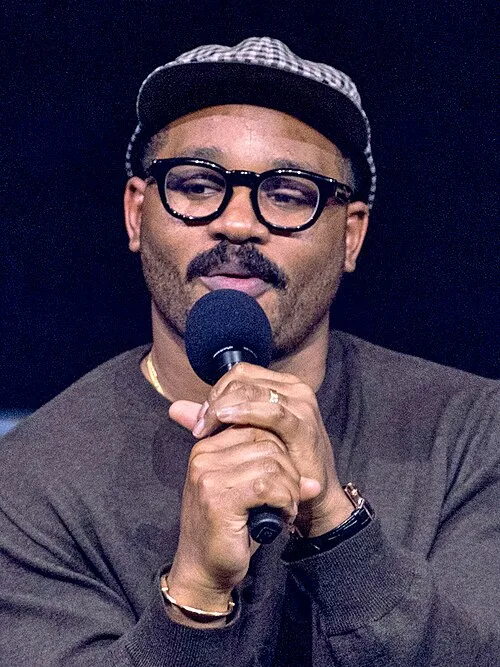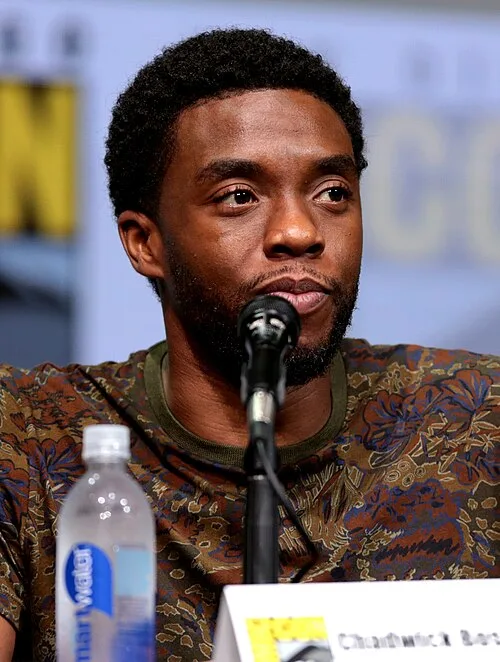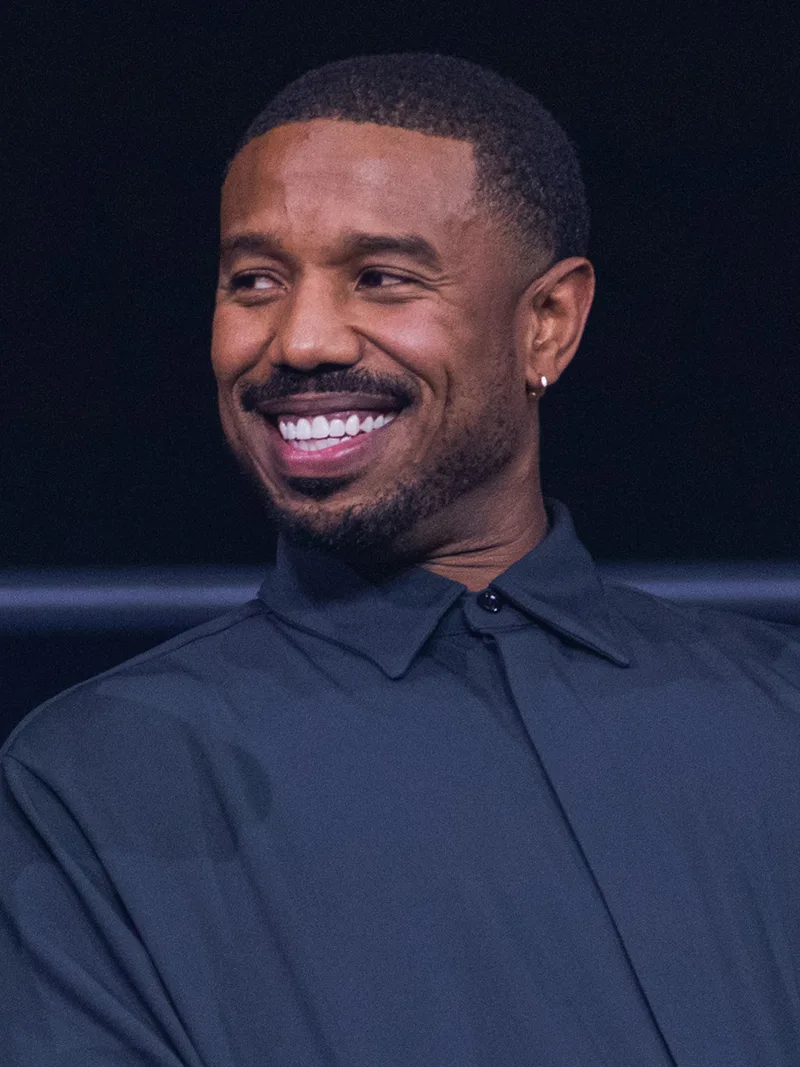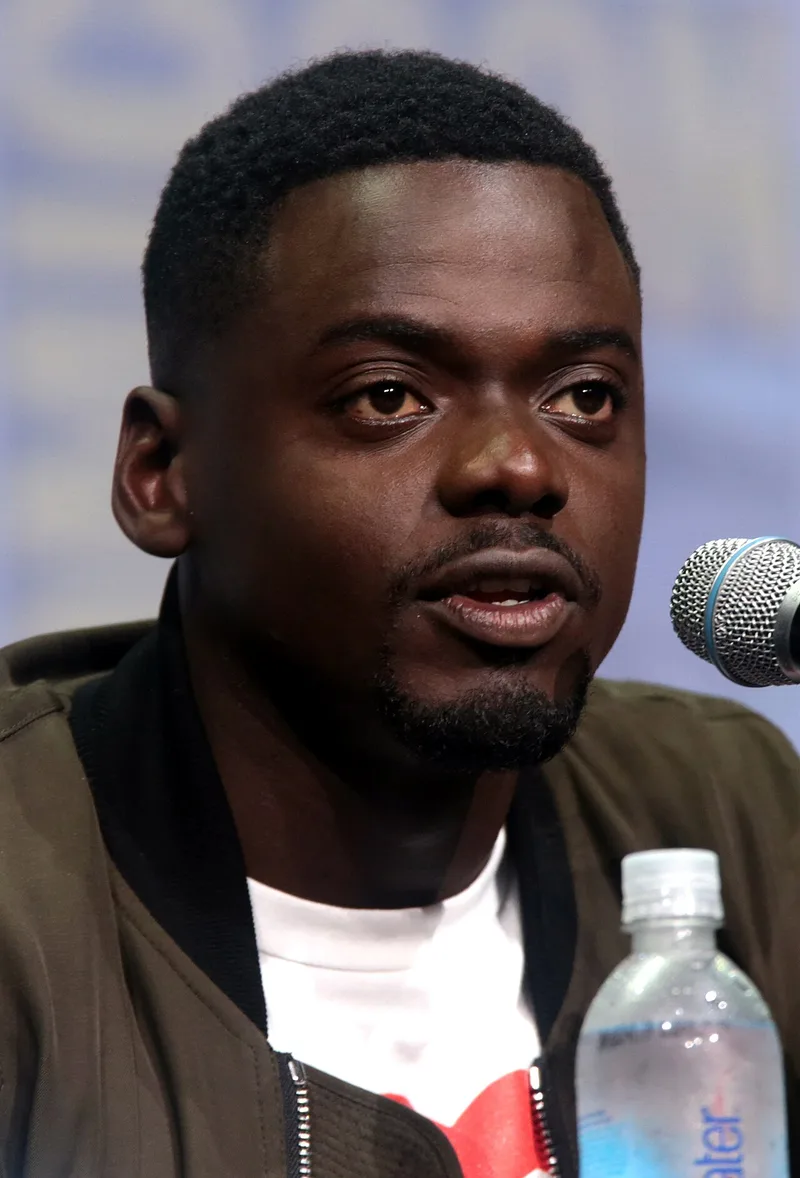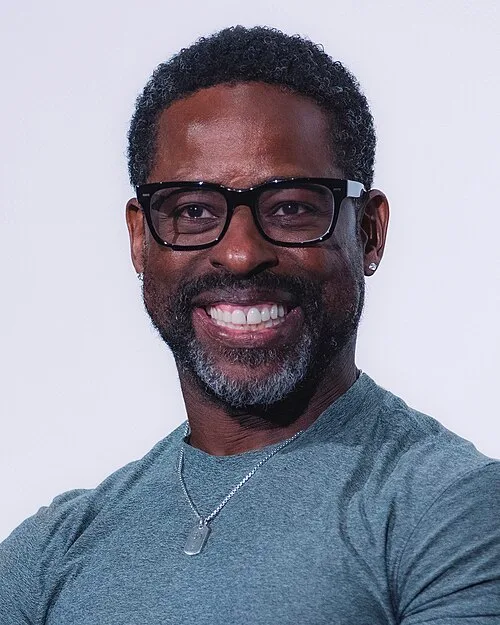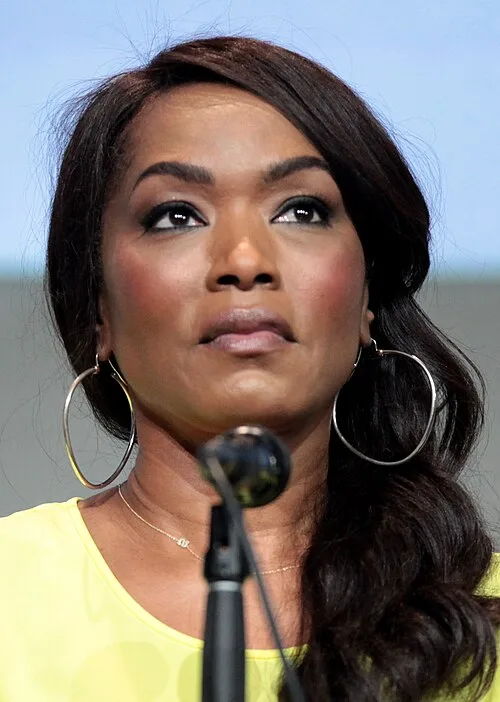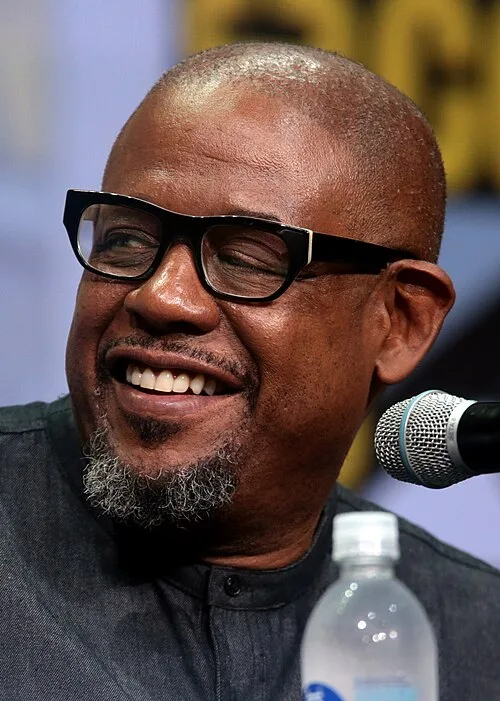




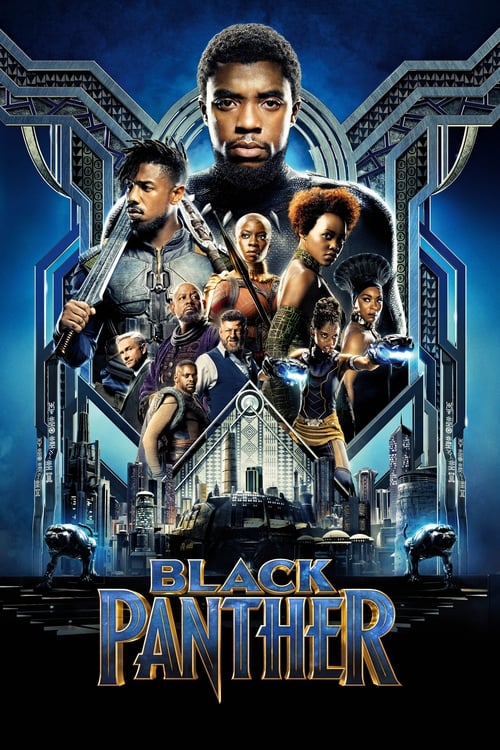
Black Panther is a 2018 American superhero film based on the Marvel Comics character T'Challa / Black Panther. Produced by Marvel Studios and distributed by Walt Disney Studios Motion Pictures, it is the 18th film in the Marvel Cinematic Universe (MCU). The film was directed by Ryan Coogler from a screenplay he wrote with Joe Robert Cole, and stars Chadwick Boseman as T'Challa / Black Panther alongside Michael B. Jordan, Lupita Nyong'o, Danai Gurira, Martin Freeman, Daniel Kaluuya, Letitia Wright, Winston Duke, Sterling K. Brown, Angela Bassett, Forest Whitaker, and Andy Serkis. In the film, T'Challa is crowned king of the African nation Wakanda following his father's death, but he is soon challenged for the throne by Killmonger (Jordan), who plans to abandon Wakanda's isolationist policies and use the country's resources to begin a global revolution.
Wesley Snipes planned to make a Black Panther film in 1992, but the project did not come to fruition. In September 2005, Marvel Studios listed a Black Panther film as one of ten films based on Marvel characters intended to be distributed by Paramount Pictures. Mark Bailey was hired to write a script in January 2011. Black Panther was officially announced in October 2014, and Boseman made his first appearance as the character in the MCU film Captain America: Civil War (2016). Cole and Coogler had joined by then, with additional casting revealed throughout 2016. Black Panther was the first Marvel Studios film with a Black director and a predominantly Black cast. Principal photography took place from January to April 2017 at EUE/Screen Gems Studios in the Atlanta metropolitan area, and on location in Busan, South Korea.
Black Panther premiered at the Dolby Theatre in Los Angeles on January 29, 2018, and was released in the United States on February 16 as part of Phase Three of the MCU. Critics praised its direction, writing, acting (particularly that of Boseman, Jordan, and Wright), costume design, production values, and soundtrack, but some criticized the visual effects. Many critics considered it to be one of the best MCU films, and it was noted for its cultural significance. The National Board of Review and the American Film Institute named Black Panther one of the top-ten films of 2018. It grossed over $1.3 billion worldwide and broke numerous box office records, becoming the highest-grossing film directed by a Black filmmaker, the ninth-highest-grossing film at the time of its release, the third-highest-grossing film in the U.S. and Canada that year, and the second-highest-grossing film of 2018.
Black Panther was nominated for seven awards at the 91st Academy Awards, winning three, and received numerous other accolades. It was the first superhero film to receive a Best Picture nomination, and the first MCU film to win an Academy Award. A sequel, Black Panther: Wakanda Forever, was released in November 2022, with Wright taking over as the lead following Boseman's death in 2020. A third film is scheduled for release in December 2028. An animated series, Eyes of Wakanda, was released in August 2025 on Disney+.
Contents
Plot
Thousands of years ago, five African tribes warred over a meteorite containing the metal vibranium. One warrior ingests a "heart-shaped herb" affected by the metal and gains superhuman abilities, becoming the first "Black Panther". He unites all but the Jabari Tribe to form the nation of Wakanda. Over centuries, the Wakandans use vibranium to develop advanced technologies and isolate themselves from the world by posing as an underdeveloped country. In 1992, Wakandan king T'Chaka visits his brother N'Jobu, who is working undercover in Oakland, California. T'Chaka accuses N'Jobu of assisting black-market arms dealer Ulysses Klaue with stealing vibranium from Wakanda. N'Jobu's partner reveals he is Zuri, another undercover Wakandan, and confirms T'Chaka's suspicions.
In the present day, following T'Chaka's death, his son T'Challa returns to Wakanda to assume the throne. He and Okoye, leader of the Dora Milaje, extract T'Challa's ex-lover Nakia from an undercover assignment so she can attend his coronation ceremony with his mother Ramonda and younger sister Shuri. At the ceremony, the Jabari Tribe's leader M'Baku challenges T'Challa for the crown in ritual combat without the benefit of the heart-shaped herb. T'Challa defeats M'Baku, and persuades him to yield rather than die.
When Klaue and his accomplice Erik Stevens steal a Wakandan artifact from a London museum, T'Challa's friend and Okoye's husband W'Kabi urges him to bring Klaue back alive. T'Challa, Okoye, and Nakia travel to Busan, South Korea, where Klaue plans to sell the artifact to CIA agent Everett K. Ross. A firefight erupts, and Klaue attempts to flee but is caught by T'Challa, who reluctantly releases him to Ross's custody. Klaue tells Ross that Wakanda's international image is a front for a technologically advanced civilization. When Erik attacks to extract Klaue, Ross is gravely injured protecting Nakia. Rather than pursue Klaue, T'Challa takes Ross to Wakanda, where their technology can save him.
While Shuri tends to Ross, T'Challa confronts Zuri about N'Jobu, since Erik wore a necklace that belonged to him. Zuri explains that N'Jobu had become disillusioned with Wakanda's isolationism and planned to share Wakanda's technology with people of African descent to help them overcome their oppressors, with Klaue's assistance. Before T'Chaka could apprehend N'Jobu, N'Jobu attacked Zuri, forcing T'Chaka to kill him. T'Chaka instructed Zuri to claim that N'Jobu had vanished and to leave behind N'Jobu's American son, N'Jadaka, to uphold the story. This boy grew up to become Erik, a U.S. black ops Navy SEAL who took on the nickname "Killmonger". Meanwhile, Killmonger kills Klaue and brings his body to Wakanda. He is presented before the tribal elders, revealing himself as N'Jadaka and asserting his claim to the throne. Killmonger challenges T'Challa to ritual combat, severely injures him, and kills Zuri, while T'Challa is presumed dead after Killmonger throws him over a waterfall. Killmonger ingests the heart-shaped herb and orders the rest to be incinerated, but Nakia manages to extract one. Killmonger, backed by W'Kabi and his army, prepares to distribute shipments of Wakandan weapons to operatives worldwide.
Cast
Chadwick Boseman as T'Challa / Black Panther:The king of the African nation of Wakanda who gains superhuman abilities by ingesting the heart-shaped herb. He ascends to the throne following the death of his father T'Chaka in the film Captain America: Civil War (2016). Boseman called T'Challa an anti-hero who is "very much aware" of his responsibility as the leader of Wakanda. Black Panther's suit, which forms around his body, was inspired by a similar design by artist Brian Stelfreeze in Ta-Nehisi Coates's comic book series Black Panther: A Nation Under Our Feet. For his Wakandan accent, Boseman worked with the same dialect coach he had for the film Message from the King (2016), and worked with Marrese Crump to stay in shape between Civil War and Black Panther. To prepare for the role, Boseman visited South Africa twice; examined Shaka Zulu, Patrice Lumumba, speeches from Nelson Mandela, and Fela Kuti songs; talked to a Yoruba Babalawo; trained in Dambe, Capoeira Angola, and Zulu stick fighting; and took a DNA test to better understand his African ancestry. He signed a five-film contract with Marvel, beginning with Civil War. Ashton Tyler plays a young T'Challa.
Michael B. Jordan as N'Jadaka / Erik "Killmonger" Stevens:A black ops mercenary and former U.S. Navy SEAL who seeks to overthrow his cousin T'Challa and enforce his own opinion on how Wakanda should be ruled. Jordan had wanted to play a villain for "a while", and likened Killmonger and T'Challa's relationship to the X-Men characters Magneto and Professor X. He added that Killmonger is strategic, thoughtful, patient, and "trained to a T". Killmonger's bumpy, ritualistic tribal markings on his chest and torso resemble the scar tattoos of the Mursi and Surma tribes, and consisted of 90 individually sculpted silicone molds that took two-and-a-half hours to apply. Jordan would have to sit in a sauna for two hours at the end of the day to remove the prosthetics. Killmonger's dreadlocks hairstyle was a modern take on the character's long hair in the comics. To prepare for the role, Jordan studied Malcolm X, Marcus Garvey, Huey P. Newton, Fred Hampton, and Tupac Shakur. He also cited Heath Ledger's portrayal of the Joker in the film The Dark Knight (2008) as an influence. Corey Calliet, who had previously worked with Jordan on the film Creed (2015), served as his trainer. Seth Carr plays a young Stevens.
Lupita Nyong'o as Nakia:T'Challa's former lover and a War Dog, an undercover spy for Wakanda, from the River Tribe. Nyong'o called Nakia a "departure" from her comic counterpart. She begins the film fighting for enslaved women in Nigeria. Nyong'o trained in judo, jujitsu, silat, and Filipino martial arts.
Production
Development
In June 1992, Wesley Snipes announced his intention to make a film about Black Panther, and began work on it by that August. Snipes felt that Africa had been portrayed poorly in Hollywood films previously, and that this film could highlight the majesty of the continent due to the title character being noble and "the antithesis of [African] stereotypes". The next July, Snipes planned to begin The Black Panther after starring in Demolition Man (1993), and a month later he expressed interest in making sequels to the film as well. In January 1994, Snipes entered talks with Columbia Pictures to portray Black Panther, and Black Panther co-creator Stan Lee joined the film by March; it entered early development by May. Snipes had discussions with several different screenwriters and directors about the project, including Mario Van Peebles and John Singleton. When the film had not progressed by January 1996, Lee explained that he had not been pleased with the scripts for the project. Snipes said that one of the issues with the project's development was confusion among those unfamiliar with the comics, who thought the film was about the Black Panther Party.
In July 1997, Black Panther was listed as part of Marvel Comics' film slate, and in March 1998, Marvel reportedly hired Joe Quesada and Jimmy Palmiotti, who at the time were editors of the Black Panther comics, to work on it; Quesada and Palmiotti have both denied this. That August, corporate problems at Marvel put the project on hold. A year later, Snipes was set to produce, and possibly star, in the film, while Artisan Entertainment announced a deal with Marvel in May 2000 to co-produce, finance, and distribute the film. In March 2002, Snipes planned to make the film or Blade 3 (2004) over the next year. In July 2004, Blade 3 director David S. Goyer stated that he felt Snipes starring as Black Panther in addition to Marvel's Blade "might be overkill".
In September 2005, Marvel chairman and CEO Avi Arad announced Black Panther as one of ten films being developed by the new Marvel Studios. Marvel Studios received financing to produce the slate of ten films to be distributed by Paramount Pictures. In June 2006, Snipes said he hoped to have a director for the project soon, and Marvel Studios president Kevin Feige reiterated in February 2007 that Black Panther was in development. By that July, Singleton had been approached to direct the film. Two months earlier, Fantastic Four (2005) director Tim Story expressed his interest in casting Djimon Hounsou as Black Panther if he were to direct another Fantastic Four film after Fantastic Four: Rise of the Silver Surfer (2007), but a third Fantastic Four film helmed by Story went unproduced. In March 2009, Marvel hired writers to help come up with creative ways to launch its lesser-known properties, including Black Panther; Nate Moore, the head of the writers program, was overseeing the development of Black Panther specifically. Snipes's involvement stalled at this time, as he was convicted of failing to file a tax return, serving his sentence from June 2010 to April 2013. In January 2011, Marvel Studios hired documentary filmmaker Mark Bailey to write a script for Black Panther, to be produced by Feige. By October 2013, the metal vibranium, which comes from Black Panther's home nation Wakanda, was introduced in the Marvel Cinematic Universe; Marvel had considered showing Wakanda itself as early as Iron Man 2 (2010), but were waiting until they had "a full idea" of how to depict it.
Pre-production
Coogler was confirmed as director in January 2016, and said that the film was his "most personal movie to date" in part because he grew up reading comics, adding, "I feel really fortunate to be able to work on something I'm this passionate about again." After being "wooed" by Feige for months, Coogler agreed to direct the film if he could bring collaborators from his previous films to differentiate the film from other MCU films that are often "shot, composed, and edited by the same in-house people". This included Fruitvale Station (2013) cinematographer Rachel Morrison, as well as production designer Hannah Beachler and composer Ludwig Göransson, who both worked with Coogler on Fruitvale Station and Creed. Coogler felt Black Panther would be unique while still fitting within the MCU's overall narrative.
In April 2016, Feige said that Coogler was working on the script with Cole, and that filming would begin at the beginning of 2017. He added that the film would be the first Marvel Studios production to feature a "primarily African-American cast": Lupita Nyong'o soon entered negotiations to star as T'Challa's love interest, and Michael B. Jordan joined in an undisclosed role, after previously working with Coogler on Fruitvale Station and Creed. Nate Moore, serving as a producer on the film by the end of May, stated that filming would occur in Atlanta, Georgia, with Marvel "definitely investigating shooting in Africa" as well.
At San Diego Comic-Con 2016, Nyong'o was confirmed for the film, in the role of Nakia, while Jordan's role was revealed to be Erik Killmonger. Also announced was Danai Gurira as Okoye. Coogler confirmed that filming would begin in January 2017. Additional casting occurred from September 2016 until the start of filming, with Winston Duke cast as M'Baku, a role that Yahya Abdul-Mateen II had also tested for as well as Michael James Shaw, who was later cast as Corvus Glaive in Avengers: Infinity War (2018) and Avengers: Endgame (2019), out of interest of visiting Africa before passing on the role; Forest Whitaker as Zuri; Daniel Kaluuya as W'Kabi; Angela Bassett as T'Challa's mother, Ramonda; Sterling K. Brown as N'Jobu; and Letitia Wright in an unspecified role, later to be revealed as Shuri. Dominique Thorne, who would go on to play Riri Williams / Ironheart in the sequel Black Panther: Wakanda Forever (2022), also auditioned to play Shuri. Florence Kasumba was revealed to be reprising her role as Ayo from Captain America: Civil War. Amandla Stenberg, who is biracial and light skinned, was considered for a role in the film but was not comfortable taking the place of a dark-skinned actor, and described her decision to pass on the role as "really challenging". By January 2017, Marvel received permission from the Oakland, California–based public transit agency AC Transit to use their logo in the film for the opening flashback sequence. The setting was chosen due to Coogler growing up in that area.
Filming
Principal photography had begun by January 21, 2017, at EUE/Screen Gems Studios in the Atlanta metropolitan area, under the working title Motherland. Filming also took place at Pinewood Atlanta Studios, and in the Sweet Auburn neighborhood in Atlanta, which doubled as Oakland; the High Museum of Art, which served as the fictional Museum of Great Britain in London; and Atlanta City Hall, which served as a United Nations building. Cinematographer Rachel Morrison, who was eager to work on Black Panther after working with Coogler on Fruitvale Station, first watched all of the other MCU films to understand the established "language". She wanted to "push" that language and feature more contrast in color. Visual effects supervisor Geoff Baumann provided Morrison with before-and-after shots of scenes from Civil War so she could understand what elements are captured on set and what is created digitally. She filmed in 3.4K ArriRaw with Arri Alexa XT Plus cameras and Panavision Primo lenses, primarily using a two-camera set-up with a third or fourth camera on occasion. Morrison said that lighting was her biggest challenge, the magnitude of which "was much bigger than I'd experienced before", and made extensive use of Arri SkyPanel LED light fixtures, which she could preprogram from an iPad. Some sets were completely surrounded by SkyPanels.
Shortly after filming started, Atandwa Kani stated that he would appear in the film alongside his father, the latter reprising the role of T'Chaka, while on-set photographs revealed that Martin Freeman would reprise his role as Everett K. Ross. Marvel announced that production was underway on January 26, and confirmed the casting of Freeman, Wright, and John Kani, while revealing that Andy Serkis would reprise his role as Ulysses Klaue from Avengers: Age of Ultron. Atandwa portrays a younger version of his father's character, and also served as a cultural consultant during filming. Dialect coach Beth McGuire worked to ensure there was continuity between the various actors who had to use "Wakandan accents". Jordan joined the production later than the rest of the core cast. He felt that this aided his performance, since his character is separate from and in conflict with the other characters. Because of this, Jordan kept to himself while he was on set. Since Black Panther and Avengers: Infinity War were filming simultaneously in Atlanta, both production teams worked together closely to ensure a unified presentation of Wakanda in the films, as the country also plays a large role in Infinity War.
Additional filming took place in South Korea, with the city of Busan serving as the setting of a car chase scene that involved 150 cars and over 700 people. Coogler and Morrison referenced the car chase sequences from Bullitt (1968), Drive (2011), and The French Connection (1971), taking the best elements from each for Black Panther's sequence. Filming in Busan began on March 17, at the Jagalchi Fish Market. Filming moved to Gwangalli Beach on March 21, with other South Korean filming locations including Marine City in the Haeundae District and at the Gwangandaegyo Bridge. The production crew hired hundreds of current and former film students from local universities as staff or assistant staff during the South Korea filming. Filming in the country wrapped on March 27, with additional location shooting also taking place at the Rwenzori Mountains and Bwindi Impenetrable National Park in Uganda. John Marzano served as cinematographer for aerial footage of South Africa, Zambia, Uganda, and South Korea. At CinemaCon 2017, Wright was revealed to be portraying Shuri in the film. Filming concluded on April 19, 2017.
Post-production
Black Panther was edited by Michael Shawver and Debbie Berman, with Shawver spending time on set during filming as well as at an editing suite near the Atlanta production base. Berman joined the film after an initial director's cut had been produced, two weeks after she completed work on Marvel's Spider-Man: Homecoming (2017), because Coogler likes to have both a male and female editing his films. She believed that she was chosen by Marvel because she is South African, and had been expressing interest in Black Panther throughout the editing process for Homecoming after first seeing the character in Civil War. Shawver said that a lot of their time editing was spent discussing how their work was affecting the audience. For instance, Shawver felt that initial versions of the first Warrior Falls fight fell "flat" and used techniques he learned working with Coogler on Creed to have the editing move back-and-forth to mimic the back-and-forth of the fighters. He also felt that adding more reaction shots to the crowd during the fight gave more weight to T'Challa's victory at the end. During work on the final battle, Berman pointed out to Coogler that the female Dora Milaje are rescued by the all-male Jabari tribe, which she felt undermined the focus on female characters leading up to that moment. Coogler agreed, and subsequently added female Jabari fighters to the scene through additional photography, including the first onscreen Jabari fighter in the scene. Berman felt that this was an important change that would not have been made if only men were editing the film.
As first hinted by Coogler in January 2018, the film includes two post-credit scenes: one showing T'Challa address the United Nations; and one featuring Sebastian Stan reprising his role as Bucky Barnes. The first scene was originally intended to be part of the actual ending of the film, but was moved to during the credits so the film could conclude in Oakland, where it begins. Coogler felt having this symmetry was important. In the scene, T'Challa says "The foolish build barriers, while the wise build bridges." Some felt this was a reference to the political climate of the presidency of Donald Trump, but Coogler stated that the line was added before Trump's election and was simply an African proverb that his wife had found. His intention with the scene was to inspire the audience by making T'Challa seem like a real person in a familiar, real-world environment, similar to how Tony Stark was treated in Iron Man (2008). Coogler was not mandated by Marvel to feature connections to other films, but was interested in addressing the fact that Barnes was in Wakanda (per the end of Civil War) because it would be fun for the audience. He did not feel the character fit in the body of the film, but felt that an end-credits scene was appropriate. Coogler originally pitched a post-credits scene teasing Namor, which would have depicted wet footprints leading to the throne in the Wakandan palace; this did not occur in part because of rights issues with the character. Namor debuts instead in Black Panther: Wakanda Forever, portrayed by Tenoch Huerta Mejía.
Music
After reading the script, composer Ludwig Göransson decided to go to Africa to do research for the film. He spent a month in Senegal, first traveling around with musician Baaba Maal on his tour, and then spending several weeks working with local musicians to form the "base" of his score. Göransson was particularly drawn to the talking drum and the tambin, or Fula flute, to use in his character themes, along with horns. Nate Moore compared the work Göransson did in defining the sound of the film to the use of music by James Gunn in the Guardians of the Galaxy films, with the composer pushing Marvel out of their comfort zone.
Kendrick Lamar produced the film's curated soundtrack, Black Panther: The Album, along with Top Dawg Entertainment founder Anthony Tiffith, after Coogler wanted to include original songs from Lamar in the film because his "artistic themes align with those we explore in the film". The soundtrack features songs that are heard in the film as well as others that are inspired by it, with the other artists featured the majority of "top-billing names" under Top Dawg Entertainment. Göransson collaborated with Lamar and producer Sounwave on the soundtrack. Three singles from the album were released throughout January and February 2018: "All the Stars", "King's Dead", and "Pray for Me". Black Panther: The Album was released on February 9, 2018, while a soundtrack of Göransson's score was released on February 16. An extended play titled Black Panther: Wakanda Remixed, featuring remixes of five cues from Göransson's score, was released on August 16, 2018. Göransson worked with several other artists to create the remixes.
Marketing
Marvel debuted early footage and concept art from the film at a press event in April 2017. Kyle Buchanan of Vulture praised the cinematography, costume and production design, and Black cast, saying "Black Panther doesn't look like any of the other Marvel movies ... If this is what the future of superhero movies looks like, deal me in." The screened footage was the first time Marvel had shown raw dailies, which Feige said they did to show off the "highest-class cast we've had" despite editing having not yet begun. A poster was released ahead of the first teaser trailer, which premiered during Game 4 of the 2017 NBA Finals. Fans on Twitter felt the poster was poorly photoshopped, and it was compared to a real-life picture of Black Panther Party co-founder Huey P. Newton. The trailer received a much more positive response, with Peter Sciretta of /Film finding it unexpected and refreshing, io9's Charles Pulliam-Moore calling it "every bit as intense as you were hoping it would be", and Andrew Husband for Uproxx feeling the single teaser outshone the entire Homecoming marketing campaign. It was viewed 89 million times in 24 hours, generating 349,000 mentions (second only to the amount the Star Wars: The Last Jedi (2017) teaser received) and "dominated the conversation on social media" over Game 4. Per comScore and its PreAct service, the film was the subject of the most new social media conversations for the rest of the week, and the second-most for the week ending June 18, behind Homecoming.
Costumes from the film were on display at D23 Expo 2017 and the 2017 San Diego Comic-Con, with Coogler, Boseman, and other members of the cast presenting exclusive footage of the film at the latter event, to a standing ovation from the audience. In September, Coogler, Gurira, and Moore participated in a panel at the Congressional Black Caucus Foundation's Annual Legislative Conference, where exclusive footage from the film was also shown and met with a positive response. On October 16, 2017, a full trailer was released. Dave Trumbore for Collider praised the trailer for showing an "unmistakable sense of style" unique to the character, while BamSmackPow's Brendan Day felt the trailer "does everything right". Writing for Rolling Stone, Tre Johnson felt the trailer showed T'Challa as "someone with the arrogance of [John] Shaft, the coolness of [Barack] Obama and the hot-headed impulsiveness of Kanye West". A few days later, Marvel Comics published a prelude tie-in comic focusing on one of T'Challa's first missions as the Black Panther set around the time of Iron Man. The first College Football Playoff National Championship halftime show was organized by Disney for the 2018 championship game, with Kendrick Lamar performing to promote Black Panther: The Album and the beginning of ticket sales for the film.
Release
Theatrical
Black Panther had its world premiere at the Dolby Theatre in Los Angeles on January 29, 2018. The premiere featured a purple carpet that was flanked by women dressed as the Dora Milaje, while Coogler, cast members, and other guests wore African clothing at the request of Marvel for attendees to wear "royal attire", honoring the African setting of the film. Ahead of the premiere screening, Coogler received an extended standing ovation before he announced the cast of the film. Black Panther was released in the United Kingdom, Hong Kong, and Taiwan on February 13, in South Korea on February 14, and the United States on February 16. In the United States, the film opened in 4,020 theaters, with over 3,200 of those in 3D, 404 in IMAX, over 660 in premium large format, and over 200 D-Box locations. In addition, Black Panther was the first MCU film to be converted to ScreenX, a 270-degree wraparound format, that played in over 101 locations in eight countries. The film opened in most markets in its first weekend of release including a "cross-nation release" in Africa, a first for a Disney film. Black Panther was originally scheduled for release on November 3, 2017, before moving to July 6, 2018, to accommodate Spider-Man: Homecoming (2017). It was then moved to the final February date to accommodate Ant-Man and the Wasp (2018). Black Panther is part of Phase Three of the MCU.
When Black Panther premiered in Riyadh, Saudi Arabia on April 18, 2018, it was the first public film viewing after a nearly-30-year-old ban on cinemas was rescinded in December 2017. The premiere took place in a cinema owned by AMC Theatres in the King Abdullah Financial District of Riyadh. Disney's regional distributor, Italia Film, said 40 seconds of the film had been removed, which was in line with cuts made to the film across the region. Awwad Alawwad, Saudi Arabia's Minister of Culture and Information, and Adam Aron, CEO of AMC Entertainment, were in attendance for the premiere along with other diplomats and industry experts; no one from the cast or production team was in attendance. Black Panther screened there for five days before Avengers: Infinity War premiered on April 26.
Black Panther returned to 250 AMC Theatres in the United States from February 1 until February 7, 2019, for free, with two showings of the film occurring at each theater for the week. The week-long return was in honor of the start of Black History Month and the film winning two Screen Actors Guild Awards and earning an Academy Award Best Picture nomination. Disney also gave a $1.5 million grant to the United Negro College Fund.
Home media
Black Panther was released for digital download by Walt Disney Studios Home Entertainment on May 8, 2018, and on Ultra HD Blu-ray, Blu-ray, and DVD on May 15, 2018. The digital and Blu-ray releases included several bonus features: behind-the-scenes featurettes, audio commentary, deleted scenes, a blooper reel, an exclusive look at Ant-Man and the Wasp, and a featurette on the first ten years of the MCU. As of November 11, 2018, the film's Blu-ray and DVD releases have sold 4.2 million units and grossed $87 million in the United States, making it the best-selling film of 2018. Black Panther was originally made available on Netflix, but was removed in March 2020 after Disney regained license for the film. It was released on Disney+ on March 4, 2020, in the United States and Canada.
On June 19, 2020, TBS, TNT, and truTV aired the film, along with Just Mercy (2019), another film which also starred Jordan, to coincide with the celebrations of Juneteenth and to support social justice against systemic racism in response to the murder of George Floyd. On August 30, 2020, ABC hosted a television special Chadwick Boseman: A Tribute for a King, aired after the film's commercial-free premiere on the same day, to honor Boseman, who died on August 28, 2020, from colon cancer. The special was presented by Robin Roberts, and featured about Boseman's life, career and legacy, as well as tributes served by celebrities, political figures and fans; it also featured other Marvel co-stars, Robert Downey Jr., Scarlett Johansson, Jeremy Renner, Mark Ruffalo, and Paul Rudd, along with Marvel Studios chief Kevin Feige, and Disney CEO Bob Iger, sharing their experiences on working with Boseman, and the legacy he had left behind. The special released on Disney+ after its television debut.
On November 29, 2020, Marvel changed the studio's production logo animation in the opening of the film to include images of Boseman from the film, as well as his appearances in Captain America: Civil War, Avengers: Infinity War, and Avengers: Endgame. Black Panther concept art and excerpts from the script were also included. This change was done on the Disney+ version of the film, to honor Boseman on what would have been his 44th birthday. Despite being released in IMAX theaters in the 1.90:1 aspect ratio, the home media release only includes the cropped 2.39:1 aspect ratio version that was used for non-IMAX screenings. The IMAX Enhanced version of the film was made available on Disney+ beginning on November 12, 2021.
Reception
Box office
Black Panther grossed $700.4 million in the United States and Canada, and $649.5 million in other territories, for a worldwide total of $1.350 billion. It became the highest-grossing solo superhero film, the third-highest-grossing film of the MCU and superhero film overall, the ninth-highest-grossing film of all time, and the highest-grossing film by an African-American director. It is the fifth MCU film and the 33rd film overall to surpass $1 billion at the box office, and it is the second-highest-grossing film of 2018. Deadline Hollywood calculated the film's net profit as $476.8 million, accounting for production budgets, marketing, talent participations, and other costs; box office grosses and home media revenues placed it second on their list of 2018's "Most Valuable Blockbusters".
The film had the fourth-highest pre-sale tickets sold on Fandango, and became the top pre-seller for a superhero film and for a film released in February as well as the first quarter of a year. The first 24 hours of ticket pre-sales on the site were the largest for a Marvel film. Black Panther also had the highest number of ticket pre-sales for any superhero film at Alamo Drafthouse Cinema, while out-selling all previous Marvel films at AMC Theatres, and having strong pre-sales at Atom Tickets. Four days before its United States opening, IMAX Entertainment CEO Greg Foster revealed that Black Panther had the most advanced IMAX ticket sales of any Marvel film, which did not appear to have peaked 10 days before opening as with most films; Black Panther, he said, "feels like it's going to peak the day it opens". Fandango's pre-sales ultimately accounted for 30% of the film's United States and Canada opening weekend gross, one of the largest box office shares for any film in Fandango's history.
Early projections for Black Panther's opening weekend ranged from $80–170 million, with rival film studios projecting the total to be as high as $180–200 million; Disney projected the gross to be around $150 million. It ultimately earned $75.8 million on its opening day (including $25.2 million from Thursday night previews), and $242.1 million over the four-day Presidents' Day weekend. This was the best Presidents' Day weekend opening, and the best opening weekend for a Black director and predominantly Black cast. With a total gross of $202 million, the film had the highest February opening weekend, surpassing Deadpool (2016). For AMC Theatres, Black Panther became the highest-grossing film ever at 33 locations, and had the biggest opening weekend for 150 of them. Overall, this was the second-largest opening weekend ever for the chain with 4.4 million admissions. Atom Tickets sold more tickets for Black Panther than any other superhero film. Anthony D'Alessandro of Deadline Hollywood described the success as "summer box office records during the second month of the year".
Critical response
The review aggregator Rotten Tomatoes reported an approval rating of 96%, with an average score of 8.3/10, based on 526 reviews. The website's critical consensus reads, "Black Panther elevates superhero cinema to thrilling new heights while telling one of the MCU's most absorbing stories—and introducing some of its most fully realized characters." As of February 18, 2018, it was the best-reviewed live-action superhero film on the site, beating The Dark Knight (2008) and Iron Man (both 94%). Metacritic, which uses a weighted average, assigned the film a score of 88 out of 100 based on 55 critics, indicating "universal acclaim". Audiences polled by CinemaScore gave the film an average grade of "A+" on an A+ to F scale, the second live-action superhero film to receive that grade after Marvel's The Avengers. Filmgoers polled by comScore's PostTrak service gave the film a 95% positive score and an 88% "definite recommend", with a third of people planning to see the film again. RelishMix reported that the use of Twitter hashtags for #BlackPanther and tagging of the film's Twitter account from those leaving the theater was the highest for a film's opening weekend, with 559,000 unique posts in one day (100,000 posts for a film is average). Black Panther was listed on many critics' top ten lists as a top film of 2018.
Individual critics called Black Panther one of the best standalone Marvel films, one of the best Marvel origin films, one of the best superhero films of the century, and a "refreshing answer to the increasingly stale world of superhero cinema". Peter Travers of Rolling Stone called it unlike any other Marvel film, "an exhilarating triumph on every level from writing, directing, acting, production design, costumes, music, special effects to you name it". Jamelle Bouie put the film in the same league as Superman (1978), Spider-Man 2 (2004), and The Dark Knight, superhero films that do not "transcend the genre as much as they embrace it in all its respects". Bouie concluded, "Black Panther could have been just another Marvel romp [but] Coogler and company had the power, and perhaps the responsibility, to do much more. And they did." The cast was acclaimed. Todd McCarthy of The Hollywood Reporter said Boseman "certainly holds his own, but there are quite a few charismatic supporting players" including Jordan, Nyong'o, and Wright.
The writing was praised for its handling of themes of Africans. Manohla Dargis honored Black Panther as an "emblem of a past that was denied and a future that feels very present" due to its focus on Black imagination, creation, and liberation. At the Los Angeles Times, Kenneth Turan praised the themes of the film and their exploration of what wealthy countries owe to the poor and oppressed, and noted that the film "draws energy from Coogler's sense of excitement at all he's attempting", saying that the film was worth seeing twice which he felt was rare for a modern superhero film. Richard Roeper, writing for the Chicago Sun-Times, said audiences should watch the film if they appreciate "finely honed storytelling with a Shakespearean core; winning performances from an enormously talented ensemble; provocative premises touching on isolationism, revolution and cultures of oppression, and oh yeah, tons of whiz-bang action sequences and good humor". Brian Truitt of USA Today stated, "While the themes are deep, Black Panther is at the same time a visual joy to behold, with confident quirkiness, insane action sequences and special effects, and the glorious reveal of Wakanda".
Analysis
Writing for Time, Jamil Smith felt Black Panther would "prove to Hollywood that African-American narratives have the power to generate profits from all audiences", and described it as a resistance to "a regressive cultural and political moment fueled in part by the white-nativist movement... Its themes challenge institutional bias, its characters take unsubtle digs at oppressors, and its narrative includes prismatic perspectives on Black life and tradition." Discussing the film as a defining moment for Black America in The New York Times Magazine, Carvell Wallace said that in contrast to earlier Black superhero films, Black Panther "is steeped very specifically and purposefully in its Blackness". He felt Wakanda would become a "promised land" for future generations of Black Americans, "untroubled by the criminal horrors of our [current] American existence." Historian Nathan D. B. Connolly said Black Panther was "a powerful fictional analogy for real-life struggles" that taps into a "500-year history of African-descended people imagining freedom, land and national autonomy." Connolly also felt, culturally, the film would be this generation's A Raisin in the Sun (1961). Writer and activist Shaun King found the film to be a cultural moment in American Black history similar to Rosa Parks' Montgomery bus boycott, Martin Luther King Jr.'s "I Have a Dream" speech, or Barack Obama being elected president.
By contrast, James Wilt, writing for Canadian Dimension, stated that "at its core, Black Panther contains a fundamentally reactionary understanding of Black liberation that blatantly advocates respectability politics over revolution" allowing "white folks such as myself to feel extremely comfortable watching it". Wilt found the scene where Ross is portrayed as "the hero" for shooting down the Wakandan ships to be the film's way of approving the vanquishing of armed resistance against oppression. Wilt also felt that Killmonger was given the "most hideous traits imaginable [making] the only major African-American character and agitator for revolution a manic killer consumed by rage and violence". Russell Rickford of Africa is a Country wrote that Killmonger's role as a character is "to discredit radical internationalism". Faisal Kutty from Middle East Eye felt the film had underlying Islamophobic themes, with the only Islamic characters being a Boko Haram–based group that kidnapped several girls and forced them to wear hijab.
Science & Entertainment Exchange Director for the National Academy of Sciences Richard Loverd felt the film would increase interest in science, technology, and Africa for young Black Americans, similarly to how The Hunger Games films and Brave (2012) sparked girls' interest in archery. Broadnax felt many people who generally do not watch comic book films would go to Black Panther since "they're going to see themselves reflected in a huge way that they just haven't been able to see before", especially since the film avoided the plight typically depicted in films about the Black experience. She also stated that the strong female characters, such as Shuri, would be an inspiration for girls.
Accolades
At the 91st Academy Awards, Black Panther received nominations for Best Picture, Best Original Song, Best Sound Editing, and Best Sound Mixing; and won Best Costume Design, Best Production Design and Best Original Score. The film's other nominations include a British Academy Film Award (which it won), twelve Critics' Choice Movie Awards (winning three), and three Golden Globe Awards. Its nominations for the Academy Award for Best Picture and Golden Globe Award for Best Motion Picture – Drama were firsts for a superhero film, while its Academy Award wins were the first for Marvel Studios and an MCU film. The National Board of Review and the American Film Institute named Black Panther one of the ten-best films of 2018. The film was the top entertainment Google Search of 2018 along with the sixth overall. In December 2021, its screenplay was listed number fifty-seven on the Writers Guild of America's "101 Greatest Screenplays of the 21st Century (So Far)". In June 2025, it ranked number 96 on The New York Times' list of "The 100 Best Movies of the 21st Century". In July 2025, it ranked number 52 on Rolling Stone's list of "The 100 Best Movies of the 21st Century."
By late August 2018, Disney hired Academy Award campaign strategist Cynthia Swartz to create a nomination campaign on behalf of the film for the 91st Academy Awards, with Feige and Marvel Studios said to have given the film a noteworthy budget for the awards season, an obligation which Marvel didn't consider for previous films. The campaign was focused to highlight "the film's creative accomplishments and the global impact it made" in the hopes of receiving a Best Picture nomination; the campaign was not altered with the announcement of the new Best Popular Film award, which appeared to be "designed to reward blockbusters like Black Panther" in the event they did not receive a Best Picture nomination. The Best Popular Film award was ultimately not implemented for the 91st Academy Awards, in order for the Academy of Motion Picture Arts and Sciences to "examine and seek additional input regarding" it. Glenn Whipp of the Los Angeles Times felt the "blueprint" for the film's Best Picture campaign was to "communicate to Oscar voters that this is an auteur-driven superhero movie possessing a deep significance both to its director and to people historically underrepresented in Hollywood films." Another Oscar campaign consultant felt reminding the Oscar voters Black Panther "wasn't just a movie, it was a phenomenon" would help the film earn a nomination. Another said voters "want to reward good movies and they also want to reward movies that say something significant and make the industry look good." The consultants also felt if Black Panther could earn multiple nominations in the craft award categories, it would bolster its chances for a Best Picture nomination; Whipp believed that Morrison, Beachler, Carter, Friend and Harlow, and Lamar all had the possibility to be nominated for Best Cinematography, Best Production Design, Best Costume Design, Best Makeup and Hairstyling, and Best Original Song, respectively. A few weeks later, Disney revealed their For Your Consideration list, with consideration in all Awards of Merit categories, aside from Best Actress and categories it was not eligible for, such as those for animation, short films, and documentaries.
Future
Sequels
A sequel, Black Panther: Wakanda Forever, was released on November 11, 2022, with Coogler returning as co-writer and director. Nyong'o, Gurira, Freeman, Wright, Duke, and Bassett reprise their roles, while Tenoch Huerta Mejía joined them as Namor. In August 2020, Boseman died from colon cancer; Coogler, Feige, and executives at Marvel Studios had been unaware of Boseman's illness. Feige stated in December 2020 that the role of T'Challa would not be recast, with Wright taking over as the lead in the sequel.
By November 2024, Coogler had had discussions with Denzel Washington about casting him for a role in a third film. The next month, Moore said he would return to produce Black Panther 3 with Marvel Studios after exiting his role with the studio in March 2025. At San Diego Comic-Con in July 2026, Feige and Coogler announced that David Jonsson had been cast as an adult version of T'Challa II / Toussaint, who would take on the mantle of Black Panther in Black Panther III. The film was scheduled for release on December 15, 2028, with Wright and Duke set to reprise their roles.
Television series
In December 2023, Marvel Studios Animation announced Eyes of Wakanda, an animated series created in collaboration with Coogler's production company Proximity Media. In May 2024, Todd Harris was revealed to have created the series, and he serves as the director. He previously served as a storyboard artist at Marvel Studios. Eyes of Wakanda was released on Disney+ on August 1, 2025, and consists of four episodes. The series tells the story of Wakandan warriors, the Hatut Zaraze, who carry out dangerous missions around the world to retrieve vibranium artifacts throughout history, and features an ensemble cast.
By February 2021, Coogler was developing a drama series set in Wakanda for Disney+ through Proximity Media. Gurira had signed on to star as Okoye in the series by May 2021, with it focusing on the character's origin story. The series was no longer being made by February 2025.