



Harry Lillis "Bing" Crosby Jr. (May 3, 1903 – October 14, 1977) was an American singer and actor. One of the first multimedia stars, he was one of the most popular and influential musical artists of the 20th century worldwide. Crosby was a leader in record sales, network radio ratings, and motion picture grosses from 1926 to 1977. He was one of the first global cultural icons. Crosby made over 70 feature films and recorded more than 1,600 songs.
Crosby's early career coincided with recording innovations that allowed him to develop an intimate singing style that influenced many male singers who followed, such as Frank Sinatra, Andy Williams, Perry Como, Dean Martin, Johnny Cash, Glen Campbell, Elton John, John Denver, Dick Haymes, Elvis Presley, John Lennon and Paul McCartney. Yank magazine said that Crosby was "the person who had done the most for the morale of overseas servicemen" during World War II. In 1948, American polls declared him the "most admired man alive", ahead of Jackie Robinson and Pope Pius XII. In 1948, Music Digest estimated that Crosby's recordings filled more than half of the 80,000 weekly hours allocated to recorded radio music in North America.
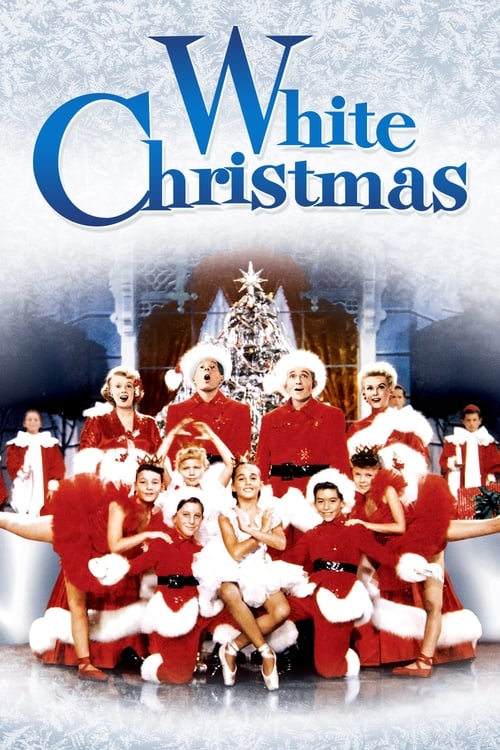
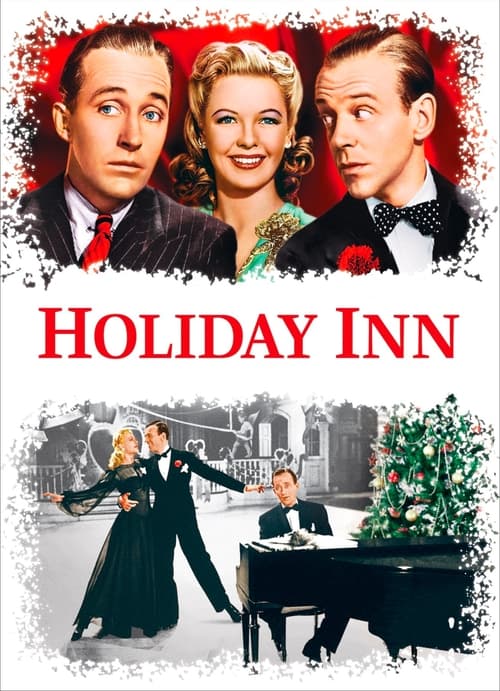
Crosby won the Academy Award for Best Actor for his performance in Going My Way (1944) and was nominated for its sequel, The Bells of St. Mary's (1945), opposite Ingrid Bergman, becoming the first of six actors to be nominated twice for playing the same character. Crosby was the number one box office attraction for five consecutive years from 1944 to 1948. At his screen apex in 1946, Crosby starred in three of the year's five highest-grossing films: The Bells of St. Mary's, Blue Skies, and Road to Utopia. In 1963, he received the first Grammy Global Achievement Award. Crosby is one of 33 people to have three stars on the Hollywood Walk of Fame, in the categories of motion pictures, radio, and audio recording. He was also known for his collaborations with his friend Bob Hope, starring in the Road to ... films from 1940 to 1962. Crosby has been associated with the Christmas season since he starred in Irving Berlin's musical film Holiday Inn and also sang "White Christmas" in the film of the same name.
Crosby influenced the development of the post–World War II recording industry. After seeing a demonstration of a German broadcast quality reel-to-reel tape recorder brought to the United States by John T. Mullin, Crosby invested $50,000 in the California electronics company Ampex to build copies. He then persuaded ABC to allow him to tape his shows and became the first performer to prerecord his radio shows and master his commercial recordings onto magnetic tape. Through audio recordings, Crosby produced his radio programs with the same directorial tools and craftsmanship (editing, retaking, rehearsal, time shifting) used in motion picture production, a practice that became the industry standard. In addition to his work with early audio tape recording, Crosby helped finance the development of videotape, bought television stations, bred racehorses, and co-owned the Pittsburgh Pirates baseball team, during which time the team won the World Series twice (1960 and 1971).
Contents
Early life
Harry Lillis Crosby Jr. was born on May 3, 1903, in Tacoma, Washington, in a house his father built at 1112 North J Street. Three years later, his family moved to Spokane in Eastern Washington State, where Crosby was raised. In 1913, his father (Harry Lillis Crosby Sr.) built a house at 508 E. Sharp Avenue. The house stands on the campus of Crosby's alma mater, Gonzaga University, as a museum housing over 200 artifacts from his life and career, including his Oscar.
Crosby was the fourth of seven children: brothers Laurence Earl "Larry" (1895–1975), Everett Nathaniel (1896–1966), Edward John "Ted" (1900–1973), and George Robert "Bob" (1913–1993); and two sisters, Catherine Cordelia (1904–1974) and Mary Rose (1906–1990). His parents were Harry Lillis Crosby Sr. (1870–1950), a bookkeeper, and Catherine Helen "Kate" (née Harrigan; 1873–1964). His mother was a second-generation Irish-American. His father was of Scottish and English descent; an ancestor, Simon Crosby, emigrated from the Kingdom of England to New England in the 1630s during the Puritan migration to New England. Through another line, also on his father's side, Crosby is descended from Mayflower passenger William Brewster (c. 1567 – 1644).
Crosby first got into music by his parents. Bing's father would blare music on the family's Edison phonograph while his mother was a singer, helping most of the kids to develop the skill. Instead of singing, Bing preferred whistling as a boy, whistling and also humming wherever we went. In his career, Crosby would whistle in a lot of his songs, including "White Christmas".
In 1917, Crosby took a summer job as property boy at Spokane's Auditorium, where he witnessed some of the acts of the day, including Al Jolson, who held Crosby spellbound with ad-libbing and parodies of Hawaiian songs. Crosby later described Jolson's delivery as "electric".
Crosby graduated from Gonzaga High School in 1920 and enrolled at Gonzaga University. He attended Gonzaga for three years but did not earn a degree. As a freshman, Crosby played on the university's baseball team. According to the son of his coach Gus Dorais, Crosby played home games, but did not qualify for the smaller squad that went on the road. He was so popular with his teammates, however, that they would sneak him on the train and hide him. He brought his guitar along and entertained them in return. The university granted him an honorary doctorate in 1937. Gonzaga University houses a large collection of photographs, correspondence, and other material related to Crosby.
Nickname "Bing"
The Associated Press had reported as early as February 1932 — later confirmed by both Bing himself and his biographer Charles Thompson — that it was in fact a neighbor, Valentine Hobart, circa 1910, who had named him "Bingo from Bingville". This was after a comic feature in the local paper called The Bingville Bugle which the young Harry liked. In time, Bingo got shortened to Bing.
On November 8, 1937, after Lux Radio Theatre's adaptation of She Loves Me Not, Joan Blondell asked Crosby how he got his nickname. As it happens, the following story was "pure whimsy" for dramatic effect.
Crosby: "Well, I'll tell you, back in the knee-britches day, when I was a wee little tyke, a mere broth of a lad, as we say in Spokane, I used to totter around the streets, with a gun on each hip, my favorite after school pastime was a game known as "Cops and Robbers", I didn't care which side I was on, when a cop or robber came into view, I would haul out my trusty six-shooters, made of wood, and loudly exclaim bing! bing!, as my luckless victim fell clutching his side, I would shout bing! bing!, and I would let him have it again, and then as his friends came to his rescue, shooting as they came, I would shout bing! bing! bing! bing! bing! bing! bing! bing!"Blondell: "I'm surprised they didn't call you "Killer" Crosby! Now tell me another story, Grandpa!Crosby: "No, so help me, it's the truth, ask Mister De Mille."De Mille: "I'll vouch for it, Bing."
Career
Early years
In 1923, Crosby was invited to join a new band composed of high-school students a few years younger than himself. Al and Miles Rinker (brothers of singer Mildred Bailey), James Heaton, Claire Pritchard and Robert Pritchard, along with drummer Crosby, formed the Musicaladers, who performed at dances both for high school students and club-goers. The group performed on Spokane radio station KHQ, but disbanded after two years. Crosby and Al Rinker obtained work at the Clemmer Theatre in Spokane (now known as the Bing Crosby Theater).
On August 14, 1925, Bing appeared at the Clemmer Theater as part of The Clemmer Trio (Frank McBride, Lloyd Grinnell and Harry Crosby) and they were shown as being presented with special stage effects. Rinker played piano in the pit. They continued at the theater alongside the film of the week for 12 weeks. They were initially billed as The Clemmer Trio and later as The Clemmer Entertainers depending on who performed.
In October 1925, Crosby and Rinker decided to seek fame in California. They traveled to Los Angeles, where Bailey introduced them to her show business contacts. The Fanchon and Marco Time Agency hired them for 13 weeks for the revue The Syncopation Idea starting at the Boulevard Theater in Los Angeles and then on the Loew's circuit. They each earned $75 a week. As minor parts of The Syncopation Idea, Crosby and Rinker started to develop as entertainers. They had a lively style that was popular with college students. After The Syncopation Idea closed, they worked in the Will Morrissey Music Hall Revue. They honed their skills with Morrissey, and when they got a chance to present an independent act, they were spotted by a member of the Paul Whiteman organization.
Whiteman needed something different to break up his musical selections, and Crosby and Rinker filled this requirement. After less than a year in show business, they were attached to one of the biggest names. Hired for $150 a week in 1926, they debuted with Whiteman on December 6 at the Tivoli Theatre in Chicago. Their first recording, in October 1926, was "I've Got the Girl" with Don Clark's Orchestra, but the Columbia-issued record was inadvertently recorded at a slow speed, which increased the singers' pitch when played at 78 rpm. Throughout his career, Crosby often credited Bailey for getting him his first important job in the entertainment business.
The Rhythm Boys
Success with Whiteman was followed by disaster when they reached New York. Whiteman considered letting them go. However, the addition of pianist and aspiring songwriter Harry Barris made the difference, and The Rhythm Boys were born. The additional voice meant they could be heard more easily in large New York theaters. Crosby gained valuable experience on tour for a year with Whiteman and performing and recording with Bix Beiderbecke, Jack Teagarden, Tommy Dorsey, Jimmy Dorsey, Eddie Lang, and Hoagy Carmichael. Crosby matured as a performer and was in demand as a solo singer.
Crosby became the star attraction of the Rhythm Boys. In 1928, he had his first number one hit, a jazz-influenced rendition of "Ol' Man River". In 1930, the Rhythm Boys appeared in the film King of Jazz with Whiteman, but Crosby's growing dissatisfaction with Whiteman led to the Rhythm Boys leaving his organization. They joined the Gus Arnheim Orchestra, performing nightly in the Coconut Grove of the Ambassador Hotel. Singing with the Arnheim Orchestra, Crosby's solos began to steal the show while the Rhythm Boys' act gradually became redundant. Harry Barris wrote several of Crosby's hits, including "At Your Command", "I Surrender Dear", and "Wrap Your Troubles in Dreams". When Mack Sennett signed Crosby to a solo film contract in 1931, a break with the Rhythm Boys became almost inevitable. Crosby married Dixie Lee in September 1930. After a threat of divorce in March 1931, he applied himself to his career.
Success as a solo singer
On September 2, 1931, 15 Minutes with Bing Crosby, his nationwide solo radio debut, began broadcasting. The weekly broadcast made Crosby a hit. Before the end of the year, he signed with both Brunswick Records and CBS Radio. "Out of Nowhere", "Just One More Chance", "At Your Command", and "I Found a Million Dollar Baby (in a Five and Ten Cent Store)" were among the best-selling songs of 1931.
Ten of the top 50 songs of 1931 included Crosby with others or as a solo act. A "Battle of the Baritones" with singer Russ Columbo proved short-lived, replaced with the slogan "Bing Was King". Crosby played the lead in a series of musical comedy short films for Mack Sennett, signed with Paramount, and starred in his first full-length film, 1932's The Big Broadcast (1932), the first of 55 films in which he received top billing. Crosby would appear in almost 80 pictures. He signed a contract with Jack Kapp's new record company, Decca, in late 1934.
Crosby's first commercial sponsor on radio was Cremo Cigars and his fame spread nationwide. After a long run in New York, Crosby went back to Hollywood to film The Big Broadcast. His appearances, records, and radio work substantially increased his impact. The success of his first film brought Crosby a contract with Paramount, and he began a pattern of making three films a year. Crosby led his radio show for Woodbury Soap for two seasons while his live appearances dwindled. Crosby's records produced hits during the Depression when sales were down. Audio engineer Steve Hoffman stated that Crosby played a crucial role in revitalizing the record industry by supporting Decca founder Jack Kapp's plan to lower the price of singles from one dollar to thirty-five cents and to receive royalties based on sales rather than a flat fee. Crosby's reputation and musical influence attracted other artists to Decca and helped ensure the company's success, which in turn prevented the phonograph record business from collapsing during the Great Depression.
His first son Gary was born in 1933 with twin boys following in 1934. By 1936, Crosby replaced his former boss, Paul Whiteman, as host of the weekly NBC radio program Kraft Music Hall, where he remained for the next decade. "Where the Blue of the Night (Meets the Gold of the Day)", with his trademark whistling, became his theme song and signature tune.
Crosby's vocal style helped take popular singing beyond the "belting" associated with Al Jolson and Billy Murray, who had been obligated to reach the back seats in New York theaters without the aid of a microphone. As music critic Henry Pleasants noted in The Great American Popular Singers, something new had entered American music, a style that might be called "singing in American" with conversational ease. This new sound led to the popular epithet crooner.
Motion pictures
In the wake of a solid decade of headlining mainly smash hit musical comedy films in the 1930s, Crosby starred with Bob Hope and Dorothy Lamour in six of the seven Road to musical comedies between 1940 and 1962 (Lamour was replaced with Joan Collins in The Road to Hong Kong and limited to a lengthy cameo), cementing Crosby and Hope as an on-and-off duo, despite never declaring themselves a "team" in the sense that Laurel and Hardy or Martin and Lewis (Dean Martin and Jerry Lewis) were teams. The series consists of Road to Singapore (1940), Road to Zanzibar (1941), Road to Morocco (1942), Road to Utopia (1946), Road to Rio (1947), Road to Bali (1952), and The Road to Hong Kong (1962). When they appeared solo, Crosby and Hope frequently made note of the other in a comically insulting fashion. They performed together countless times on stage, radio, film, and television, and made numerous brief and not so brief appearances together in movies aside from the "Road" pictures, Variety Girl (1947) being an example of lengthy scenes and songs together along with billing.
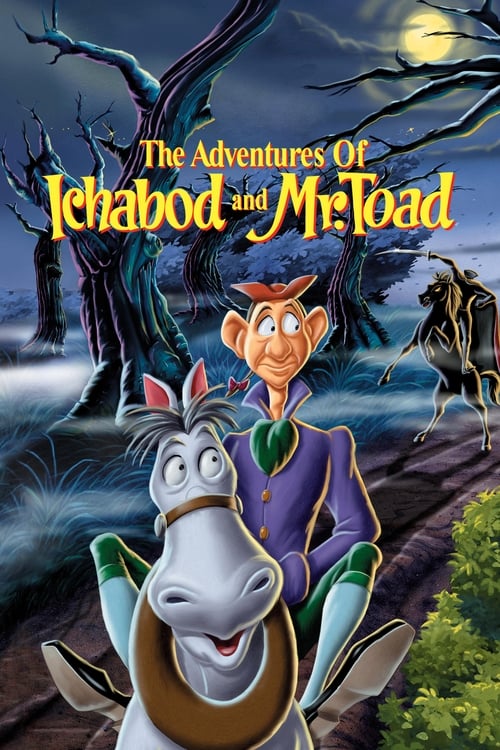
In the 1949 Disney animated film The Adventures of Ichabod and Mr. Toad, Crosby provided the narration and song vocals for The Legend of Sleepy Hollow segment. In 1960, he starred in High Time, a collegiate comedy with Fabian Forte and Tuesday Weld that predicted the emerging gap between Crosby and the new younger generation of musicians and actors who had begun their careers after World War II. The following year, Crosby and Hope reunited for one more Road movie, The Road to Hong Kong, which teamed them up with the much younger Joan Collins and Peter Sellers. Collins was used in place of their longtime partner Dorothy Lamour, whom Crosby felt was getting too old for the role, though Hope refused to do the film without her, and she instead made a lengthy and elaborate cameo appearance. Shortly before his death in 1977, Crosby had planned another Road film in which he, Hope, and Lamour search for the Fountain of Youth.
Crosby won an Academy Award for Best Actor for Going My Way in 1944 and was nominated for the 1945 sequel, The Bells of St. Mary's. He received critical acclaim and his third Academy Award nomination for his performance as an alcoholic entertainer in The Country Girl.
Television
The Fireside Theater (1950) was his first television production. The series of 26-minute shows was filmed at Hal Roach Studios rather than performed live on the air. The "telefilms" were syndicated to individual television stations. Crosby was a frequent guest on the musical variety shows of the 1950s and 1960s, appearing on various variety shows as well as numerous late-night talk shows and his own highly rated specials. Bob Hope memorably devoted one of his monthly NBC specials to his long intermittent partnership with Crosby titled "On the Road With Bing". Crosby was associated with ABC's The Hollywood Palace as the show's first and most frequent guest host and appeared annually on its Christmas edition with his wife Kathryn and his younger children, and continued after The Hollywood Palace was eventually canceled. In the early 1970s, Crosby made two late appearances on the Flip Wilson Show, singing duets with the comedian. His last TV appearance was a Christmas special, Merrie Olde Christmas, taped in London in September 1977 and aired weeks after his death. It was on this special that Crosby recorded a duet of "The Little Drummer Boy" and "Peace on Earth" with rock musician David Bowie. Their duet was released in 1982 as a single 45 rpm record and reached No. 3 in the UK singles charts. It has since become a staple of holiday radio and the final popular hit of Crosby's career. At the end of the 20th century, TV Guide listed the Crosby-Bowie duet one of the 25 most memorable musical moments of 20th-century television.
Bing Crosby Productions, affiliated with Desilu Studios and later CBS Television Studios, produced a number of television series, including Crosby's own unsuccessful ABC sitcom The Bing Crosby Show in the 1964–1965 season (with co-stars Beverly Garland and Frank McHugh). The company produced two ABC medical dramas, Ben Casey (1961–1966) and Breaking Point (1963–1964), the popular Hogan's Heroes (1965–1971) military comedy on CBS, as well as the lesser-known show Slattery's People (1964–1965).
Singing style and vocal characteristics
Crosby was one of the first singers to exploit the intimacy of the microphone rather than use the loud, penetrating vaudeville style associated with Al Jolson. Crosby was, by his own definition, a "phraser", a singer who placed equal emphasis on both the lyrics and the music. Paul Whiteman's hiring of Crosby, with phrasing that echoed jazz, particularly his bandmate Bix Beiderbecke's trumpet, helped bring the genre to a wider audience. In the framework of the novelty-singing style of the Rhythm Boys, Crosby bent notes and added off-tune phrasing, an approach that was rooted in jazz. He had already been introduced to Louis Armstrong and Bessie Smith before his first appearance on record. Crosby and Armstrong remained warm acquaintances for decades, occasionally singing together in later years, e.g. "Now You Has Jazz" in the film High Society (1956). In Crosby's performances, the presence of jazz phrasing, jazz rhythm and jazz improvisation varied depending on the piece of music, but those were elements that Crosby frequently used. This can be observed particularly in his straight jazz work during the late 1920s/early 1930s, Crosby's recordings with Buddy Cole and His Trio from the mid-1950s, as well as in his numerous collaborations with such jazz musicians as Louis Armstrong, Duke Ellington, Ella Fitzgerald, Joe Venuti, or Eddie Lang. However, while Crosby can be called a jazz singer, he was not strictly only a jazz singer as he modeled the style and techniques to a broad scope of music that he performed, ranging from Jazz to Country to even such material as operetta arias.
During the early portion of his solo career (about 1931–1934), Crosby's emotional, often pleading style of crooning was popular. But Jack Kapp, manager of Brunswick and later Decca, talked Crosby into dropping many of his jazzier mannerisms in favor of a clear vocal style. Crosby credited Kapp for choosing hit songs, working with many other musicians, and most important, diversifying his repertoire into several styles and genres. Kapp helped Crosby have number one hits in Christmas music, Hawaiian music, and country music, and top-30 hits in Irish music, French music, rhythm and blues, and ballads.
Crosby elaborated on an idea of Al Jolson's: phrasing, or the art of making a song's lyric ring true. "I used to tell Sinatra over and over," said Tommy Dorsey, "there's only one singer you ought to listen to and his name is Crosby. All that matters to him is the words, and that's the only thing that ought to for you, too."
Career achievements
Crosby's was among the most popular and successful musical acts of the 20th century. Billboard magazine used different methodologies during his career, but his chart success remains impressive: 396 chart singles, including roughly 41 number 1 hits. Crosby had separate charting singles every year between 1931 and 1954; the annual re-release of "White Christmas" extended that streak to 1957. He had 24 separate popular singles in 1939 alone. Statistician Joel Whitburn at Billboard determined that Crosby was America's most successful recording act of the 1930s and again in the 1940s.
The number of Bing Crosby record sales varies. Organizations that audit record sales do not have an official tally, but some claim sales are notable, namely: In 1960, Crosby was honored as "First Citizen of Record Industry" based on having sold 200 million discs. The Guinness Book reported some of the singer's worldwide sales on a few occasions: In 1973, Crosby had sold more than 400 million records worldwide, and by 1977 he had sold 500 million discs worldwide, being ranked as the most successful and best-selling musical artist in 1978 by Guinness World Records . Some sources contradict these alleged sales to the Guinness Book, as it is not an organization that counts or audits artists' sales in the United States or worldwide. According to different sources, Crosby's sales number varies between: 300 million, 500 million, or even 1 billion, making him one of the best-selling singers in history. The single "White Christmas" sold over 50 million copies according to Guinness World Records.
For 15 years (1934, 1937, 1940, 1943–1954), Crosby was among the top 10 acts in box-office sales, and for five of those years (1944–1948) he topped the world. Crosby sang four Academy Award-winning songs—"Sweet Leilani" (1937), "White Christmas" (1942), "Swinging on a Star" (1944), "In the Cool, Cool, Cool of the Evening" (1951)—and won the Academy Award for Best Actor for his role in Going My Way (1944).
A survey in 2000 found that with 1,077,900,000 movie tickets sold, Crosby was the third-most-popular actor of all time, behind Clark Gable (1,168,300,000) and John Wayne (1,114,000,000). The International Motion Picture Almanac lists Crosby in a tie for second-most years at number one on the All Time Number One Stars List with Clint Eastwood, Tom Hanks, and Burt Reynolds. His most popular film, White Christmas, grossed $30 million in 1954 ($360 million in current value).
Global impact
Crosby's popularity around the world was such that Dorothy Masuka, the best-selling African recording artist, stated that, "Only Bing Crosby the famous American crooner sold more records than me in Africa." His great popularity throughout the continent led other African singers to emulate him, including Masuka, Dolly Rathebe, and Míriam Makeba, known locally as "The Bing Crosby of Africa".
Presenter Mike Douglas commented in a 1975 interview, "During my days in the Navy in World War II, I remember walking the streets of Calcutta, India, on the coast; it was a lonely night, so far from my home and from my new wife, Gen. I needed something to lift my spirits. As I passed a Hindu sitting on the corner of a street, I heard something surprisingly familiar. I came back to see the man playing one of those old Vitrolas, like those of RCA with the horn speaker. The man was listening to Bing Crosby sing, "Ac-Cent-Tchu-Ate The Positive". I stopped and smiled in grateful acknowledgment. The Hindu nodded and smiled back. The whole world knew and loved Bing Crosby." His popularity in India led many Hindu singers to imitate and emulate him, notably Kishore Kumar, considered the "Bing Crosby of India".
Throughout Europe and Russia, Crosby was also known as "Der Bingle", a pseudonym coined in 1944 by Bob Musel, an American journalist based in London, after Crosby had recorded three 15-minute programs with Jack Russin for broadcast to Germany from ABSIE.
Entrepreneurship
According to Shoshana Klebanoff, Crosby became one of the richest men in the history of show business. He had investments in real estate, mines, oil wells, cattle ranches, race horses, music publishing, baseball teams, and television. Crosby made a fortune from the Minute Maid Orange Juice Corporation, in which he was a principal stockholder.
Role in early tape recording
During the Golden Age of Radio, performers had to create their shows live, sometimes even redoing the program a second time for the West Coast time zone. Crosby had to do two live radio shows on the same day, three hours apart, for the East and West Coasts. Crosby's radio career took a significant turn in 1945, when he clashed with NBC over his insistence that he be allowed to pre-record his radio shows. The live production of radio shows was reinforced by the musicians' union and ASCAP, which wanted to ensure continued work for their members. In On the Air: The Encyclopedia of Old-Time Radio, John Dunning wrote about German engineers having developed a tape recorder with a near-professional broadcast quality standard:
Suddenly Crosby saw an enormous advantage in prerecording his radio shows. The scheduling could now be done at the star's convenience. He could do four shows a week, if he chose, and then take a month off. But the networks and sponsors were adamantly opposed. The public wouldn't stand for 'canned' radio, the networks argued. There was something magic for listeners in the fact that what they were hearing was being performed, and heard live everywhere, at that precise instant. Some of the best moments in comedy came when a line was blown and the star had to rely on wit to rescue a bad situation. Fred Allen, Jack Benny, Phil Harris, and, yes, Crosby were masters at this, and the networks weren't about to give it up easily.
Crosby's insistence eventually factored into the further development of magnetic tape sound recording and the radio industry's widespread adoption of it. He used his clout, both professionally and financially, for innovations in audio. But NBC and CBS refused to broadcast prerecorded radio programs. Crosby left the network and remained off the air for seven months, creating a legal battle with his sponsor Kraft that was settled out of court. Crosby returned to broadcasting for the last 13 weeks of the 1945–1946 season.
The Mutual Network, on the other hand, pre-recorded some of its programs as early as 1938 for The Shadow with Orson Welles. ABC was formed from the sale of the NBC Blue Network in 1943 after a federal antitrust suit and was willing to join Mutual in breaking the tradition. ABC proposed a contract offering Crosby $30,000 per week to produce a pre-recorded radio program airing each Wednesday, sponsored by Philco. In addition, around 400 independent stations paid a collective $40,000 for broadcasting rights to the half-hour show, which was distributed every Monday on a set of three lacquer discs, each containing about ten minutes of audio per side at 33+1/3 rpm.
Videotape development
Mullin remained with Crosby to pursue the development of a videotape recorder (VTR). Since early television was primarily broadcast live, Crosby sought to introduce the same recording flexibility he had pioneered in radio. His first television venture, The Fireside Theater (1950), sponsored by Procter & Gamble, was produced before videotape technology was ready. As a result, the 26-minute episodes were filmed at Hal Roach Studios and distributed to individual stations as syndicated "telefilms".
Crosby kept providing financial support for the ongoing development of videotape technology. Bing Crosby Enterprises gave the world's first demonstration of videotape recording in Los Angeles on November 11, 1951. Developed by John T. Mullin and Wayne R. Johnson since 1950, the device aired what were described as "blurred and indistinct" images, using a modified Ampex 200 tape recorder and standard quarter-inch (6.3 mm) audio tape moving at 360 inches (9.1 m) per second.
Television station ownership
A Crosby-led group purchased station KCOP-TV, in Los Angeles, California, in 1954. NAFI Corporation and Crosby purchased television station KPTV in Portland, Oregon, for $4 million on September 1, 1959. In 1960, NAFI purchased KCOP from Crosby's group. In the early 1950s, Crosby helped establish the CBS television affiliate in his hometown of Spokane, Washington. Crosby partnered with Ed Craney, who owned the CBS radio affiliate KXLY (AM) and built a television studio west of Crosby's alma mater, Gonzaga University. After it began broadcasting, the station was sold within a year to Northern Pacific Radio and Television Corporation.
Thoroughbred horse racing
Crosby was a fan of thoroughbred horse racing and bought his first racehorse in 1935. Two years later, Crosby became a founding partner of the Del Mar Thoroughbred Club and a member of its board of directors. Operating from the Del Mar Racetrack in Del Mar, California, the group included millionaire businessman Charles S. Howard, who owned a successful racing stable that included Seabiscuit. Charles' son, Lindsay C. Howard, became one of Crosby's closest friends; Crosby named his son Lindsay after him, and would purchase his 40-room Hillsborough, California, estate from Lindsay in 1965.
Crosby and Lindsay Howard formed Binglin Stable to race and breed thoroughbred horses at a ranch in Moorpark in Ventura County, California. They also established the Binglin Stock Farm in Argentina, where they raced horses at Hipódromo de Palermo in Palermo, Buenos Aires. A number of Argentine-bred horses were purchased and shipped to race in the United States. On August 12, 1938, the Del Mar Thoroughbred Club hosted a $25,000 winner-take-all match race won by Charles S. Howard's Seabiscuit over Binglin's horse Ligaroti. In 1943, Binglin's horse Don Bingo won the Suburban Handicap at Belmont Park in Elmont, New York. The Binglin Stable partnership came to an end in 1953 as a result of a liquidation of assets by Crosby, who needed to raise enough funds to pay the hefty federal and state inheritance taxes on his deceased wife's estate. The Bing Crosby Breeders' Cup Handicap at Del Mar Racetrack is named in his honor.
Sports
Crosby had a keen interest in sports. In the 1930s, his friend and former college classmate, Gonzaga head coach Mike Pecarovich, appointed Crosby as an assistant football coach. From 1946 until his death, Crosby owned a 25% share of the Pittsburgh Pirates. Although he was passionate about the team, Crosby was too nervous to watch the deciding Game 7 of the 1960 World Series, choosing to go to Paris with Kathryn and listen to its radio broadcast. Crosby had arranged for Ampex, another of his financial investments, to record the NBC telecast on kinescope. The game was one of the most famous in baseball history, capped off by Bill Mazeroski's walk-off home run that won the game for Pittsburgh. Crosby apparently viewed the complete film just once, and then stored it in his wine cellar, where it remained undisturbed until it was discovered in December 2009. The restored broadcast was shown on MLB Network in December 2010.
Crosby was also an early investor in Bob Cobb's Billings Mustangs baseball club in 1948, joining other Hollywood stars Cecil B. DeMille, Robert Taylor, and Barbara Stanwyck who were also shareholders in the club. Crosby was also the honorary chairman of the club's board of directors.
Crosby was also an avid golfer. He first took up golf at age 12 as a caddy. Crosby was already spending much time on the golf course while touring the country in a vaudeville act or with Paul Whiteman's orchestra in the mid to late 1920s. Eventually, Crosby became accomplished at the sport, at his best reaching a two handicap. Crosby competed in both the British and U.S. Amateur championships, was a five-time club champion at Lakeside Golf Club in Hollywood, and once made a hole-in-one on the 16th hole at Cypress Point.
In 1937, Crosby hosted the first 'Crosby Clambake', a pro-am tournament at Rancho Santa Fe Golf Club in Rancho Santa Fe, California, the event's location prior to World War II. After the war, the event resumed play in 1947 on golf courses in Pebble Beach, where it has been played ever since. Now the AT&T Pebble Beach Pro-Am, the tournament is a staple of the PGA Tour, having featured Hollywood stars and other celebrities.
In 1950, Crosby became the third person to win the William D. Richardson award, which is given to a non-professional golfer "who has consistently made an outstanding contribution to golf". In 1978, he and Bob Hope were voted the Bob Jones Award, the highest honor given by the United States Golf Association in recognition of distinguished sportsmanship. Crosby is a member of the World Golf Hall of Fame, having been inducted in 1978.
Personal life
Crosby reportedly had a problem with alcohol abuse between the late 1920s and early 1930s, spending 60 days in jail for drinking and crashing his car during prohibition. He got his drinking under control in 1931.
In 1977, Crosby told Barbara Walters in a televised interview that he thought marijuana should be legalized, because he believed it would make it much easier for the authorities to exert proper legal control over the market.
In December 1999, the New York Post published an article by Bill Hoffmann and Murray Weiss called Bing Crosby's Single Life which claimed that "recently published" FBI files revealed connections with figures in the Mafia "since his youth". However, Crosby's FBI files had already been published in 1992 and provide no indication that Crosby had ties to the Mafia except for one major, but accidental, encounter in Chicago in 1929 which is not mentioned in the files, but is told by Crosby himself in his as-told-to autobiography Call Me Lucky. In the over 280 pages of Crosby's FBI files, there is only one reference to organized crime or gambling dens, the content of some of the many threats that Crosby received throughout his life.
The comments made by FBI investigators in the memos discredited the claims made in the letters. In the FBI files, there is only one reference to a person associated with the Mafia. A memorandum dated January 16, 1959, said, "The Salt Lake City Office has developed information indicating that Moe Dalitz received an invitation to join a deer hunting party at Bing Crosby's Elko, Nevada, ranch, together with the crooner, his Las Vegas dentist and several business associates." However, Crosby had already sold his Elko ranch a year earlier, in 1958, and it is doubtful how much he was really involved in that meeting.
Romantic relationships
Crosby was married twice. His first wife was actress and nightclub singer Dixie Lee, to whom he was married from 1930 until she died of ovarian cancer in 1952. They had four sons: Gary, twins Dennis and Phillip, and Lindsay. The film Smash-Up: The Story of a Woman (1947) was rumored to be based on Dixie's life. The Crosby family lived at 10500 Camarillo Street in North Hollywood for more than five years.
After his wife died, Crosby had relationships with model Pat Sheehan, who married his son Dennis in 1958, and actresses Inger Stevens and Grace Kelly. Crosby married actress Kathryn Grant, who converted to Catholicism, in 1957. They had three children: Harry Lillis III, who played Bill in Friday the 13th, Mary Frances, best known for portraying Kristin Shepard on TV's Dallas, and Nathaniel, the 1981 U.S. Amateur champion in golf.
Particularly during the late 1930s and the 1940s, Crosby's domestic life was dominated by his wife's excessive drinking. His efforts to cure her with the help of specialists failed. Tired of Dixie's drinking, Crosby even asked her for a divorce in January 1941. During the 1940s, he consistently had difficulties trying to stay away from home, while also trying to be there as much as possible for his children.
Crosby had one confirmed extramarital affair between 1945 and the late 1940s, while married to his first wife Dixie. Actress Patricia Neal, who herself at the time was having an affair with the married Gary Cooper, wrote in her 1988 autobiography As I Am about a cruise to England with actress Joan Caulfield in 1948:
She [Caulfield] was a lovely girl and we had some good talks. She, too, was in love with an older married man who was quite as famous as Gary [Cooper]. She confided to me that she desperately wanted to marry Bing Crosby. We were in the same boat in more ways than one, but I could not tell her so.
In the 2018 Crosby biography Bing Crosby: Swinging on a Star; the War Years, 1940–1946, there are excerpts from an original diary of two sisters, Violet and Mary Barsa, who, as young women, used to stalk Crosby in New York City in December 1945 and January 1946, and who detailed their observations in the diary. The document reveals that, during that time, Crosby was taking Caulfield out to dinner, visited theaters and opera houses with her, and Caulfield and a person in her company entered the Waldorf Hotel where Crosby was staying. The document also clearly indicates that at their meetings a third person, in most instances, Caulfield's mother, was present. In 1954, Caulfield admitted to a relationship with a "top film star" who was a married man with children, who, in the end, chose his wife and children over her.
Homes
In November 1958, Crosby purchased the 1,350-acre Rising River Ranch in Cassel, California after renting a portion of it for several years. Attorney Ira Shadwell declined to disclose the purchase price. In October 1978, actor Clint Eastwood purchased the ranch under the name of his business manager, Roy Kaufman, for $1.5 million.
Crosby and his family lived in the San Francisco area for many years. In 1963, he and his wife Kathryn moved with their three young children from Los Angeles to a $175,000 ten-bedroom Tudor estate in Hillsborough, formerly owned by fellow horseman Lindsay C. Howard, one of Crosby's closest friends, because they did not want to raise their children in Hollywood, according to son Nathaniel. This house went up for sale by its current owners in 2021 for $13.75 million.
In 1965, the Crosbys moved to a larger, 40-room French chateau-style house on nearby Jackling Drive, where Kathryn Crosby continued to reside after Bing's death. This house served as a setting for some of the family's Minute Maid orange juice television commercials.
Children
After Crosby's death, his eldest son, Gary, published a highly critical memoir, Going My Own Way (1983; written in collaboration with noted music journalist Ross Firestone), depicting his father as cruel, cold, remote, and physically and psychologically abusive. While acknowledging that corporal punishments took place, there were reports of all of Gary's immediate siblings distancing themselves from the abuse claims, either in public or in private.
Crosby's younger son Phillip disputed his brother Gary's claims about their father. Around the time Gary published his claims, Phillip stated to the press that "Gary is a whining, bitching crybaby, walking around with a two-by-four on his shoulder and just daring people to nudge it off." Nevertheless, Phillip did not deny that Crosby believed in corporal punishment. In an interview with People magazine, Phillip stated that "we never got an extra whack or a cuff we didn't deserve".
Shortly before Gary's book was actually published, Lindsay said, "I'm glad [Gary] did it. I hope it clears up a lot of the old lies and rumors." Unlike Gary, Lindsay stated that he preferred to remember "all the good things I did with my dad and forget the times that were rough". "Lindsay Crosby supported his brother (Gary) at the time of its publication but had a tempered view of its revelations. 'I never expected affection from my father so it didn't bother me,' he once told an interviewer.'" However, after the book was published, Lindsay addressed the abuse claims and what the media had made out of them, describing Crosby as a good father who provided a happy childhood. He acknowledged that, despite occasional differences, the children were raised to respect their parents and follow their instructions, with punishment given when they did not. Lindsay believed that Gary's book reflected his own feelings about his life rather than being an attack on their father. He expressed understanding of Gary's intentions and felt that his brother had not done anything wrong.
Dennis Crosby reportedly "said his older brother (Gary) was the most severely treated of the four boys. 'He got the first licking, and we got the second.'"
Gary's first wife of 19 years, Barbara Cosentino, of whom Gary wrote in his book, "I could confide in her about Mom and Dad and my childhood", and with whom Gary stayed friendly after the divorce, stated she was unsure whether the events described in his book were true, noting that Gary had never mentioned being whipped by his father. She felt that the controversy surrounding the book was out of hand and stated that she never saw any troubling behavior between Gary and Bing. Barbara said she was surprised when she read the book, as it did not sound like something Gary would write, and recalled Gary telling her before its publication that it was "not the same book" he had written.
Health and death
Following his recovery from a life-threatening fungal infection in his right lung in January 1974, Crosby emerged from semi-retirement to start a new spate of albums and concerts. On March 20, 1977, after videotaping a CBS concert special, "Bing – 50th Anniversary Gala", at the Ambassador Auditorium with Bob Hope looking on, Crosby fell off the stage into an orchestra pit, rupturing a disc in his back requiring a month-long stay in the hospital. Crosby's first performance after the accident was his last American concert, on August 16, 1977 at the Concord Pavilion in Concord, California. When the electric power failed during his performance, Crosby continued singing without amplification. On August 27, Crosby gave a televised concert in Norway.
In September, Crosby, his family and singer Rosemary Clooney began a concert tour of Britain that included two weeks at the London Palladium. While in the UK, Crosby recorded his final album, Seasons, and his final TV Christmas special with guest David Bowie on September 11, which aired a little over a month after Crosby's death. Crosby's last concert was in the Brighton Centre on October 10, four days before his death, with British entertainer Gracie Fields in attendance. The following day, Crosby made his final appearance in a recording studio and sang eight songs at the BBC's Maida Vale Studios for a radio program, which included an interview with Alan Dell. Accompanied by the Gordon Rose Orchestra, Crosby's last recorded performance was of the song "Once in a While". Later that afternoon, he met with Chris Harding to take photographs for the Seasons album jacket.
On October 13, 1977, Crosby flew alone to Spain to play golf and hunt partridge. The next day, Crosby played 18 holes of golf at the La Moraleja Golf Course near Madrid. His partner was World Cup champion Manuel Piñero. Their opponents were club president César de Zulueta and Valentín Barrios. According to Barrios, Crosby was in good spirits throughout the day, and was photographed several times during the round. At the ninth hole, construction workers building a house nearby recognized Crosby, and when asked for a song, Crosby sang "Strangers in the Night". Crosby, who had a 13 handicap, won with his partner by one stroke.
As Crosby and his party headed back to the clubhouse at around 6:30 p.m., Crosby said, "That was a great game of golf, fellas. Let's go have a Coca-Cola." Those were his last words. About 20 yards (18 m) from the clubhouse entrance, Crosby collapsed and died instantly from a heart attack. At the clubhouse and later in the ambulance, house physician Dr. Laiseca tried to revive him, but was unsuccessful. At the Reina Victoria Hospital, Crosby was administered the last rites of the Catholic Church and was pronounced dead at the age of 74.
Legacy
Crosby is a member of the National Association of Broadcasters Hall of Fame in the radio division.
The family created an official website on October 14, 2007, the 30th anniversary of Crosby's death.
In his autobiography Don't Shoot, It's Only Me! (1990), Bob Hope wrote, "Dear old Bing, as we called him, the Economy-sized Sinatra. And what a voice. God I miss that voice. I can't even turn on the radio around Christmas time without crying anymore."
Calypso musician Roaring Lion wrote a tribute song in 1939 titled "Bing Crosby", in which he wrote: "Bing has a way of singing with his very heart and soul / Which captivates the world / His millions of listeners never fail to rejoice / At his golden voice...."
Bing Crosby Stadium in Front Royal, Virginia, was named after Crosby in honor of his fundraising and cash contributions for its construction from 1948 to 1950.
In 2006, the former Metropolitan Theater of Performing Arts ('The Met') in Spokane, Washington, was renamed to The Bing Crosby Theater.
Crosby has three stars on the Hollywood Walk of Fame, one each for radio, recording, and motion pictures.
Compositions
Crosby wrote or co-wrote lyrics to 22 songs. His composition "At Your Command" was number 1 for three weeks on the U.S. pop singles chart beginning on August 8, 1931. "I Don't Stand a Ghost of a Chance With You" was his most successful composition, recorded by Duke Ellington, Frank Sinatra, Thelonious Monk, Billie Holiday, and Mildred Bailey, among others. Songs co-written by Crosby include:
"That's Grandma" (1927), with Harry Barris and James Cavanaugh
"From Monday On" (1928), with Harry Barris and recorded with the Paul Whiteman Orchestra featuring Bix Beiderbecke on cornet, number 14 on US pop singles charts
"What Price Lyrics?" (1928), with Harry Barris and Matty Malneck
"Ev'rything's Agreed Upon" (1930), with Harry Barris
"At Your Command" (1931), with Harry Barris and Harry Tobias, US, number 1 (3 weeks)
"Believe Me" (1931), with James Cavanaugh and Frank Weldon
"Where the Blue of the Night (Meets the Gold of the Day)" (1931), with Roy Turk and Fred Ahlert, US, no. 4; US, 1940 re-recording, no. 27
"You Taught Me How to Love" (1931), with H. C. LeBlang and Don Herman
"I Don't Stand a Ghost of a Chance with You" (1932), with Victor Young and Ned Washington, US, no. 5
"My Woman" (1932), with Irving Wallman and Max Wartell
"Cutesie Pie" (1932), with Red Standex and Chummy MacGregor
Grammy Hall of Fame
Four performances by Bing Crosby have been inducted into the Grammy Hall of Fame, which is a special Grammy award established in 1973 to honor recordings that are at least 25 years old and that have "qualitative or historical significance".
Radio
15 Minutes with Bing Crosby (1931, CBS), Unsponsored. 6 nights a week, 15 minutes.
The Cremo Singer (1931–1932, CBS), 6 nights a week, 15 minutes.
15 Minutes with Bing Crosby (1932, CBS), initially 3 nights a week, then twice a week, 15 minutes.
Chesterfield Cigarettes Presents Music that Satisfies (1933, CBS), broadcast two nights a week, 15 minutes.
Bing Crosby Entertains (1933–1935, CBS), weekly, 30 minutes.
Kraft Music Hall (1935–1946, NBC), Thursday nights, 60 minutes until January 1943, then 30 minutes.
Bing Crosby on Armed Forces Radio in World War II (1941–1945; World War II).
Philco Radio Time (1946–1949, ABC), 30 minutes weekly.
This Is Bing Crosby (The Minute Maid Show) (1948–1950, CBS), 15 minutes each weekday morning; Bing as disc jockey.
The Bing Crosby – Chesterfield Show (1949–1952, CBS), 30 minutes weekly.
The Bing Crosby Show for General Electric (1952–1954, CBS), 30 minutes weekly.
The Bing Crosby Show (1954–1956) (CBS), 15 minutes, 5 nights a week.
A Christmas Sing with Bing (1955–1962), (CBS, VOA and AFRS), 1 hour each year, sponsored by the Insurance Company of North America.