




Babylon Berlin is a German neo-noir television series. Created, written, and directed by Tom Tykwer, Achim von Borries, and Hendrik Handloegten, it is loosely based on novels by Volker Kutscher.
The series premiered on 13 October 2017 on Sky 1. The first release consisted of a continuous run of 16 episodes, with the first eight officially known as Season 1, and the second eight known as Season 2. Season 3 premiered in January 2020, followed by Season 4 in October 2022. The fifth and final season is scheduled to premiere in Germany on 10 September 2026.
Netflix exclusively streamed seasons 1 to 3 in Australia, Canada, New Zealand, and the United States until they were removed in February 2024. All four seasons dropped on the Australian free-to-air streaming service SBS on Demand in March 2024. In April 2024, the first three seasons of the show began streaming on MHz Choice in the United States and Canada, with the fourth season added in June.
Contents
Synopsis
The series is set in Berlin during the latter years of the Weimar Republic, beginning in 1929. It follows Gereon Rath, a police inspector on assignment from Cologne, who is on a secret mission to dismantle an extortion ring, and police clerk Charlotte Ritter, who aspires to become a police inspector.
It is due to end with season 5, set in 1933 as Hitler rises to power.
Cast
Main
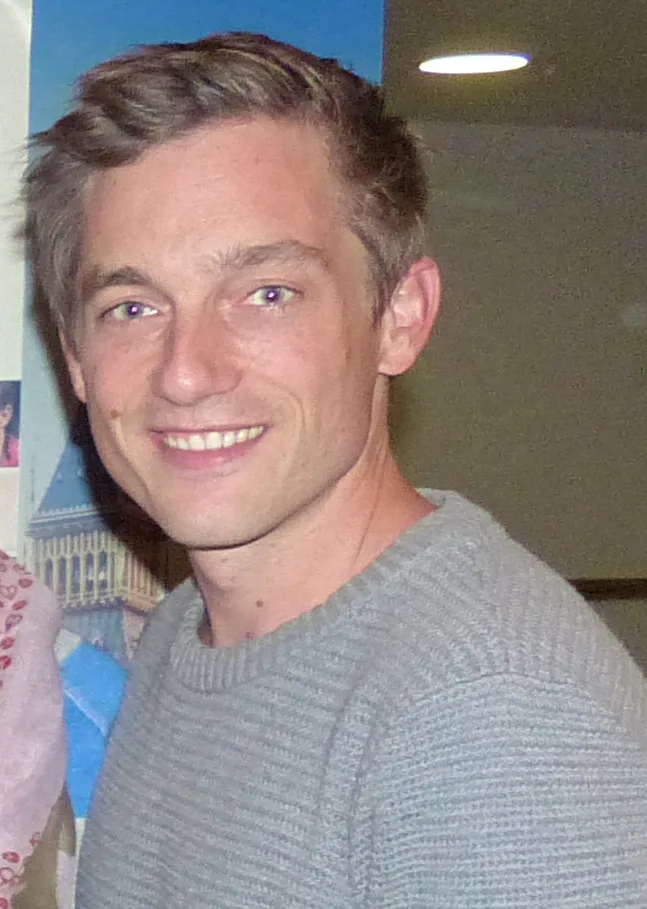
Volker Bruch as Inspector Gereon Rath, a combat veteran of the Imperial German Army during World War I and a policeman newly transferred from his home town of Cologne to Berlin; he struggles with morphine dependence linked to his war experiences, particularly his survivor's guilt over the loss of his brother (seasons 1–4)
Liv Lisa Fries as Charlotte Ritter ("Lotte"), a flapper from the slums of Neukölln and an occasional sex worker at the Moka Efti cabaret, who works as a police clerk and dreams of becoming the first female homicide detective in the history of the Berlin Police (seasons 1–4)FFSA
Peter Kurth as Detective Chief Inspector (DCI) Bruno Wolter, a Berlin Police investigator whose affability masks unseemly tendencies; he becomes the primary antagonist in season 2 (seasons 1–2)
Matthias Brandt as Councillor August Benda, the Jewish chief of the "Political Police" department of the Berlin Police. A tenacious investigator and true believer in the Weimar Republic, Benda is equally loathed by monarchists, communists, and Nazis; for years, he has been investigating the Black Reichswehr (seasons 1–2)
Leonie Benesch as Greta Overbeck, a down-on-her-luck childhood friend of Charlotte Ritter who eventually finds a job as domestic servant to Councillor Benda and his family and reluctantly gets entwined in an assassination scheme (seasons 1–3)
Severija Janušauskaitė as Countess Svetlana Sorokina ("Sveta")/Nikoros, a White Russian émigré, cross-dressing singer at the Moka Efti cabaret, and spy for the Soviet secret police (seasons 1–2)
Ivan Shvedoff as Alexei Kardakov, an anti-Stalinist Russian refugee and the leader of a fictional Trotskyist cell in Berlin called the "Red Fortress" (season 1; guest season 2)
Lars Eidinger as Alfred Nyssen, a steel manufacturer with links to Reichswehr and Freikorps officers plotting to overthrow the Republic and restore Kaiser Wilhelm II to the German throne and who detests the ruling Social Democratic Party of Germany (seasons 1–4)
Recurring
Laura Kiehne as Ilse Ritter, Charlotte's older sister (seasons 1–3)
Pit Bukowski as Erich Ritter, Ilse's husband (seasons 1–2; guest season 3)
Anton Rattinger as Dr. Joseph Schwarz, a forensic pathologist at the University of Berlin (seasons 1–4)
Lilli Fichtner as Doris, a friend of Charlotte (seasons 1–4)
Johann Jürgens as Rudolf Malzig ("Rudi"), a medical student and friend of Charlotte and Stephan (seasons 1,4; guest seasons 2–3)
Joachim Paul Assböck as Major Anton von Beck, General Seeger's adjutant (seasons 1–2)
Waldemar Kobus as Joseph Döhmann, a pharmacist who regularly supplies Gereon with morphine in exchange for pornography (season 1)
Marie Gruber as Emmi Wolter, Bruno's wife (seasons 1–2)
Jeanette Hain as Irmgard Benda, August's wife (season 1–3)
Emil von Schönfels as Arndt Scheer, a young member of the SA and a friend of Moritz who has sexual relations with Wendt (seasons 3–4; guest season 1)
Caro Cult as Vera Lohmann, an actress who replaces Betty Winter in the film Demons of Passion after her murder (season 3)
Bernhard Schütz as Jo Bellmann, a film director (season 3)
Jenny Schily as Rosa Helfers, the warden of Barnimstrasse women's prison (season 3–4)
Production
Development
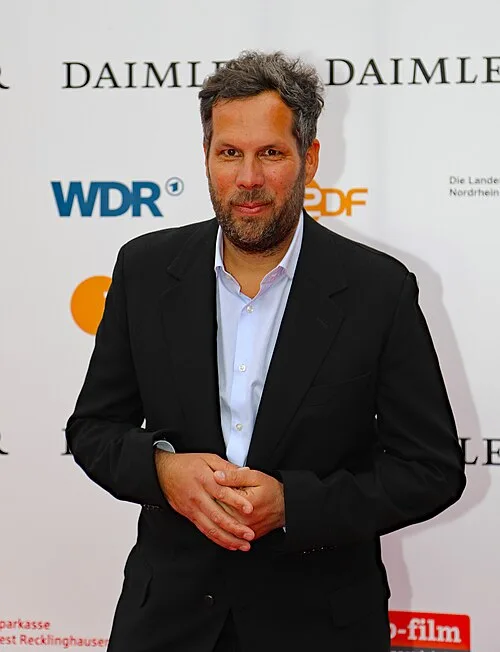
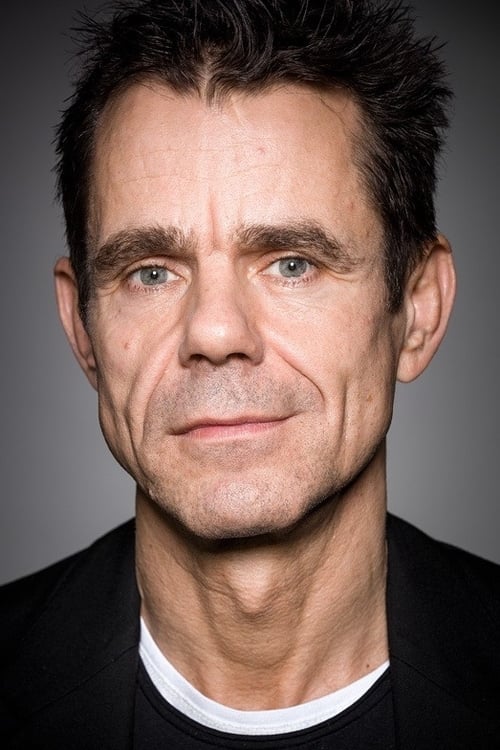
The series was co-directed by Tom Tykwer, Hendrik Handloegten, and Achim von Borries, who also wrote the scripts. The 16 episodes of the first two seasons were adapted by Tykwer, von Borries and Handloegten from the novel Der nasse Fisch (The Wet Fish) (2008) by Volker Kutscher and were filmed over eight months beginning in May 2016.
German public broadcaster ARD and pay TV channel Sky co-produced the series, a first time collaboration in German television. As part of the arrangement, Sky broadcast the series first, and ARD started broadcasts by free-to-air television on 30 September 2018. Netflix purchased rights for the United States, Canada, and Australia, where the series became available in 2018 with English dubbing and subtitles.
With a budget of €40 million that increased to €55 million due to reshoots, the series is described as the most expensive television drama series in Germany, as well as the most expensive non-English language television drama series ever produced.
The third season of Babylon Berlin was filmed over six months from late 2018 to May 2019. At the 32nd European Film Awards in December 2019, showrunners Achim von Borries, Henk Handloegten and Tom Tykwer stated that the third season was in post-production and that a fourth season was planned.
The third season was developed loosely around the second novel in Volker Kutscher's trilogy The Silent Death. The showrunners chose to diverge from the source material to better address the social and political unrest during the period as they felt that the Weimar Republic is often overlooked by both media and historical sources. The third season is set in late 1929 around the Black Tuesday stock market crash and navigates the rise of the subversive Black Reichswehr and communist political groups as well as the advent of talkies.
In a January 2020 interview with Berliner Zeitung, actress Liv Lisa Fries said that production would likely begin on the fourth season in late 2020 or early 2021. Planning and writing for the fourth season, based on the novel Goldstein, began in October 2020. Filming began in early 2021 and was completed in September 2021, with the production having shot for 129 days at Studio Babelsberg and at locations around Berlin. Season 4 is set in late 1930 and early 1931. It premiered on 8 October 2022.
Era and historical accuracy
In an interview with The Wall Street Journal, one of the show's co-creators, Tom Tykwer, spoke about the era:
At the time people did not realize how absolutely unstable this new construction of society which the Weimar Republic represented was. It interested us because the fragility of democracy has been put to the test quite profoundly in recent years... By 1929, new opportunities were arising. Women had more possibilities to take part in society, especially in the labour market as Berlin became crowded with new thinking, new art, theatre, music and journalistic writing.
Nonetheless, Tykwer insisted that he and his co-directors were determined not to idealize the Weimar Republic: "People tend to forget that it was also a very rough era in German history. There was a lot of poverty, and people who had survived the war were suffering from a great deal of trauma."
In the first season, communists, Soviets and especially Trotskyists play a prominent role. The Soviet ambassador to Germany from 1923 to 1930 was former Trotsky ally Nikolay Krestinsky. The show depicts what became known as Blutmai, violence between communist demonstrators and members of the Berlin Police in early May 1929, and extra-legal paramilitary formations promoted by the German Army, known as the Black Reichswehr.
In the first season, the Soviet ambassador in Berlin, who appears to be a loyal Stalinist, is involved in the massacre of Trotskyists in the printing shop, who were buried in a mass grave outside the city. According to Nathaniel Flakin, this event never happened. Nazi Party leader Adolf Hitler is only mentioned in passing during the first two seasons of Babylon Berlin.
Music
The score for the series was composed by Tom Tykwer and Johnny Klimek, and was done before filming. Tykwer also asked permission to integrate a remixed version of two unused compositions by Reinhold Heil, as well as one that he had written with Tykwer. Hans Hafner was music editor.
In 2018, the show formed an in-house band, the Moka Efti Orchestra, to perform the original music from the show. The group plays period-era music in a variety of styles ranging from ragtime to klezmer. Named after the nightclub featured in Babylon Berlin, the Moka Efti Orchestra is a 14-member group and is fronted by the Lithuanian actress Severija Janušauskaitė as Svetlana Sorokina. In the first double episode of the first season, Janušauskaitė's character, crossdressing as the male singer Nikoros, performs the main theme of the series, "Zu Asche, zu Staub" in the Moka Efti cabaret. This song was later released and charted on the German singles chart.
The group performed in concert in May 2018 and, due to popular demand, toured the country later that year. With the release of the third season of the show, the musical group released their debut album Erstausgabe (English: First Edition).
In addition to period music, "Dance Away", from the 1979 album Manifesto by Roxy Music, plays occasionally in the background (adapted to the style of the period) and also included is an adaptation of "These Foolish Things" and, in the Season Two finale, a Russian version of "Gloomy Sunday". Singer Bryan Ferry of Roxy Music appears toward the end of the first season as a cabaret singer performing "Bitter-Sweet", half in English, half in German, from the 1974 album Country Life.
A major action sequence in season two takes place during a performance of The Threepenny Opera. The song "Die Moritat von Mackie Messer" ("The Ballad of Mack the Knife") is featured in that scene, and also as a plot device. Two different characters hum the tune, giving detective Rath clues to the unfolding plot.
Locations
Babelsberg Studio constructed a massive addition to its Metropolitan Backlot for the filming of the series and for future productions. This permanent standing set is billed as one of the largest in Europe. The set includes recreations of various Berlin neighbourhoods, from a range of economic classes. It also includes the large exterior of the night club Moka Efti.
The series was also filmed on locations throughout Berlin and in the surrounding state of Brandenburg. Numerous scenes were filmed on Alexanderplatz in front of the historic Alexanderhaus. The police headquarters, once located directly behind it, and other surrounding buildings, were destroyed in WWII, but were recreated with computer simulations.
The Rotes Rathaus (Berlin City Hall) was used for most closeup scenes involving the exterior of the police headquarters, because their red brick appearance and architectural style are very similar. Interiors of the police headquarters lobby were filmed at the Rathaus Schöneberg, including scenes with its paternoster elevator, while the elegant Ratskeller restaurant in the same building was used as the nearby café Aschinger in multiple scenes. Other interior scenes in the police headquarters were filmed in the historic Robert-Koch-Forum.
Interior scenes in the Moka Efti were filmed at the 'Delphi Cinema' in Berlin-Weissensee. Bar Tausend, in Berlin served as the show's Holländer Bar. A lengthy suspense sequence set during a performance of The Threepenny Opera, was filmed at the historic Theater am Schiffbauerdamm, where the play actually ran at the time. The Immanuelkirche in Prenzlauer Berg was used for scenes of Anno and Helga's wedding. The headquarters of the Katholischer Studentenverein Askania-Burgundia Berlin, located in a villa in Dahlem, were used for the residence of Councillor Benda and his family.
The atrium of the Behrensbau was used as Dr. Schmidt's psychiatric clinic. The interiors and exteriors of the historic former Deutsche Bank headquarters complex were used as numerous locations in the series, including as the exterior of the Soviet Embassy. Because the complex was empty at the time of filming, it was also used as the production headquarters, and to house the show's thousands of costumes. Other scenes were filmed on Museum Island, in the Hermannplatz U-Bahn station, at the Hoppegarten Racecourse, and the Church of the Redeemer on the Havel river in Potsdam.
Broadcast
Babylon Berlin premiered in Germany on 13 October 2017 (Sky 1) and in the United Kingdom and the Republic of Ireland on Sunday, 5 November 2017 (Sky Atlantic). The series debuted in Australia, Canada, and the United States on 30 January 2018 (Netflix). Broadcasting on the German TV channel Das Erste started Sunday 30 September 2018. The Swedish broadcast began on 19 June 2019 on SVT.
The third season premiered in Germany on Sky 1 in January 2020, and on German public television station ARD in October 2020. In early 2019, the international distribution rights for the third season were sold to more than one hundred countries and many different networks, including Netflix, HBO Europe, and Viaplay.
In territories where the show was distributed by Netflix, the third season was released in its entirety in March 2020. The series was removed from Netflix in February 2024.
All four seasons dropped on the Australian free-to-air streaming service SBS on Demand on 14 March 2024. The first three seasons of the series began streaming again in the United States on MHz Choice in April 2024. The fourth season made its US premiere on the service in June 2024.
Episodes
The first and second seasons, of eight episodes each, were written as one story, covering the first novel of the Kutscher book series, and filmed as one production. They premiered as one block, numbered 1–16 and have been broadcast throughout the world en bloc. All 16 episodes of both seasons were made available simultaneously on Netflix. In many territories the show was broadcast as a season comprising eight double-length episodes.
The second block of 12 episodes are officially known as Season 3, but were broadcast as Season 2 in some territories where the previous episodes premiered as one block.
Season 1 (2017)
All episodes were written and directed by Henk Handloegten, Achim von Borries, and Tom Tykwer.
Season 2 (2017)
The second-season episodes were written and directed by Henk Handloegten, Achim von Borries, and Tom Tykwer.
Critical reception
On Rotten Tomatoes the first season holds approval rating of 100% based on 30 reviews, with the critics consensus reading: "Babylon Berlin's humor and humanity pair nicely with its hypnotic visuals, resulting in a show that dazzles within its oversaturated genre." As of April 2019, Babylon Berlin was the highest rated non-English language show on Sky TV.
Carolin Ströbele of Die Zeit praised the pilot, saying that it "is highly dynamic and unites sex, crime and history in a pleasantly unobtrusive manner." Christian Buss, cultural critic from Der Spiegel, praised the series for staying true to the tradition of "typically German angst cinema", in the vein of 1920s silent movies such as Fritz Lang's Metropolis or Robert Wiene's The Cabinet of Dr. Caligari. "It could be that Babylon Berlin is the first big German TV production since Das Boot which enjoys really relevant success abroad. Let's not be shy to say it: we [Germans] are big again – as the world champions of angst."
Accolades
The series itself received several awards in 2018. These included a Bambi in the category Beste Serie des Jahres (Best series of the year), four awards at the Deutscher Fernsehpreis (best dramatical series; best cinematography for Frank Griebe, Bernd Fischer and Philip Haberlandt; best musical score for Johnny Klimek and Tom Tykwer; and best production design for Pierre-Yves Gayraud and Uli Hanisch), a special Bavarian TV Award and a Romy for TV event of the year. In the same year, everyone majorly involved with the production of the series won a Grimme-Preis, including Volker Bruch, Liv Lisa Fries, Peter Kurth, the three directors and several members of the technical team. Bruch also won a Goldene Kamera in the category Best German actor for his portrayal of Gereon Rath.
The series' opening title sequence, created by German designer Saskia Marka and featuring a theme composed by Johnny Klimek and Tom Tykwer, was named the best title sequence of 2018 by industry website Art of the Title.
In December 2019, the European Film Academy awarded the series with the inaugural Achievement in Fiction Series Award at the European Film Awards.