Critical response
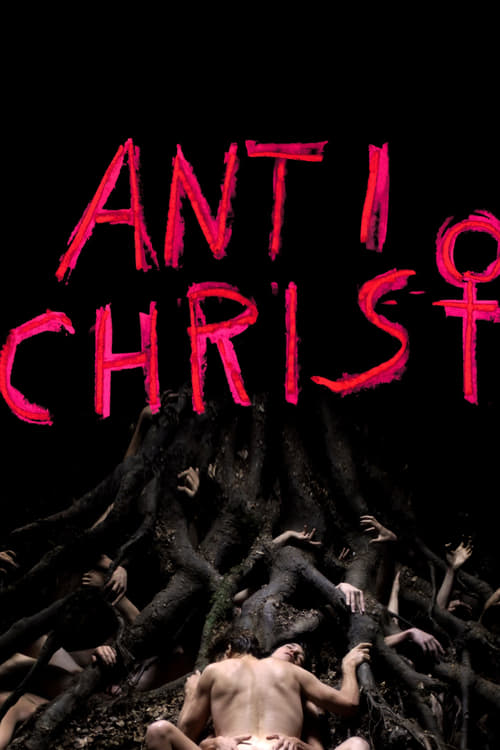
In Denmark, the film quickly became successful with both critics and audiences. Politiken called it "a grotesque masterpiece", giving it a perfect score of 6 out of 6, and praised it for being completely unconventional while at the same time being "a profoundly serious, very personal ... piece of art about small things like sorrow, death, sex and the meaninglessness of everything." Berlingske Tidende gave it a rating of 4 out of 6 and praised the "peerless imagery", and how "cinematographer Anthony Dod Mantle effectively switches between Dogme-like hand-held scenes and wonderful stylized tableaux." An exception was Claus Christensen, editor of the Danish film magazine Ekko. Christensen accused the other Danish critics of overrating the film, himself calling it "a master director's failed work". Around 83,000 tickets were sold in Denmark during theatrical run, the best performance by a Trier film since Dogville. The film was nominated by Denmark for The Nordic Council Film Prize, which it won. Antichrist went on to sweep the Robert Awards, Denmark's main national film awards, by winning in seven categories: Best Film, Best Director, Best Screenplay, Best Cinematographer, Best Editing, Best Lighting Design and Best Special Effects.
However, Antichrist polarized critical opinion in the United States. On review aggregation website Rotten Tomatoes, the film has an approval rating of 54% based on 179 reviews, and an average rating of 5.60/10. The website's critical consensus reads, "Gruesome, explicit and highly controversial; Lars von Trier's arthouse-horror, though beautifully shot, is no easy ride." On Metacritic, the film has an average weighted score of 49 out of 100, based on 34 critics, indicating "mixed or average reviews". Roger Ebert of the Chicago Sun-Times gave the film three-and-a-half stars out of four, saying:
Von Trier, who has always been a provocateur, is driven to confront and shake his audience more than any other serious filmmaker. He will do this with sex, pain, boredom, theology and bizarre stylistic experiments. And why not? We are at least convinced we're watching a film precisely as he intended it, and not after a watering down by a fearful studio executive. That said, I know what's in it for von Trier. What was in it for me? More than anything else, I responded to the performances. Feature films may be fiction, but they are certainly documentaries showing actors in front of a camera.
In a blog post, he expanded on this, discussing the film's symbolism, imagery and Trier's intentions, calling him "one of the most heroic directors in the world" and Antichrist "a powerfully-made film that contains material many audiences will find repulsive or unbearable. The performances by Willem Dafoe and Charlotte Gainsbourg are heroic and fearless. Trier's visual command is striking. The use of music is evocative; no score, but operatic and liturgical arias. And if you can think beyond what he shows to what he implies, its depth are [sic] frightening."
Betsy Sharkey of the Los Angeles Times wrote: "The story of Antichrist is a tangled mess of sex, evil and death, with Von Trier making a stab at allegory and old-fashioned horror, but ultimately failing on both fronts... You might think, given the He, She, Eden, etc., that the film is allegory. It is not. Antichrist never rises to the symbolic; instead, it looks like nothing more than a reflection of one man's unresolved issues with the sexual liberation of women." Duane Dudek of the Milwaukee Journal Sentinel called Antichrist "Trier's most visually lush and technically rigorous film; it captures things at a molecular level and in a slow motion that all but brings the world to a halt ... But paradoxically, this is his most unwatchable film, and many will find its violence and cruelty, including scenes of genital mutilation, repellent. I cannot recommend Antichrist, but in a culture that hemorrhages death and torture nightly on shows like 24 or C.S.I., I can understand it."
Arguments for censorship were common in the British press, with much criticism rooted in the EU funding the film received. Despite some controversy, the film was critically well-received in the British film magazine Empire, where film critic Kim Newman gave the film four stars out of five. He noted that "Trier's self-conscious arrogance is calculated to split audiences into extremist factions, but Antichrist delivers enough beauty, terror and wonder to qualify as the strangest and most original horror movie of the year."
Australia's The Monthly critic Luke Davies viewed it as "a bleak but entrancing film that explores guilt, grief and many things besides ... that will anger as many people as it pleases", describing Trier's "command of the visually surreal" as "truly exceptional". Davies described the film as "very good and very flawed", conceding "it is not easy to understand the meaning or intention of specific images and details of the film" but still concludes that "there's something neurotic and reactionary in the controversy and near-hysteria surrounding the film."
Film director John Waters hailed Antichrist as one of the ten best films of 2009 in Artforum, stating "If Ingmar Bergman had committed suicide, gone to hell, and come back to earth to direct an exploitation/art film for drive-ins, [Antichrist] is the movie he would have made."
The film won the award for Best Cinematographer at the 2009 European Film Awards, shared with Slumdog Millionaire as both films were shot by Anthony Dod Mantle. It was nominated for Best Director and Best Actress but the awards lost to Michael Haneke for The White Ribbon and Kate Winslet for The Reader respectively. In a 2016 international poll by BBC, critics Stephanie Zacharek and Andreas Borcholte ranked Antichrist among the greatest films since 2000.