1950–1958: Western films and collaborations with James Stewart
The 1950s marked a notable turn in Mann's career, in which he directed a total of ten Western films throughout the decade (three of which were released in 1950). After Border Incident (1949), Mann was approached by Nicholas Nayfack, who asked him: "How would you like to direct a Western? I've a scenario here that seems interesting." He was handed the script for Devil's Doorway (1950), deeming it "the best script I had ever read." The film starred Robert Taylor, portraying a Shoshone native who faces prejudice after returning home in Medicine Bow, Wyoming following his decorated service in the American Civil War. Principal photography began on August 15, 1949, and lasted until mid-October. MGM initially withheld the film because of its topical subject, but released the film after Delmer Daves' Broken Arrow (1950), which starred James Stewart, had become successful. When it was released, the film was neither a critical or commercial success.
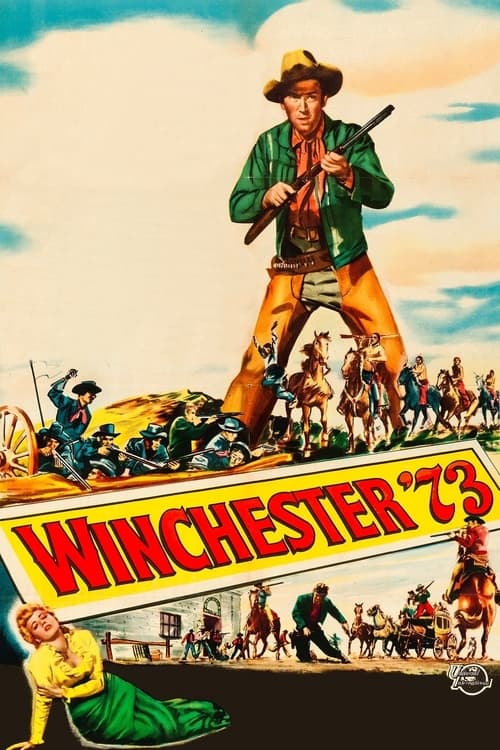
He followed this with a Western at Universal, starring James Stewart, Winchester '73 (1950). The film was originally set to be directed by Fritz Lang, but he felt Stewart was unsuitable for the lead role and dropped out. When Stewart had seen a rough cut of Devil's Doorway (1950), he suggested Mann as a replacement. Mann readily accepted, but threw out the script calling Borden Chase for a rewrite. Principal photography began on February 14, 1950, in Tucson, Arizona for a thirty-day shooting schedule. The film was a commercial success, earning $2.25 million in distributor rentals becoming Universal Pictures' second-most successful film of 1950.
At the invitation of Hal Wallis, Mann directed the Western The Furies (1950) at Paramount starring Barbara Stanwyck and Walter Huston. Also released in summer 1950, the film grossed $1.55 million in distributor rentals in the United States and Canada. Mann reflected, "It had marvellous characters, interesting notices, but it failed because nobody in it cared about anything—they were all rudderless, rootless, and haters." In the fall of 1950, Mann was sent to Cinecittà to do second-unit work on Quo Vadis (1951). There, Mann worked 24 nights, filming the burning of Rome sequence with assistant cinematographer William V. Skall.
Side Street (1950) was the final film noir that Mann directed. The film starred Farley Granger and Cathy O'Donnell, reteaming after They Live by Night (1948). He next directed a period thriller with Dick Powell, The Tall Target (1952).
After the success of Winchester '73 (1950), Universal Pictures wanted another collaboration between Mann and Stewart. After a recommendation from one friend, Stewart proposed adapting the novel Bend of the River by Bill Gulick to Universal. The studio agreed and purchased the film rights. The actor and director made a contemporary adventure film, Thunder Bay (1953) at Universal. Feeling dissatisfied with the final film, Mann stated, "We tried but it was all too fabricated and the story was weak. We were never able to lick it ...It didn't get terribly good notices but of course it made a profit."
In 1952, MGM approached Mann to direct The Naked Spur (1953). The story told of bounty hunter Howard Kemp who wants to collect a $5,000 reward on an outlaw's head so he can buy back land lost to him during the American Civil War. With unwanted help from a gold prospector and an Army deserter, Kemp captures the outlaw and the girlfriend who accompanies him. With the film's release in 1953, Mann fulfilled his contract with MGM.
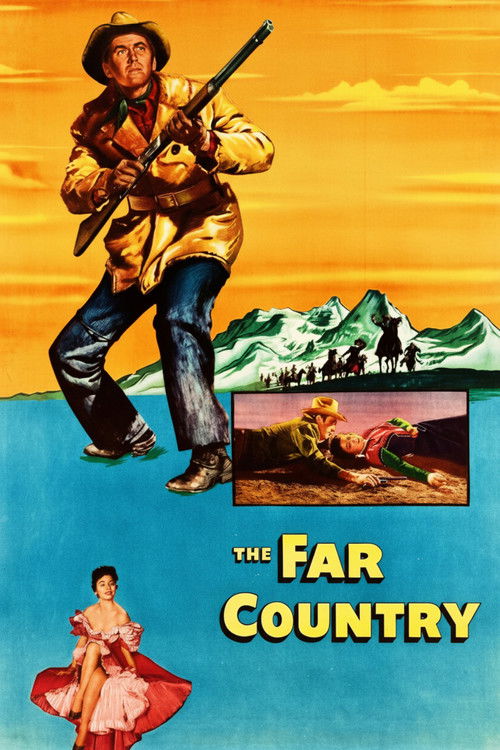
Mann and Stewart had their biggest success with The Glenn Miller Story (1954). During its release, the film earned $7 million in distributor rentals in the United States and Canada. That same year, he filmed The Far Country with James Stewart and Walter Brennan. The film would be Mann's last collaboration with Borden Chase.
Mann and Stewart paired for one more non-Western film, Strategic Air Command (1955). Stewart had served with the U.S. Air Force and pushed for a cinematic portrayal. With the cooperation of the Air Force, Mann agreed to direct the film, wanting to film the Convair B-36 and Boeing B-47 in action as the human characters, in his words, "were papier-mâché". During its release, the film earned $6.5 million at the box office.
Mann's last collaboration with Stewart was The Man from Laramie (1955) at Columbia Pictures. The film was an adaptation from a serial by Thomas T. Flynn, first published in The Saturday Evening Post in 1954. The film was shot on location in Coronado, New Mexico, and in Sante Fe. The film was the favorite of Stewart's of the films they made together. After the film's release, Harry Cohn asked Mann to direct another Western film for Columbia. Mann agreed and decided to direct The Last Frontier (1955). Mann offered Stewart the lead role to which he declined and instead cast Victor Mature.
In 1956, Mann was handed the script for Night Passage (1957) by Aaron Rosenberg, intending to reunite him with Stewart for a potential ninth collaboration. Before filming was set to begin on September 4, Mann withdrew from the project. Contemporary accounts reported that Mann withdrew because he had not yet finished editing Men in War (1957). However, latter accounts state Mann had developed creative differences with Chase over the script, which Mann considered to be weak. In 1967, Mann had also accused Stewart of only doing the film so he could play his accordion. Mann asked to be replaced, and James Neilson was hired to direct the film. Stewart and Mann never collaborated on another project again.
Mann directed a musical starring Mario Lanza titled Serenade (1956). During filming, he worked with actress Sara Montiel, who became his second wife. In August 1957, Mann announced he had acquired the film rights to Lion Feuchtwanger's novel This is the Hour, which told a fictionalized account of painter Francisco Goya. Montiel was set to portray Maria Teresa de Cayetana, Duchess of Alba. By February 1958, Mann had abandoned the project as a rival film titled The Naked Maja (1958) was in production. He then purchased the film rights to John McPartland's then-recently published novel Ripe Fruit, with Montiel set to star. However, the project failed to materialize.
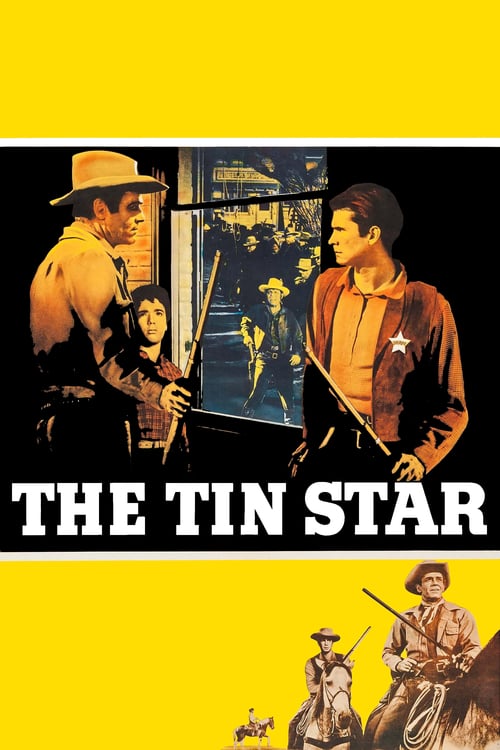
Mann directed a Western starring Henry Fonda and Anthony Perkins titled The Tin Star (1957). Mann then teamed with Philip Yordan on two films starring Robert Ryan and Aldo Ray; the first being Men in War (1957) was about the Korean War. The film was the first of three Mann had directed for United Artists. His second project was a 1958 film adaptation of Erskine Caldwell's then-controversial novel God's Little Acre. Mann and producer Sidney Harmon had intended to film in Augusta, Georgia, but the novel's controversial subject matter heightened resistance from city leaders and local farmers. As a result, the production was denied permission to film in the state. In October 1957, they eventually selected Stockton, California. On both films, Yordan was given the official screenwriter credit, but Ben Maddow stated he had written both screenplays.
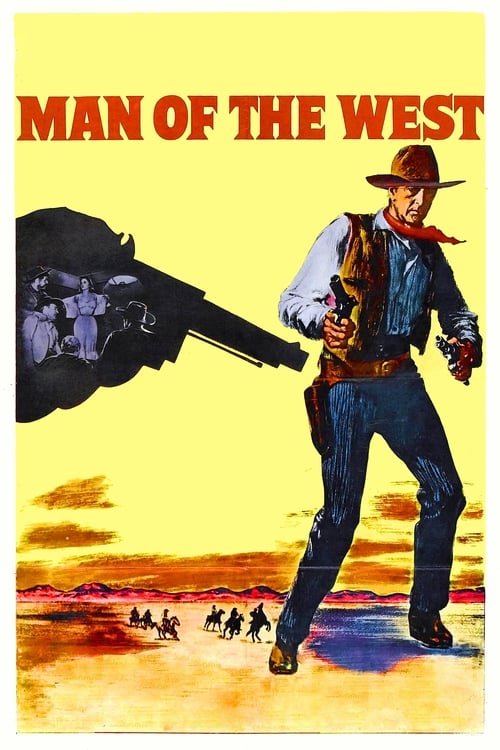
Mann later directed Gary Cooper in a Western, Man of the West (1958) for United Artists. Filming began on February 10, 1958, and ended later that same year. When it was released, Howard Thompson of The New York Times wrote the film was "good, lean, tough little Western" that was "[w]ell-acted and beautifully photographed in color and Cinema-Scope". Elsewhere, Jean-Luc Godard, then a critic for Cahiers du Cinéma, gave the film a raving review when it was released in France.