



André René Roussimoff (French: [ɑ̃dʁe ʁəne ʁusimɔf]; 19 May 1946 – 28 January 1993), known professionally as André the Giant, was a French professional wrestler and actor. Dubbed "the Eighth Wonder of the World", Roussimoff was known for his great size, which was a result of gigantism caused by excess human growth hormone.
Beginning his career in 1966, Roussimoff relocated to North America in 1971. From 1973 to the mid-1980s, Roussimoff was booked by World Wide Wrestling Federation (WWWF) promoter Vincent J. McMahon as a roving "special attraction" who wrestled for promotions throughout the United States, as well as in Japan for New Japan Pro-Wrestling. During the 1980s wrestling boom, Roussimoff became a mainstay of the WWWF (by then renamed the World Wrestling Federation), being paired with the villainous manager Bobby Heenan and feuding with Hulk Hogan. The two headlined WrestleMania III in 1987, and in 1988, he defeated Hogan to win the WWF World Heavyweight Championship, his sole major world heavyweight championship, on the first episode of The Main Event. As his WWF career wound down after WrestleMania VI in 1990, Roussimoff wrestled primarily for All Japan Pro-Wrestling, usually alongside Giant Baba, until his sudden death.
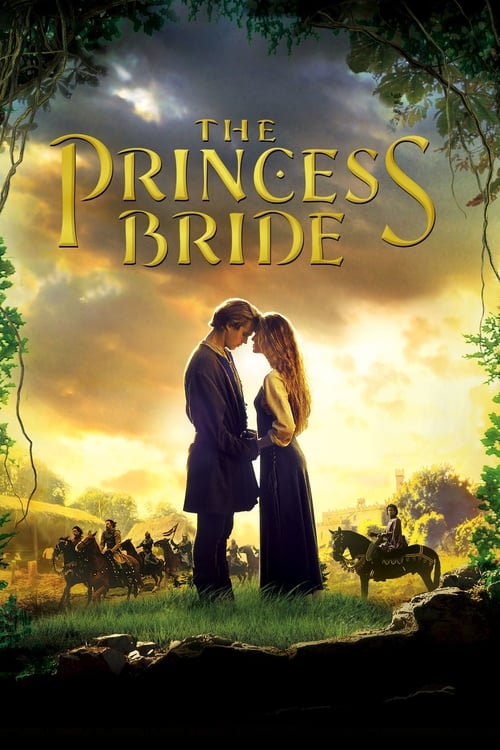
After his death in 1993, Roussimoff became the inaugural inductee into the newly created WWF Hall of Fame. He received a second induction when his WrestleMania III match with Hulk Hogan was inducted into the Immortal Moments category in 2026. He was also a charter member of the Wrestling Observer Newsletter Hall of Fame and the Professional Wrestling Hall of Fame; the latter describes him as being "one of the most recognizable figures in the world both as a professional wrestler and as a pop culture icon." Outside of wrestling, Roussimoff is best known for appearing as Fezzik, the giant in the 1987 film The Princess Bride.
Contents
Early life
André René Roussimoff was born on 19 May 1946 in Coulommiers, Seine-et-Marne, to immigrants, Boris Roussimoff and Mariann Roussimoff Stoeff (née Marasjek); his father was Bulgarian and his mother was Polish. He was raised Catholic. He had two older siblings and two younger. His childhood nickname was Dédé (, French: [dede]). At birth, André weighed 13 lb (6 kg); as a child, he displayed symptoms of gigantism, and was noted as "a good head taller than other kids", with abnormally long hands. In a 1970s television interview, Roussimoff stated that his mother was 5 ft 2 in (157 cm) tall and his father 6 ft 2 in (188 cm) tall, and that according to his father his grandfather was 7 ft 8 in (234 cm) tall. By the time he was 12, Roussimoff stood 191 cm (6 ft 3 in).
Roussimoff was an average student, though good at mathematics. When he was 14, Rousimoff decided against further schooling and joined the workforce, believing what he learned was sufficient for a career as a farmhand. He did not drop out of school, as compulsory education laws in France were no longer applicable to those aged 14 or older.
Roussimoff spent years working on his father's farm in Molien, where, according to his brother Jacques, he could perform the work of three men. He also completed an apprenticeship in woodworking, and next worked in a factory that manufactured engines for hay balers. None of these brought him any satisfaction. While Roussimoff was growing up in the 1950s, the Irish playwright Samuel Beckett was one of several adults who sometimes drove local children to school, including Roussimoff and his siblings.
Professional wrestling career
Early career (1964–1973)
At the age of 18, Roussimoff moved to Paris and was taught professional wrestling by a local promoter, Robert Lageat, who recognized the earning potential of Roussimoff's size. He trained at night and worked as a mover during the day to pay living expenses. Roussimoff was billed as "Géant Ferré", a name based on the Picardian folk hero Grand Ferré. This later became "Jean Ferre". Canadian promoter and wrestler Frank Valois met Roussimoff in 1966, years later to become his business manager and adviser.
Roussimoff began his career wrestling in his native France. He made his TV debut that year on French national television against Le Petit Prince. In 1968 he defeated Franz van Buyten for the FFCP World Heavyweight Championship In 1969 he appeared on the United Kingdom's World of Sport program's regular wrestling slot and defeated Jim Hussey, father of Mark Rocco. Roussimoff also began making a name for himself wrestling in Germany, Australia, New Zealand, and Africa.
He made his Japanese debut for the International Wrestling Enterprise in 1970, billed as "Monster Roussimoff". Wrestling as both a singles and tag team competitor, he quickly was made the IWA World Tag Team Champion alongside Michael Nador. During his time in Japan, doctors first informed Roussimoff that he suffered from acromegaly.
Roussimoff next moved to Montreal, Canada in 1971, where he became an immediate success, regularly selling out the Montreal Forum. Promoters eventually ran out of plausible opponents for him and, as the novelty of his size wore off, the gate receipts dwindled. Roussimoff was defeated by Adnan Al-Kaissie in Baghdad in 1971, and wrestled numerous times in 1971 for Verne Gagne's American Wrestling Association (AWA) as a special attraction.
Touring special attraction (1973–1984)
In 1973, Vincent J. McMahon, founder of the World Wide Wrestling Federation (WWWF), became Rousimoff's agent. McMahon suggested several changes to Roussimoff's booking and presentation to enhance his starpower. He felt Roussimoff should be portrayed as a large, immovable monster, and to enhance the perception of his size, McMahon discouraged Roussimoff from performing maneuvers such as dropkicks (although he was capable of performing such agile maneuvers before his health deteriorated in later life). He also began billing Roussimoff as "André the Giant" and set up a travel-intensive schedule, lending him to wrestling associations around the world, to keep him from becoming overexposed in any area. Promoters had to guarantee Roussimoff a certain amount of money as well as pay McMahon's WWF booking fee.On 24 March 1973, Roussimoff debuted in the World Wide Wrestling Federation (later World Wrestling Federation) as a fan favorite, defeating Frank Valois and Bull Pometti in a handicap match in Philadelphia. Two days later he made his debut in New York's Madison Square Garden, defeating Buddy Wolfe.
Roussimoff was one of professional wrestling's most beloved babyfaces throughout the 1970s and early 1980s. As such, Gorilla Monsoon often stated that Roussimoff had not been defeated in 15 years by pinfall or submission prior to WrestleMania III. He had lost matches outside of the WWF: a loss to Adnan Al-Kaissie in Baghdad, Iraq in 1971, pinfall losses to Don Leo Jonathan in Montreal in 1972, Killer Kowalski in Quebec City in 1972 two draws and a countout loss to The Sheik in Toronto in 1974 after a fireball was thrown in Andre's face, knockout to Jerry Lawler in Memphis in 1975 and a count out to Lawler in Louisville in 1977, draw with Bobo Brazil at a battle royal in Detroit in 1976, Ronnie Garvin in Knoxville in 1978, Stan Hansen by disqualification in Japan in 1981, Kamala by countout in Toronto in 1984 and Canek in Mexico in 1984 and submission losses in Japan to Strong Kobayashi in 1972 and Antonio Inoki in 1986. He also had sixty-minute time-limit draws with two of the three major world champions of the day, Harley Race in Houston in 1979 and Nick Bockwinkel in Chicago in 1976.
In 1976, at the second Showdown at Shea, Roussimoff fought professional boxer Chuck Wepner in an unscripted boxer-versus-wrestler fight. The wild fight was shown via telecast as part of the undercard of the Muhammad Ali versus Antonio Inoki fight and ended when he threw Wepner over the top rope and outside the ring and won via count-out.
World Wrestling Federation (1984–1991)
In 1982, Vincent J. McMahon sold the World Wide Wrestling Federation to his son, Vince McMahon As McMahon began to expand his newly acquired promotion to the national level, he required his wrestlers to appear exclusively for him. McMahon signed Roussimoff to these terms in 1984, although he still allowed him to work in Japan for New Japan Pro-Wrestling (NJPW).
Roussimoff feuded with Big John Studd over which of the two men was the "true giant" of wrestling. Throughout the early to mid-1980s, Roussimoff and Studd fought all over the world, battling to try to determine who the real giant of wrestling was. In 1984, Studd took the feud to a new level when he and partner Ken Patera knocked out Roussimoff during a televised tag-team match and proceeded to cut off his hair. After gaining revenge on Patera, Roussimoff met Studd in a "body slam challenge" at the first WrestleMania, held 31 March 1985, at Madison Square Garden in New York City. Roussimoff slammed Studd to win the match and collect the $15,000 prize, then proceeded to throw cash to the fans before having the bag taken from him by Studd's manager, Bobby "The Brain" Heenan.
At WrestleMania 2 on 7 April 1986, Roussimoff continued to display his dominance by winning a twenty-man battle royal which featured top National Football League stars and wrestlers. He last eliminated Bret Hart to win the contest. Following a final tour with New Japan Pro-Wrestling in mid-1986, and a win in Austria over CWA World champion Otto Wanz, Roussimoff began appearing exclusively with the World Wrestling Federation.
After WrestleMania 2, Roussimoff continued his feud with Studd and King Kong Bundy. Around this time, Roussimoff requested a leave of absence to tend to his health, since the effects from his acromegaly were beginning to take their toll, as well as to tour Japan. He had also been cast in the film The Princess Bride. To explain his absence, a storyline was developed in which Heenan—suggesting that Roussimoff was secretly afraid of Studd and Bundy, whom Heenan bragged were unbeatable—challenged Roussimoff and a partner of his choosing to wrestle Studd and Bundy in a televised tag-team match. When Roussimoff failed to show, WWF president Jack Tunney indefinitely suspended him.
Later in the summer of 1986, upon Roussimoff's return to the United States, he began wearing a mask and competing as the "Giant Machine" in a stable known as the Machines. Big Machine and Super Machine were the other members; Hulk Hogan (as "Hulk Machine") and Roddy Piper (as "Piper Machine") were also one-time members. The WWF's television announcers sold the Machines—a gimmick that was copied from the New Japan Pro-Wrestling character "Super Strong Machine", played by Japanese wrestler Junji Hirata, —as "a new tag-team from Japan" and claimed not to know the identities of the wrestlers, even though it was obvious to fans that it was Roussimoff competing as the Giant Machine. Heenan, Studd, and Bundy complained to Tunney, who eventually told Heenan that if it could be proven that Roussimoff and the Giant Machine were the same person, Roussimoff would be fired. Roussimoff thwarted Heenan, Studd, and Bundy at every turn. Then, in late 1986, the Giant Machine "disappeared" and Roussimoff was reinstated. Foreshadowing Roussimoff's heel turn, Heenan expressed his approval of the reinstatement but did not explain why.
All Japan Pro Wrestling; Universal Wrestling Association (1990–1992)
After WrestleMania VI, Roussimoff spent the rest of his in-ring career in All Japan Pro Wrestling (AJPW) and Mexico's Universal Wrestling Association (UWA), where he performed under the name "André el Gigante". He toured with AJPW three times per year, from 1990 to 1992, usually teaming with Giant Baba in tag-team matches.
Roussimoff made a couple of guest appearances for Herb Abrams' Universal Wrestling Federation, in 1991, feuding with Big John Studd, though he never had a match in the promotion.
In his last U.S. television appearance, Andre appeared on World Championship Wrestling's (WCW) Clash of the Champions XX special that aired on TBS on 2 September 1992, where he gave a brief interview. During the same event, he appeared alongside Gordon Solie and was later seen talking with him during the gala celebrating the 20th anniversary of wrestling on TBS.
He did his final tour of Mexico in 1992 in a selection of six-man tag matches alongside Bam Bam Bigelow and a variety of Lucha Libre stars facing among others Bad News Allen and future WWF Champion Yokozuna. Roussimoff made his final tour with AJPW from October to December 1992; he wrestled what became the final match of his career on 4 December 1992, teaming with Giant Baba and Rusher Kimura to defeat Haruka Eigen, Masanobu Fuchi, and Motoshi Okuma.
Acting career
Roussimoff branched out into acting in the 1970s and 1980s, after a 1967 French boxing film, making his USA acting debut playing a Sasquatch ("Bigfoot") in a two-part episode aired in 1976 on the television series The Six Million Dollar Man. He appeared in other television shows, including The Greatest American Hero, B. J. and the Bear, The Fall Guy and 1990's Zorro.
Towards the end of his career, Roussimoff appeared in several films. He had an uncredited appearance in the 1984 film Conan the Destroyer as Dagoth, the resurrected horned giant god who is killed by Conan (Arnold Schwarzenegger). That same year, he also made an appearance in Micki & Maude (billed as André Rousimmoff). He appeared most notably as Fezzik, his own favorite role, in the 1987 film The Princess Bride. Roussimoff found it novel and especially gratifying that no one stared at him on set during production. Both the film and his performance retain a devoted following. In a short interview with Lanny Poffo, André stated that the movie meant so much to him that he made his wrestling pals watch an advance copy of the VHS with him over and over again while supplying dinner, drinks, and sweetly asking each time, "Did you like my performance?".
In his last film, he had a cameo role as a circus giant in the comedy Trading Mom, which was released in 1994, a year after his death.
Personal life
Roussimoff was mentioned in the 1974 Guinness Book of World Records as the then-highest-paid wrestler in history. He earned an annual salary of approximately $400,000 (equivalent to $2,611,000 in 2025) at that time.
Robin Christensen is Roussimoff's only child. Her mother Jean Christensen (who died in 2008) became acquainted with Roussimoff through the wrestling business around 1972 or 1973. Christensen had regular contact with her father, but saw him only five times in her life. After his death, Christensen spoke positively about her father and became a guardian of his image and legacy. On April 17, 2026, Christensen appeared alongside Nick Hogan at the WWE Hall of Fame, when their respective fathers' WrestleMania III match was inducted as an Immortal Moment.
In 1989, Roussimoff was arrested and charged with assault after he attacked a KCRG-TV cameraman shooting his match with Ultimate Warrior at Cedar Rapids, Iowa's Five Seasons Center. While acquitted on the assault charge, he was fined $100 (equivalent to $260 in 2025) for criminal mischief and ordered to pay KCRG $233 (equivalent to $605 in 2025) in damage to its equipment.
William Goldman, the author of the novel and the screenplay of The Princess Bride, wrote in his nonfiction work Which Lie Did I Tell? that Roussimoff was one of the gentlest and most generous people he ever knew. Whenever Roussimoff ate with someone in a restaurant, he would pay, but he would also insist on paying when he was a guest. On one occasion, after Roussimoff attended a dinner with Arnold Schwarzenegger and Wilt Chamberlain, Schwarzenegger had quietly moved to the cashier to pay before Roussimoff could, but then found himself being physically lifted, carried from his table and deposited on top of his car by Roussimoff and Chamberlain.
Roussimoff owned a ranch in Ellerbe, North Carolina since the 1970s. Starting in 1980, Andre would also live at this ranch with both his close friend Frenchy Bernard and Bernard's then-wife Jackie . When he was not on the road, he loved spending time at the ranch, where he tended to his cattle, played with his dogs, and entertained friends. While there were custom-made chairs and a few other modifications in his home to accommodate his size, tales that everything in his home was custom-made for a large man are said to be exaggerated. Since Roussimoff could not easily go shopping due to his fame and size, he was known to spend hours watching and purchasing items from the shopping channel QVC.
Health
Roussimoff has been dubbed "the greatest drunk on Earth" for once consuming 119 12-US-fluid-ounce (350 mL) beers (in total, over 41 litres [72 imp pt] or 11.16 gallons) in six hours. In an appearance on Late Night with David Letterman on 23 January 1984, Roussimoff told David Letterman he once drank 117 beers. When Letterman asked if he was drunk, Roussimoff said he couldn't remember because he passed out. He also said he quit drinking beer 14 months prior to this appearance on Letterman.
On an episode of WWE's Legends of Wrestling, Mike Graham said Roussimoff once drank 156 16-US-fluid-ounce (470 mL) beers (over 73 litres [128 imp pt] or 19.5 gallons) in one sitting, which was confirmed by Dusty Rhodes. The Fabulous Moolah wrote in her autobiography that Roussimoff drank 127 beers at the bar of the Abraham Lincoln Hotel in Reading, Pennsylvania and later passed out in the lobby. The staff could not move him and had to leave him there until he awoke.
In a shoot interview, Ken Patera recalled an occasion where Roussimoff was challenged by Dick Murdoch to a beer drinking contest. After nine or so hours, Roussimoff had drunk 116 beers. A tale recounted by Cary Elwes in his book about the making of The Princess Bride has Roussimoff falling on top of somebody while drunk, after which the NYPD sent an undercover officer to follow Roussimoff around whenever he went out drinking in their city to make sure he did not fall on anyone again.
Another story says that, prior to his famous WrestleMania III match, Roussimoff drank 14 bottles of wine. Hulk Hogan has stated that Roussimoff drank a case of 12 bottles of Pouilly-Fuissé during a three-hour bus journey.
An urban legend exists surrounding Roussimoff's 1987 surgery in which his size made it impossible for the anesthesiologist to estimate a dosage via standard methods; consequently, his alcohol tolerance was used as a guideline instead. Some reports claim this is true.
Some stories of Roussimoff's eating have circulated, such as one dinner where he ate twelve 16-ounce steaks and fifteen lobsters in one sitting. However, according to his usual traveling partner Tim White, Roussimoff only ate so much on occasion to show off, saying, "He had a substantial appetite, but for his size, it was completely normal."
Death
On the morning of 28 January 1993, Roussimoff died of congestive heart failure and an apparent heart attack in his sleep, likely associated with his untreated acromegaly, at a Paris hotel, at the age of 46, 13 days after his father. After he visited and played cards in Molien with some of his oldest friends on the night of 27 January 1993, he returned to his hotel room around 1 a.m. CET on 28 January. Twelve hours later that afternoon, Roussimoff was found dead in his room by hotel management and his chauffeur. He was in Paris at the time to attend his father's funeral. While there, he had decided to extend his stay there to be with his mother on her birthday.
In his will, he specified that his remains should be cremated and "disposed of". Upon his death in Paris, his family in France held a funeral for him, intending to bury him near his father. When they learned of his wish to be cremated, his body was flown to the United States, where he was cremated according to his wishes. Those who spoke at Andre's funeral included Frenchy Bernard, Jackie Bernard, Darrell Dickenson (who supplied Andre's ranch with Texas Longhorn cattle), Hulk Hogan, Dr. PR Rankin Jr., Terry Todd, and Tim White. His ashes were scattered at his ranch in Ellerbe, North Carolina. Additionally, in accordance with his will, he left his estate to his daughter Robin, his sole beneficiary. However, some of Andre's wrestling memorabilia would also be donated to Dr. Rankin's museum in Ellerbe as well.
Other media
Roussimoff made numerous appearances as himself in video games, starting with WWF WrestleMania. He also appears posthumously in Virtual Pro Wrestling 64, WWF No Mercy, Legends of Wrestling, Legends of Wrestling II, Showdown: Legends of Wrestling, WWE SmackDown! vs. Raw, WWE SmackDown! vs. Raw 2006, WWE Legends of WrestleMania, WWE All Stars, WWE 2K14, WWE 2K15, WWE 2K16, WWE 2K17, WWE 2K18, WWE 2K19, WWE 2K20, WWE 2K Battlegrounds, WWE 2K22, WWE 2K23, WWE 2K24, and many others.
In January 2005, WWE released André The Giant, a DVD focusing on the life and career of Roussimoff. The DVD is a reissue of the out-of-print André The Giant VHS made by Coliseum Video in 1985, with commentary by Michael Cole and Tazz replacing Gorilla Monsoon and Jesse Ventura's commentary on his WrestleMania match with Big John Studd. The video is hosted by Lord Alfred Hayes. Later matches, including his battles against Hulk Hogan while a heel, are not included on this VHS.
Legacy
In 1993, when the then-World Wrestling Federation created the WWF Hall of Fame, André the Giant was the inaugural and sole inductee in the class of 1993.
Roussimoff was the inspiration for the 1998 film My Giant, written by his friend Billy Crystal, whom he had met during the filming of The Princess Bride.
Paul Wight, better known as Big Show, is more similar in body structure to Roussimoff than any other wrestler since Roussimoff's death. He was originally billed as the son of André during his stint in WCW (when he was known as simply "the Giant") despite there being no biological relationship. While also suffering from acromegaly, unlike Roussimoff, Wight did get surgery on his pituitary gland in the early 1990s, which successfully halted the progress of his condition. The former wrestler Giant González suffered from problems similar to those that Roussimoff had near the end of his life and died in 2010 due to diabetes complications.
In 1999, he was the subject of an episode of A&E Biography, titled André the Giant: Larger Than Life. The documentary covered his childhood and early life in France, as well as the beginning of his wrestling career, his struggles with acromegaly, his personal life, and his final years. His brother, Jacques Roussimoff, was interviewed for the documentary, as were fellow wrestling personalities Gorilla Monsoon, Tim White, Arnold Skaaland, Vince McMahon, Freddie Blassie, Killer Kowalski, Rene Goulet, and Frenchy Bernard, as well as wrestling historian Sheldon Goldberg. Several of his longtime hometown friends were interviewed as well. The documentary described Roussimoff as pro wrestling's "first and only international attraction" and that "on his broad shoulders, wrestling rose from its status as a questionable sport to become big business, and some might argue, performance art."
The Obey brand icon originated from wheatpaste posters that artist Shepard Fairey created based upon a photo of André the Giant that he had found in a newspaper.
Capcom's video game character Hugo, from the Street Fighter series (known as Andore in the Final Fight series) is based on him.
Biopics
In 1999, Biography produced and aired a documentary called Andre The Giant: Larger Than Life.
On 9 May 2016, it was announced that a movie based on the 2015 authorized graphic novel biography André the Giant: Closer to Heaven was in the plans made by Lion Forge Comics along with producers Scott Steindorff, Dylan Russell and consulted by Roussimoff's daughter, Robin Christensen-Roussimoff.
On 10 April 2018, HBO aired a documentary film called André the Giant.
Championships and accomplishments
50th State Big Time Wrestling
Texas Battle Royal (1977)
All Japan Pro Wrestling
World's Strongest Tag Determination League East Sports Special Award (1991) – with Giant Baba
Championship Wrestling from Florida
NWA Florida Tag Team Championship (1 time) – with Dusty Rhodes
Fédération Française de Catch Professionnel
World Heavyweight Championship (France) (1 time)
Houston Wrestling
Two-Ring Battle Royal (1974, 1975)
International Professional Wrestling Hall of Fame
Class of 2021
International Wrestling Enterprise
IWA World Tag Team Championship (1 time) – with Michael Nador
NWA Hollywood Wrestling
Los Angeles Battle Royal (1975, 1980)
NWA San Francisco
Cow Palace Battle Royal (1977)
New Japan Pro-Wrestling
International Wrestling Grand Prix (1985)