



Amy Heckerling (born May 7, 1954) is an American writer, producer, and director. Heckerling started her career after graduating from New York University and entering the American Film Institute, making small student films. Heckerling is a recipient of AFI's Franklin J. Schaffner Alumni Medal celebrating her creative talents and artistic achievements. She struggled to break out into big films up until the release of Fast Times at Ridgemont High (1982).
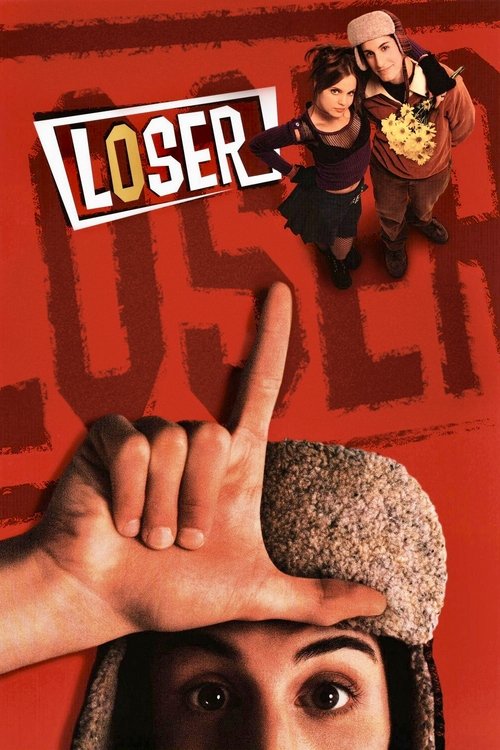
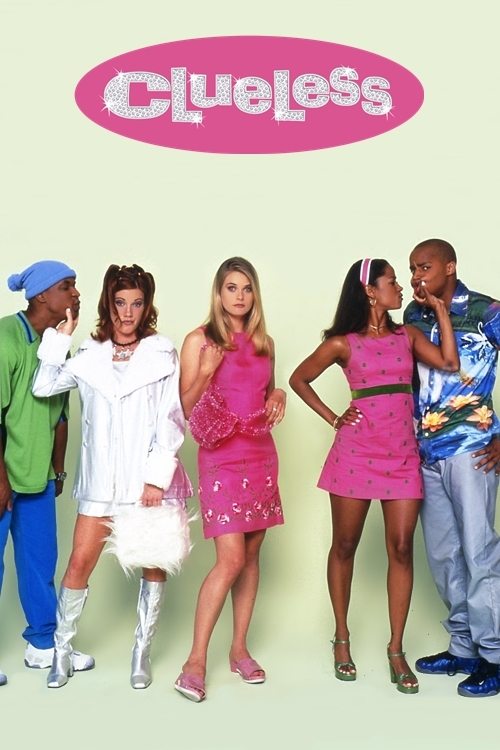
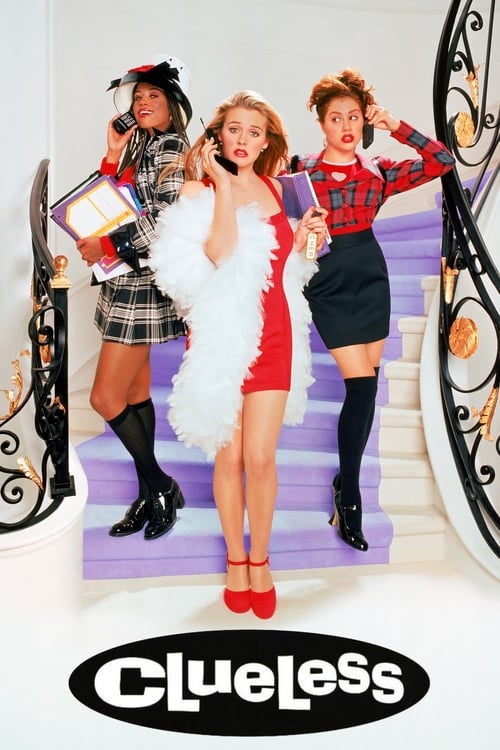
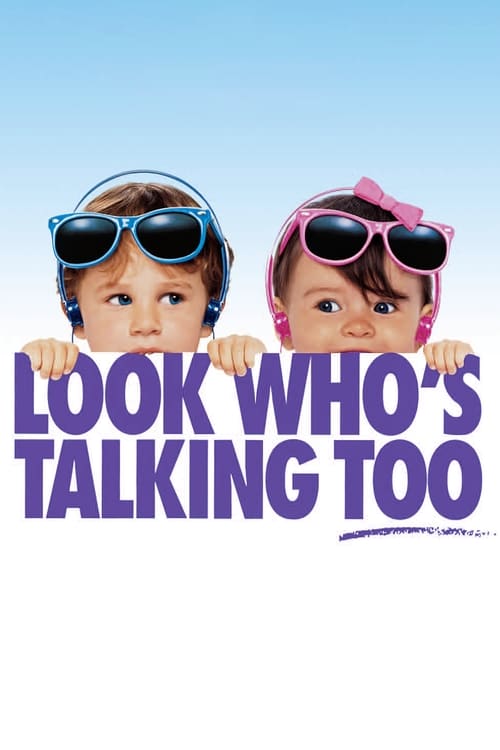
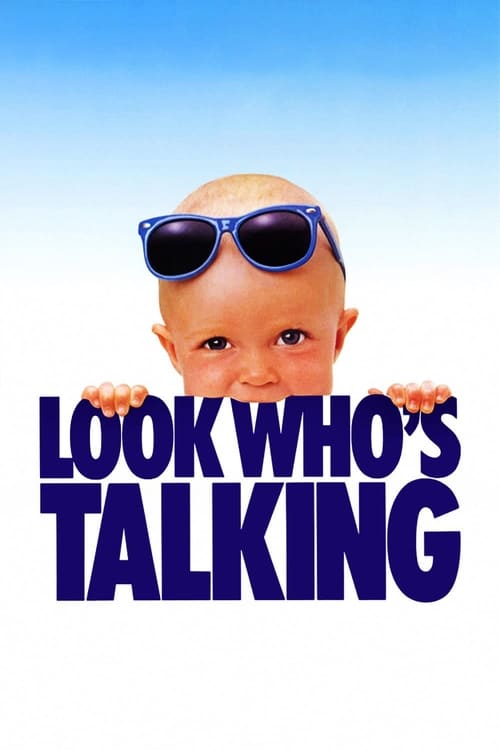
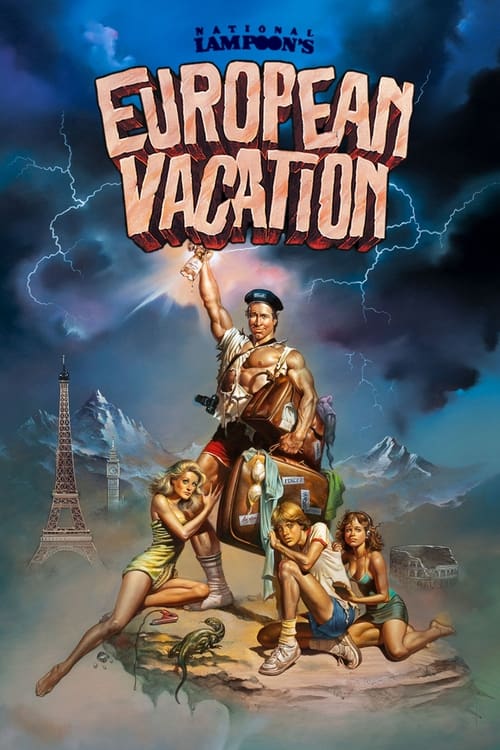
She has also directed the films Johnny Dangerously (1984), National Lampoon's European Vacation (1985), Look Who's Talking (1989), Clueless (1995), Loser (2000), I Could Never be Your Woman (2007) and Vamps (2012). She was a producer on A Night at the Roxbury (1998) and executive producer on Molly (1999). Many of Heckerling's films were adapted as television series. Fast Times at Ridgemont High evolved into the series Fast Times (1986), while Clueless (1995) became a television series that ran from 1996 to 1999.
Contents
Early life and education
Heckerling was born on May 7, 1954, in The Bronx, New York City, to a bookkeeper mother and an accountant father. She had a Jewish upbringing and remembers that the apartment building where she spent her early childhood was full of Holocaust survivors. "Most of them had tattoos on their arms and for me there was a feeling that all of these people had a story to tell. These were interesting formative experiences." Both of her parents worked full-time, so she frequently moved back and forth from her home in the Bronx, where Heckerling claims she was a latchkey kid sitting at home all day watching television, to her grandmother's home in Brooklyn, which she enjoyed much better. Here, she frequented Coney Island and stayed up watching films all night with her grandmother. At that time Heckerling loved television, where she watched numerous cartoons and old black and white movies. Her favorites were gangster movies, musicals and comedies. She had a particular fondness for James Cagney.
... when I saw Angels with Dirty Faces, Cagney was walking to the electric chair. Now I never understood what was going on in those movies, I just knew I loved them. I knew something bad was happening because of the music, so I started crying and crying. My mother told me that Cagney was going to the chair because he was a bad guy, and that he was going to die. I didn't know what that was, so she explained dying to me. It seemed pretty horrible, but then my mother told me that he wasn't really going to die because he was in a movie. Well, it just all seemed to click then! That was the way to beat it! I could see James Cagney die a million times, but he was always there. This year [1986] I didn't believe it really happened. I kept expecting Cagney to get up.
After her father passed his CPA exam, the family became more financially stable and moved to Queens, where Heckerling felt more out of place than ever. She did not get along with other kids in her school there, nor did she want to continue to be classmates with them through high school, so she enrolled at the High School of Art and Design in Manhattan. On her first day of school there, Heckerling realized that she wanted to be a film director. During their first assignment, writing about what they wanted to do in life, Heckerling wrote that she wanted to be a writer or artist for Mad. She noticed that a boy next to her, that she claimed copied from her papers later on, wrote that he wanted to be a film director.
I was really annoyed because I thought that if an idiot like that guy could say he wanted to be a director, then so could I, and certainly I should be a director more than he should. It had never occurred to me that that was a job possibility. He put the thought in my head because until then I would never have thought of saying that I wanted to do that; it didn't seem to be one of the jobs in the world that could be open to me.
Career
After graduating from NYU, Heckerling decided that she wanted to follow her friend Martin Brest to the American Film Institute Conservatory in Los Angeles, where she felt there would be more opportunities to break into the business. Heckerling experienced severe culture shock upon moving to LA, especially because NYC's public transportation had made it unnecessary for her to learn to drive. She eventually adjusted, and began working. Her first studio job was lip-syncing dailies for a television show, where she started making connections in the business.
During her second year at AFI, Heckerling made her first short film, Getting it Over With, about a girl that wants to lose her virginity before she turns twenty and the adventures she has before midnight of her twentieth birthday. Heckerling continued to work on the film after she graduated from AFI with her MFA, using the editing studios at night to finish the project after work. As soon as she finished the edit and sent it away to be processed, she was in a car collision with a drunk driver who hit the side of her car. Hospitalized with a collapsed lung, bruised kidney, and mild amnesia, she was fired from her editing job because she could not remember where certain footage was.
When asked about film's ability to grant a form of immortality, Heckerling describes the experience during the accident: "There was the whole thing-the yellow light and all that stuff-and what went through my mind right then was, 'Well, at least I got the film to the lab.' So it's not going to save you from anything, obviously, but something about it pulls you forward." Eventually, she finished the film and held a screening that gained a very positive response, causing Heckerling to call it one of the best days of her life. Her next step was to use the film to get a job. Thom Mount, president of Universal Pictures, showed a lot of interest in Heckerling, but because she was not backed by an agent they could not hire her. After months of struggling to find an agent, Mount called Heckerling and asked her to make a film.
Feature films
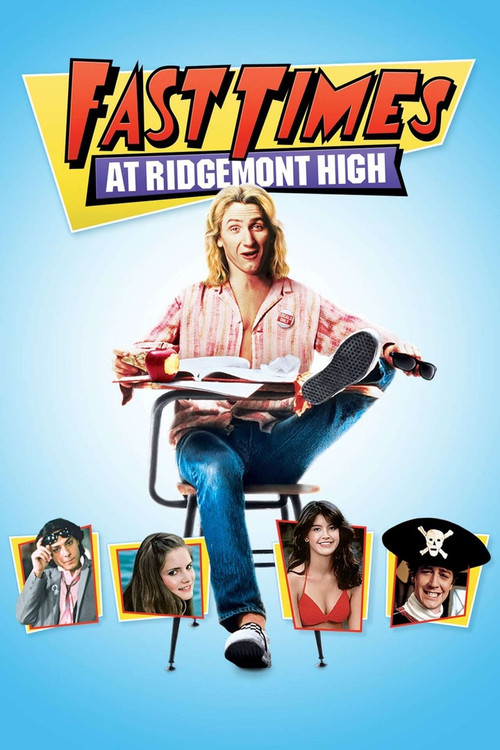
Heckerling's first feature was Fast Times at Ridgemont High (1982), based on the non-fiction account of a year in the life of California high school students as observed by undercover Rolling Stone journalist Cameron Crowe. When Heckerling first signed on to do a feature for Universal, she read a lot of scripts, but it was Crowe's script for Fast Times at Ridgemont High that stood out to her. Although she loved the script, she felt that it bore the marks of excessive studio interference, so she read the novel, determined which parts were strongest, and sat down with Crowe to rework the script. The film helped launch the careers of numerous stars, including Jennifer Jason Leigh, Judge Reinhold and Phoebe Cates.
In addition, it marks early appearances by several actors who later became stars, including Nicolas Cage, Forest Whitaker, Eric Stoltz, and Anthony Edwards. Most notable, however, is the appearance of Sean Penn as Jeff Spicoli, who was launched into stardom by his performance. Heckerling describes casting Penn, whom she first met while he was sitting on the floor outside of the casting office, as a feeling of being overwhelmed by his intensity, even though all he had done was look up at her. She knew that this was her Spicoli, even though they had seen other people who had read better for the role. Ally Sheedy read for the role of Leigh's character Stacy Hamilton, but Heckerling decided that she wanted someone that seemed younger and more fragile (though Jennifer Jason Leigh is more than four months older than Ally Sheedy).
Heckerling was discriminating about the film's soundtrack. Originally, the film was supposed to have music in it by bands like the Eagles. "I guess a lot of people like that stuff, but being young as I was at the time, I really wanted a new edgy eighties music soundtrack. I wanted Fear, Oingo Boingo, The Go-Gos, Talking Heads, and the Dead Kennedys. I was one of those obnoxious teenagers that thought that the music I liked was great and everything else sucked. Getting that Oingo Boingo song in the film was a big fight. But I had to make some compromises and put in some songs that I didn't like at all."
The studio was unsure of how to market the film, and Heckerling guesses that they did not think that anyone would want to watch it. The studio decided to just open it in a few hundred or so theaters on the west coast without any advertisement. Once the film opened, it was a huge success, leading the studio to quickly open it at theaters around the country. It became an instant hit right out of the gate, eventually going on to become a pop culture touchstone. The film earned $27,092,880 at the box office in the USA. It also spawned a short-lived series on CBS called Fast Times, with Heckerling writing, directing and producing.
Filmmaking style
Heckerling's films have been characterized as having a proto-feminist perspective. Heckerling focuses on the female life at pivotal turning points. With films such as Fast Times at Ridgemont High and Clueless, Heckerling has focused on women finishing high school and going into what would be their adult lives. Her characters are constantly going against the norms that women are pushed into within society. Heckerling has a tendency to prioritize the female friendships within her films, along with a larger discussion of gender positioning within teenagers' lifestyles.
Personal life
Heckerling dated fellow film director Martin Brest when she first moved to Los Angeles. Though they later broke up, they remained good friends. Heckerling's first marriage was to musician David Brandt, from 1981 to 1983. At one point she hired director Neal Israel to work on one of her films. Ten months afterward, he asked her out; they married in July 1984. The marriage ended with a 1990 divorce.
The couple's daughter, Mollie Israel, was born in 1985. Mollie was led to believe Israel was her biological father until 2004, when it was revealed to her that in fact Harold Ramis was her biological father. Heckerling has included Mollie in some of her films in bit parts, including Look Who's Talking and Loser, though Heckerling claims that her daughter never wanted to be a "girly girl" and distanced herself from much of her work, never adding any input to the lives of characters such as those in Clueless. Despite this, the two get along very well and Mollie frequently introduces her mother to new music, such as OK Go, and films.
Actor and comedian Chris Kattan claimed in his 2019 memoir Baby, Don't Hurt Me: Stories and Scars from Saturday Night Live that he was pressured by Lorne Michaels to have sex with Heckerling so she would direct the 1998 film A Night at the Roxbury (although she ultimately only produced, rather than directed it). Heckerling's daughter Mollie disputes the claim, saying that although Heckerling and Kattan had an affair, it began once the film was already shooting.. When asked about the matter during an interview with The Daily Beast , Heckerling referred to Kattan as a "nut" and stated, "You know, I don’t comment about that, because basically I have no interest in helping his book sales. I don’t even want to know or hear the dumb shit he came up with.”
Awards and nominations
In 1995, Heckerling won the National Society of Film Critics Best Screenplay award and was nominated for the Writers Guild of America award for Best Screenplay Written Directly for the Screen for her screenplay, Clueless. The film was also nominated for a WGA Award for Best Screenplay. In 1998, she received the Franklin J. Schaffner Medal from the American Film Institute. In 1999, she received the Women in Film Crystal Award for outstanding women who, through endurance and excellence, have helped to expand the role of women within the entertainment industry.